

Remember when your five-year-old wouldn't stop asking "why?" When they turned the living room into a science lab, mixing soap and water just to see what would happen? When bedtime was delayed by "just one more page" of their favorite book?
Now you're lucky if you can get them to look up from their phone long enough to mumble about their day. Homework feels like pulling teeth. And that dreaded phrase – "When will I ever use this?" – has become their response to everything school-related.
If this sounds familiar, you're not alone. And more importantly, you're not failing as a parent.
The truth is, your child's natural love of learning hasn't disappeared. It's just buried under years of worksheets, standardized tests, and being told there's only one right answer. The good news? You can help them find it again. And it might be easier than you think. This will help you make learning fun again.
Key Takeaways
What You'll Learn in This Guide:
- The neuroscience behind curiosity – Why your child's brain is actually wired for learning (and what's blocking it)
- How to identify hidden interests – Even "worthless" activities like gaming or TikTok can become learning goldmines
- Age-specific strategies that work – Different approaches for elementary, middle school, and teen learners
- The 30-Day Transformation Challenge – A step-by-step plan to reignite learning joy in just one month
- Warning signs vs. success indicators – Know exactly when you're on track (or when to seek help)
- Project-based learning secrets – How to make education feel like play while covering multiple subjects
- Free tools and resources – Interactive apps and proven products that support your journey
- Real answers to tough questions – From screen time balance to resistant spouses to college prep concerns
Time to Read: 12 minutes | Time to Change Everything: 30 days
Why Kids Lose Their Spark (And It's Not Your Fault)
Here's something that might surprise you: kids don't naturally hate learning. In fact, their brains are literally wired for curiosity. When children discover something interesting, their brains release dopamine – the same feel-good chemical that makes us love chocolate or a great song. Learning is supposed to feel good!
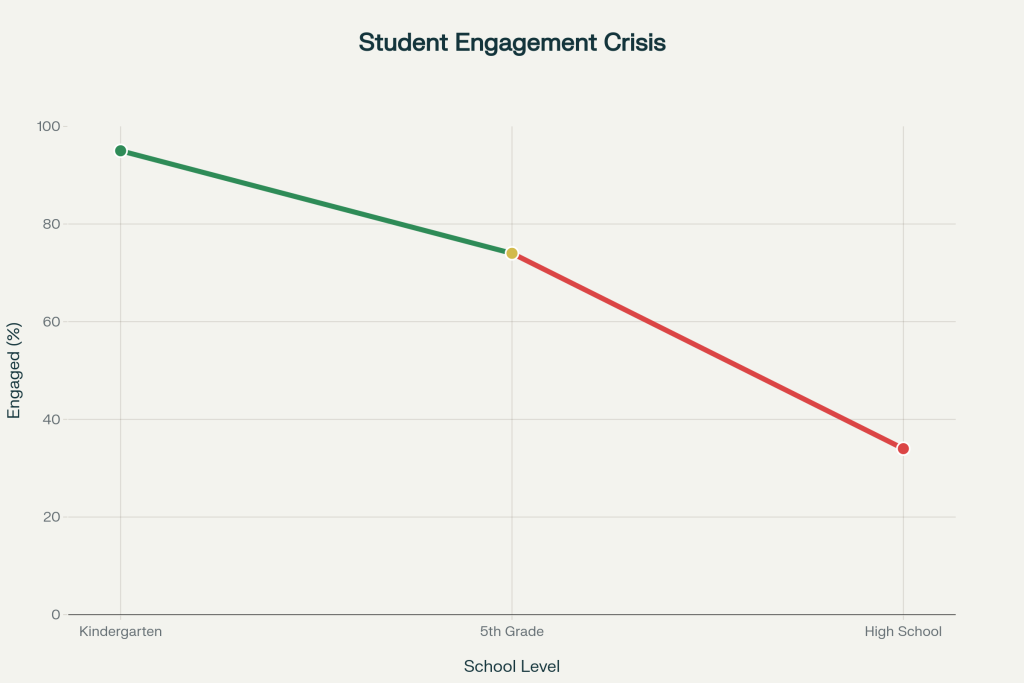
But somewhere between finger painting and algebra, something goes wrong. Research shows that while nearly all kindergarteners are excited about school, only about one-third of high schoolers feel engaged with their learning. That's a heartbreaking drop, and it happens for a reason.
Traditional schools often replace natural curiosity with external rewards. Instead of learning because something is fascinating, kids learn for grades, gold stars, or to avoid getting in trouble. It's like replacing a home-cooked meal with fast food – it might fill you up, but it doesn't nourish you the same way.
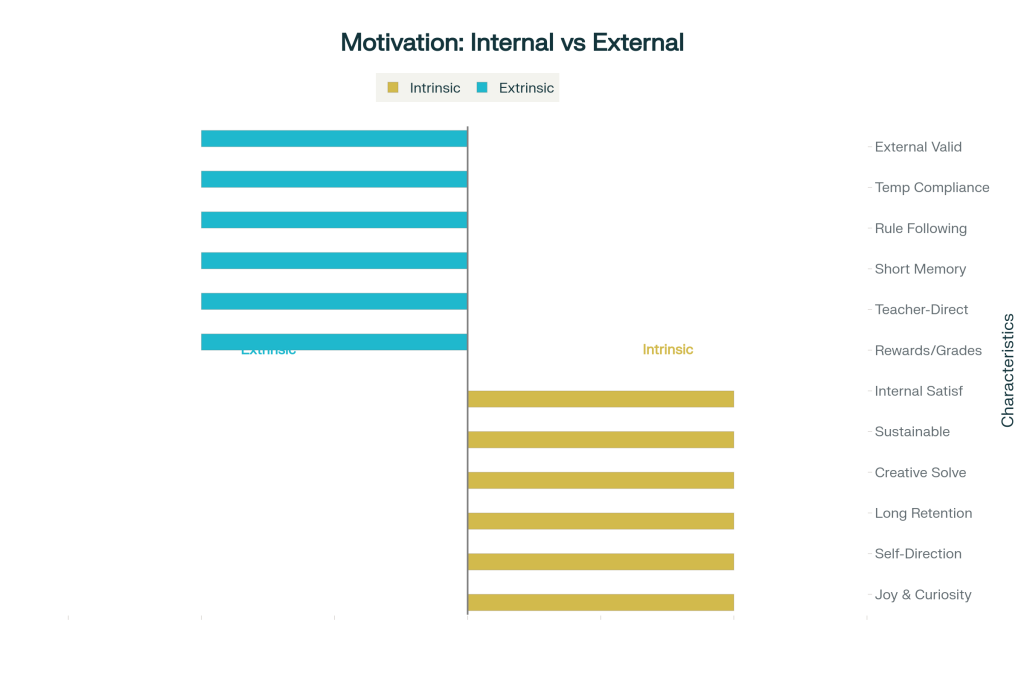
When kids are constantly told what to learn, when to learn it, and how to show they've learned it, their inner motivation starts to fade. They stop asking "why" and start asking "will this be on the test?"
Your Detective Mission: Finding What Still Lights Them Up
Before you can reignite your child's learning spark, you need to find what interests are still glowing, even if they're just embers. This is where you put on your detective hat.
For the next week, watch your child when they think you're not looking. What do they choose to do with free time? What YouTube videos do they watch? What do they talk about with friends? Even seemingly "worthless" interests can be learning goldmines. That obsession with Minecraft? That's architecture, physics, and resource management. Their love of sports statistics? That's math, data analysis, and pattern recognition.
🎯 FREE TOOL: Interest Discovery Treasure Hunt
Transform detective work into a fun adventure! Our interactive app helps uncover your child's hidden passions in just 15 minutes.
What You Get:
- Virtual treasure map with 100+ interest areas to explore
- Gamified assessment that doesn't feel like a test
- Detailed interest profile with top 3 passion areas
- Personalized activity suggestions based on results
Perfect For: Ages 6-18 who say "I don't know" when asked what they like
➡️ [Start Your Free Treasure Hunt Now] (No email required for basic version)
Create a simple "curiosity journal" – just a notebook where you jot down moments when your child seems genuinely interested in something. Don't judge or evaluate; just observe. You might be surprised by patterns you discover.
Making Learning Feel Like Play (Without Them Knowing It's Learning)
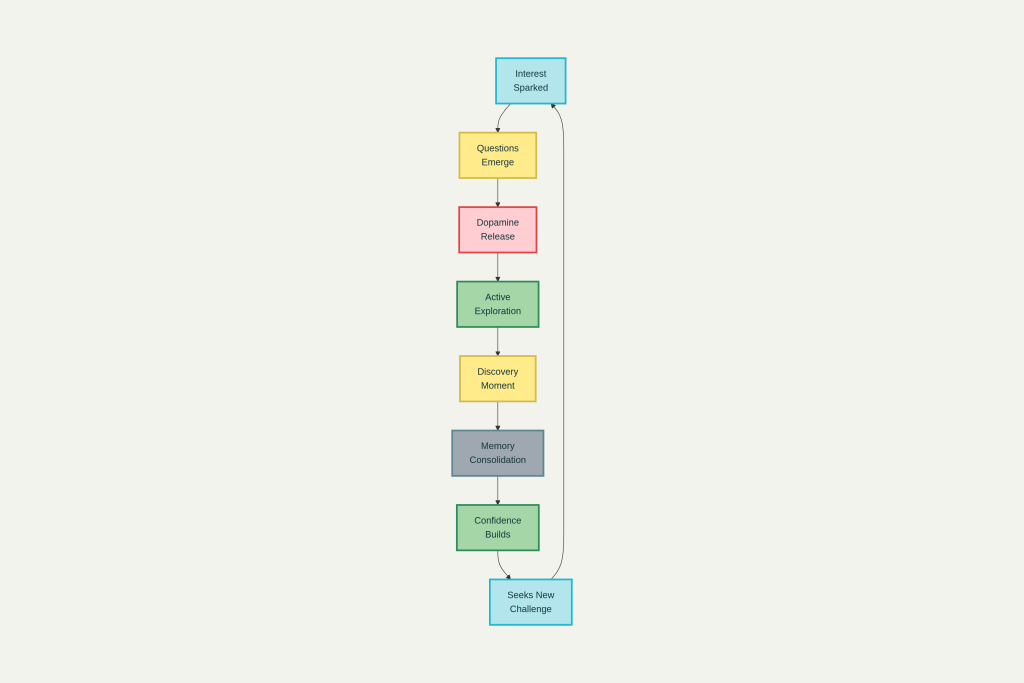
The secret to reigniting your child's love of learning? Stop calling it learning. Start calling it exploring, discovering, creating, or investigating. The best education happens when kids don't realize they're being educated.
Project-Based Learning That Actually Works
Instead of worksheets about fractions, bake cookies and let your child figure out how to double the recipe. Instead of reading about ecosystems, create a terrarium and watch how everything works together. Instead of memorizing historical dates, help them research your family tree and discover the history that led to them.
When kids work on projects they care about, they naturally learn multiple subjects at once. Building a treehouse teaches geometry, physics, and problem-solving. Starting a small business selling handmade items teaches math, communication, and creativity.
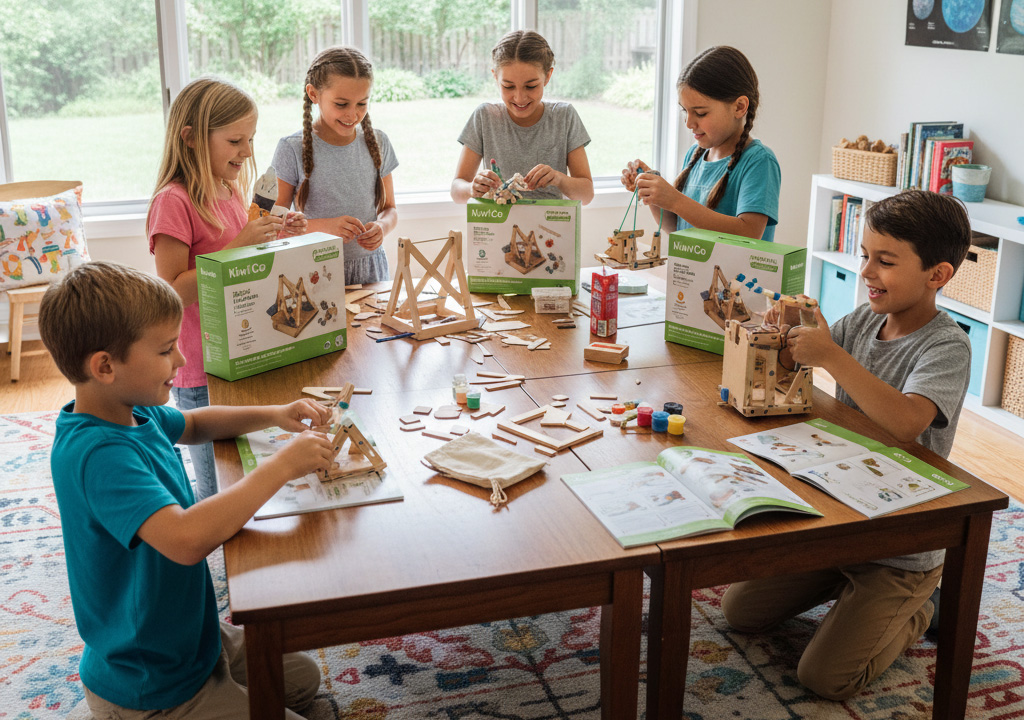
💡 FEATURED RESOURCE: KiwiCo STEM Subscription Boxes
Hands-on learning delivered to your door – no Pinterest-fail frustration!
Why Parents Love KiwiCo:
- Age-appropriate projects (0-16+) designed by experts
- Everything included – no shopping for supplies
- Real science & engineering, disguised as fun
- Builds confidence through successful creation
- Monthly excitement when the box arrives
Price: Starting at $16.95/month
Best For: Busy parents who want quality STEM activities without the prep work
➡️ [Get 30% Off Your First Box] Use code SMARTER30
The Power of "What If?" Questions
Encourage your child to ask "what if?" questions, then explore the answers together. What if gravity was twice as strong? What if the South had won the Civil War? What if we could breathe underwater? These questions lead to research, experiments, and discussions that are way more engaging than any textbook.
Following Their Lead (Even When It's Scary)
One of the hardest things for parents to do is let go of the curriculum and follow their child's interests. But research shows that kids learn best when they have some control over their education.
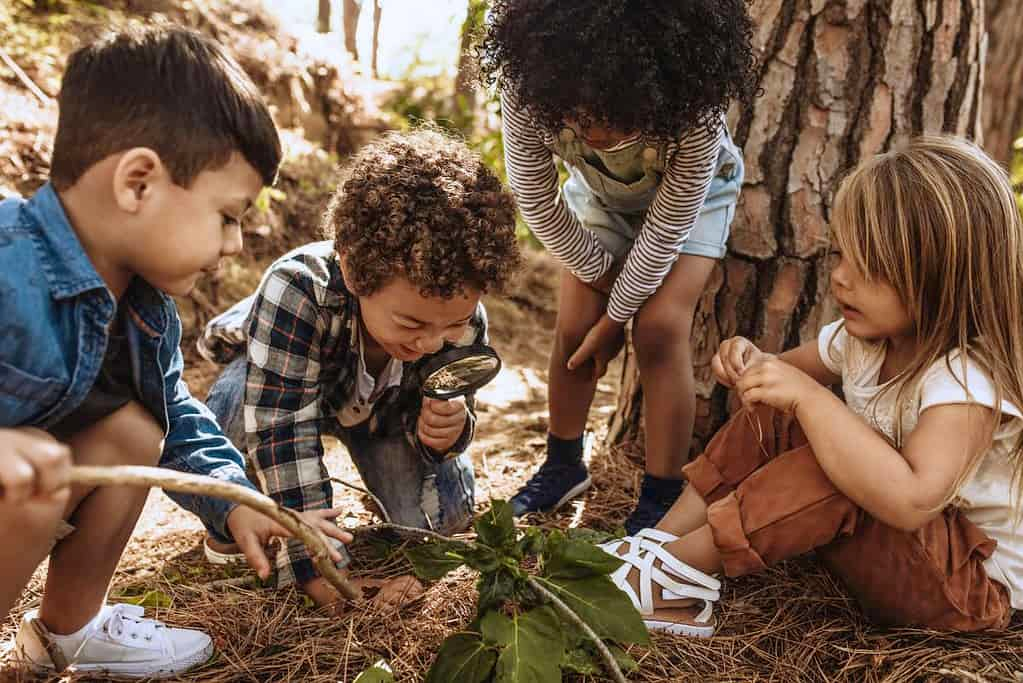
This doesn't mean letting them play video games all day. It means giving them choices within boundaries. Would they rather learn about the Revolutionary War through a documentary, a historical fiction book, or by visiting a local museum? Would they prefer to show their understanding through writing, art, or a presentation?
When kids feel like they have a say in their learning, they're more likely to engage with it. They're not passive receivers of information; they're active participants in their education.
📊 FREE TOOL: Engagement Level Meter
Track your child's learning spark day by day – spot patterns, adjust approach
How It Works:
- Quick daily check-ins using simple emoji faces
- Visual trend charts show engagement patterns
- Identifies best times and topics for learning
- Alerts you to concerning drops in motivation
Parents Report: "Finally understood why Tuesdays were so hard – now we do hands-on projects that day!"
➡️ [Start Tracking for Free] (Unlock unlimited tracking with email signup)
Age-Specific Strategies That Really Work
Different ages need different approaches. Here's what works best for each stage:
Ages 5-8: Hands-On Everything
Little kids learn through their senses. They need to touch, build, and experiment. Try:
- 🧪 Kitchen science experiments
- 🌱 Nature scavenger hunts
- 🎨 Art projects that explore concepts
- 🔨 Building challenges with blocks or LEGOs
Ages 9-12: Deep Dives and Connections
Kids this age can focus longer and love becoming "experts." Try:
- 📚 Passion projects on their favorite topics
- 🎮 Creating their own board games
- 🔬 Real science experiments with hypotheses
- 💰 Running a small business or fundraiser
Ages 13+: Real-World Impact
Teens want to matter. They need to see how learning connects to real life. Try:
- 💻 Learning skills for actual jobs (coding, design, writing)
- 🌍 Community service projects
- 📱 Creating content about their interests
- 🎯 Internships or shadowing professionals
🚀 FEATURED RESOURCE: CodaKid Online Coding
Turn gaming obsession into future-ready skills!
What Makes CodaKid Different:
- Build REAL games and apps (not just exercises)
- Project-based learning that feels like play
- Popular tracks: Minecraft modding, Roblox development, Python
- Live mentor support when kids get stuck
- See their creations come to life immediately
Price: Starting at $25/month
Ages: 8-18
Best For: Kids who love gaming and want to create, not just consume
➡️ [Try CodaKid Free for 14 Days] No credit card required
Warning Signs You're On The Right Track
How do you know if your efforts are working? Watch for these positive signs:
🌟 Success Indicators:
- They start asking more questions
- They make connections between different topics
- They want to share what they've learned
- They pursue interests without being prompted
- They're okay with making mistakes
- They lose track of time while learning
- They start teaching others (siblings, friends, even you!)
- They seek out challenges instead of avoiding them
- They say "I wonder…" more often
- They show pride in their process, not just results
Red Flags That Need Attention
Sometimes, despite our best efforts, kids need extra support. Watch for these warning signs:
⚠️ Warning Signs to Address:
- Complete refusal to engage with any learning
- Extreme anxiety about making mistakes
- Saying "I'm stupid" or "I can't learn"
- Physical symptoms like headaches or stomachaches
- Avoiding all academic challenges
- Lying about completed work
- Extreme anger or sadness about learning
- Comparing themselves negatively to others constantly
- Giving up immediately when challenged
- Loss of interest in previously loved activities
If you see multiple red flags, it might be time to investigate deeper issues like learning differences, anxiety, or depression. There's no shame in getting professional help – it's actually a sign of good parenting.
Your 30-Day Transformation Challenge
Ready to see real change? Here's a simple 30-day plan to reignite your child's learning spark:
Week 1: Observe and Connect
- Days 1-3: Start your curiosity journal. Just watch and note what interests them.
- Days 4-5: Have daily "what made you curious today?" conversations at dinner.
- Days 6-7: Do one activity related to something they mentioned.
Week 2: Add Choices
- Days 8-10: Give them options for how to complete regular tasks (homework, chores, etc.).
- Days 11-12: Let them set their own timeline for a project.
- Days 13-14: Ask their opinion on a family decision.
Week 3: Celebrate the Process
- Days 15-17: Praise effort and strategy, not just results.
- Days 18-19: Start a hands-on project together (no pressure to finish).
- Days 20-21: Have a "failure party" – celebrate something that didn't work and figure out why.
Week 4: Connect to Real Life
- Days 22-24: Show how their interests connect to real jobs or skills.
- Days 25-26: Let them teach you something they've learned.
- Days 27-30: Plan a field trip or experience based on their interests.
The Ripple Effect: What Happens When Learning Becomes Joy Again
When you successfully reignite your child's love of learning, something magical happens. They stop seeing challenges as threats and start seeing them as puzzles to solve. They develop what experts call a "growth mindset" – the belief that abilities can be developed through effort.
🧪 FEATURED RESOURCE: MEL Science
Chemistry experiment subscription boxes with AR technology that bring molecular science to life.
Why Parents Love MEL Science:
- Real chemistry experiments delivered monthly to your door
- AR app shows molecules in 3D for deeper understanding
- Safety-tested materials with clear video instructions
- Builds scientific thinking and experimental skills
- Kids see the "why" behind reactions at molecular level
- Quality educational content designed by scientists
- Ignites passion for chemistry through hands-on discovery
Price: Starting at $34.90/month (subscription options available)
Best For: Kids ages 5-16 fascinated by science, visual learners who need to "see" concepts, families wanting screen time that educates, and children who've lost interest in textbook science
➡️ [Start Your MEL Science Subscription]
Kids who rediscover their learning joy become more confident, creative, and resilient. They're better prepared for a world where the ability to learn new things matters more than what you memorized in school. They become the adults who adapt to change, solve problems creatively, and never stop growing.
But here's the best part: when your child's learning spark reignites, it often rekindles your own. You'll find yourself curious about things you haven't thought about in years. Family dinners become more interesting. Car rides turn into fascinating discussions. Learning becomes something your family does together, not something imposed on your child.
Your Child's Brilliant Future Starts Today
Your child's disengagement with learning isn't permanent. It's not a character flaw or a sign of laziness. It's a normal response to a system that often values compliance over curiosity, test scores over deep understanding, and one-size-fits-all over individual brilliance.
You have the power to change this. Not by adding more pressure or finding better worksheets, but by creating an environment where learning feels like an adventure again. Where mistakes are interesting, not shameful. Where questions matter more than answers.
Start small. Pick one strategy from this guide and try it this week. Watch for tiny sparks – a moment of "huh, that's interesting" or "can we do that again?" Those sparks, no matter how small, are the beginning of transformation.
Remember: your child was born curious. That curiosity is still there, waiting to be awakened. All it needs is permission to come out and play again.
Trust yourself. Trust your child. Trust the process. The journey from bored to brilliant isn't always straight, but it's always worth it.
Ready to start? Download our free Interest Discovery Treasure Hunt app and spend 15 minutes today uncovering what makes your child's eyes light up. Because every brilliant journey begins with a single spark.
Frequently Asked Questions
Q: My child says everything is boring. Where do I even start?
A: Start by becoming a detective. For one week, don't try to fix anything – just observe. What does your child choose when they have free time? What YouTube videos do they watch? What do they talk about with friends? Even "time-wasting" activities like gaming or social media can reveal interests. Our Interest Discovery Treasure Hunt app can help uncover hidden passions in just 15 minutes. Once you find even a tiny spark of interest, you can build from there.
Q: How long before I see real changes in my child's attitude toward learning?
A: Every child is different, but most parents report seeing small positive signs within 2-3 weeks of consistent effort. These might be subtle – asking one more question, spending five extra minutes on something, or saying "that's kind of cool." Major transformation typically takes 2-3 months. Remember, it took years for their curiosity to be suppressed; it's okay if it takes time to resurface.
Q: What if my child's interests aren't "educational" (like video games or TikTok)?
A: Every interest has learning potential! Video games involve strategy, problem-solving, and often complex storytelling. TikTok creators need to understand algorithms, video editing, and audience engagement. Instead of fighting these interests, dig deeper. If they love Minecraft, explore architecture or coding (try CodaKid's Minecraft modding course). If they're obsessed with TikTok, learn about digital marketing or video production together. The key is building bridges from their interests to broader learning.
Q: I work full-time. How can I support my child's learning without burning out?
A: You don't need to become a full-time teacher! Focus on quality over quantity. Even 15 minutes of engaged conversation at dinner can make a difference. Use tools that work while you're busy – KiwiCo boxes provide hours of independent learning, and apps like our Engagement Level Meter help you track progress with minimal time investment. Also, remember that giving your child more autonomy in their learning actually requires less hands-on time from you.
Q: My teenager thinks trying equals being "uncool." How do I handle this?
A: Peer pressure peaks during teen years, making visible effort seem risky. Combat this by: 1) Celebrating process privately rather than publicly, 2) Finding "cool" role models who value learning (YouTubers, athletes, entrepreneurs who talk about their learning journey), 3) Connecting learning to their goals (want to be a gamer? Learn coding. Want to be an influencer? Study psychology and marketing), and 4) Creating a home environment where curiosity is normal and mistakes are safe.
Q: How do I balance screen time with hands-on learning?
A: Instead of fighting screens, make them work for you. Set a "learning first" rule where educational screen time (coding, educational videos, creative apps) doesn't count toward screen limits. Balance passive consumption with creative production – if they watch YouTube for an hour, they create content for 30 minutes. Also, many digital interests can lead to offline activities. Love of digital art can lead to physical drawing; interest in YouTube science videos can inspire real experiments.
Q: What if my spouse/partner doesn't support this approach?
A: Start small and show results. Rather than overhauling everything, pick one area where you both agree change is needed (like homework battles or Sunday night anxiety). Try the approach for 30 days and document changes. Share articles about growth mindset and intrinsic motivation from reputable sources. Often, reluctant partners come around when they see their child becoming happier and more engaged. If disagreement persists, consider designating certain areas where each parent takes the lead.
Q: Should I be worried if my child only wants to deeply focus on one subject?
A: Deep, passionate interest in one area (even if it seems narrow) is actually a gift! This kind of focused passion builds expertise, confidence, and learning skills that transfer to other areas. History shows that many successful people started with one deep interest that branched out over time. Support the passion while occasionally showing connections to other subjects. A dinosaur obsession naturally leads to geology, history, biology, and even math (measuring and comparing sizes).
Q: How do I know if my child needs professional help vs. just a different approach?
A: Consider professional evaluation if you see: persistent anxiety or depression, complete refusal to engage with any learning for 6+ weeks, physical symptoms (headaches, stomachaches) that don't have medical causes, statements about being "stupid" or "broken," or regression in previously mastered skills. Learning differences, ADHD, anxiety, or other challenges might need professional support. Getting help isn't giving up – it's giving your child the tools they need to succeed.
Q: My child is afraid of making mistakes. How do I change this mindset?
A: Model mistake-making yourself! Share your daily mistakes and what you learned. Create "failure parties" where you celebrate attempts that didn't work. Change your language: instead of "wrong," say "not yet" or "interesting approach." Share stories of famous failures (did you know WD-40 is named after 39 failed attempts?). Use our Engagement Level Meter to track progress over process. Remember, fear of mistakes often comes from years of conditioning, so be patient with the transformation.
Q: Will this approach prepare my child for standardized tests and college?
A: Absolutely! Kids who love learning naturally perform better on tests because they understand concepts deeply rather than just memorizing facts. They develop critical thinking skills that are essential for SATs and ACTs. College admissions officers increasingly value genuine passion and self-directed projects over perfect grades. Students who've reignited their love of learning often write more compelling application essays and show the intellectual curiosity colleges seek. Plus, they're more likely to thrive in college because they know how to learn independently.
Remember: You're not alone in this journey. Join thousands of parents in our newsletter community who are successfully reigniting their children's love of learning. Get weekly tips, success stories, and exclusive access to our tools and resources. Your child's transformation starts with your first step.