
Halloween isn't just a single night of trick-or-treating, costume parades, and festive parties—it's a season filled with anticipation and creativity that builds up to the main event. Before the excitement of the night itself, there are numerous fun activities that kids can engage in to prepare for the big celebration.
From carving pumpkins and crafting homemade decorations to designing unique costumes and organizing scavenger hunts, these preparatory activities not only amplify the Halloween spirit but also create cherished memories and traditions leading up to October 31st.
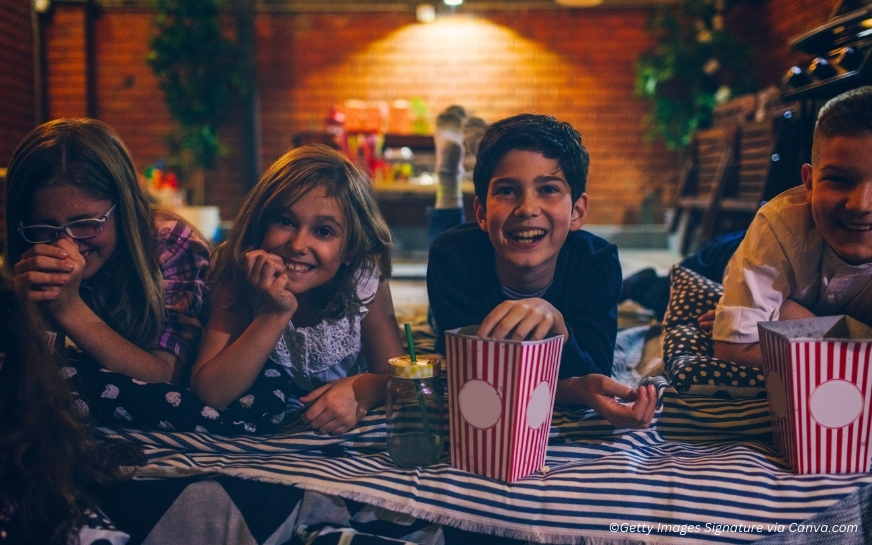
Hosting a Halloween movie night is another fantastic way to build anticipation for the holiday. Selecting family-friendly scary movies ensures that the content is enjoyable without being too intense for younger viewers. Films like "Addams Family", "Hocus Pocus", "Hotel Transylvania", or the classic "Ghost Busters" offer a perfect blend of spookiness and fun.
Enhance the experience by setting up a cozy viewing area with blankets, pillows, and themed snacks like popcorn, caramel apples, or pumpkin-shaped cookies. This activity provides an opportunity for the whole family to relax and enjoy some chills and thrills in a comfortable environment. Sharing the thrills and chills by talking about favorite scenes or characters afterward can extend the fun and make the evening even more memorable.
Gathering to read scary stories is a timeless way to immerse kids in the Halloween spirit. Creating an ambient setting with dimmed lights, flickering candles, or flashlight shadows can make the experience more thrilling.
Choose age-appropriate tales that are spooky yet not too frightening, ensuring the content is suitable for all participants. Classic ghost stories, folklore, or even humorous spooky tales can captivate young imaginations.
Encouraging children to read aloud or even craft their own stories fosters creativity, improves reading skills, and builds confidence. This shared activity not only entertains but also strengthens family bonds as everyone indulges in the eerie excitement together.

Reading scary stories on their own allows kids to engage with the Halloween spirit independently, exploring spooky narratives at their own pace without feeling overwhelmed. Age-appropriate books like R.L. Stine's Goosebumps series provide just the right amount of thrill and excitement.
And a great Minecraft Halloween adventure comic will get even the most reluctant readers begging for more to read. This activity enhances reading skills, stimulates imagination, and fosters a sense of bravery as children navigate suspenseful plots.
Creating a cozy reading nook with comfortable seating and soft lighting can make the experience even more enjoyable, encouraging a love for reading while adding to the festive anticipation of Halloween.
Pumpkin carving is a classic Halloween activity that everyone loves. It's a great way to get creative and make something unique. Plus, the end result can serve as a festive decoration for your home.
First, choose the right pumpkin. Look for one that is firm and has a flat bottom so it won't roll. Next, gather your tools: a pumpkin carving kit, a large spoon, and some newspaper to keep your workspace clean.
And there you have it! A beautifully carved pumpkin to light up your Halloween night.

If you're looking to take your pumpkin carving to the next level, try some of these creative ideas:
These ideas can make your pumpkin the talk of the neighborhood!
While pumpkin carving is fun, it's important to stay safe. Here are some tips to keep in mind:
By following these tips, you can ensure a fun and safe pumpkin carving experience.
Halloween crafts are a fantastic way to keep kids entertained and involved in the holiday spirit. These crafts can also serve as decorations, making your home look festive and spooky.

Here are some simple decoration ideas that are easy to make and can be done with materials you likely already have at home.
Monster handprints and footprint art are perfect for younger children. They can create adorable and spooky keepsakes that you'll cherish for years to come.
To make monster handprints, you'll need some washable paint, paper, and markers. Have your child dip their hand in the paint and press it onto the paper. Once the paint dries, use markers to add eyes, mouths, and other monster features. You can do the same with footprints to create different types of monsters.
These crafts are not only fun but also a great way to spend quality time with your kids.
Black cat and bat cut-outs are simple yet effective decorations that can add a spooky touch to any room. Here's how to make them:
These cut-outs are easy to make and can be a fun activity for kids of all ages.
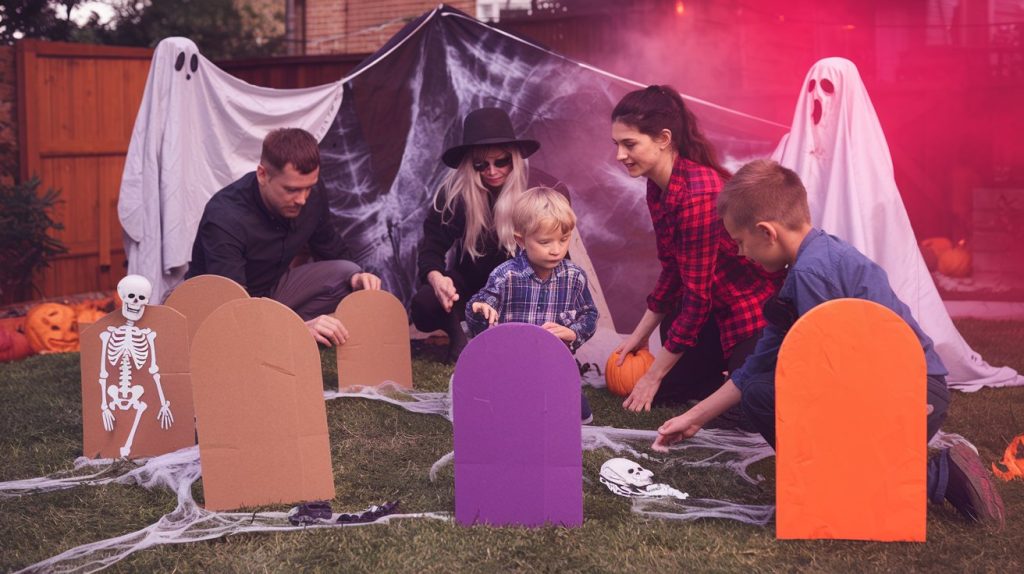
Creating a haunted graveyard in your yard is a surefire way to impress trick-or-treaters and party guests. It's a fun project that can involve the whole family.
Start by making your own tombstones. You can use foam boards or cardboard. Cut them into tombstone shapes and paint them gray. Use black paint to add spooky inscriptions like "RIP" or "Here Lies a Restless Soul."
Besides tombstones, add other decorations like skeletons, cobwebs, and fake spiders. You can also use old sheets to create ghost figures. Drape the sheets over stakes or hang them from trees to make them look like they're floating.
Fog machines can add an eerie atmosphere to your haunted graveyard. Place them behind tombstones or in hidden spots to create a mysterious fog that creeps along the ground. Or you can add them into a witches cauldron for a steaming magical brew effect. You can find affordable fog machines at most party stores or online.
To enhance the effect, make sure the fog machine comes with colored lights. If not then you can add your own green, purple, and blue lights which can make the fog look even spookier. Aim the lights at the fog and decorations to create an otherworldly glow.
Transform your backyard into a spooky campsite for a night of Halloween fun. A backyard campout can be an exciting adventure for kids and a nostalgic experience for adults.

Start by setting up a safe area for a campfire. Make sure it's away from any flammable materials and always have a bucket of water or a fire extinguisher nearby. Arrange some seating around the fire using logs, chairs, or blankets.
Next, decorate the area with Halloween-themed items like fake cobwebs, pumpkins, and lanterns. You can even use orange and purple string lights to add a festive glow. Don't forget to have plenty of marshmallows, graham crackers, and chocolate for making s'mores!
Nothing beats the thrill of telling ghost stories around a campfire. Here are a few classic tales that are sure to give everyone chills:
These stories are perfect for setting a spooky atmosphere and keeping everyone on the edge of their seats.
To make the campout even more fun, plan some activities like a scavenger hunt or flashlight tag. You can also set up a projector and watch a Halloween movie under the stars (refer to our previous Family-Friendly Scary Movies section above). Provide plenty of cozy blankets and pillows to keep everyone comfortable.
Remember to keep safety in mind. Always supervise children around the campfire and ensure everyone knows basic fire safety rules. With a little planning, your spooky backyard campout can be a highlight of the Halloween season.
Hosting a Halloween party can be an exhilarating experience for both kids and adults. It’s a fantastic way to bring people together, enjoy some spooky fun, and create lasting memories. Here’s how you can throw a Halloween bash that will be the talk of the town.
From DIY decorations to themed snacks and engaging games, there are endless possibilities to make your Halloween party unforgettable.
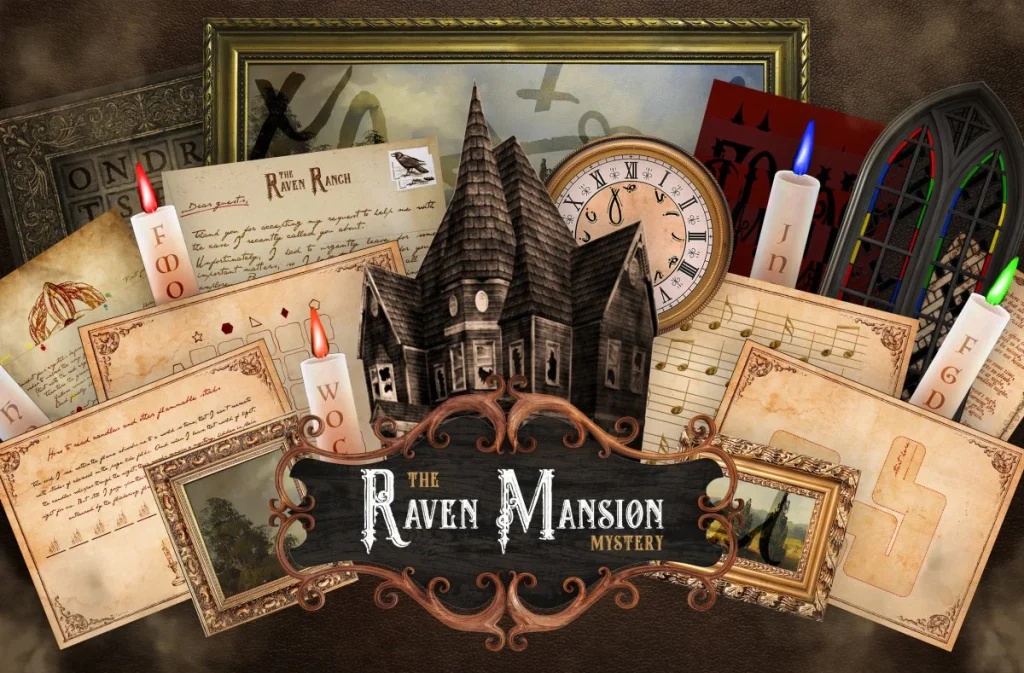
Hosting a Halloween-themed escape room party with Mystery Locks' printable kits is a spooktacular way to give kids an unforgettable night of fun and learning! As they delve into eerie puzzles and unravel mysterious clues, children naturally enhance their problem-solving skills and ignite their creativity. The immersive challenges encourage teamwork and communication, helping them develop social skills as they collaborate to beat the clock and escape the haunted scenario.
Not only does this transform your space into a thrilling adventure filled with Halloween magic, but it also provides an educational experience disguised as pure entertainment. Kids will be so engrossed in the mysterious fun that they won't even realize they're learning valuable cognitive and social skills. It's the perfect recipe for a memorable Halloween party that combines excitement with enrichment!
Music is another key element to set the mood. Create a playlist of Halloween-themed songs, including classics like "Thriller" by Michael Jackson and "Monster Mash" by Bobby "Boris" Pickett and the theme from "Ghostbusters". You can also include some eerie sound effects like howling wolves and creaking doors to add an extra layer of spookiness.
No party is complete without delicious snacks and drinks. For a Halloween party, the more creative, the better! Here are some ideas to get you started:
You can add to the Halloween party feeling by putting your drinks in a spooky inflatable drink cooler. These themed snacks and drinks will delight your guests and add to the festive atmosphere.
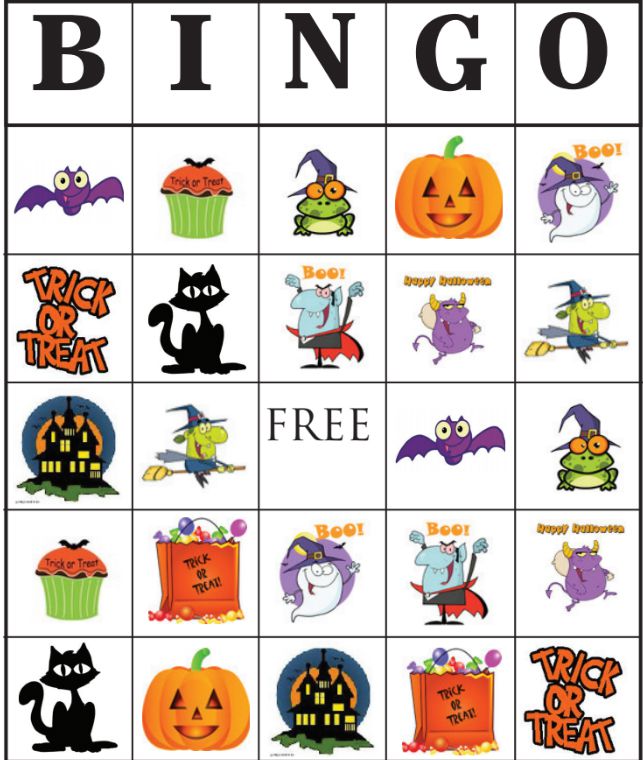
Games are a great way to keep everyone entertained at your Halloween party. Here are some fun ideas that both kids and adults will enjoy:
These games will keep your guests engaged and add an extra layer of fun to your Halloween party.
Nothing excites kids more than the opportunity to show off their Halloween costumes. Hosting a costume contest and parade can turn a simple gathering into an unforgettable event. Not only does it give children a chance to display their creativity, but it also encourages community spirit. Even adults can join in on the fun!
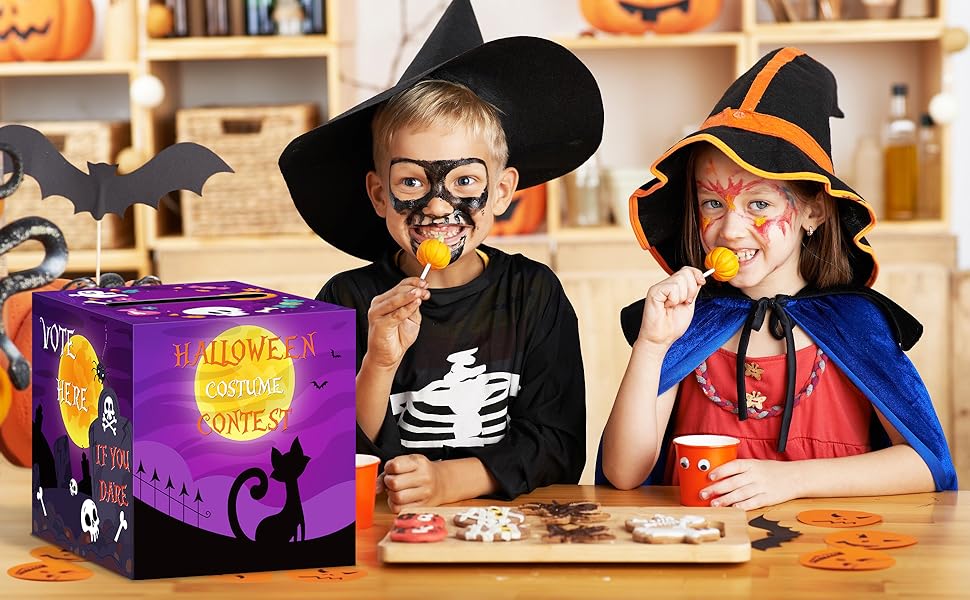
Organizing a costume contest is straightforward and can be done with a few simple steps. First, you'll need to decide on the categories.
Announce the categories in advance so participants know what to aim for. Common categories include:
Next, set up a stage or a designated area where participants can walk and show off their costumes. You can use a simple red carpet or even just a marked-off area in your backyard or living room. Make sure to have a sound system to play some fun Halloween music during the parade.
Finally, select a panel of judges. This could be adults or older kids who are not participating in the contest. Give them scorecards then have them deposit their votes in a secret contest voting box.
To ensure fairness, it's important to have clear judging criteria. Here are some points to consider:
Using these criteria will help the judges make fair and balanced decisions.
Offering prizes can add an extra layer of excitement to your costume contest. Here are some prize ideas that both kids and adults will love:
Make sure the prizes are age-appropriate and appealing to the participants to keep the competition lively and engaging.
Not all neighborhoods are created equal when it comes to trick-or-treating. Look for areas that are well-lit and have a lot of houses close together. Some neighborhoods even organize special events or have houses that go all out with decorations.
If you're new to the area, ask neighbors or check local community boards for recommendations. Often, local schools and community centers will have information on the best places to go.
Safety should always come first. Here are some guidelines to ensure a safe trick-or-treating experience:
Following these guidelines will help keep everyone safe while they enjoy the night.
Why settle for a plain pillowcase when you can create your own trick-or-treat bag? Here are some simple ideas:
Creating your own trick-or-treat bag adds a personal touch and can be a fun craft project to do together.

Here are some frequently asked questions about Halloween activities for kids and how to ensure a safe and fun experience.
Pre-Halloween activities include carving pumpkins, crafting homemade decorations, designing unique costumes, and organizing scavenger hunts. These activities not only amplify the Halloween spirit but also create cherished memories and traditions leading up to October 31st. Engaging in these preparations fosters creativity and brings families together in anticipation of the big night.
Absolutely! Family-friendly scary movies like "The Addams Family," "Hocus Pocus," "Hotel Transylvania," and the classic "Ghostbusters" offer a perfect blend of spookiness and fun. Hosting a movie night with these films can create a cozy and enjoyable atmosphere for all ages, complete with themed snacks like popcorn and pumpkin-shaped cookies.
Reading scary stories together immerses children in the Halloween spirit while fostering creativity and improving reading skills. Creating an ambient setting with dimmed lights or flashlight shadows enhances the thrill. Encouraging kids to read aloud or craft their own spooky tales builds confidence and strengthens family bonds as everyone shares in the eerie excitement.
Start by choosing firm pumpkins with flat bottoms to prevent rolling. Gather safe carving tools designed for pumpkins, a large spoon for scooping, and newspapers to keep the workspace clean. Guide children through drawing simple designs and carving carefully. Always supervise them closely, use appropriate tools, and prioritize safety to ensure a fun and accident-free experience. How can I ensure a safe Halloween for my children?
A Halloween-themed printable escape room party uses kits that provide eerie puzzles and mysterious clues for an immersive, interactive experience. It benefits kids by enhancing problem-solving skills, igniting creativity, and encouraging teamwork and communication as they work together to solve challenges. It's both entertaining and educational, making it a great addition to any Halloween celebration.
Play is not just a simple pastime for children; it is a vital component of their development and learning. From the early stages of life, play is a fundamental building block for cognitive, social, emotional, and physical growth. Through the power of play, children explore their environment, experiment with different roles, and develop essential life skills to support them throughout their lives. Understanding the importance of play in learning can help parents and educators create enriching experiences that foster holistic development.
Key Takeaways:
Explanation of How Play Stimulates Brain Development
Play is a critical activity that drives brain development in children. During play, children engage in activities that challenge their cognitive processes, enhancing neural connections and promoting the growth of new pathways. This stimulation supports the development of essential cognitive functions and lays the foundation for future learning.
Examples of Cognitive Skills Developed through Play
| Type of Play | Cognitive Skills Developed |
| Puzzle Play | Problem-solving, spatial awareness |
| Building Blocks | Logical thinking, spatial reasoning |
| Imaginative/Pretend Play | Creativity, language skills, role-playing |
| Memory Games | Memory retention, pattern recognition |
| Strategy Games | Critical thinking, decision-making |
Role of Different Types of Play in Cognitive Growth
The Role of Play in Developing Communication Skills
Play is instrumental in developing communication skills in children. Through interactions during play, children learn to express their thoughts, listen to others, and interpret non-verbal cues. These experiences are crucial for effective communication and language development.
Importance of Cooperative Play in Learning Teamwork and Empathy
Cooperative play, where children work together towards a common goal, is essential for teaching teamwork and empathy. During cooperative play, children learn to share, negotiate, and support each other. These interactions help them understand the importance of working collaboratively and recognizing the feelings and needs of others.
Examples of Social Interactions Facilitated by Play
| Type of Play | Social Skills Developed |
| Group Games (e.g., Tag) | Teamwork, turn-taking, conflict resolution |
| Role-Playing Games | Empathy, understanding different perspectives |
| Board Games | Negotiation, strategy, patience |
| Collaborative Projects | Cooperation, communication, shared goals |
Emotional Well-being and Play
How Play Helps Children Manage Stress and Emotions
Play provides children with a natural outlet to process and express their emotions. Through imaginative play, children can recreate and make sense of stressful or confusing situations, which helps them manage their feelings. Activities like drawing, role-playing, and storytelling allow children to explore their inner world and develop coping mechanisms for handling stress and anxiety.
The Importance of Play in Building Resilience and Confidence
Engaging in play allows children to face challenges safely, fostering resilience. Whether trying to solve a complex puzzle or navigating the rules of a new game, overcoming these small hurdles helps build their confidence and perseverance. Through repeated play experiences, children learn that effort and persistence can lead to success, boosting their self-esteem and resilience.
Role of Free Play in Self-expression
Free play, which is unstructured and child-directed, is vital for self-expression. It allows children to explore their interests, make rules, and express their creativity without external constraints. This autonomy encourages children to develop their unique identity and fosters a sense of agency and independence.
Benefits of Physical Play in Developing Motor Skills
Physical play is essential for developing both fine and gross motor skills. Activities like climbing, running, jumping, and playing with balls enhance coordination, balance, and overall physical strength. Fine motor skills are honed through drawing, cutting, and manipulating small objects.
| Type of Physical Play | Motor Skills Developed |
| Climbing | Balance, coordination, upper body strength |
| Running and Jumping | Cardiovascular fitness, leg strength |
| Playing Ball Games | Hand-eye coordination, reflexes |
| Drawing and Cutting | Fine motor skills, hand dexterity |
Importance of Outdoor Play for Physical Health
Outdoor play is crucial for physical health. It encourages children to engage in vigorous activities that strengthen their muscles and improve cardiovascular health. Exposure to sunlight helps synthesize Vitamin D, essential for bone health. Outdoor environments also provide varied and stimulating settings that challenge children's physical abilities.
Examples of Activities that Promote Physical Development
| Activity | Physical Development Benefits |
| Playing on Playgrounds | Climbing structures, sliding, swinging |
| Riding Bicycles | Balance, coordination, leg strength |
| Team Sports (e.g., Soccer) | Endurance, teamwork, coordination |
| Hiking and Nature Walks | Cardiovascular health, leg strength |
Early Childhood Education: Play-Based Learning Incorporated
Play-based learning is an educational approach that uses play as the primary method for teaching young children. This method integrates academic concepts into playful activities, making learning enjoyable and engaging. Children can grasp these ideas more naturally and with tremendous enthusiasm by using play to introduce and reinforce concepts such as numbers, letters, and problem-solving skills.
Examples of Successful Play-Based Learning Programs
Research Supporting the Effectiveness of Play in Early Education
Numerous studies have shown that play-based learning is highly effective in early childhood education. Research indicates that children who engage in play-based learning demonstrate better language skills, improved social interactions, and greater cognitive flexibility. Research suggests that play-oriented initiatives increase enthusiasm and involvement in educational pursuits, potentially yielding enduring benefits for academic success and individual growth.
Tips for Incorporating Play into Daily Routines
Suggestions for Creating a Play-Friendly Environment
Importance of Balancing Structured and Unstructured Play
Balancing structured and unstructured play is crucial for a child's development. Structured play, such as organized sports or guided activities, helps children learn specific skills, follow rules, and work towards goals. Unstructured play, on the other hand, allows children to explore their interests freely, fostering creativity and independence. A healthy balance of both game types ensures that children develop a wide range of cognitive, social, emotional, and physical skills.
Why is play essential for a child's development?
Play is crucial for a child's development as it enhances cognitive, social, emotional, and physical growth. It stimulates brain development, fosters social skills, helps manage emotions, and promotes physical health.
How does play contribute to learning?
Play contributes to learning by providing a natural and enjoyable way for children to explore and understand the world around them. Through play, children develop problem-solving skills, creativity, and critical thinking.
What types of play are most beneficial for children?
Different types of games offer various benefits. Pretend play enhances imagination and social skills, physical play promotes motor skills and health, and cooperative play teaches teamwork and empathy. A balance of various play types is ideal.
How can parents and educators incorporate play into learning?
They can do this by creating a play-friendly environment, allowing for structured and unstructured play, and using play-based learning activities that align with educational goals.
Are there any risks associated with too much play?
While play is essential, it should be balanced with structured learning, rest, and chores. Excessive screen-based play can lead to sedentary behavior and should be moderated, but overall, play is a vital part of healthy development.
Play is an indispensable element of childhood that significantly contributes to a child's cognitive, social, emotional, and physical development. Children can enjoy learning and develop essential skills naturally and engagingly by integrating play into early education. Together with scheduled and unstructured play activities, parents and educators are critical to creating a play environment that promotes learning in all domains. Emphasizing the importance of play ensures that children achieve academic success and develop into well-rounded, resilient, and confident individuals.
Sensory play, a fundamental aspect of early childhood development, is more than just fun and games. It involves activities that engage a child's senses, including touch, sight, sound, smell, and taste. These activities stimulate toddlers' curiosity and contribute significantly to their overall development. From enhancing cognitive abilities to supporting physical growth and fostering emotional and social skills, sensory play lays a robust foundation for a child's future learning and development.
Key Takeaways:
Any action stimulating a child's senses—touch, sight, sound, smell, and taste—is considered sensory play. As kids play, create, discover, and explore, it naturally encourages them to employ scientific procedures through exciting activities. For young children, sensory play is essential because it helps them make sense of the world.
Examples of Sensory Play Activities
Importance of Different Senses in Sensory Play
Engaging multiple senses helps children to process and understand information more effectively. Each sense contributes uniquely to a child's development:
Enhancing Brain Development
Sensory play stimulates the brain, creating neural connections that support learning and development. When toddlers engage in sensory activities, they activate various parts of their brain, which enhances cognitive processes such as attention, memory, and perception.
Sensory play activities provide numerous cognitive benefits for children. By stimulating the brain, these activities enhance brain development and create neural connections that support learning and development. As toddlers engage in sensory play, they activate various parts of their brain, which improves cognitive processes such as attention, memory, and perception. Engaging multiple senses in sensory play helps children process and understand information more effectively. Each sense contributes uniquely to a child's development.
Improving Problem-Solving Skills
Through sensory play, children are encouraged to explore, try new things, and learn how things function. For example, playing with water and different containers teaches concepts of volume and capacity, while building with blocks develops spatial awareness and problem-solving skills.
By engaging in sensory play, children develop problem-solving skills as they explore and experiment with different materials and objects. The hands-on experience allows them to understand cause and effect relationships and find solutions to challenges they encounter. Through activities such as pouring and transferring water or sand, they learn to problem-solve by adapting their actions and adjusting their strategies. Sensory play fosters a sense of curiosity and exploration, encouraging children to think creatively and come up with innovative solutions. These problem-solving skills acquired through sensory play are transferable to various aspects of their lives, supporting their cognitive development.
Encouraging Creativity and Imagination
Sensory play provides a platform for children to use their imagination and creativity. Activities such as playing with colored rice or creating shapes with clay allow children to express themselves freely and invent new ways to interact with the materials. This kind of play fosters innovation and creative thinking, skills that are essential throughout life.
Development of Fine Motor Skills
Fine motor skills involve using small muscles in the hands and fingers, which are essential for tasks like writing, buttoning clothes, and using utensils. Sensory play activities such as molding playdough, threading beads, and stacking blocks help toddlers strengthen these muscles and improve agility.
| Activity | Skill Developed |
| Playing with Playdough | Hand strength and finger dexterity |
| Threading Beads | Hand-eye coordination and precision |
| Stacking Blocks | Grasping and releasing objects |
Improving Coordination and Balance
Movement- and balance-intensive activities enhance toddlers' coordination and balance. These tasks require them to use their entire body, which improves their gross motor abilities.
| Activity | Skill Developed |
| Walking on Textured Paths | Balance and spatial awareness |
| Sandbox Play | Gross motor skills and coordination |
| Water Play | Muscle control and coordination |
Promoting Healthy Sensory Processing
Sensory play helps toddlers process and respond to sensory information effectively. Engaging in activities stimulating different senses ensures children learn to adapt and respond to various sensory inputs, promoting healthy sensory integration and processing.
| Activity | Sensory Processing Benefit |
| Playing with Textured Materials | Tactile processing and awareness |
| Listening to Different Sounds | Auditory processing and discrimination |
| Exploring Scented Playdough | Olfactory processing and memory |
Building Self-Confidence and Independence
Sensory play encourages toddlers to explore and try new things independently, helping them feel autonomous and confident. Completing tasks and discovering new textures and sensations boosts their self-esteem.
| Activity | Benefit |
| Independent Play | Builds self-confidence and autonomy |
| Exploring Sensory Bins | Encourages curiosity and self-directed learning |
Enhancing Social Interactions and Communication Skills
Group sensory play activities provide opportunities for toddlers to interact with peers, enhancing their social and communication skills. Activities like collaborative building projects or group music sessions teach toddlers to share, take turns, and communicate effectively.
| Activity | Social Skill Developed |
| Group Building Projects | Cooperation and teamwork |
| Music Sessions | Communication and social interaction |
Managing Emotions and Developing Coping Mechanisms
Sensory play can be soothing and help toddlers manage their emotions. Children can learn coping skills for stress and anxiety by participating in water play or playing with soothing sensory bottles.
| Activity | Emotional Benefit |
| Calming Sensory Bottles | Reduces stress and anxiety |
| Water Play | It provides a calming effect. |
Simple and Safe Sensory Play Ideas
DIY Sensory Play Materials
| DIY Material | How to Make |
| Colored Rice | Mix rice with food coloring and vinegar, then let it dry. |
| Homemade Playdough | Combine flour, salt, water, and food coloring. |
| Texture Boards | Attach various textured materials to a board. |
Tips for Incorporating Sensory Play into Daily Routines
Designing a Sensory Play Space at Home
Creating a sensory play space at home is essential for encouraging your toddler's exploration and development. This space should be inviting, safe, and equipped with various sensory materials and activities.
Key Elements to Consider:
| Element | Description |
| Location | Quiet, accessible, distraction-free area |
| Materials | Variety of textures, colors, sounds, and smells. |
| Storage | Bins, shelves, baskets, clear containers |
| Comfort | Cushions, mats, rugs |
| Flexibility | Adaptable space for changing activities |
Ensuring Safety During Sensory Play
Safety is a top priority when it comes to sensory play. Here are some tips to ensure a safe play environment for your toddler:
| Safety Tip | Description |
| Supervision | Always watch your child during play. |
| Non-Toxic Materials | Use child-safe, non-toxic items. |
| Choking Hazards | Avoid small items or ensure they are not chokeable |
| Cleanliness | Regularly clean play materials and area |
| Allergy Awareness | Be mindful of potential allergens. |
Adapting Activities for Different Sensory Needs
Every child is unique, and some may have specific sensory needs. Adapting sensory play activities can help accommodate these needs and ensure that all children benefit from sensory play.
| Sensory Need | Adaptation |
| Over-Responsive | Less intense sensory input, gradual introduction |
| Under-Responsive | Tactile solid or auditory stimuli, vibrant colors |
| Sensory Avoiders | Alternatives that are comfortable for the child |
| Sensory Seekers | Activities involving vigorous movement, deep pressure |
What are the key benefits of sensory play for toddlers?
Sensory play enhances cognitive, physical, emotional, and social development. It helps toddlers explore and understand the world, develop fine motor skills, and build social and communication skills.
How can I create sensory play activities at home?
Simple activities such as playing play dough, exploring different textures with fabric, or developing sensory bins with rice, beans, or pasta can be easily set up at home.
Is sensory play safe for all toddlers?
Sensory play can be adapted to suit the needs of all toddlers, including those with sensory processing disorders. Ensuring a secure environment and choosing age-appropriate materials is crucial.
How often should toddlers engage in sensory play?
Toddlers should have opportunities for sensory play daily. Integrating sensory activities into their routine can help them develop and learn continuously.
What should I do if my toddler hesitates to engage in sensory play?
If a toddler hesitates, start with less stimulating activities and gradually introduce more complex sensory experiences. Observing their reactions and preferences can help tailor activities to their comfort level.
Sensory play is crucial to early childhood development, offering numerous benefits across cognitive, physical, emotional, and social domains. By engaging in activities stimulating their senses, toddlers can enhance brain development, improve fine motor skills, and build self-confidence and independence. Creating a sensory-friendly environment at home, ensuring safety during play, and adapting activities to meet individual sensory needs can significantly enrich a child's learning experience. A lifetime of interest and an appreciation of learning are laid down by promoting sensory play, which develops essential life skills. Making these routine activities a priority for your kids can support their overall development and well-being.
Outdoor activities for kids offer a unique learning experience and an enriching way to engage with the world around them. These activities go beyond the confines of traditional classroom settings, providing hands-on experiences that foster physical health, mental well-being, and a deep connection to nature. Children can explore, discover, and learn by stepping outside in an environment stimulating their curiosity and creativity. Including outdoor learning into daily routines has become crucial for raising well-rounded, environmentally conscientious people as society understands the value of holistic education.
Key Takeaways:
Physical Health: Improves Fitness, Reduces Obesity
Physical activity is a natural part of outdoor activities, like jogging, climbing, strolling, or playing games. Children who engage in this frequent physical activity gain muscular strength, cardiovascular health, and increased fitness. Furthermore, playing actively can lower a child's risk of obesity and associated health problems by assisting them in maintaining a healthy weight.
Mental Health: Reduces Stress, Improves Mood
Exposure to natural environments has a calming effect on children, helping to reduce stress and anxiety. The sensory experiences nature provides – the sounds of birds, the feel of the breeze, the sight of greenery – can enhance mood and give a sense of tranquility. Outdoor learning allows children to disconnect from the pressures of modern life and enjoy the simple pleasures of being in nature, contributing to better mental health.
Academic Improvement: Enhances Focus, Better Retention of Information
Outdoor learning activities often require children to observe, question, and engage directly with their surroundings, which can enhance their focus and attention to detail. The hands-on nature of outdoor learning also aids in better information retention, as children are more likely to remember experiences that involve active participation. These activities can make abstract concepts more tangible and understandable, improving academic performance.
Social Skills: Encourages Teamwork and Communication
Many collaborative outdoor learning activities require children to work together to achieve common goals. Whether building a fort, conducting a science experiment, or navigating a hike, these activities promote teamwork and effective communication. Children learn to listen, share ideas, and support each other, developing essential social skills that are valuable in all areas of life.
Environmental Stewardship: Fosters a Connection with Nature and Responsibility
By spending time outdoors, children develop a personal connection with the environment, fostering a sense of responsibility toward its preservation. They learn about ecosystems, wildlife, and the impact of human activities on nature. This awareness encourages environmentally responsible behaviors and cultivates a lifelong commitment to conservation and sustainability.
Nature Walks and Hikes: Exploring Local Trails and Parks
Nature walks and hikes allow children to explore their natural surroundings, observe wildlife, and learn about different plant species. These activities can be guided by educational prompts or left open for free exploration, encouraging curiosity and discovery.
| Activity | Description | Learning Outcomes |
| Nature Walks | Guided walks focusing on flora and fauna | Knowledge of local ecology, observation skills |
| Hikes | Exploring trails, often with varied terrains | Physical endurance, map-reading skills |
Gardening Projects: Learning About Plants, Sustainability, and Food Sources
Gardening projects teach children about plant life cycles, sustainability, and where food comes from. By growing their plants, children gain hands-on experience in nurturing and understanding the importance of sustainable practices.
| Activity | Description | Learning Outcomes |
| Vegetable Gardens | Planting and caring for vegetables | Understanding food sources, responsibility |
| Flower Gardens | Growing flowers and learning about pollination | Knowledge of plant biology, aesthetics |
Outdoor Science Experiments: Hands-on Activities Like Weather Observation, Bug Hunts, and Rock Studies
Conducting science experiments outdoors makes learning interactive and fun. Activities like weather observation, bug hunts, and rock studies allow children to apply scientific concepts in real-world settings.
| Activity | Description | Learning Outcomes |
| Weather Observation | Monitoring weather patterns and phenomena | Meteorology, data recording |
| Bug Hunts | Exploring insect habitats and behaviors | Entomology, ecology |
| Rock Studies | Identifying and classifying different rocks | Geology, classification skills |
Art and Craft in Nature: Creating Art Using Natural Materials
Children can create art and craft projects using natural objects like leaves, sticks, and stones. Through these creative exercises, kids can express themselves and learn to appreciate the wonders of nature.
| Activity | Description | Learning Outcomes |
| Leaf Art | Making collages and prints with leaves | Creativity, appreciation of natural forms |
| Stone Painting | Decorating stones with paints and markers | Artistic expression, fine motor skills |
Adventure Play: Building Forts, Obstacle Courses, and Imaginative Play
Adventure play encourages children to use their imagination and problem-solving skills. Activities like building forts, creating obstacle courses, and engaging in imaginative play help develop resilience, spatial awareness, and creativity.
| Activity | Description | Learning Outcomes |
| Fort Building | Constructing forts using natural materials | Engineering concepts, teamwork |
| Obstacle Courses | Setting up and navigating physical challenges | Physical fitness, strategic thinking |
| Imaginative Play | Role-playing and storytelling in nature | Creativity, social skills |
Safety Considerations: Ensuring a Safe Environment, First Aid, and Supervision
Safety is paramount when planning outdoor learning activities. Ensuring a safe environment involves conducting risk assessments to identify potential hazards and implementing mitigation measures. Providing adequate supervision is crucial, with a recommended adult-to-child ratio based on the children's age and needs. First aid kits should be readily available, and staff or supervising adults should be trained in basic first aid and emergency procedures. Clear safety rules and guidelines should be communicated to children before starting any activity.
Materials and Resources: What to Bring and How to Prepare
Preparation is vital to successful outdoor learning experiences. Essential materials and resources may vary depending on the activity but generally include:
Incorporating Curriculum: Aligning Activities with Educational Goals and Standards
Activities should be aligned with the curriculum and educational standards to maximize the educational value of outdoor learning. This can be achieved by:
Community and Parental Involvement: Engaging the Community and Parents in Outdoor Activities
Engaging the community and parents in outdoor learning activities enhances the experience for children and fosters a supportive learning environment. Strategies for involving parents and the community include:
Real-world Examples: Schools and Programs that Successfully Integrate Outdoor Learning
Numerous schools and programs have successfully integrated outdoor learning into their curricula, demonstrating its benefits and feasibility. Examples include:
| School/Program | Description | Key Outcomes |
| Forest Schools | Woodland-based programs focusing on nature | More robust social skills and better mental and physical health |
| Eco-Schools | Schools with a strong emphasis on sustainability | Increased environmental awareness, practical sustainability skills |
| School Gardens | Schools with student-maintained gardens | Knowledge of plant biology, sustainable practices, nutritional awareness |
Impact Stories: Testimonials from Students, Teachers, and Parents
Testimonials from those who have experienced the benefits of outdoor learning provide valuable insights and inspiration. These tales frequently demonstrate how outdoor education has a profoundly positive effect on kids' growth and well-being.
These success stories underscore the positive effects of outdoor learning on children's education and highlight the importance of integrating these activities into regular teaching practices. By sharing these experiences, educators and parents can be encouraged to embrace and support outdoor learning initiatives.
FAQs
What are the main benefits of outdoor learning for children?
Outdoor learning improves physical fitness, enhances mental well-being, fosters academic growth, develops social skills, and instills a sense of environmental stewardship.
How can outdoor learning be safely implemented?
Safety can be ensured by conducting risk assessments, providing proper supervision, teaching children about safety protocols, and having first aid kits readily available.
What materials are needed for outdoor learning activities?
Materials vary by activity but include nature journals, gardening tools, art supplies, science kits, and appropriate clothing and footwear for outdoor conditions.
How can outdoor learning be integrated into the school curriculum?
Outdoor learning can be aligned with educational standards by incorporating subjects like science, geography, art, and physical education into outdoor activities, ensuring they meet curriculum goals.
How can parents support outdoor learning at home?
Parents can encourage exploration of their local environment, participate in outdoor activities with their children, and provide resources like books and tools for nature-based learning.
Incorporating outdoor learning activities into children's education offers many benefits, from enhancing physical and mental health to fostering academic improvement and social skills. These activities provide hands-on learning experiences and cultivate a deep connection with nature, promoting environmental stewardship. Educators and parents can create enriching outdoor learning environments by planning carefully, ensuring safety, and engaging the community. Success stories from various programs highlight the transformative impact of outdoor learning, inspiring more schools and families to embrace this holistic approach to education. As we continue to recognize the importance of experiential learning, outdoor activities will play a crucial role in developing well-rounded, curious, and environmentally conscious individuals.
Sticky note origami has gained popularity among kids for several reasons. First, it's incredibly accessible. Almost everyone has sticky notes lying around the house or in their school supplies. These small, colorful squares are perfect for creating a variety of designs without the need for special origami paper.
Besides that, sticky note origami is a fantastic way for kids to express their creativity. The adhesive strip on sticky notes helps hold the shapes together, making it easier for beginners to complete their projects. Plus, the vibrant colors add an extra layer of fun and visual appeal to the finished pieces.
Before diving into the world of sticky note origami, you'll need to gather a few basic supplies. Fortunately, the list is short and simple:
With these items in hand, you're ready to start folding and creating your own origami masterpieces.
If you're new to origami, it's best to start with simple designs. Here are a few beginner-friendly projects that kids will love:
The origami star is a great starting point for kids. It looks impressive but is relatively easy to make. Follow these steps to create your own star:
And there you have it—a beautiful origami star made from a simple sticky note!
Next, let's try making an origami heart. This design is perfect for decorating cards or as a small gift. Here's how to do it:
This simple heart design is a great way to practice your folding skills and create something lovely.
The origami pinwheel is another fun and easy project. It can be used as a decoration or even as part of a larger art project. Follow these steps:
And just like that, you've created a colorful pinwheel that spins with a gentle breeze!
Now that we've covered some easy designs, let's move on to more advanced projects that will challenge and inspire kids even further.
For those who have mastered the basics and are looking for a new challenge, advanced origami projects offer a great way to further develop skills and creativity. Here are two popular advanced designs: the origami crane and the origami flower.
The origami crane is a classic design that symbolizes peace and good fortune. While it requires more steps than the simpler designs, the result is a beautiful and elegant paper crane. Here's how to make one:
Creating an origami crane can be a bit tricky, but with practice, kids will be able to master this beautiful design. For another fun project, check out how to make your own Post-it-Note crown.
The origami flower is another advanced project that results in a stunning paper creation. This design is perfect for decorating cards, gifts, or even creating a bouquet. Follow these steps to make an origami flower:
This origami flower is a beautiful and intricate design that will impress friends and family.
Origami is not just a fun activity; it also offers numerous benefits for kids. Here are some of the key advantages:
Folding paper requires precise hand movements, which help improve fine motor skills. This is especially important for young children as they develop their hand-eye coordination and dexterity.
Origami encourages kids to think creatively and use their imagination. By transforming a simple piece of paper into a work of art, children learn to see the potential in everyday objects and develop their artistic abilities.
Origami can be challenging, especially for beginners. Completing a complex design requires patience and persistence, teaching kids the value of perseverance and the satisfaction of achieving their goals.
To ensure success with origami projects, here are some helpful tips and tricks:
While sticky notes are great for beginners, more advanced projects may require higher-quality paper. Origami paper is thin and easy to fold, making it ideal for intricate designs. However, any square piece of paper can work, so don't be afraid to experiment with different types.
Precision is key in origami. Make sure to fold along the creases accurately and press down firmly to create sharp edges. Using a ruler or bone folder can help make more precise folds.
Once you've mastered individual designs, try combining them to create more complex projects. For example, you can attach an origami flower to a stem made from another folded piece of paper to create a complete bouquet.
By following these tips, kids can improve their origami skills and create even more impressive designs.
As kids become more skilled at origami, they can start to explore new ways to use their creations and share their art with others.
Encourage kids to keep their completed origami projects in a special collection. This could be a scrapbook, a display shelf, or even a dedicated box. Having a collection allows kids to see their progress and take pride in their work.
Kids can also share their origami creations with friends and family. Whether it's giving a handmade card with an origami heart or decorating a room with paper stars, showing off their work can boost confidence and inspire others to try origami as well.
Origami is a wonderful activity that offers endless possibilities for creativity and learning. By starting with simple designs and gradually progressing to more advanced projects, kids can develop valuable skills and have a lot of fun along the way.
As kids become more skilled at origami, they can start to explore new ways to use their creations and share their art with others. Origami isn't just a hobby; it's a journey that evolves with each fold and crease. Encouraging children to continue their journey can lead to lifelong benefits and a deeper appreciation for the art of paper folding.
One of the best ways to keep the enthusiasm alive is by integrating origami into daily life. Kids can use their creations to decorate their rooms, give as gifts, or even create themed projects for holidays and special occasions, like making their own Post-it-Note Crown.
Encourage kids to keep their completed origami projects in a special collection. This could be a scrapbook, a display shelf, or even a dedicated box. Having a collection allows kids to see their progress and take pride in their work. Over time, this collection can become a cherished keepsake that showcases their growth and creativity.
For example, a scrapbook filled with origami hearts, stars, and flowers can be a beautiful way to preserve memories. Kids can also write notes about each piece, describing the process and what they enjoyed about making it. This not only enhances their writing skills but also helps them reflect on their creative journey.
Kids can also share their origami creations with friends and family. Whether it's giving a handmade card with an origami heart or decorating a room with paper stars, showing off their work can boost confidence and inspire others to try origami as well. Hosting an origami show-and-tell session at school or during family gatherings can be a fun way to showcase their skills and encourage others to join in the fun.
Besides that, kids can create origami gifts for special occasions. An origami bouquet, for instance, can be a thoughtful and unique gift for Mother's Day or a friend's birthday. By sharing their creations, kids learn the joy of giving and the impact of handmade gifts.
As you and your kids embark on this origami journey, you might have some questions. Here are answers to some common queries:
The best type of sticky note for origami is a square-shaped one with a strong adhesive strip. The standard 3"x3" sticky notes work well for most projects. However, you can experiment with different sizes and colors to add variety to your creations. Just make sure the paper is not too thick, as it can be difficult to fold.
Yes, you can use regular paper instead of sticky notes. Any square piece of paper can be used for origami. If you're using regular paper, you may need to cut it into squares. Origami paper is ideal because it's thin and easy to fold, but sticky notes are a convenient and readily available alternative.
Origami can be challenging for beginners, but starting with simple designs like the ones mentioned in this article can make it easier. As with any new skill, practice is key. Begin with basic projects and gradually move on to more complex designs. With time and patience, anyone can become proficient in origami.
To make your origami designs last longer, you can use a few techniques:
Taking these steps can help preserve your origami creations for years to come.
Absolutely! There are many online resources where you can learn more origami designs. Websites like Origami Instructions and YouTube channels dedicated to origami offer step-by-step tutorials for a wide range of projects. Additionally, there are numerous books available that provide detailed instructions and diagrams for various origami designs.
Origami is a wonderful activity that offers endless possibilities for creativity and learning. By starting with simple designs and gradually progressing to more advanced projects, kids can develop valuable skills and have a lot of fun along the way.
STEM (Science, Technology, Engineering, and Mathematics) educational model engine kits are essential tools for inspiring young minds. These kits provide hands-on experience that helps kids understand complex scientific and engineering principles. Besides that, they encourage critical thinking and problem-solving, which are invaluable skills for the future.
When children build a model engine, they learn how each component interacts within a system. This understanding is fundamental in many fields, from automotive engineering to robotics. Most importantly, these kits make learning fun and engaging, which can foster a lifelong interest in STEM subjects.
Several STEM model engine kits stand out for their educational value and quality. Here are some of the top picks:
These kits offer a range of features and complexities, catering to different age groups and skill levels. Therefore, it's essential to choose one that matches your child's interests and abilities.
A great model engine kit should mimic the real-life functionality of an engine. This realism helps kids understand how engines work in actual vehicles. For example, the Thames & Kosmos Internal Combustion Engine Kit includes transparent parts, allowing kids to see the pistons, crankshaft, and valves in action.
"The transparency of the parts in the Thames & Kosmos kit is a game-changer. It allows kids to visualize internal mechanisms, making abstract concepts tangible."
Durability is another critical factor. Kits made from high-quality materials can withstand repeated assembly and disassembly, which is crucial for learning. The Revell V8 Engine Model Kit, for instance, features robust parts that ensure longevity.
Educational value is perhaps the most crucial characteristic. A good kit should teach various scientific principles, from thermodynamics to mechanical engineering. The Playz V8 Combustion Engine Model, for example, comes with a comprehensive guide that explains each step in detail, enhancing the educational experience.
Safety should never be compromised. Ensure that the kit is age-appropriate and meets all safety standards. Kits like the Smithsonian Motor-Works Engine Kit are designed with safety in mind, making them suitable for younger children.
Parents and educators play a crucial role in maximizing the learning potential of these kits. Here are some steps to follow:
Integrating model engine kits into the STEM curriculum can make lessons more engaging and effective. Here are some ways to do it:
Besides following the instructions, encourage kids to experiment with different configurations. This fosters creativity and enhances problem-solving skills. For instance, ask them to modify the engine to improve its efficiency or performance. This kind of open-ended exploration is where real learning happens.
Choosing the right STEM model engine kit can make a significant difference in your child's learning experience. Here are some of the best options available now:
The Smithsonian Motor-Works Engine Kit is a fantastic choice for beginners. It includes over 100 pieces and a detailed instruction manual. The kit is designed to teach kids about the inner workings of an internal combustion engine. It even includes a battery-powered motor to simulate engine operation. For more options, check out these STEM kits for kids.
"The Smithsonian Motor-Works Engine Kit is not only educational but also incredibly fun. My 10-year-old was fascinated by how the engine parts moved together."
The Thames & Kosmos Internal Combustion Engine is another excellent option. This kit features transparent parts, allowing kids to see the internal mechanisms at work. It comes with a comprehensive guide that explains the science behind each component, making it perfect for older children and teens.
What sets this kit apart is its focus on realism. The moving parts, such as the pistons and crankshaft, closely mimic those in a real engine, providing a deeper understanding of how internal combustion engines function.
The Revell V8 Engine Model Kit is ideal for those interested in automotive engineering. This kit includes over 250 parts and a detailed manual. The V8 engine model is highly realistic, featuring moving pistons, a working crankshaft, and even a timing belt.
"Building the Revell V8 Engine Model Kit was a rewarding experience for my teenager. It provided a hands-on understanding of how a V8 engine works."
The Playz V8 Combustion Engine Model is designed for younger kids but still offers a rich educational experience. This kit includes over 270 pieces and a detailed instruction manual. It also comes with a sound module that mimics the noise of a real V8 engine, making the learning experience more engaging.
This kit is particularly good for teaching the basics of engine mechanics and thermodynamics. The included guidebook explains each step in simple terms, making it accessible for children as young as 8 years old.
Hands-on STEM learning offers numerous benefits that go beyond traditional classroom education. These model engine kits are excellent tools for achieving those benefits.
When kids build a model engine, they have to follow detailed instructions and solve problems along the way. This process enhances their critical thinking skills. They learn to identify issues, think logically, and find solutions, which are essential skills for any future career.
Building a model engine can be a collaborative activity. Whether working with parents, siblings, or classmates, kids learn the value of teamwork. They have to communicate effectively, share responsibilities, and work towards a common goal. For more options, check out these STEM kits for kids.
Hands-on activities like building model engines make learning fun and engaging. When kids see how exciting science and engineering can be, they're more likely to develop a lifelong interest in these fields. This early exposure can inspire them to pursue STEM careers in the future.
Many parents have shared positive experiences with STEM model engine kits. Here are a few testimonials:
"My daughter was always curious about how things work. The Smithsonian Motor-Works Engine Kit was a perfect gift for her. She spent hours assembling it and learned so much about engines."
"The Playz V8 Combustion Engine Model was a hit with my son. He loved the realistic sounds and moving parts. It was a great way to introduce him to engineering concepts."
Educators also see the value in using model engine kits as teaching tools. Here are some insights from teachers:
"Incorporating the Thames & Kosmos Internal Combustion Engine into our curriculum made a huge difference. The students were more engaged and understood the concepts better."
"The Revell V8 Engine Model Kit is a fantastic resource for our STEM club. The kids love the hands-on experience, and it complements our lessons perfectly."
When selecting a model engine kit, it's essential to consider the age and skill level of the child. Most kits come with age recommendations, which can serve as a useful guide. For younger children, simpler kits like the Smithsonian Motor-Works Engine Kit are ideal. These kits have fewer parts and more straightforward instructions, making them easier to assemble.
For older children and teens, more complex kits like the Revell V8 Engine Model Kit or the Thames & Kosmos Internal Combustion Engine offer a greater challenge. These kits require a higher level of dexterity and understanding, which can provide a more rewarding experience.
Another crucial factor is the child's interests and future learning goals. If your child shows a keen interest in cars and how they work, a kit like the Revell V8 Engine Model Kit can be incredibly engaging. On the other hand, if they are more interested in the science behind engines, the Thames & Kosmos Internal Combustion Engine might be a better fit.
Understanding your child's interests can help you choose a kit that will keep them engaged and motivated. This engagement can lead to a deeper understanding and appreciation of STEM subjects, potentially guiding their future educational and career choices.
Budget is always a consideration when purchasing educational toys. Model engine kits can range from $20 to over $200, depending on their complexity and quality. While it might be tempting to go for the cheapest option, it's essential to consider the educational value and durability of the kit.
Kits like the Playz V8 Combustion Engine Model offer a good balance between cost and educational value, making them an excellent choice for those on a budget. However, investing in a more expensive kit like the Revell V8 Engine Model Kit can provide a richer learning experience and last longer, offering better value for money in the long run.
STEM educational model engine kits are powerful tools for inspiring young minds. They offer hands-on learning experiences that can enhance critical thinking, problem-solving, and teamwork skills. By choosing the right kit based on age, interests, and budget, you can provide a valuable educational experience that fosters a love for science and engineering.
Whether you're a parent looking to engage your child in a new hobby or an educator seeking to enrich your curriculum, these kits offer endless possibilities for learning and growth. So, take the plunge and introduce your child to the fascinating world of model engines. You never know, you might be nurturing the next great engineer or scientist.
Most model engine kits are suitable for children aged 8 and up. However, it's essential to check the manufacturer's age recommendations for each specific kit. Younger children may require adult supervision.
The assembly time varies depending on the complexity of the kit. Simpler kits like the Smithsonian Motor-Works Engine Kit can take a few hours, while more complex kits like the Revell V8 Engine Model Kit may take several days to complete.
While many kits are designed to be safe, it's always best to supervise younger children during assembly. Some parts may be small and pose a choking hazard, and certain steps may require adult assistance.
Building model engine kits helps develop a range of skills, including critical thinking, problem-solving, fine motor skills, and an understanding of mechanical and scientific principles. These skills are valuable in many areas of education and future careers.
Absolutely! Model engine kits are excellent for school projects and science fairs. They provide a hands-on way to demonstrate engineering concepts and can make any project more engaging and informative.
"Incorporating the Thames & Kosmos Internal Combustion Engine into our curriculum made a huge difference. The students were more engaged and understood the concepts better."
In conclusion, STEM educational model engine kits offer a wealth of learning opportunities for kids and teens. By carefully selecting the right kit and integrating it into your child's learning routine, you can spark a lifelong interest in STEM subjects and equip them with valuable skills for the future.
What if there was a fun way for your child to learn important life lessons? Wonder Academy has after-school programs to do just that. These classes spark curiosity and boost confidence in kids 7 and older.
At Wonder Academy, children learn cool magic tricks meant for small hands. These tricks are just right for beginners. The classes are interactive, full of fun, and go beyond just being entertaining. With this real magic for Kids, they learn tricks and tools that are made just for them. This makes learning magic not just fun but also teaches important skills.
Kids in these after-school programs learn more than just magic tricks. They also learn skills that help in many parts of life. They learn to communicate well, get creative, and their confidence grows. This helps them in personal growth and with their friends too.

Learning magic helps kids grow by improving their social skills. This is crucial today in a world filled with technology. Magic is interactive, involving talk and gestures between the magician and the audience. This helps kids learn how to communicate with others.
Magic classes give children a place to feel secure and gain confidence while performing. Shy kids find a welcoming space where they can try new things without fear. They get a confidence boost as they master magic tricks, which makes them more self-assured.
"Magic is a great way to help children develop social skills and build confidence. It's amazing to see shy kids come out of their shells and engage with others through the art of magic."
- Sarah Johnson, Child Psychologist
The advantages of learning magic are vast. It lets children:
| Skill | How Magic Helps |
|---|---|
| Communication | Performing magic requires clear verbal instructions and non-verbal cues, helping children refine their communication skills. |
| Confidence | Mastering tricks and performing for others boosts self-esteem and confidence in children. |
| Problem-solving | Learning and executing magic tricks challenges children to think critically and solve problems creatively. |
| Social Skills | Engaging with an audience and responding to their reactions helps children develop essential social skills. |
Diving into magic offers children a wide variety of skills for life. Magic is a joyful way for kids to learn and blossom.
Get ready to be amazed by the Ultimate Magic Academy, a top magic course for children. It teaches amazing tricks. It also builds important life skills. The program is run by a team of award-winning magicians. They love to teach the magic to the new kids in town.
The Ultimate Magic Academy is just for kids. Every class is fun, hands-on, and right for their age. Kids learn special magic not seen elsewhere. Plus, they grow in skills like confidence and how to talk to others.
| Feature | Benefit |
|---|---|
| Trusted by 4,000+ school and district partners worldwide | Proven track record of success |
| Loved by over 2 million educators | Widely accepted and appreciated by professionals |
| Save 10+ hours a week using the platform | Efficient and time-saving for busy educators |
The Ultimate Magic Academy is made by top award-winning magicians. They bring their magic master skills to every lesson. Kids not only learn cool tricks. They also learn the eight top traits of a good magician. These are being respectful, excited, humble, real, giving, ready, creative, and sure of yourself.
"The Ultimate Magic Academy has been an incredible experience for my daughter. She's not only learning amazing magic tricks but also developing important life skills that will serve her well in the future." - Sarah, parent of a Ultimate Magic Academy student
Is your kid thinking about being a magician? Or they just want to try something fun? The Ultimate Magic Academy is a great choice. It's about more than magic. It also helps kids be better people. It's great for any kid, whether they're a boy or a girl.
At the Ultimate Magic Academy, we think magicians need more than tricks. It's about skills and traits that help on and off stage. We teach eight traits: respect, enthusiasm, humility, authenticity, giving, preparedness, creativity, and confidence.
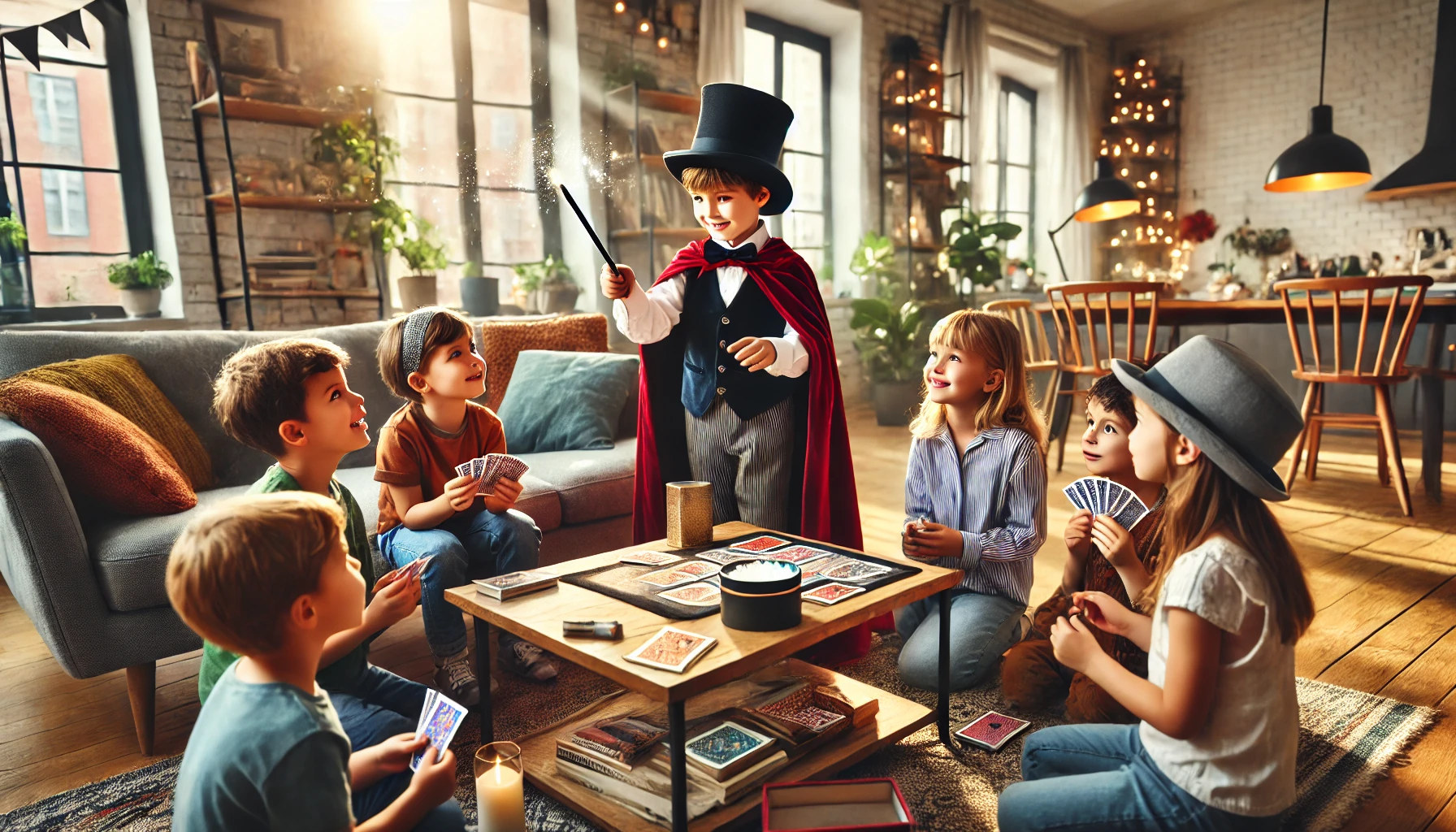
These traits help in magic shows and in life. We teach them alongside magic lessons. Our goal is to make well-rounded kids with great life skills.
A true magician respects everyone, the magic craft, and the art. They're kind and thoughtful in all they do.
Being excited about magic draws others in. It teaches children to tackle challenges with joy.
Magicians stay humble to keep learning. It helps kids grow and improve in all they do.
Real connections need real people. Being themselves helps children feel confident and aware.
Magicians give joy and wonder to others. It teaches kids the joy of giving back.
Good shows need preparation. We stress practice and detail, preparing kids for life's challenges.
Magic loves new ideas. We encourage kids to be creative and solve problems in different ways.
Self-belief is vital for performers. With our support, kids learn to be confident, doing well in magic and life.
Magic's not just fun; it helps personal growth and character. Focusing on these traits helps kids be their best.
The Ultimate Magic Academy is special. It mixes fun magic with key life skills. Kids learn awesome magic tricks and important traits for life.
Every lesson at the academy brings a secret file with extra tricks and magic's history. This makes learning more fun. Kids also get a key card for magic online, where they unlock new tricks with a special code.
At the academy, classes are fun with games and videos. This keeps kids excited to learn. The environment is positive and supportive.
Graduates get a special surprise. This memory of their success motivates them to keep trying hard. It's their reward for doing well.
"The Ultimate Magic Academy has been an incredible experience for my son. Not only has he learned amazing magic tricks, but he has also gained confidence, improved his communication skills, and developed a genuine passion for learning. The program's emphasis on life skills has been invaluable, and I highly recommend it to any parent looking to support their child's growth and development." - Sarah Thompson, parent of a Ultimate Magic Academy graduate
Joining the Ultimate Magic Academy is great for kids. It's a chance to learn magic and life skills. Kids have fun while they learn and grow.
Parents love the Ultimate Magic Academy. They say it's great for their kids. The magic classes really change kids' lives.
Kids return home happy from the magic classes. The classes are fun and make students excited to attend. Even online, kids love learning magic tricks at the Academy.
"My son looks forward to his magic classes every week. He's always eager to show us the new tricks he's learned and how he can apply the lessons to his daily life. It's been incredible to watch his confidence grow."
- Sarah, parent of a 10-year-old student
The classes boost kids' confidence. Many shy kids become more outgoing. Magic helps kids express themselves and make friends.
"The Ultimate Magic Academy has been a game-changer for my daughter. She's always been shy, but since starting the magic classes, she's become more outgoing and willing to take on new challenges. It's been a joy to see her blossom."
- Michael, parent of a 12-year-old student
But it's not just about magic tricks. The Academy teaches kids important life skills. These skills help students do better in many parts of their lives.
Students and parents both love the Ultimate Magic Academy. It has a big impact and makes learning magical. The Academy is truly special to everyone.
Parents and children often have questions about Ultimate Magic Academy. We're here to answer those key concerns. This guidance can help you decide whether to sign up your child for our magic school.
Yes, our academy is great for kids just starting in magic. Our teachers have made lessons easy for young ones. This includes tricks that are simple and fun to learn.
Every child begins at the beginner level. They learn the basics of magic in a friendly setting.
Our academy teaches tricks that really surprise adults. Instructors pick tricks that are good for the child’s age. They help kids learn important skills, like how to perform in front of people.
Some tricks are for fun and confidence, while others are mind-bending. These tricks impress adults and kids alike.
Yes, it is! We welcome everyone, boys and girls alike. Magic is for all, and we're excited by girls' growing interest in it.
Our aim is to boost creativity and confidence, and teach skills kids need. This makes our academy a great choice for any child.
Magic can be good for any child, even if they don't dream of being a magician. They have fun and learn skills like talking in public and problem-solving. Our classes mix learning with games, making them enjoyable for everyone.
| Instructor | Notable Achievements |
|---|---|
| Rich Cowley | Academy member since 1991 |
| Alfonso | Magic Castle member since 1983, performed nearly 2,500 times |
| Cydney Kaplan | Finalist for IBM Close Up Magician of the Year 2021 |
| Adam Wylie | Over 2 million social media followers |
| Simone Turkington | Performed in Australia, New Zealand, and the UK |
| David Gabbay | 2011 First Place Close Up Magician at Texas Association of Magicians convention |
We have a team of the best magicians as our teachers. They ensure your child gets the finest magic education. This learning will help them in many ways for their future.
Discover Magic isn't just about learning magic tricks. It's a fun and interactive way to learn important life skills. Children get to learn amazing magic while building skills that will help them always.
The course teaches children the 8 Traits of a True Magician. These include being Respectful, Prepared, Enthusiastic, and more. Each lesson ties a magic trick to one of these traits. This helps children build a great character.
Magic also helps kids get better at talking to others and working in groups. They get to show off their tricks and talk about them. This works on making them more confident and better at making friends.
"Magic is a great way to help children develop social skills and confidence. By performing for others, they learn to communicate effectively and build self-esteem in a fun and engaging way."
- Michael Smith, Child Development Expert
Discover Magic is special because it teaches magic in a unique way. Children learn tricks they can't find anywhere else. This keeps the magic exciting and kids learn something very special.
- Discover Magic is a life skills course that teaches magic, rather than a magic class with life skills sprinkled in
- The program features the 8 traits of a true magician, with tricks and videos that reinforce these traits
- The interactive nature of magic helps children develop social skills through performing for others
- Discover Magic creates a safe and nurturing environment for children to build confidence through performance
- The specific tricks taught in the program are unlikely to be found elsewhere, with many being unique to the curriculum
Discover Magic blends magic with skills like confidence and character. Kids not only learn to astound with magic but also to succeed in life. It's a unique way for them to grow and have fun.
At Wonder Academy, kids start an exciting journey. It's not just magic tricks they learn. They also pick up life skills. By exploring the magic world, they learn lessons for success.
The academy is full of curiosity and confidence. There, creativity has no limits. Eight traits of a true magician are key. These include respectfulness and enthusiasm. Wonder Academy teaches skills that are good for magic and life.
Kids become amazing magicians at Wonder Academy. But, they also learn to face life's hurdles. They figure out magic tricks and their own strong points. This prepares them for a future of wonder and success.
Yes, it's perfect for beginners. Tricks are easy and fit small hands well. You don't need any magic experience. It's great even for kids not into magic. They learn cool tricks and skills for life.
Some tricks can really fool adults. They are fun for kids to show off. Others are really amazing and surprise even grown-ups.
Totally! Boys and girls both love it. More girls are into magic now. The program is fun and helpful for all kids.
Magic helps kids with important social skills. This is key in today's world. It makes them better at talking and working with others. They also get more confident and learn cool stuff in a happy place.
It's top-notch and made just for kids by top magicians. It's not like any other program. Kids learn magic and important life skills. Each lesson teaches about being a great magician and person.
Parents love the Ultimate Magic Academy. Their kids come home excited and confident. They see a big change in their children. The classes are fun and come highly recommended.
Discover Magic teaches more than magic, it's about life skills. Kids learn about being a great magician and a good person. It helps them make friends, get confident, and learn lessons for life.
Wonder Academy is all about fun and learning. Kids learn amazing magic and life skills. They become curious, confident, and creative. It's a great place to learn and dream big.
Imagine a world where the only limit is your imagination. That's the realm you enter when you combine the creativity of Lego with the adventurous spirit of Minecraft. It's a place where you can build, explore, and create anything you can think of, one brick at a time.
When you hold a Lego brick in your hand, you're not just holding a piece of plastic. You're holding potential. And when that potential meets the imaginative world of Minecraft, magic happens. Lego Minecraft is not just about replicating the game's iconic structures; it's about making them your own, adding a personal touch that no one else has thought of.
Most importantly, Lego Minecraft sets serve as a canvas for your wildest ideas. They encourage you to think outside the box - or, in this case, outside the block. As you snap bricks together, you're developing critical thinking and fine motor skills without even realizing it.
There's something deeply satisfying about seeing your virtual creations take shape in the real world. Lego Minecraft bridges the gap between digital and physical play, allowing you to recreate your favorite moments from the game or invent entirely new scenarios.
Because of this blend, every Lego Minecraft set is an opportunity to relive the thrill of discovery and the joy of creation. And the best part? You can share this excitement with friends and family, turning a solitary hobby into a communal experience.
Before diving into building, it's important to set yourself up for success. This means choosing the right set and preparing your building space. Let's walk through these first steps together.
For those just starting out, the sheer variety of Lego Minecraft sets can be overwhelming. Here's what to consider:
Therefore, a great starter set could be something like 'The First Night'. It's simple enough for beginners, offers a classic Minecraft experience, and can be connected with other sets to grow your Lego Minecraft world.
A cluttered workspace can make building frustrating. To avoid this, take a moment to organize. Here's how:
Besides that, consider investing in a good quality brick separator. It'll save your fingernails and help dismantle pieces that are tough to separate by hand.
Now, with your set chosen and your space prepped, you're ready to embark on your Lego Minecraft building adventure. In the next sections, we'll cover building your first structure and advancing to more complex creations.
When you're ready to start building, it's important to understand the basic elements of Minecraft, which are the blocks. Each block in the game has a real-world counterpart in your Lego set. You've got your grass blocks, dirt blocks, stone blocks, and so many more. Recognizing these will help you bring your virtual designs to life.
For example:
In Minecraft, a simple wooden house might consist of oak planks and glass panes. In your Lego set, you'll find corresponding brown flat tiles for the planks and transparent pieces for the windows. It's all about matching the textures and colors.
As you get more comfortable with the blocks, you'll start to see how they can be combined in different ways to create anything from a humble cottage to a grand castle. Remember, each block is a building opportunity!
Building your first Lego Minecraft structure is incredibly rewarding. Here are some tips to get you started:
And remember, if you make a mistake, it's okay! That's what the brick separator is for. Pull apart, rebuild, and learn as you go.
Once you've mastered the basics, you might want to tackle more advanced structures. This is where your creativity really gets to shine. Think about the incredible builds you've seen in Minecraft and start planning how you can recreate those in your Lego world.
Advanced structures often require a bit more planning and a lot more bricks. Here's a step-by-step approach:
As you become more experienced, you'll learn to adapt the instructions to suit your own designs, creating something truly unique.
Redstone is Minecraft's version of electrical wiring, and you can simulate its functionality with your Lego sets too. While you can't create actual circuits, you can use special pieces to mimic the effects of Redstone, like using levers and trapdoors to simulate mechanisms.
Here's an idea:
Build a secret door that opens when a certain brick (your 'Redstone torch') is placed next to it. Use hinges and sliding pieces to create the illusion of Redstone activation.
This adds an interactive element to your builds, making them not just static displays but dynamic parts of your Lego Minecraft world.
Now that you've got the hang of building, why not add your personal touch to your Lego Minecraft world? This is where you can really let your imagination run wild.
Your Lego Minecraft sets come with a variety of minifigures and creatures, but there's no rule saying you have to keep them as they are. Swap out parts to create your own custom characters or mix and match to invent new Minecraft mobs.
For instance:
Combine the legs of a skeleton with the body of a zombie for a spooky new adversary, or swap out a minifigure's hairpiece to give your favorite character a fresh new look.
This is your world, and these are your characters. Make them as unique as you are!
Minecraft is known for its diverse biomes, and you can recreate these in Lego form too. From the sandy deserts to the snowy tundras, each biome can be represented using different colors and textures of Lego bricks.
Consider these tips:
By adding these unique landscapes to your build, you create a world that's rich in detail and bursting with color.
One of the best parts of Lego Minecraft is sharing the experience with friends. Collaborative builds can be an exciting way to combine different ideas and create something extraordinary.
Organizing a group build starts with a plan. Decide on what you're building, distribute the tasks, and make sure everyone has their bricks sorted. It's like a real-life version of a Minecraft server where everyone has a role to play.
Here are some steps to ensure a successful group build:
And most importantly, have fun! Building with friends should be a joyous and memorable experience.
Ready for a friendly competition? Host a build-off! This is a fantastic way to challenge your creativity and see what you and your friends can come up with under a bit of friendly pressure. Here's how to ensure a fun and fair competition:
And remember, the goal is to have fun and push the boundaries of your Lego Minecraft skills. May the best builder win!
Now, let's tackle some common questions you might have as you delve into the world of Lego Minecraft creations.
"The First Night" set is perfect for beginners. It includes a Steve minifigure, a creeper, and a buildable shelter with a bed, crafting table, and a furnace. It's simple enough for a smooth introduction yet offers plenty of room for creative expansion.
To enhance the realism of your Lego Minecraft creations, focus on details. Use a variety of textures and colors to mimic the in-game environment. Add elements like trees, water features, and animals to bring your scenes to life. And don't forget to play with lighting – use transparent bricks to simulate light sources like torches or glowstone.
Integrating Lego Technic with Minecraft sets can open up new possibilities for creating moving parts and bringing your creations to life.
Absolutely! Integrating Lego Technic elements can add motion to your builds, such as a working minecart track or a piston door. Just make sure the scale and style of the Technic parts fit with your Minecraft theme for a seamless look.
Organization is key for efficient building. Use tackle boxes or drawer organizers to sort pieces by type, size, or color. A pair of tweezers can be handy for placing small parts, and a good lamp will help you see your work clearly.
Yes, Lego often hosts build competitions, including those specifically for Minecraft. Keep an eye on the official Lego website and social media channels for announcements about upcoming contests.
For fans of both building blocks and epic adventures, combining LEGO with Minecraft was a stroke of genius. Not only does it allow for the recreation of the iconic pixelated world in a more tactile form, but it also encourages imaginative play beyond the screen. Children and adults alike can enjoy crafting their own structures or replicating the game's diverse environments. To get inspired, check out some of the best LEGO Minecraft creations that have been assembled by fans around the world.
Ready to learn outside the box? Homeschool field trips mix learning with fun. They make learning memories that last a lifetime. With more than 30 different ideas, you can turn the world into your classroom.
Picture your kids' faces lighting up at a science museum. Or imagine their questions during a hike. These hands-on trips make learning exciting. They can spark a love for exploring the world. Whether it's trips outside or fun but educational ones, homeschool field trips make learning fun.
Today, field trips go beyond just visiting places. You can learn at pumpkin patches or see inside Amazon. These trips are more than breaks; they help kids grow and remember. From playing at the park for free or visiting famous spots at a discount, there's something for everyone.
Field trips are key in homeschooling. They offer learning that goes beyond books. For homeschool moms, these trips are a great way to add to their kids' education. Plus, they make memories together.

Field trips make what's in books real. This way, kids see how what they learn applies to life. Hands-on learning helps kids remember things better.
Places like museums or nature centers make learning fun. Homeschoolers then love what they're studying more.
Kids learn a lot on field trips, like how to talk to people. They interact with tour guides and other kids. This helps with making new friends and talking to new people.
They also learn to be independent and how to adjust to new places.
"Field trips have been a game-changer for my shy daughter. She's now more outgoing and curious about the world around her."
Field trips help homeschoolers bond. Whether they visit an apple orchard or a science center, they make memories. These memories last and make a fun break from the usual lessons.
Parents and kids alike feel refreshed by these outings.
A good idea is to plan one trip each month. This way, kids get to learn in different ways. They also get to explore and have fun.
Nature trips mix fun with learning for kids. They help homeschooled kids explore the outdoors. These trips teach them about ecosystems, farming, and the stars.
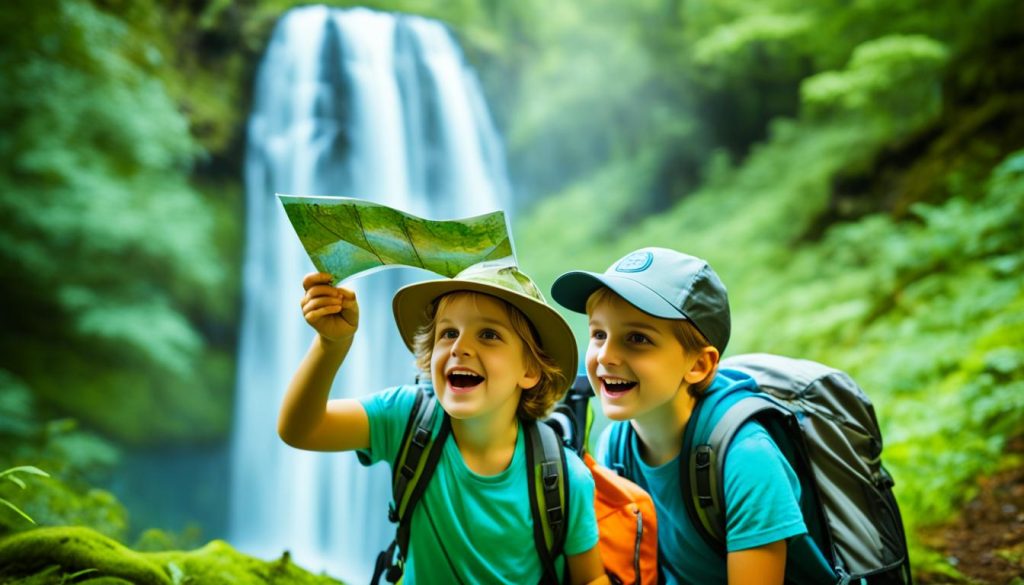
Hiking in parks is fun and educational. Children get to see and learn about plants and animals. Entry is free on some days, which makes it affordable for families who homeschool.
Kids can see how food grows by visiting farms and orchards. They get to pick fruits, feed animals, and learn how to farm in a good way.
"Our farm visit was the highlight of our homeschool year. The kids learned so much about where their food comes from!"
Botanical gardens and observatories mix fun with science. They are great for field trips. Kids can learn and explore the outdoors at these places.
| Venue | Learning Opportunities | Fun Activities |
|---|---|---|
| Botanical Gardens | Plant species, ecosystems | Scavenger hunts, gardening workshops |
| Observatories | Astronomy, space science | Stargazing, planetarium shows |
Planning these trips is great for homeschoolers. It adds a lot of fun and learning to their year. Kids also learn to love and respect nature.
Looking into history and culture can be exciting for kids. It makes the past come to life. These trips give hands-on learning that books can't.

The U.S. has many historical spots for fun and learning. Here are some great places to visit:
At these places, history feels alive. Kids can imagine the past, see old towns, and learn important American stories.
"Field trips are more than fun. They help students remember better by using all their senses. This makes the learning experience very strong."
Cultural outgoings are also important. Here are some to think about:
Homeschoolers often go on field trips every week. This is a lot more than the usual two per year for public schools. It lets kids dive deeper into history and cultures.
| Benefits of Historical Field Trips | Examples |
|---|---|
| Real-life learning | Touring Independence Hall |
| Improved retention | Doing things at Colonial Williamsburg |
| Family bonding | Sharing times at Mount Vernon |
| Physical activity | Walking the Boston Freedom Trail |
| Career exploration | Meeting historians at museums |
These trips aren't just for fun. They add big to kids' learning. They make the world's history and culture much more real to them.
Science and tech field trips offer great ideas for homeschooling. They are full of fun and give kids hands-on experiences. These help young minds learn in exciting ways.
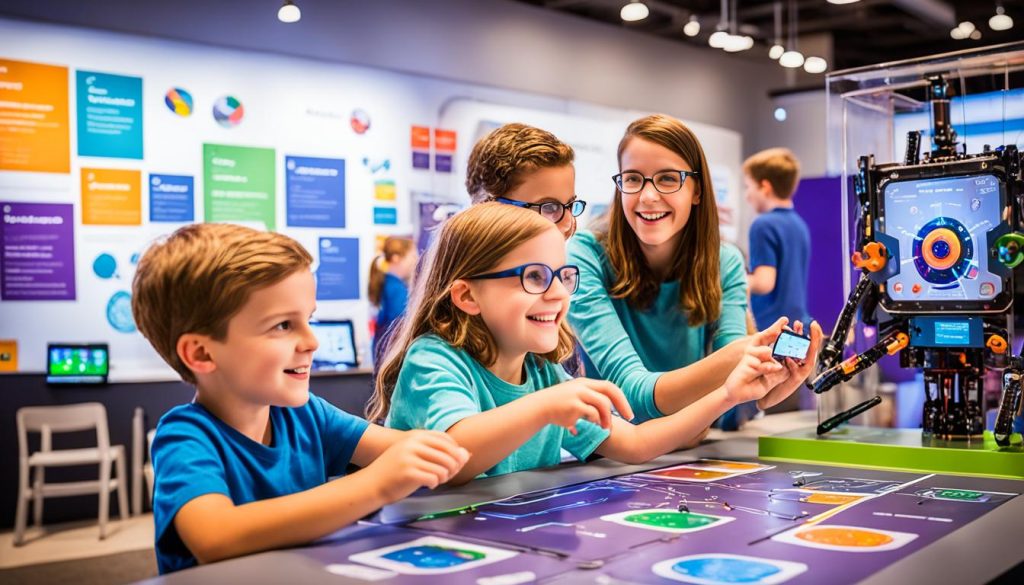
Science museums and planetariums are full of knowledge. They have exhibits that make hard things easy to understand. The Museum of Science and Industry in Chicago does this well.
Here are some tips for your visit:
Visiting tech centers and factories shows how things are made. A family loved watching a Kia car get built. These trips get kids interested in making things and how they work.
Aquariums and zoos teach about animals and the earth. The Shedd Aquarium in Chicago lets kids see marine life up close. This makes them care more about saving animals and their habitats.
"Eating popcorn for lunch at the Museum of Science & Discovery was a highlight of our homeschool field trips!"
Here's a comparison of popular science trip destinations to help plan your next outing:
| Destination | Focus Area | Age Range | Cost per Child |
|---|---|---|---|
| Atlas Science Center | Chemistry, Physics, Biology | K-12 | $7 |
| Museum of Science & Industry | Various Scientific Fields | All Ages | $21.95 |
| Adler Planetarium | Astronomy | All Ages | $19 |
| Shedd Aquarium | Marine Biology | All Ages | $39.95 |
Don't forget to look for group discounts and use Groupon for great deals. With good planning, these trips can be amazing learning moments for your family.
Homeschool moms find joy in taking kids on art and creativity field trips. It's a great way to have fun and learn. These trips show kids different ways to be creative.
One exciting place to visit is The Art Institute of Chicago. It has a lot of cool art that can get kids' imaginations going. Let's check out some cool exhibits:
| Exhibit | Details |
|---|---|
| Grandma Moses Collection | Diverse paintings showcasing her unique style |
| Horace Pippin Showcase | Notable paintings offering valuable learning experiences |
| French Impressionist Gallery | Permanent exhibit featuring Monet, Renoir, Pisarro, and Matisse |
| Electrifying Design: A Century of Lighting | Extensive selection appealing to technology enthusiasts |
| Calder-Picasso Exhibit | Over 100 artworks by two renowned artists |
Local art fests are also great for exploring creativity. They let kids try fun, hands-on crafts. Moms can organize visits to places like pottery studios. There, kids can make their art pieces.
Here are some tips for a great trip:
Art-focused trips help kids think creatively and appreciate art more. Moms can teach their children to enjoy different types of art this way.
Looking for homeschool field trip ideas? Focus on community service and volunteering. They offer more than just fun. Kids learn about helping others and feeling for them. Moms can use these trips to teach their kids to care about their community.
Joining in on clean-up projects is neat for homeschool families. It's a chance to keep your area nice and learn. Here are things you can do:
Going to nursing homes and hospitals can really touch kids. They get to meet older people and others who need cheering. You can do fun stuff together like:
Animal shelters are perfect for homeschoolers wanting to help pets. Your family can do things like:
| Volunteer Opportunity | Skills Developed | Age Suitability |
|---|---|---|
| Local Clean-Up Projects | Environmental awareness, teamwork | All ages |
| Nursing Home Visits | Empathy, communication | 5 and up |
| Animal Shelter Work | Responsibility, compassion | 8 and up |
These trips are cool because they help your child be smarter and kinder. And they make your child want to keep helping others. Moms really like using these to talk about big issues and urge their kids to stay involved.
Homeschool field trip ideas are different in every season. They bring kids outdoor fun all year. Each season, nature changes, offering new learning chances.
Homeschool families can make the most of seasons for learning. Studies show in a year, they take about 24 field trips. Six of these happen online. So, both in-person and digital trips are key.
| Season | Popular Field Trip | Educational Focus |
|---|---|---|
| Fall | Pumpkin Patch | Agriculture, Harvest |
| Winter | Science Museum | STEM Learning |
| Spring | Botanical Garden | Plant Life, Ecosystems |
| Summer | State Park | Nature, Conservation |
Planning trips for each season helps homeschooling kids learn in many ways. They mix classroom with hands-on learning. These outings help kids fully understand their world. They also grow to love learning for life.
Homeschool field trips often go to local places. Kids can learn a lot about jobs and how our community works. These trips mix fun and learning well.
Visiting fire stations and police is cool. Here, children see what first responders do up close. They learn about safety and see cool equipment. The tours often let kids try on firefighter gear and sit in a police car.
They also learn how to act in emergencies. Understanding community service is a big part of the fun.
Post offices and courthouses are great for learning about the law and government. On these trips, kids can see how mail gets sorted. They learn about courts and the need for good communication.
Going to city halls and other government places is interesting. Students learn about how cities work. They can attend city meetings and tour the mayor's office.
Learning local laws and rules is also part of the fun.
Trips to these places give kids real-world learning. They really help children understand how our communities work. And they might even spark interest in future careers.
| Location | Learning Opportunities | Fun Activities |
|---|---|---|
| Fire Station | Fire safety, emergency response | Sliding down fire poles, exploring fire trucks |
| Police Department | Law enforcement, community safety | Fingerprinting, K-9 unit demonstrations |
| Post Office | Mail system, communication | Stamping letters, following a package's journey |
| Courthouse | Legal system, civic duties | Mock trials, meeting judges |
| City Hall | Local government, community planning | Mayoral Q&A sessions, city planning activities |
Many of these places offer free tours, which is great for homeschoolers. These field trips are not just fun; they teach your kids a lot. They help make learning real and interesting.
Keeping learning fun is key for homeschool moms. They mix education with fun on field trips. Fun lessons add a break to the study routine. About 10% of these trips are just for fun.
Kids love outdoor adventures. Fall is perfect for visiting pumpkin patches and apple orchards. They learn about farming and nature. Zoos and aquariums also offer lots of educational fun.
Children's museums and discovery centers are big in the U.S. These places let kids learn by doing. Some places have special deals for families. Planning smart means more fun for less money.
Field trips offer real-world learning and fun experiences. They make the curriculum richer. They can also be scheduled every month.
Field trips let children learn by doing. They explore beyond books. These trips help with making friends and growing confidence.
They also lead to memories that last a lifetime. Kids get to see how experts do things in different fields.
Nature trips include hikes in parks and visits to farms. Kids can also go to botanical gardens and look at stars in observatories. These trips make learning about our planet fun.
Historical trips can be to museums or sites. Places like the Abraham Lincoln Presidential Library or Chinatown in Chicago are great.
So are visits to historic spots like Route 66. These places let kids see the past up close.
Science and tech trips are to museums and more. Kids can visit planetariums and see how things are made in factories. Places like the Museum of Science and Industry offer a lot to discover.
Art trips are to museums and live shows. Kids get to see all types of art. The Art Institute of Chicago is a top spot for this.
There are also local art fests where they can join in. Pottery or glass studios are good places to get creative.
Service trips are about helping others. Kids clean up local areas or cheer folks up in nursing homes. Volunteering at shelters is also a way to give back.
There's a trip for every season. Fall means pumpkin patches. Winter's for ice skating. In spring, kids visit gardens. Summer's for fun outdoor festivals.
Trips to local places show how communities work. Kids see fire stations and meet police. They learn about mail at post offices and government in courthouses.
Recreational trips include fun places and events. Like seeing sports or a show. Examples are the Chicago Bulls, Navy Pier, and the Symphony Orchestra.
There's something magical about watching kids work together, their faces lit up with excitement, solving problems, and cheering each other on. That's the power of team building activities, a playground where future leaders are molded. As someone who's seen firsthand the transformation that teamwork can bring, I'm here to guide you through crafting experiences that will not only entertain your kids but also equip them with skills for life.
Team building is more than just fun and games; it's about laying the foundation for young individuals to become effective communicators, empathetic friends, and innovative thinkers. By engaging in team building activities, kids learn to navigate the complexities of collaboration, which is crucial in today's interconnected world. It's about planting seeds of leadership in fertile young minds.
Most importantly, these activities teach children that the collective effort of a team is often greater than the sum of its parts. They understand the significance of each member's contribution and learn the value of diverse perspectives. This understanding is critical because it shapes how they will interact with others throughout their lives.
When kids participate in team building exercises, they're not just having a good time; they're developing core attributes that will serve them well into adulthood:
These skills are the bricks and mortar of strong character and leadership. And the best part? Kids are learning all this while immersed in the joy of play.
Let's step outside where the sun shines bright and the grass is a canvas for adventure. Outdoor team building activities are a fantastic way to energize kids and introduce them to the thrills of working together in a dynamic environment.
Picture this: a group of kids, a map dotted with mysterious symbols, and a hidden treasure waiting to be discovered. Treasure hunts are an exhilarating way to develop problem-solving skills and teamwork. Here's how you can set up an unforgettable treasure hunt:
The thrill of the chase combined with the joy of discovery makes treasure hunts a team building favorite. They teach kids that by pooling their intellectual resources, they can achieve great things—like finding that hidden chest of goodies.
Sports days are not just about physical prowess; they're also about fostering a spirit of teamwork. Organize a day filled with relay races, tug-of-war, and team-based obstacle courses. The key is to design activities that require teams to work together to win. For instance, in a relay race, the speed of the fastest runner is irrelevant if the baton isn't passed correctly.
Through these fun competitions, children learn that cooperation is just as important as individual skill. They understand that winning isn't just about crossing the finish line first, but about crossing it together.
When the weather doesn't cooperate or you just need a change of scenery, indoor team building activities are your go-to. These activities are perfect for challenging young minds and encouraging a blend of creativity and strategic thinking within the comfort of four walls.
Imagine a scenario where kids are locked in a room, surrounded by puzzles and hidden clues that they must use to find their way out. Escape room challenges are thrilling adventures that require a team to communicate effectively, think critically, and work together to solve the mystery. To create your own escape room experience, you can:
These challenges push kids to pool their mental resources and work under pressure, teaching them the importance of staying calm and collected in the face of obstacles.
Bridge building is not only a test of physics and engineering but also a metaphor for connecting ideas and people. Provide teams with materials like straws, tape, and paper, and challenge them to build a bridge that can support a certain weight. This activity encourages kids to discuss, plan, and execute a shared vision, which is at the heart of effective teamwork.
Brain teasers are a brilliant way to get kids to engage with each other and think outside the box. They can be puzzles, riddles, or logic problems that require a collective effort to solve.
Divide the group into small teams and give each a puzzle to assemble. The catch? Each team has pieces belonging to the other teams' puzzles. They'll need to negotiate and trade pieces, not only testing their problem-solving skills but also their ability to work with others under time constraints.
Riddles are great for stretching the imagination and fostering a collaborative environment. Pose a series of riddles to the group and have them work in teams to decipher the answers. Encourage discussion and sharing of ideas, as this will demonstrate that different perspectives can contribute to finding the solution.
Team building activities also play a critical role in developing social skills. When kids learn to interact positively with their peers, they're not just building teams; they're building friendships.
Role-playing scenarios are a dynamic way to help kids understand different perspectives and practice empathy. Set up situations where they have to assume different roles within a story or problem. This not only helps them understand different viewpoints but also teaches them the nuances of interpersonal communication and conflict resolution.
For example, you could create a scenario where one team member is a superhero, another the mayor of a city, and a third the head of an environmental group. They must work together to solve a crisis that affects them all, requiring negotiation and compromise.
A compliment circle is a simple yet powerful way to foster a positive team environment. Have the kids sit in a circle, and one by one, each child gives a compliment to the person on their right. This exercise not only promotes positivity but also encourages kids to look for the good in others—a skill that's invaluable in team settings.
Now that we've explored a variety of team building activities, let's talk about how to plan and implement them successfully. The key is to be thoughtful about the activities you choose and how they align with the age, interests, and abilities of the kids involved.
Selecting age-appropriate activities is crucial. Younger children might enjoy simple games and puzzles, while older kids can handle more complex challenges like escape rooms or strategic games. Consider the group size as well; some activities work better with smaller groups, while others can accommodate larger numbers.
Most importantly, always aim for inclusivity. Make sure that every child feels valued and has an opportunity to contribute. Team building is about bringing people together, not leaving anyone out.
Remember, the goal is not just to have fun, but to create a learning experience that will stick with kids long after the activity is over. With careful planning and a spirit of adventure, you can create team building sessions that are both enjoyable and transformative.
Before you dive into the team building fun, let's talk numbers. The ideal group size can vary depending on the activity, but generally, smaller teams of about 4 to 6 members work best. This size is small enough to ensure everyone has a role and a voice, yet large enough to offer a variety of skills and perspectives. However, don't be afraid to adjust according to the dynamics and the specific exercise at hand. The key is to keep everyone engaged and included.
Got questions? You're not alone. Here are some of the most common queries about team building activities for kids, answered to help you plan and execute with confidence.
From understanding group sizes to handling conflicts, and incorporating educational elements to scheduling sessions, these FAQs cover the essentials of team building for young minds. And for those introverted children, there's plenty of insight on how to make team building a comfortable, enjoyable experience for them too.
These nuggets of wisdom are based on experience and are designed to help you create a positive and productive environment for all kids involved in the team building activities.
As I mentioned earlier, smaller groups tend to work better for team building activities. Aim for groups of 4 to 6 kids to ensure everyone can participate fully. If you're working with a larger crowd, consider breaking them into multiple smaller teams to keep the activities manageable and enjoyable for everyone.
Conflicts are a natural part of teamwork, but they're also teachable moments. When disagreements arise, encourage open communication and guide the kids to find a compromise. Emphasize respect for each other's ideas and feelings, and turn the conflict into a learning opportunity about negotiation and empathy.
Remember, the goal is not to avoid conflict, but to handle it in a way that strengthens the team. By fostering a supportive atmosphere where kids feel heard and valued, you can transform potential friction into a chance for growth.
Absolutely! Team building activities can be a fun way to reinforce academic concepts or introduce new ones. For instance, a treasure hunt can include math problems as clues, or a bridge-building challenge can incorporate lessons in physics. The trick is to weave learning objectives into the fabric of the game, so kids are absorbing knowledge as they play.
Therefore, don't hesitate to get creative with how you integrate educational elements into team building exercises. The combination of play and learning can yield powerful results.
Consistency is key when it comes to team building. Regular sessions, whether weekly or monthly, help reinforce the skills and relationships developed during the activities. However, balance is important; too many sessions can lead to burnout, while too few can cause the momentum to fizzle. Find a rhythm that keeps the kids excited and engaged without overwhelming them.
And remember, the quality of the sessions is more important than the quantity. It's better to have a few well-planned, impactful activities than a packed schedule of lackluster ones.
Team building isn't just for the outgoing and extroverted. There are plenty of activities that can help introverted children shine. Look for exercises that allow for individual reflection or roles that don't require speaking in front of large groups. Activities like writing a team story, where each child contributes a part, or working on a collaborative art project can be great options.
It's also helpful to give introverted kids a heads-up about what to expect during the activities. This preparation can reduce anxiety and make them feel more comfortable participating.
Most importantly, celebrate their contributions, no matter how small. Recognition can go a long way in building an introvert's confidence in a team setting.
Team building activities for kids are more than just fun and games—they're a crucial part of developing well-rounded, cooperative, and confident individuals. By carefully selecting activities, managing group dynamics, and ensuring inclusivity, you can create an environment where every child has the opportunity to grow and shine.
