
I spent 147 hours researching educational platforms so you don't have to.
After testing dozens of educational apps for kids, comparing hundreds of reviews, and watching my own kids struggle with "award-winning" programs that put them to sleep, I finally cracked the code. The truth? 69% of the best educational resources are completely free, but most parents are spending $200+ monthly on the wrong tools.
If you're feeling overwhelmed by the 300,000+ educational apps out there, you're not alone. Last week, a mom in my Facebook group posted: "I've downloaded 23 learning apps and my daughter still hates math. What am I doing wrong?"
Nothing. She just didn't have a roadmap.
This post contains affiliate links. If you click these links and make a purchase, I may earn a commission at no extra cost to you.
Before we dive into specific resources, let me share something that will save you hours of research and hundreds of dollars in wasted subscriptions.
We've created a free Educational Resource Scorecard tool that takes the guesswork out of choosing learning platforms. Think of it as your personal education consultant, minus the $500 price tag.
Find the perfect learning tool without the endless research! Our scorecard matches resources to your child's specific needs and your family's reality.
What You Get:
Perfect For: Parents feeling overwhelmed by options and wanting a data-driven way to choose the right learning resources.
➡️ [Try Our Free Resource Scorecard - Get Personalized Recommendations in 5 Minutes]
One parent told us: "I went from 3 hours of comparing spreadsheets to 10 minutes of clarity. The scorecard showed me exactly why ABCmouse wasn't working for my visual learner and what would work instead."
The best part? It remembers your preferences, so when new resources launch, you'll know immediately if they're worth your time.

This post contains affiliate links. If you click these links and make a purchase, I may earn a commission at no extra cost to you.
Let's start with the heavy hitters - complete curriculum programs that can replace or supplement traditional schooling.
Cost: Starting at $46/month (with 6-month plans)
Best For: Families wanting flexibility without sacrificing structure
GSN isn't just another online school. It's seven different curriculums in one platform, which means when your child hits a wall with one teaching style, you can switch without starting over. They offer over 2,000 courses from kindergarten through high school.
Why Parents Love It:
Parent Pro Tip: "We use Apex for math because of the virtual labs, but switched to Accelerate for English since my daughter prefers their storytelling approach. Can't do that with most programs!" - Tanya B., homeschooling mom
Your Next Step: If you need a complete curriculum, start GSN's free trial and use our Scorecard to compare it with your other options.
Cost: $9.95/month (one subject) or $19.95/month (all core subjects)
Best For: Filling learning gaps and providing extra practice
With over 17 million students using IXL worldwide, there's a reason it's everywhere. The platform adapts to your child's exact level - not just "3rd grade math" but "understanding equivalent fractions with denominators of 10."
The Game-Changer Features:
Time-Saver Alert: IXL's diagnostic test can identify a full year of knowledge gaps in 45 minutes. That's faster than a parent-teacher conference and way more useful.

Cost: 14-day FREE trial; $25-29/month per child; Annual and Family plans
Best For: Hands-On Learners Who Need to SEE Results
Here's something amazing: CodaKid teaches kids ages 8-15 to code using actual programming languages - Python, JavaScript, Java - not those simplified baby blocks that don't translate to real skills.
And here's why that matters for critical thinking: when your child builds a Minecraft mod or creates their own game, they're not just following instructions. They're learning to break down complex problems into bite-sized pieces, think through logical sequences, spot patterns, and - this is huge - develop what I call the "debugging mindset."
That's when they hit an error, analyze what went wrong, test their hypothesis, adjust, and try again. That iterative problem-solving? That's the exact critical thinking skill they'll use for everything from algebra to adult decision-making.
I love recommending CodaKid to overwhelmed parents because it solves that nagging worry: "How do I prepare my child for an AI-driven future when I barely understand technology myself?"
The platform is completely self-paced with live mentor support (yes, real humans!), so your child learns independently while you're working or making dinner. No hovering required! And honestly? Watching a child go from "I can't do this" to confidently debugging their own code and explaining their logic is one of the most beautiful confidence transformations you'll see.
Cost: Free basic version, $8.95/month for premium
Best For: Kids who think math is boring
Imagine if solving math problems let you battle dragons and explore magical worlds. That's Prodigy. Over 100 million students use it because it works.
The Reality Check: Kids spend 40% more time practicing math with Prodigy than traditional worksheets. My nephew went from "I hate fractions" to asking for extra math time. True story.
Cost: $7.99/month
Best For: Building reading habits without library fines
Epic! gives you instant access to 40,000+ books. But here's what they don't advertise: the read-to-me feature is a game-changer for struggling readers. They can follow along with highlighted text while building confidence.
Budget Breakthrough: One Epic! subscription replaces about $100 worth of monthly book purchases. Schools using Epic report kids read 2.8x more than with traditional classroom libraries.
Cost: $10-30 per class average (some as low as $5)
Best For: Specialized subjects and social learning
Want your kid to learn Japanese? Ancient mythology? Minecraft architecture? Outschool has 140,000+ live classes with real teachers in small groups of 3-8 students.
Hidden Gem Alert: Try one-time classes for $5-15 before committing to full courses. It's like test-driving education. Many parents use Outschool to supplement homeschooling in subjects they're not confident teaching.
Chemistry experiment subscription boxes with AR technology that bring molecular science to life.
Why Parents Love MEL Science:
Price: Starting at $34.90/month (subscription options available)
Best For: Kids ages 5-16 fascinated by science, visual learners who need to "see" concepts, families wanting screen time that educates, and children who've lost interest in textbook science
➡️ [Start Your MEL Science Subscription]
Cost: $19.95/month average (varies by age)
Best For: Screen-free, creative learning
Each month, a box arrives with everything needed for an age-appropriate STEM project. No Pinterest fails. No missing supplies. Just open and create.
Parent Sanity Saver: "I stopped feeling guilty about screen time when my kids started begging for their KiwiCo box instead of the tablet." - Maria D.
Cost: $12.99/month
Best For: Ages 2-8 who need foundational skills
With 10,000+ activities across reading, math, science, and art, ABCmouse creates a complete learning path that adapts to your child's pace.
[Use Our Resource Matchmaker Quiz to Find Your Perfect STEM Solution]

Before you spend another dollar, try these completely free options that rival paid programs:
Money-Saving Reality Check: These three free resources alone can replace $50+/month in subscriptions for many families.

Here's where most parents get stuck. You've got 20 browser tabs open, three free trials running, and a headache from comparison charts.
Stop. Breathe. Use the Scorecard.
Find the perfect resources by evaluating what truly matters to your family. Our scorecard helps you evaluate any resource based on:
Perfect For: Parents who want to make informed, personalized choices about educational tools without the guesswork.
➡️ [Get Your Personalized Education Roadmap - Free Scorecard Tool]
Remember: The best educational resource is the one your child will actually use. Start with one or two tools, master them, then expand.
Q: How do I know which resource is right for my child?
A: Start with our free Scorecard tool. It asks about your child's specific needs and matches them with resources that fit. No more guessing or reading hundreds of reviews.
Q: What if I can't afford subscription services?
A: Start with free resources like Khan Academy and PBS Kids. They're genuinely excellent. Add one paid resource only after maximizing free options. GSN and IXL offer discounts for multiple children and military families.
Q: How many resources should we use at once?
A: Less is more. Start with one comprehensive platform (like GSN or IXL) plus one engagement tool (like Prodigy or Epic). Adding more usually decreases focus rather than improving results.
Q: Can free resources really be as good as paid ones?
A: Absolutely. Khan Academy's curriculum rivals $200/month programs. The difference? Paid resources often offer better progress tracking, parent controls, and customer support. Decide what matters most to your family.
Q: My child gets bored with everything. Which resource will hold their attention?
A: Try Prodigy Math for gamification, Outschool for live interaction, or KiwiCo for hands-on projects. Our Scorecard can identify which type of engagement works best for your child's learning style.
Q: Should I choose different resources for different children?
A: Yes! What works for your visual learner might frustrate your hands-on kid. Use the Scorecard for each child to get personalized recommendations. Many platforms offer sibling discounts.
Q: How do I know if a resource is actually working?
A: Look for: increased time spent learning without prompting, improved confidence, and measurable skill progress. Most good platforms provide parent dashboards. If you don't see improvement in 30 days, try something else.
Q: What about screen time concerns?
A: Balance is key. Mix digital resources (IXL, Prodigy) with hands-on options (KiwiCo) and physical books. Set daily limits and use parental controls. Quality educational screen time is different from passive video watching.
Stop researching. Start doing:
Week 1: Take the Scorecard assessment. Try 2-3 recommended free resources.
Week 2: Start free trials of your top 2 paid recommendations.
Week 3: Commit to the resources that showed the best engagement.
Week 4: Establish a routine and track progress.
The perfect educational toolkit isn't about having every resource - it's about having the right resources for your family. Whether that's GSN's comprehensive curriculum, IXL's targeted practice, or a combination of free tools, you now have a roadmap to find what works.
Ready to simplify your search? [Start with Your Free Personalized Scorecard]
Remember: You're not failing if the first resource doesn't work. You're gathering data. Every "failed" app teaches you something about how your child learns best.
Trust your instincts, use the tools available, and know that finding the right educational resources is a journey, not a destination. You've got this, and now you've got the toolkit to prove it.
Halloween isn't just a single night of trick-or-treating, costume parades, and festive parties—it's a season filled with anticipation and creativity that builds up to the main event. Before the excitement of the night itself, there are numerous fun activities that kids can engage in to prepare for the big celebration.
From carving pumpkins and crafting homemade decorations to designing unique costumes and organizing scavenger hunts, these preparatory activities not only amplify the Halloween spirit but also create cherished memories and traditions leading up to October 31st.
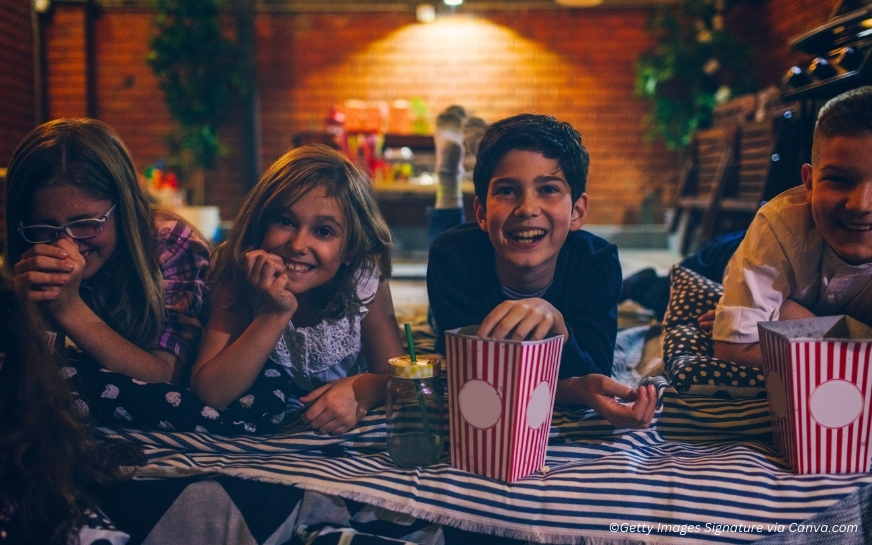
Hosting a Halloween movie night is another fantastic way to build anticipation for the holiday. Selecting family-friendly scary movies ensures that the content is enjoyable without being too intense for younger viewers. Films like "Addams Family", "Hocus Pocus", "Hotel Transylvania", or the classic "Ghost Busters" offer a perfect blend of spookiness and fun.
Enhance the experience by setting up a cozy viewing area with blankets, pillows, and themed snacks like popcorn, caramel apples, or pumpkin-shaped cookies. This activity provides an opportunity for the whole family to relax and enjoy some chills and thrills in a comfortable environment. Sharing the thrills and chills by talking about favorite scenes or characters afterward can extend the fun and make the evening even more memorable.
Gathering to read scary stories is a timeless way to immerse kids in the Halloween spirit. Creating an ambient setting with dimmed lights, flickering candles, or flashlight shadows can make the experience more thrilling.
Choose age-appropriate tales that are spooky yet not too frightening, ensuring the content is suitable for all participants. Classic ghost stories, folklore, or even humorous spooky tales can captivate young imaginations.
Encouraging children to read aloud or even craft their own stories fosters creativity, improves reading skills, and builds confidence. This shared activity not only entertains but also strengthens family bonds as everyone indulges in the eerie excitement together.

Reading scary stories on their own allows kids to engage with the Halloween spirit independently, exploring spooky narratives at their own pace without feeling overwhelmed. Age-appropriate books like R.L. Stine's Goosebumps series provide just the right amount of thrill and excitement.
And a great Minecraft Halloween adventure comic will get even the most reluctant readers begging for more to read. This activity enhances reading skills, stimulates imagination, and fosters a sense of bravery as children navigate suspenseful plots.
Creating a cozy reading nook with comfortable seating and soft lighting can make the experience even more enjoyable, encouraging a love for reading while adding to the festive anticipation of Halloween.
Pumpkin carving is a classic Halloween activity that everyone loves. It's a great way to get creative and make something unique. Plus, the end result can serve as a festive decoration for your home.
First, choose the right pumpkin. Look for one that is firm and has a flat bottom so it won't roll. Next, gather your tools: a pumpkin carving kit, a large spoon, and some newspaper to keep your workspace clean.
And there you have it! A beautifully carved pumpkin to light up your Halloween night.

If you're looking to take your pumpkin carving to the next level, try some of these creative ideas:
These ideas can make your pumpkin the talk of the neighborhood!
While pumpkin carving is fun, it's important to stay safe. Here are some tips to keep in mind:
By following these tips, you can ensure a fun and safe pumpkin carving experience.
Halloween crafts are a fantastic way to keep kids entertained and involved in the holiday spirit. These crafts can also serve as decorations, making your home look festive and spooky.

Here are some simple decoration ideas that are easy to make and can be done with materials you likely already have at home.
Monster handprints and footprint art are perfect for younger children. They can create adorable and spooky keepsakes that you'll cherish for years to come.
To make monster handprints, you'll need some washable paint, paper, and markers. Have your child dip their hand in the paint and press it onto the paper. Once the paint dries, use markers to add eyes, mouths, and other monster features. You can do the same with footprints to create different types of monsters.
These crafts are not only fun but also a great way to spend quality time with your kids.
Black cat and bat cut-outs are simple yet effective decorations that can add a spooky touch to any room. Here's how to make them:
These cut-outs are easy to make and can be a fun activity for kids of all ages.
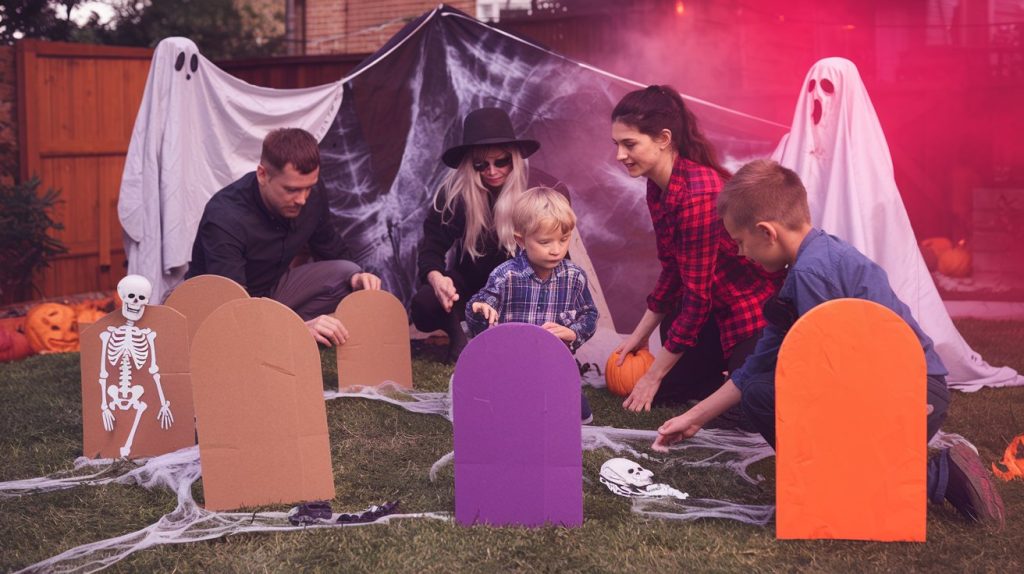
Creating a haunted graveyard in your yard is a surefire way to impress trick-or-treaters and party guests. It's a fun project that can involve the whole family.
Start by making your own tombstones. You can use foam boards or cardboard. Cut them into tombstone shapes and paint them gray. Use black paint to add spooky inscriptions like "RIP" or "Here Lies a Restless Soul."
Besides tombstones, add other decorations like skeletons, cobwebs, and fake spiders. You can also use old sheets to create ghost figures. Drape the sheets over stakes or hang them from trees to make them look like they're floating.
Fog machines can add an eerie atmosphere to your haunted graveyard. Place them behind tombstones or in hidden spots to create a mysterious fog that creeps along the ground. Or you can add them into a witches cauldron for a steaming magical brew effect. You can find affordable fog machines at most party stores or online.
To enhance the effect, make sure the fog machine comes with colored lights. If not then you can add your own green, purple, and blue lights which can make the fog look even spookier. Aim the lights at the fog and decorations to create an otherworldly glow.
Transform your backyard into a spooky campsite for a night of Halloween fun. A backyard campout can be an exciting adventure for kids and a nostalgic experience for adults.

Start by setting up a safe area for a campfire. Make sure it's away from any flammable materials and always have a bucket of water or a fire extinguisher nearby. Arrange some seating around the fire using logs, chairs, or blankets.
Next, decorate the area with Halloween-themed items like fake cobwebs, pumpkins, and lanterns. You can even use orange and purple string lights to add a festive glow. Don't forget to have plenty of marshmallows, graham crackers, and chocolate for making s'mores!
Nothing beats the thrill of telling ghost stories around a campfire. Here are a few classic tales that are sure to give everyone chills:
These stories are perfect for setting a spooky atmosphere and keeping everyone on the edge of their seats.
To make the campout even more fun, plan some activities like a scavenger hunt or flashlight tag. You can also set up a projector and watch a Halloween movie under the stars (refer to our previous Family-Friendly Scary Movies section above). Provide plenty of cozy blankets and pillows to keep everyone comfortable.
Remember to keep safety in mind. Always supervise children around the campfire and ensure everyone knows basic fire safety rules. With a little planning, your spooky backyard campout can be a highlight of the Halloween season.
Hosting a Halloween party can be an exhilarating experience for both kids and adults. It’s a fantastic way to bring people together, enjoy some spooky fun, and create lasting memories. Here’s how you can throw a Halloween bash that will be the talk of the town.
From DIY decorations to themed snacks and engaging games, there are endless possibilities to make your Halloween party unforgettable.
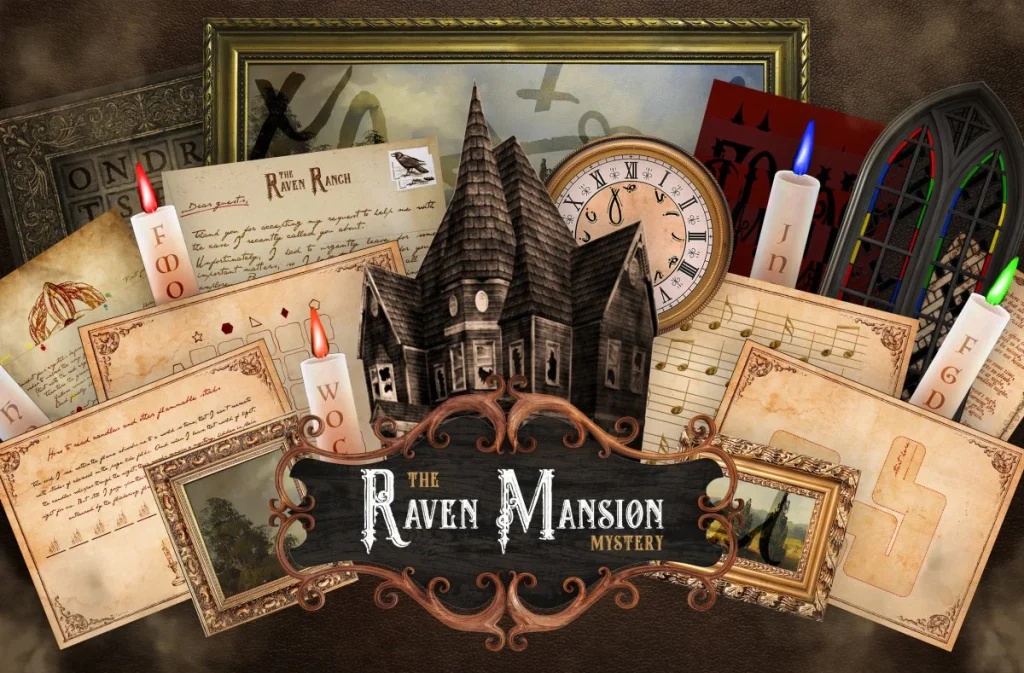
Hosting a Halloween-themed escape room party with Mystery Locks' printable kits is a spooktacular way to give kids an unforgettable night of fun and learning! As they delve into eerie puzzles and unravel mysterious clues, children naturally enhance their problem-solving skills and ignite their creativity. The immersive challenges encourage teamwork and communication, helping them develop social skills as they collaborate to beat the clock and escape the haunted scenario.
Not only does this transform your space into a thrilling adventure filled with Halloween magic, but it also provides an educational experience disguised as pure entertainment. Kids will be so engrossed in the mysterious fun that they won't even realize they're learning valuable cognitive and social skills. It's the perfect recipe for a memorable Halloween party that combines excitement with enrichment!
Music is another key element to set the mood. Create a playlist of Halloween-themed songs, including classics like "Thriller" by Michael Jackson and "Monster Mash" by Bobby "Boris" Pickett and the theme from "Ghostbusters". You can also include some eerie sound effects like howling wolves and creaking doors to add an extra layer of spookiness.
No party is complete without delicious snacks and drinks. For a Halloween party, the more creative, the better! Here are some ideas to get you started:
You can add to the Halloween party feeling by putting your drinks in a spooky inflatable drink cooler. These themed snacks and drinks will delight your guests and add to the festive atmosphere.
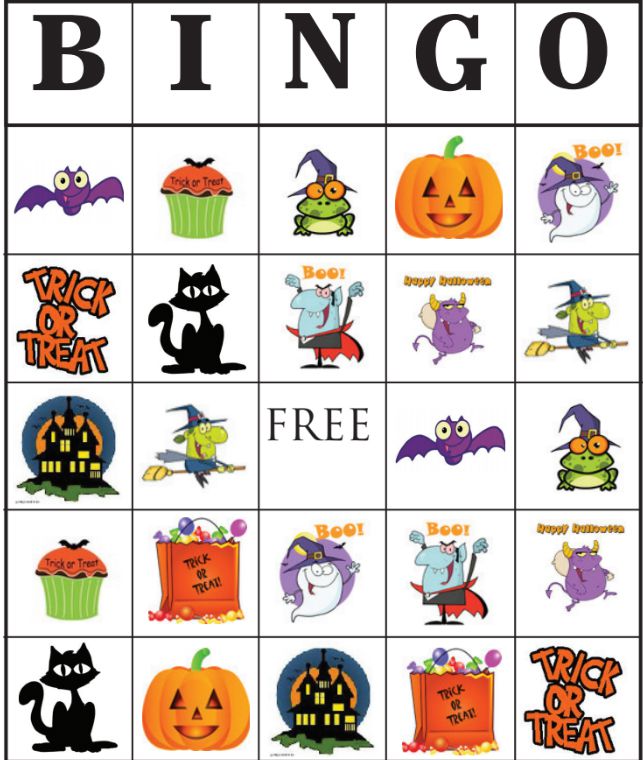
Games are a great way to keep everyone entertained at your Halloween party. Here are some fun ideas that both kids and adults will enjoy:
These games will keep your guests engaged and add an extra layer of fun to your Halloween party.
Nothing excites kids more than the opportunity to show off their Halloween costumes. Hosting a costume contest and parade can turn a simple gathering into an unforgettable event. Not only does it give children a chance to display their creativity, but it also encourages community spirit. Even adults can join in on the fun!
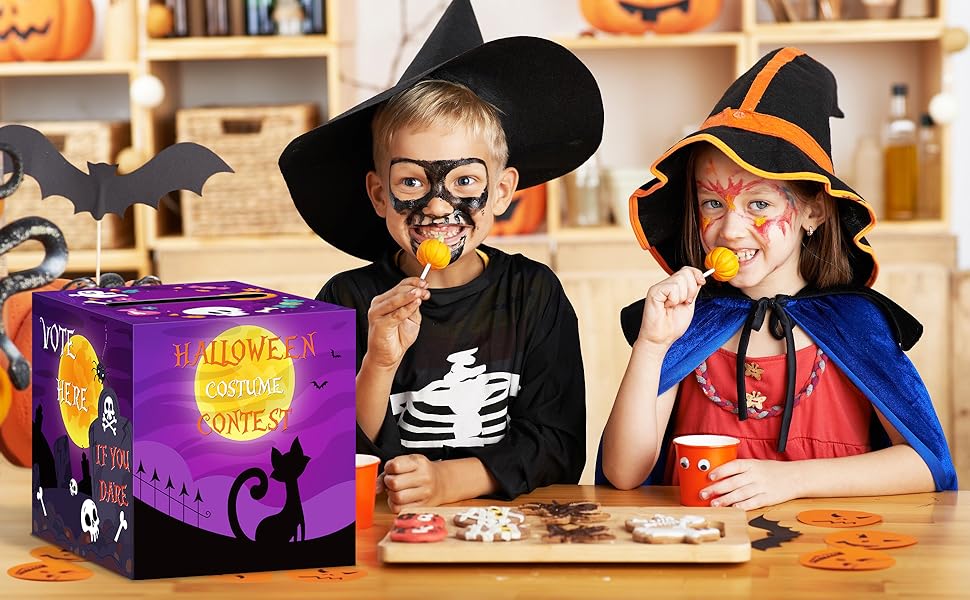
Organizing a costume contest is straightforward and can be done with a few simple steps. First, you'll need to decide on the categories.
Announce the categories in advance so participants know what to aim for. Common categories include:
Next, set up a stage or a designated area where participants can walk and show off their costumes. You can use a simple red carpet or even just a marked-off area in your backyard or living room. Make sure to have a sound system to play some fun Halloween music during the parade.
Finally, select a panel of judges. This could be adults or older kids who are not participating in the contest. Give them scorecards then have them deposit their votes in a secret contest voting box.
To ensure fairness, it's important to have clear judging criteria. Here are some points to consider:
Using these criteria will help the judges make fair and balanced decisions.
Offering prizes can add an extra layer of excitement to your costume contest. Here are some prize ideas that both kids and adults will love:
Make sure the prizes are age-appropriate and appealing to the participants to keep the competition lively and engaging.
Not all neighborhoods are created equal when it comes to trick-or-treating. Look for areas that are well-lit and have a lot of houses close together. Some neighborhoods even organize special events or have houses that go all out with decorations.
If you're new to the area, ask neighbors or check local community boards for recommendations. Often, local schools and community centers will have information on the best places to go.
Safety should always come first. Here are some guidelines to ensure a safe trick-or-treating experience:
Following these guidelines will help keep everyone safe while they enjoy the night.
Why settle for a plain pillowcase when you can create your own trick-or-treat bag? Here are some simple ideas:
Creating your own trick-or-treat bag adds a personal touch and can be a fun craft project to do together.

Here are some frequently asked questions about Halloween activities for kids and how to ensure a safe and fun experience.
Pre-Halloween activities include carving pumpkins, crafting homemade decorations, designing unique costumes, and organizing scavenger hunts. These activities not only amplify the Halloween spirit but also create cherished memories and traditions leading up to October 31st. Engaging in these preparations fosters creativity and brings families together in anticipation of the big night.
Absolutely! Family-friendly scary movies like "The Addams Family," "Hocus Pocus," "Hotel Transylvania," and the classic "Ghostbusters" offer a perfect blend of spookiness and fun. Hosting a movie night with these films can create a cozy and enjoyable atmosphere for all ages, complete with themed snacks like popcorn and pumpkin-shaped cookies.
Reading scary stories together immerses children in the Halloween spirit while fostering creativity and improving reading skills. Creating an ambient setting with dimmed lights or flashlight shadows enhances the thrill. Encouraging kids to read aloud or craft their own spooky tales builds confidence and strengthens family bonds as everyone shares in the eerie excitement.
Start by choosing firm pumpkins with flat bottoms to prevent rolling. Gather safe carving tools designed for pumpkins, a large spoon for scooping, and newspapers to keep the workspace clean. Guide children through drawing simple designs and carving carefully. Always supervise them closely, use appropriate tools, and prioritize safety to ensure a fun and accident-free experience. How can I ensure a safe Halloween for my children?
A Halloween-themed printable escape room party uses kits that provide eerie puzzles and mysterious clues for an immersive, interactive experience. It benefits kids by enhancing problem-solving skills, igniting creativity, and encouraging teamwork and communication as they work together to solve challenges. It's both entertaining and educational, making it a great addition to any Halloween celebration.
It's crucial to introduce children to the incredible women who have shaped our world. Their stories are not only inspiring but also serve as powerful lessons in perseverance, courage, and innovation. Learning about these women helps kids, especially young girls, see the limitless possibilities for their futures.
When children learn about influential women, they gain a broader understanding of history and the diverse contributions that have shaped our society. This knowledge fosters a sense of respect and admiration for the achievements of women across various fields.
Most importantly, these stories can inspire young girls to dream big and pursue their goals with determination. By seeing the obstacles these women overcame, children learn that they too can achieve great things, regardless of the challenges they may face.
Besides that, learning about women in history promotes gender equality. It helps dismantle stereotypes and biases, encouraging kids to appreciate the talents and abilities of everyone, regardless of gender.
Let's dive into the stories of some trailblazing women who have left an indelible mark on history. These women come from various backgrounds and fields, but they all share a common trait: an unwavering commitment to their passions and a desire to make a difference.
Marie Curie was a groundbreaking scientist known for her research on radioactivity. She was the first woman to win a Nobel Prize and remains the only person to have won Nobel Prizes in two different scientific fields—Physics and Chemistry.
Curie's discoveries have had a lasting impact on science and medicine. Her work with radium and polonium paved the way for advancements in cancer treatment and nuclear energy.
Teaching kids about Marie Curie can spark an interest in science and show them the importance of perseverance in the face of adversity. Despite facing significant obstacles as a woman in a male-dominated field, Curie's passion for science never wavered.
Amelia Earhart was a pioneering aviator who became the first woman to fly solo across the Atlantic Ocean. Her fearless spirit and determination made her a symbol of women's empowerment and adventure.
Earhart's achievements in aviation broke barriers and opened doors for future generations of female pilots. Her story teaches kids about the importance of setting ambitious goals and pursuing them with courage.
Besides her flying feats, Earhart was also an advocate for women's rights and encouraged women to pursue careers in aviation and other fields traditionally dominated by men.
"You must never be fearful about what you are doing when it is right." - Rosa Parks
Rosa Parks is best known for her pivotal role in the Montgomery Bus Boycott. By refusing to give up her seat to a white passenger, Parks ignited a movement that led to significant advancements in the fight for civil rights.
Parks' story is a powerful example of how one person's actions can spark change. Teaching kids about her bravery and determination helps them understand the importance of standing up for what is right, even in the face of adversity.
Malala Yousafzai is a Pakistani activist for girls' education and the youngest-ever Nobel Prize laureate. Despite facing life-threatening challenges, she has continued to advocate for the right of all children, especially girls, to receive an education.
Malala's story is one of resilience and unwavering commitment to her cause. By sharing her journey with kids, we can inspire them to value education and understand the power of their voices in creating change.
Through her activism, Malala has shown that age is not a barrier to making a significant impact. Her message resonates with young people worldwide, encouraging them to stand up for their rights and the rights of others.
Books are a fantastic way to introduce kids to the stories of influential women. They provide a detailed and engaging narrative that can captivate young minds and inspire them to dream big. Here are some excellent book recommendations:
Reading these books can help kids understand the impact of these women and inspire them to pursue their own dreams with determination and courage.
Engaging kids in discussions about the contributions of women throughout history is essential. It helps them process what they've learned and apply it to their own lives. Here are some ways to facilitate these discussions: Famous Women in History
It's important to highlight the obstacles that these women faced and overcame. Discussing these challenges can help kids appreciate the resilience and determination required to achieve great things.
For example, Marie Curie faced significant gender bias in the scientific community, yet she persevered and made groundbreaking discoveries. Similarly, Rosa Parks faced racial discrimination but stood her ground, igniting a movement for civil rights.
Help kids draw connections between the achievements of women in history and the opportunities available to them today. Discuss how the efforts of women like Malala Yousafzai have paved the way for greater access to education for girls worldwide.
Encourage kids to think about how they can contribute to making the world a better place. Ask them questions like, "What can you do to stand up for what you believe in?" or "How can you make a difference in your community?" For inspiration, consider learning about famous women in history who have made significant contributions.
While it's important to learn about historical figures, it's equally crucial to introduce kids to modern role models. These contemporary women can show kids that they, too, can achieve great things in today's world.
Highlighting women who are making strides in STEM fields can inspire kids to pursue careers in science, technology, engineering, and mathematics. Some notable STEM innovators include:
Political leaders and activists play a vital role in shaping society and advocating for change. Introducing kids to these figures can inspire them to get involved in their communities and stand up for their beliefs.
"Every great dream begins with a dreamer. Always remember, you have within you the strength, the patience, and the passion to reach for the stars to change the world." - Harriet Tubman
Some influential political leaders and activists include:
Athletes and artists also serve as powerful role models for kids. Their dedication to their craft and their ability to overcome obstacles can inspire kids to pursue their passions, whether in sports, music, art, or other creative fields.
Some inspiring athletes and artists include:
Women's History Month is a fantastic opportunity to celebrate the achievements of women and inspire kids to learn more about their contributions. Here are some practical ways to celebrate:
"The more you celebrate your life, the more there is in life to celebrate." - Oprah Winfrey
Creating Women's History Badges is a fun and educational activity that allows kids to learn about influential women and showcase their creativity. Here's how you can do it:
This activity not only educates kids about women's history but also allows them to practice their research and presentation skills.
Creating Women’s History Badges is a fun and educational activity that allows kids to learn about influential women and showcase their creativity. Here's how you can do it:
This activity not only educates kids about women's history but also allows them to practice their research and presentation skills.
Setting up a classroom or home museum is an interactive way to celebrate Women’s History Month. It provides a hands-on learning experience that can deepen kids' understanding and appreciation of women's contributions. Here’s how to set it up:
This project encourages kids to dive deeper into their research and allows them to share their knowledge with others in a creative and engaging way. For more inspiration, check out famous women in history.
As we celebrate and learn about the achievements of women in history, it's natural to have questions. Here are some frequently asked questions and their answers to help guide your learning journey.
By celebrating Women’s History Month, we ensure that the stories of influential women are passed down to future generations, fostering a more inclusive and equitable society.
There are many resources available to help you learn more about women in history. Here are some suggestions:
These resources can provide a wealth of information and help you explore the lives and achievements of women throughout history.
Teaching kids about women in history can be both fun and educational. Here are some easy ways to incorporate these lessons into your teaching:
These methods can make learning about women in history engaging and memorable for kids.
While many kids are familiar with figures like Marie Curie and Rosa Parks, there are countless lesser-known women who have made significant contributions to history. Here are a few examples:
Learning about these women can broaden kids' understanding of history and inspire them with diverse examples of courage and innovation.
Celebrating women’s achievements has a profound impact on both girls and boys. Here’s how:
By highlighting the stories of influential women, we inspire the next generation to strive for greatness and work together to create a better future.
Math often has a reputation for being a difficult and boring subject, but it doesn't have to be that way. Math tricks can transform how children view numbers and calculations, making math exciting and fun. These tricks are not just about showing off; they help kids understand underlying mathematical concepts in a more engaging way.
Besides that, these tricks can make kids feel like they have superpowers. Imagine the thrill of solving a problem in seconds that might take others minutes to figure out. It's a fantastic way to boost their confidence and spark a lifelong interest in math.
Multiplying by eleven might sound challenging, but it's surprisingly simple with this trick. Let's say you want to multiply 32 by 11. Here’s how you can do it:
So, 32 multiplied by 11 equals 352. This trick works for any two-digit number. If the sum of the digits is more than 9, just carry over the extra value to the hundreds place. For example, for 76:
So, 76 multiplied by 11 equals 836. This trick is not only quick but also a great way to impress friends.
Adding multiple numbers can be tedious, but there's a trick to make it faster. Suppose you have to add 48, 35, and 27. Here's a step-by-step method to do it quickly:
Therefore, 48 + 35 + 27 equals 110. This trick simplifies the process and helps in quickly arriving at the correct sum.
Mind-reading math tricks are a fantastic way to amaze friends and family. These tricks use simple mathematical principles but appear magical to those who don't know the secret.
Here's a classic mind-reading trick that involves predicting a number. Ask your friend to think of any number, then follow these steps:
- Ask them to double the number.
- Then add 10 to the result.
- Next, divide the result by 2.
- Finally, subtract the original number from the result.
The answer will always be 5, no matter what number they started with. This trick works because of the way the operations cancel each other out.
Another intriguing trick is the number reversal subtraction trick. Here's how it works:
The answer will always be 1089. This trick is based on the properties of numbers and always yields the same result, making it seem like magic.
Patterns in numbers can reveal secrets that are both surprising and educational. Here are a few examples:
These patterns not only help in quick calculations but also enhance a child's understanding of mathematical properties.
Visual math tricks use imagery and patterns to simplify complex concepts. These tricks are especially helpful for children who learn better through visual aids.
The dot multiplication trick is a fun way to multiply numbers visually. Here's how it works:
Let's say you want to multiply 23 by 21:
Count the intersections of the lines to get the result. This visual method makes multiplication more intuitive and less intimidating.
The circle math trick helps children understand the concept of angles and fractions. Here's an example:
Draw a circle and divide it into 8 equal parts. Label each part with a fraction (1/8, 2/8, 3/8, etc.).
By visually seeing how fractions add up to a whole, children can better grasp the concept of fractions and angles.
The circle maths trick helps children understand the concept of angles and fractions in a visual and engaging way. Here's an example to illustrate this:
Draw a circle and divide it into 8 equal parts. Label each part with a fraction (1/8, 2/8, 3/8, etc.).
By visually seeing how fractions add up to a whole, children can better grasp the concept of fractions and angles. This trick can be further enhanced by asking them to color different fractions and see how they combine to form a complete circle. It's a fantastic way to make abstract concepts tangible and easier to understand. For more fun ideas, check out these cool math tricks.
The mirror image number trick is another fascinating way to engage kids with numbers. This trick involves reversing the digits of a number and performing some simple calculations to achieve surprising results. Here's how it works:
The answer will always be 1089. This trick works because of the properties of numbers and always yields the same result, making it seem like magic. It's a great way to show kids the consistency and patterns within mathematics.
Learning math tricks offers numerous benefits beyond just impressing friends. These tricks can significantly enhance a child's mathematical abilities and overall confidence. Here are some of the key benefits:
For more ideas, check out these cool math tricks to amaze your friends.
Math tricks often involve breaking down complex problems into simpler steps. This process helps children develop strong problem-solving skills. By practicing these tricks, kids learn to approach problems methodically and think critically about each step. For example, the magic multiplication by eleven trick teaches them to decompose numbers and reassemble them in a logical way.
One of the biggest hurdles in learning math is overcoming the fear of numbers. Math tricks can help build a child's confidence by making calculations easier and more intuitive. When kids see that they can solve problems quickly and accurately, their self-esteem grows. This newfound confidence can translate into better performance in math classes and other areas of life.
Traditional math exercises can sometimes be dull and repetitive. Math tricks, on the other hand, add an element of fun and excitement to learning. They turn math into a game, where kids can challenge themselves and their friends. This playful approach keeps children engaged and motivated to learn more.
Practice is key to mastering any skill, and math is no exception. Incorporating math tricks into regular practice can make learning more enjoyable and effective. Here are some strategies to encourage practice and improvement:
One way to keep kids engaged is by setting daily math trick challenges. These challenges can be simple tasks that take only a few minutes but provide regular practice. For example, ask your child to multiply a two-digit number by eleven using the trick they learned. This keeps their skills sharp and reinforces their learning.
Homework doesn't have to be a chore. By incorporating math tricks into homework assignments, you can make it more interesting and less daunting. Encourage your child to use tricks like the dot multiplication or the circle math trick to solve their homework problems. This not only makes homework more fun but also helps them see the practical applications of what they've learned.
Games and puzzles are excellent tools for practicing math skills. There are many math games available that incorporate these tricks, turning practice into play. Consider setting up a weekly game night where the family can solve math puzzles together. This not only reinforces learning but also strengthens family bonds.
For example, you can play a game where each player takes turns performing a math trick and the others have to guess the result. This adds a competitive element that can motivate kids to practice more.
Math tricks are more than just fun party tricks; they are powerful tools for learning and engagement. By introducing your child to these tricks, you're opening up a world of possibilities where math is not just a subject but an exciting adventure. For more ideas, check out these cool math tricks to amaze your friends.
The ultimate goal of learning math tricks is to get kids excited about math. When children see math as a fun and intriguing subject, they are more likely to pursue it further. This excitement can lead to better performance in school, a greater interest in STEM subjects, and even future career opportunities in fields that require strong mathematical skills.
Math tricks are more than just fun party tricks; they are powerful tools for learning and engagement. By introducing your child to these tricks, you're opening up a world of possibilities where math is not just a subject but an exciting adventure.
The ultimate goal of learning math tricks is to get kids excited about math. When children see math as a fun and intriguing subject, they are more likely to pursue it further. This excitement can lead to better performance in school, a greater interest in STEM subjects, and even future career opportunities in fields that require strong mathematical skills.
Math tricks reveal the hidden patterns and beauty in numbers. They demonstrate that math is not just about memorizing formulas but about understanding how numbers work together. This deeper understanding can make math feel less intimidating and more accessible. When kids grasp these concepts, they start to see math as a set of fascinating puzzles waiting to be solved.
One of the most rewarding aspects of learning math tricks is the ability to share them with others. When kids perform these tricks for their friends, they not only reinforce their own understanding but also inspire others to take an interest in math. It's a wonderful way to create a positive and collaborative learning environment.
To help you get the most out of these math tricks, here are answers to some common questions.
These math tricks are generally suitable for children aged 7 and up. Younger children may need some guidance, but the tricks can be adapted to suit different age groups and skill levels.
Encourage your child to practice regularly by incorporating the tricks into their daily routine. You can set up daily challenges, use the tricks during homework, or play math games that involve these tricks. The key is to make practice fun and engaging.
Math tricks work because of the inherent properties and patterns within numbers. Some tricks are based on specific mathematical principles, while others rely on number patterns that always produce consistent results. Understanding why a trick works can deepen a child's appreciation for math.
Yes, many of these tricks can be applied to school math problems. They provide shortcuts and alternative methods for solving problems, which can be particularly useful during tests and exams. Moreover, these tricks help reinforce fundamental mathematical concepts.
Absolutely. When children master these tricks, they gain a sense of accomplishment and confidence in their mathematical abilities. This confidence can translate into better performance in school and a more positive attitude towards learning math.
By incorporating these fun and engaging math tricks into your child's learning routine, you're not only helping them develop essential math skills but also fostering a lifelong love for numbers. So go ahead, try these tricks, and watch your child's curiosity and confidence in math soar!
Astronomy opens up a universe of wonder and curiosity for kids. It's not just about looking at stars; it's about exploring the unknown and discovering how our universe works. Imagine the excitement of seeing the craters on the Moon or spotting Jupiter's moons through a telescope for the first time. These experiences can spark a lifelong passion for science and discovery.
Besides that, astronomy helps kids develop critical thinking skills. They learn to observe, ask questions, and seek answers. This scientific approach to understanding the world can be incredibly empowering for young minds.
Getting hands-on with astronomy can make the subject even more engaging for kids. Here are a few simple experiments that you can try at home:
Starting with the right equipment can make stargazing more enjoyable and productive. Here are some essentials:
For more tips on stargazing with kids, check out this guide to inspire young astronomers.
Astronomy is more than just a hobby; it's a gateway to understanding our place in the universe. Here's why it's beneficial for kids:
Learning about astronomy can significantly enhance a child's education. It integrates various subjects like physics, chemistry, and math, making them more relevant and interesting. For example, understanding how stars form involves concepts from physics and chemistry, while calculating distances in space can improve math skills.
Moreover, astronomy encourages curiosity and lifelong learning. Kids learn to ask questions like, "Why does the Moon change shape?" or "What are black holes?" These questions lead to research and discovery, fostering a love for learning.
Astronomy also fuels the imagination. The vastness of space, the beauty of nebulae, and the mystery of black holes can inspire creative thinking. Kids can write stories about space adventures, draw their own constellations, or even build models of the solar system.
Most importantly, astronomy shows kids that the universe is full of possibilities. It teaches them that there's always more to learn and discover, which can be a powerful motivator in all areas of life.
Stargazing is one of the most accessible ways to explore astronomy. You don't need expensive equipment or a lot of experience to get started. Here's how you can begin:
The first step in stargazing is finding the right time and place. Here are some tips:
Remember, patience is key. It may take some time for your eyes to adjust to the darkness, and finding specific stars and planets can be challenging at first. But with practice, it will become easier and more enjoyable.
Using a telescope for the first time can be both exciting and a bit overwhelming. Here are some basic tips to help you get started:
1. Start with the Moon: The Moon is one of the easiest and most rewarding objects to observe. Its craters, mountains, and valleys are visible even with a small telescope.
2. Use a Star Map: A star map can help you locate stars, planets, and constellations. Familiarize yourself with the map during the day to make nighttime stargazing easier.
Engaging kids in hands-on activities can make learning about astronomy more fun and memorable. Here are a few activities to try:
Creating a constellation viewer is a simple and enjoyable project that can help kids learn about constellations. Here's how to do it:
Keeping a star map and planet journal can help kids track their observations and learn more about the night sky. Here's how to get started:
These activities not only teach kids about astronomy but also encourage them to observe and record their findings, which can enhance their learning experience.
Hosting an astronomy-themed party can be a great way to share the excitement of stargazing with friends and family. Here are some ideas to make your party a hit: you can also check out this introductory guide to astronomy for kids for more inspiration.
1. Star-Gazing Session: Set up telescopes and binoculars for guests to use. Provide star maps and guides to help them identify celestial objects.
2. Space-Themed Snacks: Serve snacks that fit the theme, like star-shaped cookies or "rocket" sandwiches.
3. Educational Games: Plan games and activities that teach guests about astronomy, such as a constellation scavenger hunt or a trivia quiz about space. For more ideas, check out this introductory guide to astronomy for kids.
There are many resources available to help kids learn more about astronomy. Here are some of the best books, apps, and websites for young astronomers:
Books can be a great way to introduce kids to the wonders of astronomy. Here are a few recommendations:
Technology can be a powerful tool for learning about astronomy. Here are some top apps and websites:
Interactive learning platforms can provide kids with a more engaging and immersive educational experience. Here are a few to explore:
Engaging with the astronomy community can significantly enhance your child's learning experience. It offers opportunities to meet like-minded individuals, share discoveries, and participate in exciting projects. Here’s how you can connect with the astronomy community:
Many communities have local astronomy clubs that host regular meetings, stargazing events, and educational workshops. These clubs are great places to meet experienced astronomers and get hands-on experience with telescopes and other equipment.
To find a local club, you can:
Global astronomy projects offer a unique opportunity for kids to contribute to real scientific research. These projects often involve tasks like classifying galaxies, tracking asteroids, or observing variable stars. Participating in these projects can provide valuable experience and a sense of accomplishment.
Some popular global astronomy projects include:
Sharing your astronomy experiences can inspire others and create a sense of community. You can share your discoveries through social media, blogs, or local club newsletters. Encourage your child to keep a journal of their observations and share their findings with others.
Here are some ways to share your stories:
Here are some common questions that parents and young astronomers often have:
Kids can start learning about astronomy at any age. Even young children can enjoy looking at the stars and learning about the Moon. As they get older, they can start to understand more complex concepts and use more advanced equipment.
A good starter telescope for kids is a simple refractor telescope with a sturdy mount. Look for one with a 70-90mm aperture and easy-to-use controls. Brands like Celestron and Orion offer good beginner telescopes that are both affordable and reliable.
To make astronomy interesting for your child, involve them in hands-on activities, such as building a constellation viewer or keeping a star map. Encourage their curiosity by answering their questions and exploring topics that interest them. Additionally, using apps and interactive resources can make learning more engaging.
Stargazing is generally safe, but there are a few precautions to keep in mind. For more tips on safe stargazing, check out this guide to stargazing with kids.
To find astronomy events in your area, you can:
Learning world history for kids is like embarking on a grand adventure. It's not just about memorizing dates and names; it's about uncovering thrilling tales of bravery, innovation, and discovery. When kids dive into history, they encounter epic stories that are more exciting than any movie or video game.
Understanding world history helps kids appreciate the diversity and complexity of human cultures. It gives them a sense of where we come from and how past events have shaped our present. Most importantly, history teaches valuable lessons that can inspire kids to make a positive impact on the future.
Ancient civilizations are like the foundation stones of human history. They laid the groundwork for modern society with their incredible achievements in architecture, governance, and culture. Exploring these ancient worlds can be both fun and educational for kids.
Explorers are the real-life adventurers who dared to venture into the unknown. Their journeys opened up new lands and brought different cultures into contact with each other. Learning about these explorers can ignite a sense of curiosity and wonder in kids.
Battles have often been turning points in history. They can be dramatic and intense, with heroes and heroines emerging from the chaos. Understanding these battles helps kids grasp the complexities of conflict and the importance of strategy and leadership. For more insights, visit History for Kids.
Innovation has always driven human progress. From the invention of the wheel to the landing on the moon, groundbreaking discoveries have transformed the way we live. Learning about these inventions can inspire kids to think creatively and pursue their own ideas.
Throughout history, certain individuals have stood out for their extraordinary contributions. Whether they were leaders, artists, scientists, or activists, these influential figures have left a lasting impact on the world. Studying their lives can provide kids with role models and inspiration.
Ancient Egypt is one of the most fascinating civilizations in history. Known for its majestic pyramids and powerful pharaohs, Egypt was a land of innovation and mystery. The pyramids, built as tombs for the pharaohs, are among the most iconic structures in the world.
Besides that, the ancient Egyptians made significant advances in medicine, mathematics, and engineering. Their hieroglyphic writing system was one of the earliest forms of written communication. Exploring the world of ancient Egypt can spark a child's imagination and curiosity.
Ancient Greece is often called the cradle of Western civilization. It was a place where democracy was born, and where great philosophers like Socrates, Plato, and Aristotle pondered the mysteries of life. Greek mythology, with its gods and heroes, is full of captivating stories that have been told for centuries.
The Greeks also excelled in the arts and sciences. They made groundbreaking contributions to architecture, drama, and astronomy. Learning about ancient Greece can help kids understand the roots of modern Western culture and the importance of critical thinking.
Ancient Rome was a powerful empire that dominated much of Europe, North Africa, and the Middle East. The Romans were master builders, known for their impressive aqueducts, roads, and buildings. The Colosseum, where gladiators once fought, is a testament to their engineering prowess.
Roman law and governance laid the foundation for many modern legal systems. The Latin language, spoken by the Romans, influenced many languages spoken today. By studying ancient Rome, kids can learn about the rise and fall of empires and the lasting impact of Roman innovations.
Christopher Columbus is one of the most famous explorers in history. In 1492, he set sail from Spain with the goal of finding a new route to Asia. Instead, he stumbled upon the Americas, opening up a whole new world for European exploration and colonization.
Columbus's voyages were filled with challenges and discoveries. He made four trips to the New World, each time bringing back valuable information about the lands he encountered. Learning about Columbus's adventures can teach kids about the Age of Exploration and the impact of European colonization on indigenous peoples.
Marco Polo was a Venetian merchant and explorer who traveled extensively through Asia in the 13th century. His journey took him along the Silk Road, reaching as far as China, where he served at the court of Kublai Khan. Marco Polo's detailed accounts of his travels introduced Europeans to the wonders of the East, including its culture, technology, and wealth.
His book, "The Travels of Marco Polo," became a bestseller and inspired many other explorers, including Christopher Columbus. Marco Polo's adventures teach kids about the importance of curiosity, perseverance, and the exchange of ideas between different cultures.
Throughout history, certain battles have stood out for their significance and impact. These battles often marked turning points in history, shaping the future of nations and civilizations. Understanding these legendary battles can provide kids with insights into strategy, leadership, and the consequences of conflict.
The Battle of Thermopylae is one of the most famous battles in ancient history. In 480 BC, a small Greek force led by King Leonidas of Sparta held off a much larger Persian army at a narrow pass called Thermopylae. Despite being vastly outnumbered, the Spartans' bravery and tactical skill became legendary.
The story of the 300 Spartans has been immortalized in literature and film. It teaches kids about courage, sacrifice, and the importance of standing up for one's beliefs, even in the face of overwhelming odds.
The Battle of Hastings took place in 1066 and was a pivotal moment in English history. William the Conqueror, the Duke of Normandy, defeated King Harold II of England, leading to the Norman conquest of England. This battle changed the course of English history, introducing Norman culture, language, and governance.
Learning about the Battle of Hastings helps kids understand the impact of conquest and cultural integration. It also highlights the significance of leadership and strategy in determining the outcome of historical events.
The American Revolution was a monumental conflict that led to the birth of the United States. From 1775 to 1783, American colonists fought against British rule to gain their independence. Key battles such as the Battle of Bunker Hill, the Siege of Yorktown, and the Battle of Saratoga were crucial in securing victory for the American forces.
The American Revolution teaches kids about the values of freedom, democracy, and the power of collective action. It also underscores the importance of resilience and determination in achieving one's goals.
Inventions and discoveries have played a crucial role in shaping human history. These breakthroughs have revolutionized the way we live, work, and communicate. Understanding these innovations can inspire kids to think creatively and pursue their own ideas.
The invention of the printing press by Johannes Gutenberg in the 15th century was a game-changer for the dissemination of information. Before the printing press, books were copied by hand, making them rare and expensive. The printing press allowed for the mass production of books, making knowledge more accessible to people.
This invention played a significant role in the spread of ideas during the Renaissance and the Reformation. It also paved the way for the scientific revolution and the Enlightenment. Learning about the printing press helps kids appreciate the importance of communication and the power of the written word.
"The printing press is the greatest invention of the past thousand years. It changed the course of human history." – Steven Pinker
Electricity is one of the most important discoveries in human history. Pioneers like Benjamin Franklin, Thomas Edison, and Nikola Tesla made significant contributions to our understanding and use of electricity. From the invention of the light bulb to the development of electrical grids, electricity has transformed every aspect of our lives.
Understanding the history of electricity can inspire kids to explore the world of science and technology. It also highlights the importance of innovation and the impact of scientific discoveries on society.
Space exploration represents the pinnacle of human curiosity and ambition. The Apollo 11 mission in 1969, which landed the first humans on the moon, was a monumental achievement. Astronauts Neil Armstrong and Buzz Aldrin became the first people to walk on the lunar surface, while Michael Collins orbited the moon in the command module.
The famous words, "That's one small step for man, one giant leap for mankind," spoken by Armstrong, captured the significance of this achievement. Learning about space exploration can inspire kids to dream big and pursue careers in science, technology, engineering, and mathematics (STEM).
Throughout history, certain individuals have made extraordinary contributions that have shaped the world we live in today. Studying these influential figures can provide kids with role models and inspire them to make a positive impact on the world.
Alexander the Great was one of history's most successful military leaders. Born in 356 BC, he became king of Macedonia at the age of 20 and embarked on a campaign of conquest that created one of the largest empires in history. His empire stretched from Greece to Egypt and into India.
Alexander's leadership and strategic brilliance made him a legendary figure. His achievements teach kids about the importance of vision, ambition, and the ability to inspire others. Despite his early death at the age of 32, Alexander's legacy continues to influence the world.
Leonardo da Vinci's life and work inspire kids to explore multiple interests and pursue knowledge with passion and creativity. His legacy as the quintessential Renaissance man demonstrates the value of a well-rounded education.
Mahatma Gandhi was a leader of the Indian independence movement against British rule. Born in 1869, Gandhi advocated for nonviolent resistance and civil disobedience as means to achieve political and social change. His philosophy of "Satyagraha" emphasized truth and nonviolence.
Gandhi's leadership and dedication to peaceful protest inspired movements for civil rights and freedom across the world. His legacy teaches kids about the power of compassion, resilience, and the importance of standing up for justice.
"Tell me and I forget, teach me and I may remember, involve me and I learn." – Benjamin Franklin
Interactive activities and resources can make learning history fun and engaging for kids. By involving them in hands-on activities, we can help them better understand and retain historical knowledge.
Here are some interactive resources for exploring world history:
By incorporating these resources into their learning, kids can develop a deeper understanding of history and its relevance to the present and future.
Marco Polo's adventures teach kids about the importance of curiosity, perseverance, and the exchange of ideas between different cultures.
Throughout history, certain battles have stood out for their significance and impact. These battles often marked turning points in history, shaping the future of nations and civilizations. Understanding these legendary battles can provide kids with insights into strategy, leadership, and the consequences of conflict.
The Battle of Thermopylae is one of the most famous battles in ancient history. In 480 BC, a small Greek force led by King Leonidas of Sparta held off a much larger Persian army at a narrow pass called Thermopylae. Despite being vastly outnumbered, the Spartans' bravery and tactical skill became legendary.
The story of the 300 Spartans has been immortalized in literature and film. It teaches kids about courage, sacrifice, and the importance of standing up for one's beliefs, even in the face of overwhelming odds.
The Battle of Hastings took place in 1066 and was a pivotal moment in English history. William the Conqueror, the Duke of Normandy, defeated King Harold II of England, leading to the Norman conquest of England. This battle changed the course of English history, introducing Norman culture, language, and governance.
Learning about the Battle of Hastings helps kids understand the impact of conquest and cultural integration. It also highlights the significance of leadership and strategy in determining the outcome of historical events.
The American Revolution was a monumental conflict that led to the birth of the United States. From 1775 to 1783, American colonists fought against British rule to gain their independence. Key battles such as the Battle of Bunker Hill, the Siege of Yorktown, and the Battle of Saratoga were crucial in securing victory for the American forces.
The American Revolution teaches kids about the values of freedom, democracy, and the power of collective action. It also underscores the importance of resilience and determination in achieving one's goals.
Inventions and discoveries have played a crucial role in shaping human history. These breakthroughs have revolutionized the way we live, work, and communicate. Understanding these innovations can inspire kids to think creatively and pursue their own ideas.
The invention of the printing press by Johannes Gutenberg in the 15th century was a game-changer for the dissemination of information. Before the printing press, books were copied by hand, making them rare and expensive. The printing press allowed for the mass production of books, making knowledge more accessible to people.
This invention played a significant role in the spread of ideas during the Renaissance and the Reformation. It also paved the way for the scientific revolution and the Enlightenment. Learning about the printing press helps kids appreciate the importance of communication and the power of the written word.
"The printing press is the greatest invention of the past thousand years. It changed the course of human history." – Steven Pinker
Electricity is one of the most important discoveries in human history. Pioneers like Benjamin Franklin, Thomas Edison, and Nikola Tesla made significant contributions to our understanding and use of electricity. From the invention of the light bulb to the development of electrical grids, electricity has transformed every aspect of our lives.
Understanding the history of electricity can inspire kids to explore the world of science and technology. It also highlights the importance of innovation and the impact of scientific discoveries on society.
Space exploration represents the pinnacle of human curiosity and ambition. The Apollo 11 mission in 1969, which landed the first humans on the moon, was a monumental achievement. Astronauts Neil Armstrong and Buzz Aldrin became the first people to walk on the lunar surface, while Michael Collins orbited the moon in the command module.
The famous words, "That's one small step for man, one giant leap for mankind," spoken by Armstrong, captured the significance of this achievement. Learning about space exploration can inspire kids to dream big and pursue careers in science, technology, engineering, and mathematics (STEM).
Throughout history, certain individuals have made extraordinary contributions that have shaped the world we live in today. Studying these influential figures can provide kids with role models and inspire them to make a positive impact on the world.
Alexander the Great was one of history's most successful military leaders. Born in 356 BC, he became king of Macedonia at the age of 20 and embarked on a campaign of conquest that created one of the largest empires in history. His empire stretched from Greece to Egypt and into India.
Alexander's leadership and strategic brilliance made him a legendary figure. His achievements teach kids about the importance of vision, ambition, and the ability to inspire others. Despite his early death at the age of 32, Alexander's legacy continues to influence the world.
Leonardo da Vinci's life and work inspire kids to explore multiple interests and pursue knowledge with passion and creativity. His legacy as the quintessential Renaissance man demonstrates the value of a well-rounded education.
Mahatma Gandhi was a leader of the Indian independence movement against British rule. Born in 1869, Gandhi advocated for nonviolent resistance and civil disobedience as means to achieve political and social change. His philosophy of "Satyagraha" emphasized truth and nonviolence.
Gandhi's leadership and dedication to peaceful protest inspired movements for civil rights and freedom across the world. His legacy teaches kids about the power of compassion, resilience, and the importance of standing up for justice.
"Tell me and I forget, teach me and I may remember, involve me and I learn." – Benjamin Franklin
Interactive activities and resources can make learning history fun and engaging for kids. By involving them in hands-on activities, we can help them better understand and retain historical knowledge.
Timelines and maps are excellent tools for visualizing historical events and geographical changes over time. Creating a timeline of key events helps kids see the sequence of historical developments. Maps can show how civilizations expanded, traded, and interacted with each other. For more resources, visit History for Kids.
For example, a timeline of the American Revolution can help kids understand the progression of key battles and events. A map showing the routes taken by explorers like Marco Polo and Christopher Columbus can illustrate the vast distances they traveled.
Online quizzes and educational games can make learning history exciting and interactive. Websites like Kahoot! and Quizlet offer fun quizzes on various historical topics. Educational games such as "Oregon Trail" and "Civilization" allow kids to experience historical events and decision-making processes.
By engaging in these interactive activities, kids can test their knowledge, reinforce what they've learned, and develop a deeper understanding of history.
Books and movies can bring historical events and figures to life. Recommend age-appropriate books that tell captivating stories about historical events. For example, "Number the Stars" by Lois Lowry is a gripping tale set during World War II, while "The Story of the World" series by Susan Wise Bauer provides a comprehensive overview of world history.
Movies like "Night at the Museum" and "The Prince of Egypt" can also spark kids' interest in history. These films offer entertaining and educational portrayals of historical events and characters.
Learning world history is not just about understanding the past; it's about gaining insights that can shape the future. By exploring the exciting events and influential figures of history, kids can develop a sense of curiosity, critical thinking, and empathy.
By making history engaging and accessible, we can inspire the next generation to learn from the past and make a positive impact on the future.
Learning world history is important for kids because it helps them understand the world they live in. It provides context for current events and teaches valuable lessons about human behavior, leadership, and innovation.
"Those who cannot remember the past are condemned to repeat it." – George Santayana
By studying history, kids can learn from past mistakes and successes, and apply those lessons to their own lives.
Some interesting historical events that kids should know about include:
These events are not only fascinating but also have had a significant impact on the world we live in today.
Parents can help their kids learn about history by:
By making history a part of everyday conversations, parents can foster a love of learning in their children.
Yes, there are many excellent resources for kids to learn history, including:
These resources provide engaging and informative content that can make learning history fun and accessible for kids.
History enthusiasts can pursue a variety of careers, including:
These careers allow individuals to explore their passion for history and share their knowledge with others.
Key Takeaways
Unlocking your child's genius starts with sparking their curiosity. One of the best ways to do this is through science toys that not only entertain but also educate. These toys can transform playtime into a learning experience, making science fun and accessible for kids of all ages.
Science toys play a crucial role in a child's growth. They offer more than just entertainment; they provide educational value that helps children understand the world around them. Most importantly, they inspire a love for learning that can last a lifetime.
Educational play is essential for a child's cognitive and social development. Science toys encourage kids to think critically and solve problems. They also help children develop fine motor skills and hand-eye coordination.
When children engage with science toys, they learn to ask questions and seek answers. This curiosity-driven approach helps them develop a scientific mindset early on. Besides that, these toys often require teamwork, fostering social skills and cooperation.
For example, the 5-in-1 STEM Model Car Kit lets kids build multiple types of cars, each requiring different assembly methods. This not only keeps them engaged but also challenges their creativity and problem-solving skills.
Science toys are excellent for teaching problem-solving skills. When kids encounter challenges during their experiments, they learn to think critically and come up with solutions. This process enhances their analytical skills and prepares them for real-world problems.
For instance, a child playing with the Think Fun Laser Maze has to use mirrors to direct a laser beam to a target. This requires them to think ahead and plan their moves, fostering strategic thinking.
Choosing the right science toy depends on the child's age. Different age groups have varying developmental needs and interests. Therefore, it's essential to select toys that are age-appropriate and engaging.
Toddlers are naturally curious and love to explore. Science toys for this age group should be simple yet stimulating. Look for toys that encourage sensory exploration and basic scientific concepts.
The Primary Science Lab Set is an excellent choice for toddlers. It includes oversized tools that are easy for small hands to grasp and use. The set comes with simple experiment cards that introduce basic scientific principles in a fun and engaging way.
Elementary school kids are ready for more complex science toys. They can handle detailed instructions and enjoy experiments that require multiple steps. Look for toys that cover various scientific fields like chemistry, physics, and biology.
The Scientific Explorer Magic Science Kit is perfect for this age group. It allows kids to perform "magical" experiments that are rooted in scientific principles. This kit not only entertains but also educates, making science exciting and accessible.
Tweens and teens need more advanced science toys that challenge their intellect. These toys should offer in-depth experiments and projects that require critical thinking and problem-solving skills.
The Snap Circuits Pro SC-500 Electronics Exploration Kit is an excellent option for older kids. It allows them to build complex electronic circuits and understand how different components work together. This kit provides a hands-on experience that can spark an interest in engineering and technology.
Here are some of the best science toys for 2023 that can help unlock your child's genius:
This versatile kit allows kids to build five different types of wooden mechanical cars. It's ideal for kids aged 8 to 12 and offers a hands-on experience in engineering and mechanics. The kit includes all the parts needed for assembly, making it a convenient and educational toy.
Key Takeaways
Unlocking your child's genius starts with sparking their curiosity. One of the best ways to do this is through science toys that not only entertain but also educate. These toys can transform playtime into a learning experience, making science fun and accessible for kids of all ages.
Science toys play a crucial role in a child's growth. They offer more than just entertainment; they provide educational value that helps children understand the world around them. Most importantly, they inspire a love for learning that can last a lifetime.
Educational play is essential for a child's cognitive and social development. Science toys encourage kids to think critically and solve problems. They also help children develop fine motor skills and hand-eye coordination.
When children engage with science toys, they learn to ask questions and seek answers. This curiosity-driven approach helps them develop a scientific mindset early on. Besides that, these toys often require teamwork, fostering social skills and cooperation.
For example, the 5-in-1 STEM Model Car Kit lets kids build multiple types of cars, each requiring different assembly methods. This not only keeps them engaged but also challenges their creativity and problem-solving skills.
Science toys are excellent for teaching problem-solving skills. When kids encounter challenges during their experiments, they learn to think critically and come up with solutions. This process enhances their analytical skills and prepares them for real-world problems.
For instance, a child playing with the Think Fun Laser Maze has to use mirrors to direct a laser beam to a target. This requires them to think ahead and plan their moves, fostering strategic thinking.
Choosing the right science toy depends on the child's age. Different age groups have varying developmental needs and interests. Therefore, it's essential to select toys that are age-appropriate and engaging.
Toddlers are naturally curious and love to explore. Science toys for this age group should be simple yet stimulating. Look for toys that encourage sensory exploration and basic scientific concepts.
The Primary Science Lab Set is an excellent choice for toddlers. It includes oversized tools that are easy for small hands to grasp and use. The set comes with simple experiment cards that introduce basic scientific principles in a fun and engaging way. For more ideas on science toys, check out top science toys and kits for Mighty Girls.
Elementary school kids are ready for more complex science toys. They can handle detailed instructions and enjoy experiments that require multiple steps. Look for toys that cover various scientific fields like chemistry, physics, and biology.
The Scientific Explorer Magic Science Kit is perfect for this age group. It allows kids to perform "magical" experiments that are rooted in scientific principles. This kit not only entertains but also educates, making science exciting and accessible.
Tweens and teens need more advanced science toys that challenge their intellect. These toys should offer in-depth experiments and projects that require critical thinking and problem-solving skills.
The Snap Circuits Pro SC-500 Electronics Exploration Kit is an excellent option for older kids. It allows them to build complex electronic circuits and understand how different components work together. This kit provides a hands-on experience that can spark an interest in engineering and technology.
Here are some of the best science toys for 2023 that can help unlock your child's genius:
This versatile kit allows kids to build five different types of wooden mechanical cars. It's ideal for kids aged 8 to 12 and offers a hands-on experience in engineering and mechanics. The kit includes all the parts needed for assembly, making it a convenient and educational toy.
This interactive board game uses mirrors and lasers to create a fun, science-based challenge. It helps develop reasoning and planning skills, making it perfect for kids who love puzzles. The game includes 60 challenges of varying difficulty, ensuring it stays engaging over time.
The human body is a fascinating machine, and this toy helps kids explore it in detail. It includes a 12-inch model with removable squishy organs and a book that explains how each part functions. This toy is great for kids interested in biology and anatomy.
This set allows little engineers to build a variety of structures using colorful straws and connectors. It's perfect for developing hand-eye coordination, creative thinking, and problem-solving skills. The open-ended nature of the toy ensures endless possibilities for construction. For more ideas, check out top science toys and kits for kids.
The set includes 300 pieces, making it suitable for individual or group play. Kids can create anything from simple shapes to complex structures, fostering their creativity and engineering skills.
This kit is a gem—literally. It allows kids to turn rough rocks into polished gemstones, teaching them about geology in the process. The kit includes everything needed for the tumbling process, making it easy for kids to get started.
The National Geographic Hobby Rock Tumbler Kit is perfect for kids who love collecting rocks and learning about the Earth's natural processes. It's an engaging way to introduce them to the world of geology.
When selecting science toys, it's essential to consider several factors to ensure they are both educational and safe for your child. Here are some key features to look for:
Ensure the toy is suitable for your child's age. Younger kids need simpler toys that are easy to understand and use, while older kids can handle more complex and challenging toys. Always check the recommended age range on the packaging.
Safety is paramount when choosing toys. Look for toys made from non-toxic materials and ensure they don't have small parts that could pose a choking hazard. Additionally, make sure the toy complies with safety standards and regulations.
The primary purpose of science toys is to educate. Choose toys that offer valuable learning experiences and cover various scientific fields. Look for toys that encourage critical thinking, problem-solving, and creativity.
Science toys should be easy to use and offer replay value. Toys that are too complicated may frustrate your child, while those that are too simple may quickly lose their appeal. Look for toys that strike a balance and can be used multiple times in different ways.
Finding the best science toys can be a challenge, but there are several places where you can find high-quality options. Here are some popular choices:
Online retailers like Amazon, Walmart, and Target offer a wide range of science toys. These platforms often have customer reviews, which can help you make an informed decision. Additionally, online shopping provides the convenience of home delivery.
Amazon, in particular, has an extensive selection of science toys for all age groups. You can filter your search by age, price, and customer ratings to find the perfect toy for your child.
Brick-and-mortar stores like Toys "R" Us, Target, and Walmart often have dedicated sections for educational toys, including science kits. Shopping in physical stores allows you to see the toys up close and assess their quality before purchasing. You can also ask store employees for recommendations based on your child's age and interests. For more ideas, check out top science toys and kits for Mighty Girls.
If you're on a budget, consider second-hand options. Thrift stores, garage sales, and online marketplaces like eBay and Craigslist can be treasure troves for gently used science toys. Often, you can find high-quality toys at a fraction of the retail price.
Discount stores like TJ Maxx and Ross also offer educational toys at lower prices. While their inventory can be hit or miss, it's worth checking out these stores for potential bargains.
Science toys are invaluable tools for sparking curiosity and fostering a love of learning in children. They offer a hands-on approach to education, making complex scientific concepts accessible and fun. By choosing the right toys, you can help your child develop essential skills that will serve them well throughout their lives.
Remember, the best science toys are those that are age-appropriate, safe, educational, and engaging. Whether you opt for a DIY science kit, an interactive game, or a detailed model, the goal is to inspire and educate.
Encouraging a love of learning starts with making education enjoyable. Science toys do just that by turning playtime into an opportunity for discovery and growth. By incorporating these toys into your child's routine, you can help them develop a lifelong passion for learning.
"What Age is Appropriate to Start Using Science Toys?"
Science toys can be introduced as early as age 3. At this age, focus on simple, sensory-based toys that encourage exploration and basic scientific concepts. As children grow older, you can introduce more complex toys that require critical thinking and problem-solving skills.
"How Do Science Toys Help in Child Development?"
Science toys aid in child development by fostering critical thinking, problem-solving, and creativity. They also help develop fine motor skills, hand-eye coordination, and social skills when used in group settings. Most importantly, they inspire a love for learning and curiosity about the world.
"Are Science Toys Safe for Young Children?"
Most science toys are designed with safety in mind, but it's crucial to choose age-appropriate toys. Ensure the toys are made from non-toxic materials and do not contain small parts that could pose a choking hazard. Always supervise young children during playtime to ensure their safety.
When buying a science toy, look for age-appropriateness, safety, educational value, and ease of use. Read customer reviews and check for safety certifications. Opt for toys that cover various scientific fields and offer replay value to keep your child engaged.
Absolutely! Science toys are excellent tools for classroom settings. They provide hands-on learning experiences that can complement traditional teaching methods. Teachers can use these toys to demonstrate scientific concepts, conduct experiments, and encourage group collaboration. For more ideas, check out top science toys and kits that can enhance classroom learning.
Imagine transforming a small corner of your home into a magical and inviting space where your kids can immerse themselves in the world of books. Setting up a reading nook is a wonderful way to inspire a love for reading, encourage imagination, and provide a quiet retreat for children to explore stories.
Whether you have a dedicated room or a small corner to work with, follow these tips to design a reading nook that will spark joy and curiosity in your young readers.
Reading nooks are more than just a cozy spot to sit and read. They create a dedicated space that encourages children to spend time with books, away from the distractions of screens and noise. This special area can help foster a love for reading and improve literacy skills, which are crucial for a child's development.
A well-designed reading nook can provide numerous benefits for children. Besides enhancing their reading skills, it can also nurture creativity and imagination. Here are some key benefits:
When it comes to creating a reading nook, the location is crucial. You want to choose a spot that is quiet, comfortable, and free from distractions. Here are some tips for finding the perfect location in your home:
Think about areas in your home that are naturally quiet and receive plenty of natural light. Some ideal locations include:
While indoor locations are more common, don't overlook the potential of outdoor spaces. An outdoor reading nook can be a delightful option, especially during pleasant weather. Here are some considerations for both:
Creating a reading nook in a quiet area is essential for helping children concentrate on their reading. Here are some tips to ensure the space is free from distractions:
Lighting plays a crucial role in creating a cozy and inviting reading nook. Whenever possible, use natural light to illuminate the space. Natural light not only creates a warm and welcoming atmosphere but also reduces eye strain. Place the reading nook near a window to take advantage of sunlight during the day. However, be mindful of glare and consider using sheer curtains to diffuse the light.
When natural light isn't available, or for evening reading sessions, supplement with artificial lighting. A combination of different light sources can create a magical ambiance:
Organizing the books and materials in your reading nook is essential for creating an inviting and functional space. Proper organization makes it easy for children to find and access their favorite books, encouraging them to read more often.
Start by choosing the right type of bookshelves and storage solutions. Low, accessible shelves are ideal for young children, allowing them to reach books without assistance. Consider using a mix of open shelves and bins to store different types of reading materials.
Keep the space tidy by regularly decluttering and rotating books. This not only keeps the nook looking neat but also keeps the selection fresh and engaging for your child.
When selecting bookshelves and storage options, prioritize accessibility. Children should be able to reach their books easily to foster independence and encourage frequent reading. Here are some ideas:
Children are often drawn to colorful and engaging book covers. Displaying books with their covers facing out can make them more appealing and easier to choose. Use a mix of favorite titles and new additions to keep your child's interest piqued.
Consider rotating the displayed books regularly to introduce new stories and keep the selection fresh. This can also help highlight seasonal or themed books that align with holidays or special events.
To maintain your child's interest in the reading nook, rotate the books periodically. Swap out older titles for new ones, or reintroduce forgotten favorites. This keeps the selection exciting and encourages children to explore different genres and authors. For more ideas on creating a special reading space, check out Kids Read Now.
Besides that, you can use themed rotations based on your child's interests or current events. For example, during Halloween, feature spooky stories and during summer, highlight adventure books.
Personalizing the reading nook can make it a special and inviting space for your child. Adding personal touches that reflect their interests and personality can enhance their love for reading and make the nook feel like their own little sanctuary.
Decorate the reading nook with artwork and inspirational quotes to create a visually appealing and motivating environment. Hang up your child's artwork or posters of their favorite book characters. Use frames or clipboards to display these items neatly.
Incorporate inspirational quotes about reading and learning to encourage a positive mindset. You can create custom prints or use pre-made ones that resonate with your child's interests.
Choose a theme for the reading nook based on your child's favorite books, characters, or interests. This can make the space more engaging and exciting. For example, if your child loves outer space, decorate the nook with starry wallpapers, space-themed cushions, and astronaut figurines. For more ideas, check out these kids reading nook ideas.
Use colors, patterns, and accessories that align with the chosen theme. This can help create a cohesive and immersive environment that sparks your child's imagination.
Involve your child in the decoration process to make the reading nook truly their own. Let them choose colors, themes, and decor items that they love. This not only makes the space more personal but also gives them a sense of ownership and pride.
Encourage your child to create DIY crafts and decorations for the nook. This can include painting picture frames, making bookmarks, or designing their own artwork. Display these creations in the nook to add a personal touch. For more ideas, check out these kids reading nook ideas.
"Let your child participate in decorating their reading nook. It gives them a sense of ownership and makes the space feel truly special." - Expert Tip
Creating a reading nook is just the first step. To truly inspire a love for reading, it's important to foster good reading habits. Here are some strategies to encourage your child to spend more time with books:
Establish a reading routine, encourage independent reading, and incorporate reading-related activities into their daily life. Additionally, make the reading nook a technology-free zone to minimize distractions and promote focus.
Establishing a consistent reading routine can help make reading a regular part of your child's day. Set aside a specific time each day for reading, whether it's before bed, after school, or during a quiet afternoon.
Make this time special by creating a cozy atmosphere in the reading nook. Encourage your child to look forward to their reading time by incorporating elements like a favorite blanket, a warm drink, or a special reading light.
Encourage your child to read independently by providing a variety of books that match their interests and reading level. Offer a mix of fiction and non-fiction, picture books, and chapter books to keep their options diverse.
Allow your child to choose what they want to read, even if it's the same book multiple times. The goal is to foster a love for reading, so let them explore stories that captivate their imagination.
Besides reading, incorporate activities that complement and enhance the reading experience. Here are some ideas:
To promote focus and concentration, make the reading nook a technology-free zone. This means no tablets, phones, or other electronic devices that can distract from reading.
By creating a dedicated space for reading, free from digital distractions, you help your child immerse themselves in the stories and develop a deeper connection with books.
To promote focus and concentration, make the reading nook a technology-free zone. This means no tablets, phones, or other electronic devices that can distract from reading.
By creating a dedicated space for reading, free from digital distractions, you help your child immerse themselves in the stories and develop a deeper connection with books.
Reading nooks can do more than just provide a place to read. They can be a springboard for creativity and imagination. Here are some ways to enhance the reading nook experience:
Include journals and sketchbooks in the reading nook to encourage your child to jot down thoughts, draw scenes from their books, or create their own stories. This not only enhances their reading experience but also nurtures their creative writing and artistic skills.
Incorporate mindfulness activities such as breathing exercises or quiet reflection time. This can help children relax and focus, making the reading experience more enjoyable and immersive. You can use simple guided meditations or breathing exercises to start or end their reading time.
Mindfulness activities can also include visualization exercises where children imagine themselves in the story they are reading. This can deepen their engagement with the book and enhance their imaginative skills.
Use props to make storytime more interactive and engaging. For example, if you're reading a book about pirates, include a pirate hat and a treasure map. These props can make the story come alive and make reading a more immersive and fun experience for your child.
Besides props, consider using sound effects or background music that matches the theme of the book. This can create a more dynamic and captivating reading environment. For more ideas, check out Kids Reading Nook Ideas.
Creating a kids' reading nook is a wonderful way to inspire a love for reading and foster creativity in your child. By choosing the right location, designing a cozy and inviting space, organizing books and materials effectively, and personalizing the nook, you can create a magical retreat where your child can explore the world of books.
Let's recap the key points to remember when building a kids' reading nook:
By creating a dedicated reading nook, you're not just providing a space for your child to read. You're inspiring a lifelong love of reading, nurturing their imagination, and helping them develop essential skills that will benefit them throughout their lives.
Remember, the goal is to make reading a joyful and engaging experience. With the right setup, your child's reading nook can become their favorite spot in the house, a place where they can escape into the magical world of books and let their imagination soar.
You don't need a lot of space to create a reading nook. Even a small corner of a room can be transformed into a cozy reading area with the right seating and lighting. The key is to make the space inviting and comfortable.
Include a variety of books that match your child's interests and reading level. Offer a mix of fiction and non-fiction, picture books, and chapter books. Rotate the selection regularly to keep it fresh and engaging.
Keep the reading nook exciting by rotating the books, adding new decorations, and incorporating themed decor based on your child's current interests. Involve your child in the decoration process to give them a sense of ownership and pride in their reading space.
A reading nook can be created for children of all ages, from toddlers to teenagers. The key is to tailor the space to their needs and interests. For younger children, focus on soft seating and accessible books. For older kids, include more advanced reading materials and a comfortable chair or bean bag.
Yes, you can create a reading nook on a budget by using items you already have at home. Repurpose furniture, use DIY decorations, and shop for affordable cushions and blankets. The most important thing is to create a cozy and inviting space where your child can enjoy reading.
What if there was a fun way for your child to learn important life lessons? Wonder Academy has after-school programs to do just that. These classes spark curiosity and boost confidence in kids 7 and older.
At Wonder Academy, children learn cool magic tricks meant for small hands. These tricks are just right for beginners. The classes are interactive, full of fun, and go beyond just being entertaining. With this real magic for Kids, they learn tricks and tools that are made just for them. This makes learning magic not just fun but also teaches important skills.
Kids in these after-school programs learn more than just magic tricks. They also learn skills that help in many parts of life. They learn to communicate well, get creative, and their confidence grows. This helps them in personal growth and with their friends too.

Learning magic helps kids grow by improving their social skills. This is crucial today in a world filled with technology. Magic is interactive, involving talk and gestures between the magician and the audience. This helps kids learn how to communicate with others.
Magic classes give children a place to feel secure and gain confidence while performing. Shy kids find a welcoming space where they can try new things without fear. They get a confidence boost as they master magic tricks, which makes them more self-assured.
"Magic is a great way to help children develop social skills and build confidence. It's amazing to see shy kids come out of their shells and engage with others through the art of magic."
- Sarah Johnson, Child Psychologist
The advantages of learning magic are vast. It lets children:
| Skill | How Magic Helps |
|---|---|
| Communication | Performing magic requires clear verbal instructions and non-verbal cues, helping children refine their communication skills. |
| Confidence | Mastering tricks and performing for others boosts self-esteem and confidence in children. |
| Problem-solving | Learning and executing magic tricks challenges children to think critically and solve problems creatively. |
| Social Skills | Engaging with an audience and responding to their reactions helps children develop essential social skills. |
Diving into magic offers children a wide variety of skills for life. Magic is a joyful way for kids to learn and blossom.
Get ready to be amazed by the Ultimate Magic Academy, a top magic course for children. It teaches amazing tricks. It also builds important life skills. The program is run by a team of award-winning magicians. They love to teach the magic to the new kids in town.
The Ultimate Magic Academy is just for kids. Every class is fun, hands-on, and right for their age. Kids learn special magic not seen elsewhere. Plus, they grow in skills like confidence and how to talk to others.
| Feature | Benefit |
|---|---|
| Trusted by 4,000+ school and district partners worldwide | Proven track record of success |
| Loved by over 2 million educators | Widely accepted and appreciated by professionals |
| Save 10+ hours a week using the platform | Efficient and time-saving for busy educators |
The Ultimate Magic Academy is made by top award-winning magicians. They bring their magic master skills to every lesson. Kids not only learn cool tricks. They also learn the eight top traits of a good magician. These are being respectful, excited, humble, real, giving, ready, creative, and sure of yourself.
"The Ultimate Magic Academy has been an incredible experience for my daughter. She's not only learning amazing magic tricks but also developing important life skills that will serve her well in the future." - Sarah, parent of a Ultimate Magic Academy student
Is your kid thinking about being a magician? Or they just want to try something fun? The Ultimate Magic Academy is a great choice. It's about more than magic. It also helps kids be better people. It's great for any kid, whether they're a boy or a girl.
At the Ultimate Magic Academy, we think magicians need more than tricks. It's about skills and traits that help on and off stage. We teach eight traits: respect, enthusiasm, humility, authenticity, giving, preparedness, creativity, and confidence.
These traits help in magic shows and in life. We teach them alongside magic lessons. Our goal is to make well-rounded kids with great life skills.
A true magician respects everyone, the magic craft, and the art. They're kind and thoughtful in all they do.
Being excited about magic draws others in. It teaches children to tackle challenges with joy.
Magicians stay humble to keep learning. It helps kids grow and improve in all they do.
Real connections need real people. Being themselves helps children feel confident and aware.
Magicians give joy and wonder to others. It teaches kids the joy of giving back.
Good shows need preparation. We stress practice and detail, preparing kids for life's challenges.
Magic loves new ideas. We encourage kids to be creative and solve problems in different ways.
Self-belief is vital for performers. With our support, kids learn to be confident, doing well in magic and life.
Magic's not just fun; it helps personal growth and character. Focusing on these traits helps kids be their best.
The Ultimate Magic Academy is special. It mixes fun magic with key life skills. Kids learn awesome magic tricks and important traits for life.
Every lesson at the academy brings a secret file with extra tricks and magic's history. This makes learning more fun. Kids also get a key card for magic online, where they unlock new tricks with a special code.
At the academy, classes are fun with games and videos. This keeps kids excited to learn. The environment is positive and supportive.
Graduates get a special surprise. This memory of their success motivates them to keep trying hard. It's their reward for doing well.
"The Ultimate Magic Academy has been an incredible experience for my son. Not only has he learned amazing magic tricks, but he has also gained confidence, improved his communication skills, and developed a genuine passion for learning. The program's emphasis on life skills has been invaluable, and I highly recommend it to any parent looking to support their child's growth and development." - Sarah Thompson, parent of a Ultimate Magic Academy graduate
Joining the Ultimate Magic Academy is great for kids. It's a chance to learn magic and life skills. Kids have fun while they learn and grow.
Parents love the Ultimate Magic Academy. They say it's great for their kids. The magic classes really change kids' lives.
Kids return home happy from the magic classes. The classes are fun and make students excited to attend. Even online, kids love learning magic tricks at the Academy.
"My son looks forward to his magic classes every week. He's always eager to show us the new tricks he's learned and how he can apply the lessons to his daily life. It's been incredible to watch his confidence grow."
- Sarah, parent of a 10-year-old student
The classes boost kids' confidence. Many shy kids become more outgoing. Magic helps kids express themselves and make friends.
"The Ultimate Magic Academy has been a game-changer for my daughter. She's always been shy, but since starting the magic classes, she's become more outgoing and willing to take on new challenges. It's been a joy to see her blossom."
- Michael, parent of a 12-year-old student
But it's not just about magic tricks. The Academy teaches kids important life skills. These skills help students do better in many parts of their lives.
Students and parents both love the Ultimate Magic Academy. It has a big impact and makes learning magical. The Academy is truly special to everyone.
Parents and children often have questions about Ultimate Magic Academy. We're here to answer those key concerns. This guidance can help you decide whether to sign up your child for our magic school.
Yes, our academy is great for kids just starting in magic. Our teachers have made lessons easy for young ones. This includes tricks that are simple and fun to learn.
Every child begins at the beginner level. They learn the basics of magic in a friendly setting.
Our academy teaches tricks that really surprise adults. Instructors pick tricks that are good for the child’s age. They help kids learn important skills, like how to perform in front of people.
Some tricks are for fun and confidence, while others are mind-bending. These tricks impress adults and kids alike.
Yes, it is! We welcome everyone, boys and girls alike. Magic is for all, and we're excited by girls' growing interest in it.
Our aim is to boost creativity and confidence, and teach skills kids need. This makes our academy a great choice for any child.
Magic can be good for any child, even if they don't dream of being a magician. They have fun and learn skills like talking in public and problem-solving. Our classes mix learning with games, making them enjoyable for everyone.
| Instructor | Notable Achievements |
|---|---|
| Rich Cowley | Academy member since 1991 |
| Alfonso | Magic Castle member since 1983, performed nearly 2,500 times |
| Cydney Kaplan | Finalist for IBM Close Up Magician of the Year 2021 |
| Adam Wylie | Over 2 million social media followers |
| Simone Turkington | Performed in Australia, New Zealand, and the UK |
| David Gabbay | 2011 First Place Close Up Magician at Texas Association of Magicians convention |
We have a team of the best magicians as our teachers. They ensure your child gets the finest magic education. This learning will help them in many ways for their future.
Discover Magic isn't just about learning magic tricks. It's a fun and interactive way to learn important life skills. Children get to learn amazing magic while building skills that will help them always.
The course teaches children the 8 Traits of a True Magician. These include being Respectful, Prepared, Enthusiastic, and more. Each lesson ties a magic trick to one of these traits. This helps children build a great character.
Magic also helps kids get better at talking to others and working in groups. They get to show off their tricks and talk about them. This works on making them more confident and better at making friends.
"Magic is a great way to help children develop social skills and confidence. By performing for others, they learn to communicate effectively and build self-esteem in a fun and engaging way."
- Michael Smith, Child Development Expert
Discover Magic is special because it teaches magic in a unique way. Children learn tricks they can't find anywhere else. This keeps the magic exciting and kids learn something very special.
- Discover Magic is a life skills course that teaches magic, rather than a magic class with life skills sprinkled in
- The program features the 8 traits of a true magician, with tricks and videos that reinforce these traits
- The interactive nature of magic helps children develop social skills through performing for others
- Discover Magic creates a safe and nurturing environment for children to build confidence through performance
- The specific tricks taught in the program are unlikely to be found elsewhere, with many being unique to the curriculum
Discover Magic blends magic with skills like confidence and character. Kids not only learn to astound with magic but also to succeed in life. It's a unique way for them to grow and have fun.
At Wonder Academy, kids start an exciting journey. It's not just magic tricks they learn. They also pick up life skills. By exploring the magic world, they learn lessons for success.
The academy is full of curiosity and confidence. There, creativity has no limits. Eight traits of a true magician are key. These include respectfulness and enthusiasm. Wonder Academy teaches skills that are good for magic and life.
Kids become amazing magicians at Wonder Academy. But, they also learn to face life's hurdles. They figure out magic tricks and their own strong points. This prepares them for a future of wonder and success.
Yes, it's perfect for beginners. Tricks are easy and fit small hands well. You don't need any magic experience. It's great even for kids not into magic. They learn cool tricks and skills for life.
Some tricks can really fool adults. They are fun for kids to show off. Others are really amazing and surprise even grown-ups.
Totally! Boys and girls both love it. More girls are into magic now. The program is fun and helpful for all kids.
Magic helps kids with important social skills. This is key in today's world. It makes them better at talking and working with others. They also get more confident and learn cool stuff in a happy place.
It's top-notch and made just for kids by top magicians. It's not like any other program. Kids learn magic and important life skills. Each lesson teaches about being a great magician and person.
Parents love the Ultimate Magic Academy. Their kids come home excited and confident. They see a big change in their children. The classes are fun and come highly recommended.
Discover Magic teaches more than magic, it's about life skills. Kids learn about being a great magician and a good person. It helps them make friends, get confident, and learn lessons for life.
Wonder Academy is all about fun and learning. Kids learn amazing magic and life skills. They become curious, confident, and creative. It's a great place to learn and dream big.
Imagine a world where the only limit is your imagination. That's the realm you enter when you combine the creativity of Lego with the adventurous spirit of Minecraft. It's a place where you can build, explore, and create anything you can think of, one brick at a time.
When you hold a Lego brick in your hand, you're not just holding a piece of plastic. You're holding potential. And when that potential meets the imaginative world of Minecraft, magic happens. Lego Minecraft is not just about replicating the game's iconic structures; it's about making them your own, adding a personal touch that no one else has thought of.
Most importantly, Lego Minecraft sets serve as a canvas for your wildest ideas. They encourage you to think outside the box - or, in this case, outside the block. As you snap bricks together, you're developing critical thinking and fine motor skills without even realizing it.
There's something deeply satisfying about seeing your virtual creations take shape in the real world. Lego Minecraft bridges the gap between digital and physical play, allowing you to recreate your favorite moments from the game or invent entirely new scenarios.
Because of this blend, every Lego Minecraft set is an opportunity to relive the thrill of discovery and the joy of creation. And the best part? You can share this excitement with friends and family, turning a solitary hobby into a communal experience.
Before diving into building, it's important to set yourself up for success. This means choosing the right set and preparing your building space. Let's walk through these first steps together.
For those just starting out, the sheer variety of Lego Minecraft sets can be overwhelming. Here's what to consider:
Therefore, a great starter set could be something like 'The First Night'. It's simple enough for beginners, offers a classic Minecraft experience, and can be connected with other sets to grow your Lego Minecraft world.
A cluttered workspace can make building frustrating. To avoid this, take a moment to organize. Here's how:
Besides that, consider investing in a good quality brick separator. It'll save your fingernails and help dismantle pieces that are tough to separate by hand.
Now, with your set chosen and your space prepped, you're ready to embark on your Lego Minecraft building adventure. In the next sections, we'll cover building your first structure and advancing to more complex creations.
When you're ready to start building, it's important to understand the basic elements of Minecraft, which are the blocks. Each block in the game has a real-world counterpart in your Lego set. You've got your grass blocks, dirt blocks, stone blocks, and so many more. Recognizing these will help you bring your virtual designs to life.
For example:
In Minecraft, a simple wooden house might consist of oak planks and glass panes. In your Lego set, you'll find corresponding brown flat tiles for the planks and transparent pieces for the windows. It's all about matching the textures and colors.
As you get more comfortable with the blocks, you'll start to see how they can be combined in different ways to create anything from a humble cottage to a grand castle. Remember, each block is a building opportunity!
Building your first Lego Minecraft structure is incredibly rewarding. Here are some tips to get you started:
And remember, if you make a mistake, it's okay! That's what the brick separator is for. Pull apart, rebuild, and learn as you go.
Once you've mastered the basics, you might want to tackle more advanced structures. This is where your creativity really gets to shine. Think about the incredible builds you've seen in Minecraft and start planning how you can recreate those in your Lego world.
Advanced structures often require a bit more planning and a lot more bricks. Here's a step-by-step approach:
As you become more experienced, you'll learn to adapt the instructions to suit your own designs, creating something truly unique.
Redstone is Minecraft's version of electrical wiring, and you can simulate its functionality with your Lego sets too. While you can't create actual circuits, you can use special pieces to mimic the effects of Redstone, like using levers and trapdoors to simulate mechanisms.
Here's an idea:
Build a secret door that opens when a certain brick (your 'Redstone torch') is placed next to it. Use hinges and sliding pieces to create the illusion of Redstone activation.
This adds an interactive element to your builds, making them not just static displays but dynamic parts of your Lego Minecraft world.
Now that you've got the hang of building, why not add your personal touch to your Lego Minecraft world? This is where you can really let your imagination run wild.
Your Lego Minecraft sets come with a variety of minifigures and creatures, but there's no rule saying you have to keep them as they are. Swap out parts to create your own custom characters or mix and match to invent new Minecraft mobs.
For instance:
Combine the legs of a skeleton with the body of a zombie for a spooky new adversary, or swap out a minifigure's hairpiece to give your favorite character a fresh new look.
This is your world, and these are your characters. Make them as unique as you are!
Minecraft is known for its diverse biomes, and you can recreate these in Lego form too. From the sandy deserts to the snowy tundras, each biome can be represented using different colors and textures of Lego bricks.
Consider these tips:
By adding these unique landscapes to your build, you create a world that's rich in detail and bursting with color.
One of the best parts of Lego Minecraft is sharing the experience with friends. Collaborative builds can be an exciting way to combine different ideas and create something extraordinary.
Organizing a group build starts with a plan. Decide on what you're building, distribute the tasks, and make sure everyone has their bricks sorted. It's like a real-life version of a Minecraft server where everyone has a role to play.
Here are some steps to ensure a successful group build:
And most importantly, have fun! Building with friends should be a joyous and memorable experience.
Ready for a friendly competition? Host a build-off! This is a fantastic way to challenge your creativity and see what you and your friends can come up with under a bit of friendly pressure. Here's how to ensure a fun and fair competition:
And remember, the goal is to have fun and push the boundaries of your Lego Minecraft skills. May the best builder win!
Now, let's tackle some common questions you might have as you delve into the world of Lego Minecraft creations.
"The First Night" set is perfect for beginners. It includes a Steve minifigure, a creeper, and a buildable shelter with a bed, crafting table, and a furnace. It's simple enough for a smooth introduction yet offers plenty of room for creative expansion.
To enhance the realism of your Lego Minecraft creations, focus on details. Use a variety of textures and colors to mimic the in-game environment. Add elements like trees, water features, and animals to bring your scenes to life. And don't forget to play with lighting – use transparent bricks to simulate light sources like torches or glowstone.
Integrating Lego Technic with Minecraft sets can open up new possibilities for creating moving parts and bringing your creations to life.
Absolutely! Integrating Lego Technic elements can add motion to your builds, such as a working minecart track or a piston door. Just make sure the scale and style of the Technic parts fit with your Minecraft theme for a seamless look.
Organization is key for efficient building. Use tackle boxes or drawer organizers to sort pieces by type, size, or color. A pair of tweezers can be handy for placing small parts, and a good lamp will help you see your work clearly.
Yes, Lego often hosts build competitions, including those specifically for Minecraft. Keep an eye on the official Lego website and social media channels for announcements about upcoming contests.
For fans of both building blocks and epic adventures, combining LEGO with Minecraft was a stroke of genius. Not only does it allow for the recreation of the iconic pixelated world in a more tactile form, but it also encourages imaginative play beyond the screen. Children and adults alike can enjoy crafting their own structures or replicating the game's diverse environments. To get inspired, check out some of the best LEGO Minecraft creations that have been assembled by fans around the world.
