
Hey there, fellow Minecraft enthusiast! Have you ever felt like you've seen it all in Minecraft? Think again! Beyond the familiar creepers and endermen lies a realm of characters shrouded in mystery. These are the figures that don't make it to the posters or merchandise, but they hold secrets and experiences that can transform your gameplay. Let's dive into the depths and meet the most epic Minecraft characters you never knew existed.
While many players focus on the mainstays of the game, there's a whole other level of play waiting for those who seek it. From the depths of the mines to the heights of the Nether, rare characters lurk, each with their own stories and powers. By seeking them out, you not only add to your knowledge of the game but also unlock new strategies and rewards.
Imagine stumbling upon a character that can trade items you can't find anywhere else, or encountering a mob with a behavior pattern you've never seen. These moments are what make Minecraft an endlessly surprising adventure.
And it's not just about the thrill of the unknown. These characters can challenge you in ways you've never been challenged before, pushing you to develop new techniques and approaches to the game.
So, who are these mysterious characters? Some are variations of familiar mobs, others are entirely unique entities, and a few are the stuff of legends. Let's get acquainted with some of the most intriguing hidden characters in Minecraft.
Among the vast roster of Minecraft characters, some are less prominent yet equally captivating. For instance, the Illusioner, an illager that casts spells and creates clones to confound players, is a formidable adversary you might not have encountered. Or consider the Iron Golem, a towering protector of villagers that many players overlook as a potential ally.
Each of these lesser-known characters comes with its own set of unique abilities and traits that can significantly impact your gameplay. The Illusioner's spells, for example, can disorient even the most seasoned players, while the Iron Golem's strength can be harnessed to defend against hostile mobs. Understanding these abilities is key to mastering the game.
Let's not forget the mysterious Enderman, often seen but rarely understood. With their ability to teleport and their penchant for picking up blocks, Endermen can be both a nuisance and an asset. Learn their quirks, and you'll find they can actually help you in your building endeavors.
Most importantly, remember that these characters aren't just obstacles; they're opportunities. By engaging with them, you can gain access to rare resources, discover hidden parts of the game, and experience Minecraft in a whole new way.
Now, let's gear up and set forth on our quest to uncover these hidden gems of the Minecraft world. Keep your eyes peeled and your wits about you, because you never know what—or who—you might find.
When you're deep into your Minecraft adventure, stumbling upon a rare character isn't just a surprise—it's a game-changer. These characters do more than just add a sense of wonder to your world; they can alter the very way you play the game. But why do they matter so much?
These rare characters matter because they breathe life into the world of Minecraft, making it feel like a living, breathing ecosystem. They add depth and complexity to the game, challenging you to adapt and strategize. Whether it's a mob with a unique behavior or a passive entity with a rare drop, each one enriches the experience, making the game feel more immersive and engaging.
Interacting with these characters isn't just about combat. It's about observation, learning, and sometimes even diplomacy. Take the Witch, for instance. While often hostile, if you approach a Witch with caution, you can learn about potion effects by watching which ones they use. Similarly, bartering with Piglins, a practice introduced in the Nether Update, can yield valuable items if done correctly. Here's what you should do:
In Minecraft, you’ll meet two main kinds of beings: characters and mobs. Characters are like you and me, such as Steve and Alex. You get to control them, making them explore, build, dig, and craft cool things. They do whatever you want, helping you have all sorts of adventures in the game.
Mobs are different. They aren’t controlled by players but by the game itself. There are three types of mobs: passive, neutral, and hostile. Passive mobs, like cows and chickens, are friendly and won’t hurt you. They give you things like milk and eggs. Neutral mobs, like Endermen, won’t bother you unless you bother them first. Hostile mobs, like Creepers and Zombies, are always out to get you and make the game exciting and sometimes a bit scary.
The big difference is that you control characters, making them do all the fun stuff, while mobs just do their own thing. They make the game world lively and full of surprises, giving you both friends and challenges as you play. Together, characters and mobs make Minecraft an awesome place to explore and create!
Once upon a time, in the vast and pixelated world of Minecraft, there lived a character known to many as Steve. Steve was not just any ordinary character; he was the embodiment of adventure, creativity, and resilience. With his iconic blue shirt and trusty pickaxe, Steve set out to explore a seemingly endless world filled with mysteries and wonders.
Steve's journey began in an unknown land, where he quickly learned to harness the resources around him. From crafting simple wooden tools to building elaborate structures, Steve's ingenuity knew no bounds. He braved dark caves and towering mountains, encountering strange creatures like Creepers, Endermen, and Zombies. Each day brought new challenges, but Steve’s courage and curiosity drove him to uncover the secrets of his blocky universe.
One of Steve’s most remarkable adventures led him to the fabled End, where he faced the fearsome Ender Dragon. With determination and skill, Steve emerged victorious, proving himself a true hero of the Minecraft realm. But Steve's story didn't end there. He continued to explore, build, and inspire others to create their own epic tales.
In the world of Minecraft, Steve stands as a symbol of endless possibilities and the spirit of adventure. His legacy lives on in every player who dares to dream and craft their own adventures in this limitless sandbox world.
In the vibrant world of Minecraft, there exists a character as iconic as Steve: Alex. With her distinctive green tunic and fiery red hair, Alex embodies the spirit of exploration and creativity. She is a master builder, capable of crafting intricate structures and surviving the harshest environments. Whether she’s delving deep into mysterious caves or scaling towering mountains, Alex approaches every challenge with ingenuity and bravery. Her adventures have led her to discover hidden treasures, tame wild animals, and build awe-inspiring creations. Alex's story is one of resilience and endless possibilities, inspiring players to explore and create in the boundless world of Minecraft.
Herobrine is the stuff of Minecraft legend—a mysterious character rumored to appear in the game, causing havoc and fear. Despite being a myth and not actually part of the game, the tale of Herobrine has captivated players for years. Some say he's a vengeful spirit; others think he's a glitch or a leftover from the game's development. While you won't encounter Herobrine in a standard game, the mythos surrounding him has inspired mods and custom maps that allow players to "meet" this enigmatic figure.
Shrouded in mystery and legend, Herobrine is the most enigmatic figure in Minecraft lore. Often described as a ghostly version of Steve with white, empty eyes, Herobrine is said to haunt players’ worlds, leaving behind eerie structures and watching from the shadows. Some say he can manipulate the environment, creating traps and causing strange occurrences. Though officially denied by the game’s creators, the myth of Herobrine continues to intrigue and terrify players. Whether as a spooky campfire tale or a real threat lurking in the darkness, Herobrine’s legend adds a layer of mystery and suspense to the Minecraft experience.
Deep beneath the surface, in the darkest corners of the Minecraft world, dwells the Warden. This formidable mob is blind but highly sensitive to sound and vibrations, making it a deadly opponent in the ancient cities of the Deep Dark biome. Covered in a mossy, skeletal armor, the Warden is both awe-inspiring and terrifying. Players who venture too close without caution may find themselves facing this fearsome guardian. The Warden adds a thrilling element of danger and intrigue to the game, challenging even the bravest players to tread carefully and respect the secrets of the deep.
Markus "Notch" Persson, the creator of Minecraft, is a legendary figure in the game’s lore. Although not a character within the game itself, his influence is felt throughout the world of Minecraft. Notch’s vision brought this sandbox universe to life, allowing millions of players to unleash their creativity and embark on endless adventures. His contributions to the gaming community are immense, and his legacy lives on in the continued evolution and popularity of Minecraft. Notch’s story is a testament to the power of imagination and the impact one person can have on the world of gaming.
"Flash and Bones" is an engaging Minecraft comic series that follows the thrilling adventures of two main characters, Flash and Bones, as they navigate a world filled with magic, danger, and mystery. The series combines elements of fantasy, action, and friendship, creating a captivating narrative for readers.
Flash is a young man who wakes up in a strange world with no memories of his past. As he explores this new world, he discovers that he possesses hidden magical abilities. His quest revolves around uncovering his identity and understanding his powers, which are crucial in his battle against the evil god, Herobrine.
Bones is a village hunter who encounters Flash early in the series. Known for his bravery and loyalty, Bones becomes Flash’s closest ally. Throughout their journey, Bones undergoes significant transformations, including losing his human form and dealing with a zombie curse. Despite these challenges, Bones remains steadfast in his support for Flash.
Leetah, a young alchemist, is lured into a haunted mansion by a magical wolf, where she must thwart Herobrine's plan to use her potion-making skills to dominate the world. Captured and imprisoned, she learns Herobrine's intentions and corrupts his potion ingredients to prevent his rise to power. In a final showdown, Leetah battles Herobrine and his mutant minion to save her village and the world, relying on her alchemical prowess and newfound abilities
Launa is a witch’s apprentice who joins Flash and Bones on their quest. She plays a vital role in teaching Flash how to control his magic. Launa’s knowledge of alchemy and potions is crucial in several episodes, helping the team overcome numerous obstacles.
Angel is a small-town bandit who forms a temporary alliance with Flash and Bones. Though initially driven by her own agenda, Angel's resourcefulness and combat skills prove invaluable to the group. Her complex background and evolving motivations add depth to her character.
Herobrine is the primary antagonist of the series. An exiled god with immense power, Herobrine aims to reclaim his dominion by any means necessary. His dark influence and relentless pursuit of Flash and Bones drive much of the conflict in the story.
The series begins with Flash waking up in a mysterious world and meeting Bones. Together, they embark on a journey to uncover Flash’s past and understand his magical abilities. Along the way, they encounter various allies and enemies, each contributing to their quest in different ways.
In the early episodes, Flash and Bones face immediate threats from hostile creatures and must learn to work together to survive. Their first significant ally, Launa, introduces them to the deeper mysteries of magic and alchemy. Her guidance helps Flash begin to harness his powers.
As the story progresses, the group faces increasingly formidable challenges. They must navigate treacherous landscapes, solve intricate puzzles, and combat powerful adversaries. One of their recurring foes is Herobrine, who seeks to thwart their efforts at every turn. The series delves into the backstories of several characters, revealing their motivations and connections to the overarching plot.
Episodes such as "Escape with the Ruby Eye" and "Secrets in the Wild West Stronghold" highlight the group’s tactical ingenuity and determination. In "The Demon Zombie Curse," Bones grapples with his transformation, while "The Jungle Demon Agramon" and "Agramon's Nether Fortress" showcase the team's resilience against supernatural threats.
The climax of the series involves an epic confrontation with Herobrine. In "The Final Duel with Herobrine," Flash, having mastered his powers, faces Herobrine in a decisive battle. The outcome of this duel determines the fate of the world and concludes the central narrative arc.
The series also explores the origins and backstories of its characters through various side comics. For instance, "Leetah the Witch" delves into Leetah's background and her initial encounters with dark forces. These side stories enrich the main narrative by providing deeper context and understanding of the characters' motivations and histories.
Overall, "Flash and Bones" is a richly woven tale of adventure, magic, and camaraderie, set in the imaginative world of Minecraft. The series captivates readers with its blend of action, mystery, and character development, making it a standout in the genre of Minecraft comics.
As you become more experienced in Minecraft, you'll want to seek out these uncommon characters to level up your gameplay. They can provide you with rare resources, help you discover new areas of the game, and give you an edge in survival mode. Here's how you can leverage them:
Engaging with rare characters requires strategy. Here's a quick guide to help you make the most of these encounters:
By following these strategies, you'll be able to turn rare character encounters into opportunities for growth and excitement in your Minecraft adventures. Remember, the world of Minecraft is vast and full of surprises, and with a little bit of courage and a lot of curiosity, you can uncover all its secrets.
Now that we've embarked on a journey through the lesser-known corners of Minecraft, you might have some questions. Let's tackle some of the most common inquiries to help you on your quest to uncover these hidden characters.
An 'unknown' or 'epic' character in Minecraft is one that is rare, has unique abilities, or adds a significant challenge or value to the game. These characters often have special interactions or are part of the game's deeper lore, making them intriguing and sought after by players who wish to go beyond the surface level of gameplay.
Yes, many of these rare characters can be found across different Minecraft modes. However, some may be more prevalent in specific modes. For example, survival mode is where you'll most likely encounter hostile mobs with unique behaviors, while creative mode allows you to spawn and study these characters at your leisure.
Absolutely! The Minecraft community is known for its creativity, and fans have created countless characters through mods and custom content. These fan-made characters can be as 'epic' as any found in the vanilla game, with some even surpassing the original content in complexity and intrigue.
Characters like Flash and Bones, which stem from fan fiction, are prime examples of community-created content that has enriched the Minecraft universe. Their stories and abilities have captivated players and inspired them to create their own epic characters and narratives.
To search for hidden characters in Minecraft, follow these steps:
Once you've discovered a rare character, the way you interact with them will vary depending on the character's nature. Here's what you need to keep in mind:
Remember, each character brings something unique to the table, so take the time to learn about them and adapt your approach accordingly. With these tips and a sense of adventure, you're well on your way to becoming a Minecraft character expert!
And there you have it, the final piece to our exploration of Minecraft's hidden characters. From the eerie Enderman to the mythical Herobrine, the world of Minecraft is brimming with secrets waiting to be uncovered. So grab your pickaxe, potion, or map, and set out on an adventure that will take you beyond the familiar. Who knows what epic characters you'll meet along the way?
Key Takeaways
Imagine a classroom where students are eager to learn, where complex mathematical problems are solved not with a pen and paper but within the realms of a vibrant, block-based universe. This isn't a vision of the future; it's happening right now, thanks to Minecraft. As an educational tool, Minecraft is not just another game; it's a gateway to a world of endless possibilities, where the only limit is your imagination.
STEM education faces a unique challenge: it must evolve to keep pace with the rapidly changing world. Traditional teaching methods often struggle to captivate students' attention or provide them with a context for their learning. That's where Minecraft comes in. It's a game that's loved by millions around the globe, and when you blend its gameplay with educational content, you get a powerful tool that can transform the learning experience.
Most importantly, Minecraft teaches through experience. When students engage with the game, they're not just passively receiving information; they're actively creating, experimenting, and discovering. This active learning process is key to understanding and retaining STEM concepts.
Within the pixelated landscapes of Minecraft, students learn to think outside the box. They encounter problems that require creative solutions, whether it's building a sustainable farm or designing a circuit with Redstone. These challenges mimic real-world scenarios, teaching students that there's often more than one way to solve a problem.
Moreover, collaboration is a cornerstone of Minecraft's gameplay. Students can work together on projects, share resources, and brainstorm solutions. This not only enhances their problem-solving skills but also fosters teamwork and communication – essential components in any STEM field.
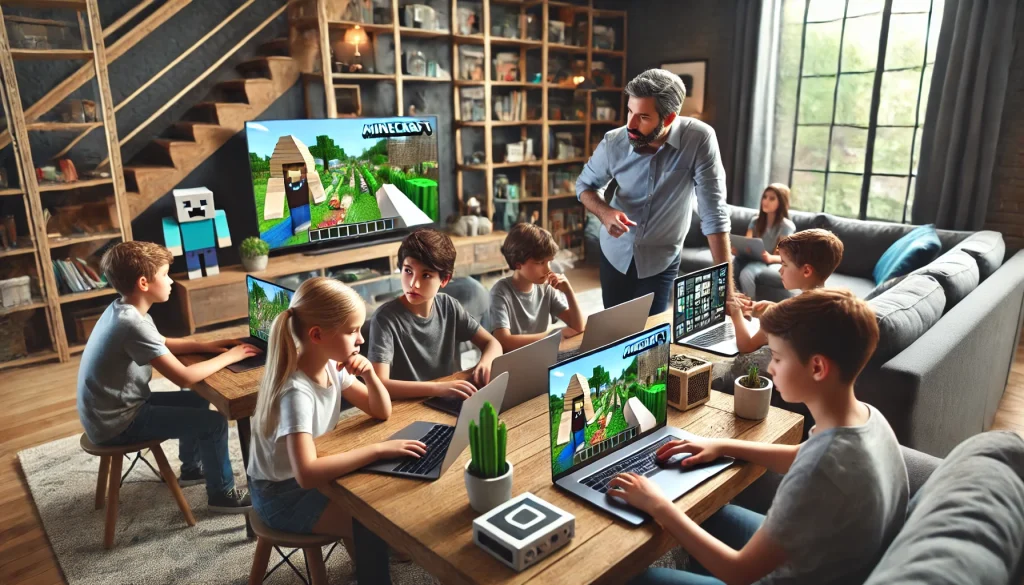
So, why is Minecraft such a game-changer for STEM education? The answer lies in its versatility and its ability to engage students on a level that traditional methods can't match. Let's dive deeper into why Minecraft is making waves in classrooms worldwide.
STEM subjects can be abstract and difficult to grasp. For some students, the leap from theory to practical application is a chasm they struggle to cross. Minecraft bridges this gap. By providing a visual and tactile environment, it allows students to see theories in action and understand their practical applications.
When students play Minecraft, they're not just building structures; they're building their futures. They learn coding, engineering, and scientific principles in a way that feels natural and fun. Therefore, they're more likely to pursue these subjects outside the classroom and into their careers.
Because Minecraft mirrors the iterative process of scientific inquiry, students learn that failure is not an endpoint but a step towards success. They try different approaches, learn from mistakes, and try again – a mindset that's invaluable in any STEM field.
Let's get concrete about learning in the virtual world. Minecraft is a sandbox, which means it provides the tools, but the kids are the architects. They can build bridges, literally and figuratively, linking concepts they've learned in the game to the real world.
Consider geometry, a subject that can be quite abstract. In Minecraft, students can build their own geometric shapes, exploring concepts like volume and surface area in 3D space. This hands-on approach not only solidifies their understanding but also makes learning geometry a whole lot more enjoyable.
Then there's physics. Students can experiment with gravity, friction, and properties of materials in a safe, controlled environment. They see the immediate impact of their actions, and because it's all happening within a game, they're learning without even realizing it.
Minecraft offers a unique and interactive way to explore chemistry concepts through hands-on learning. With the Minecraft Education Edition's Chemistry Resource Pack, students can experiment with creating compounds, performing chemical reactions, and understanding the elements from the periodic table—all within the game.
A popular mod called "MineChem" takes this a step further by allowing players to decompose Minecraft blocks into chemical components and use them to craft new items. This immersive experience helps students grasp complex chemistry topics by turning abstract concepts into practical, visual experiments that keep them engaged and curious.
From Pixels to Practice: Transpiring Skills
Now, you might wonder, how does building a virtual castle help in the real world? Well, it's about the process as much as the product. Students who design and construct in Minecraft are honing skills like spatial reasoning, resource management, and project planning. These are the same skills engineers, architects, and scientists use daily.
Take the story of a group of students who used Minecraft to simulate a Mars habitat for a school project. They researched the conditions on Mars, calculated what was needed to sustain life, and built a model of their habitat in the game. This project wasn't just about building in Minecraft; it was a lesson in research, astronomy, sustainability, and teamwork.
By tackling complex projects in Minecraft, students are laying the foundation for a strong STEM education – and having a blast while doing it.
Lego Minecraft Kits offer a hands-on way for kids to bring their favorite in-game engineering concepts into the real world. By building with these kits, children can explore basic engineering principles like structural design, problem-solving, and creativity.
With each piece, they can recreate familiar Minecraft structures, such as houses, farms, or even complex redstone contraptions, all while developing spatial awareness and fine motor skills. These simple projects not only fuel their imagination but also provide an engaging introduction to real-world engineering concepts, making learning both fun and practical. Through these kits, kids gain a better understanding of construction, physics, and teamwork, skills they can apply beyond the game.
Across the globe, educators are witnessing firsthand the transformative effects of Minecraft in their classrooms. From increased engagement to deeper understanding of complex concepts, the success stories are as varied as they are inspiring.
One notable example comes from a middle school in Sweden, where students used Minecraft to create a model of their town's water purification system. Through this project, they learned about environmental science and urban planning, skills that are directly applicable to real-world issues.
Another success story involves a history class that rebuilt famous historical landmarks, allowing students to explore ancient civilizations in a way that textbooks could never match. They gained a deeper appreciation for history and architecture, understanding the past through a creative and interactive lens.
Moreover, a science teacher used Minecraft to teach genetics by having students breed virtual animals with different traits. This innovative approach helped students grasp the complexities of heredity and dominant-recessive genes in an engaging and memorable way.
These stories underscore Minecraft's potential as a versatile educational tool that can be tailored to a wide array of subjects and learning objectives. By leveraging its immersive and interactive nature, educators can create experiences that resonate with students and make learning come alive.
Teachers who have embraced Minecraft in their classrooms often report that it's not just the students who are learning – they are too. They find themselves rethinking education, discovering new ways to deliver lessons that are more engaging and effective. They see students who were once disengaged become active participants in their learning journey.
Adopting Minecraft in education isn't about playing a game; it's about strategically integrating this tool into the curriculum. To do this effectively, educators need a solid plan that aligns with their learning goals.
Start by identifying the concepts you want to teach and consider how Minecraft can facilitate these lessons. Is it through a simulation, a building project, or perhaps a collaborative challenge? Once you have a framework, you can begin to weave Minecraft activities into your lesson plans.
For integration to be successful, Minecraft activities must be tied to clear educational outcomes. For instance, if you're teaching geometry, you could have students calculate the area and perimeter of structures they build in Minecraft. If it's a science lesson on renewable energy, students could design and test various types of sustainable houses within the game.
Minecraft offers an engaging way to explore sustainable energy concepts through various mods that simulate renewable and alternative energy sources. Mods like "Immersive Engineering" and "IndustrialCraft 2" introduce players to solar panels, windmills, and waterwheels, allowing them to generate clean energy to power their in-game machinery.
Additionally, mods like "Mekanism" and "Big Reactors" take things further by incorporating nuclear power, offering players the chance to manage more advanced energy systems. In "Mekanism," for example, players can harness the power of nuclear fission to create massive energy outputs, but they must also handle the risks associated with radioactive waste.
These mods not only teach players about renewable energy but also expose them to the complexities of managing different energy sources, making Minecraft a powerful educational tool for sustainable energy and nuclear power exploration.
Before diving into Minecraft, here's a checklist to ensure you're prepared:
With these resources in place, educators can confidently introduce Minecraft: Education Edition into their classrooms, creating a dynamic learning environment that captivates and educates in equal measure. For a more comprehensive look at Minecraft Education Edition, check out this article: Ultimate Minecraft Education Edition Guide: Tips, Lessons & Resources
For students who have mastered the basics, it's time to level up. Advanced Minecraft projects can challenge even the most adept young minds, pushing them to apply their STEM knowledge in new and complex ways.
Consider setting up a server where students can work on group projects that span multiple class periods or even grades. These could include large-scale builds like a model of the solar system or recreating historical events. Such projects not only deepen students' understanding of the subject matter but also teach them valuable lessons in teamwork and project management.
Another advanced use of Minecraft is to introduce students to coding. With the Code Builder feature, they can learn the basics of programming by controlling an in-game robot called the Agent. This hands-on approach demystifies coding and shows students how it can be used to create, control, and manipulate within a virtual world.
The possibilities are endless, and as students grow with the game, they're also growing their skills – skills that will serve them well in whatever STEM path they choose to follow.
For those who think Minecraft is just about mining and crafting, think again. One of the most exciting aspects of Minecraft in education is the opportunity to incorporate coding into gameplay. This isn't just any coding lesson; it's about bringing students' creations to life and seeing the immediate results of their code in a world they're already invested in.
Using tools like the Code Builder, students can learn the basics of programming in an environment that's both familiar and fun. They can control entities, automate tasks, and build complex systems, all through the power of code. It's a brilliant way to introduce the concepts of logic, sequencing, and computational thinking without the intimidation factor that often accompanies these subjects.
What's more, coding in Minecraft isn't a solitary activity. Students can share their code, work on projects together, and even troubleshoot each other's work. It's collaborative, it's creative, and it's exactly what the future of STEM education should look like.
You've got questions, and I've got answers. Here's a rundown of some of the most common queries educators and parents have about Minecraft in STEM education.
Minecraft is a natural fit for STEM education because it's a sandbox game that rewards creativity, problem-solving, and critical thinking. These are the very skills that form the foundation of STEM learning. In Minecraft, students can visualize mathematical concepts, apply scientific principles, and see the results of their engineering feats.
Furthermore, Minecraft's open-ended nature means that it can be used across all STEM disciplines. Whether it's creating a sustainable ecosystem, exploring the principles of electricity with Redstone, or using blocks to model chemical compounds, Minecraft provides a versatile platform for a wide range of educational experiences.
Getting started with Minecraft in your classroom might seem daunting, but it's easier than you think. Here's a quick start guide:
Once you've got the basics down, you can start to explore more advanced features and even create your own custom lesson plans tailored to your students' interests and learning objectives.
Remember, the key to success with Minecraft in education is to keep the learning objectives at the forefront, ensuring that each activity has a clear educational purpose.
Absolutely! One of the strengths of Minecraft is its ability to cater to a variety of learning styles. Visual learners can benefit from the game's graphical interface, while kinesthetic learners can engage with the hands-on building aspects. Auditory learners can follow spoken instructions and collaborate with peers, and reading/writing learners can benefit from in-game documentation and storytelling.
Because Minecraft offers so many ways to engage with content, it ensures that no student is left behind. It's a platform that encourages exploration and expression in ways that traditional teaching methods often cannot.
Minecraft Education is versatile enough to benefit students of all ages, from elementary through high school. Younger students can learn the basics of collaboration, pattern recognition, and problem-solving, while older students can tackle more complex projects involving coding, scientific simulations, and detailed historical reconstructions.
The game's educational value grows with the student, offering more sophisticated challenges and learning opportunities as their skills develop. It's this scalability that makes Minecraft a lasting educational tool across grade levels.
Minecraft strikes a perfect balance between learning and play by embedding educational content within an engaging game environment. Students are motivated to learn because they're having fun, and they're having fun because they're empowered to be creative and in control of their own learning.
The game's design naturally encourages curiosity and exploration, which leads to learning that feels organic rather than forced. Teachers can guide this process by setting specific learning objectives and challenges that align with curriculum goals.
Ultimately, Minecraft respects the natural way that children learn – through play. By harnessing the power of play, Minecraft makes learning an adventure, not a chore. And that's the secret to its success in STEM education.
Imagine a space where your child is curled up, lost in a world of dragons, adventure, and discovery. This can be a daily reality with the right setup—a cozy corner equipped with a kids reading chair. It's more than just a piece of furniture; it's an invitation to explore, learn, and grow.
When you choose a chair specifically for reading, you're sending a powerful message: reading is important. But it's not just about the message. It's about creating a spot that's irresistibly comfortable and uniquely theirs. It's where the magic of reading comes alive, and where your child willingly chooses to dive into books.
The right environment can significantly influence your child's attitude towards reading. A special reading chair can serve as the centerpiece of a nurturing environment that's conducive to reading. With a chair they love, your child is more likely to make reading a daily habit, laying the groundwork for a lifetime of learning.
Not all chairs are created equal, especially when it comes to kids. You'll want to consider several factors to find the perfect throne for your little reader.
First and foremost, the chair must be comfortable. If your child can't sit still for a story, chances are the chair isn't doing its job. But comfort isn't just about soft cushions. The chair should support your child's back and encourage good posture—after all, they'll be spending a lot of time in it.
And remember, a chair that's comfortable for a toddler won't necessarily work for a preteen. Size matters. Their feet should be able to touch the floor, and their arms should rest easily on the armrests. This isn't just about comfort; it's about physical health and developing good habits.
Let's talk style. The chair should be something that your child is drawn to, that reflects their personality. Whether it's a vibrant color, a fun shape, or a theme that aligns with their interests, the chair should shout, "This is your special spot!"
Functionality is key, too. It needs to be the right size for their body and for the space you have. It should be easy to clean—because spills happen—and durable enough to withstand the rigors of childhood. You want a chair that grows with them, at least for a few years.
Having a space to call their own is important for kids. It gives them a sense of independence and control. A reading chair can be that space where they make the rules: what to read, how to sit, and when to use it. It's a small kingdom where they're in charge, and that's a powerful motivator for self-directed learning.
Think about it: when something is truly yours, you care for it, you use it, and it becomes a part of your daily life. The same goes for your child's reading chair. It's a place that belongs solely to them, which naturally draws them into using it regularly. Because it's their very own, they'll want to spend time in it, and that means more time spent reading.
Once you've found the perfect chair, it's time to set up a reading nook. This should be a quiet corner of the house, away from the hustle and bustle, where your child can retreat with a good book. Add a small bookshelf within arm's reach and proper lighting, and you've just created an environment that's conducive to reading. A personalized reading nook can help make reading a special, enjoyable experience for your child.
Comfort is the key that unlocks concentration and enjoyment. When your child is comfortable, they're more likely to stay put and get lost in a book. And the more they read, the better they get at it. It's a virtuous cycle that starts with something as simple as a cozy chair.
When we relax, our minds open up to new possibilities. For kids, a comfortable reading chair can be the gateway to a relaxed state where they're more receptive to reading. By associating the comfort of their chair with the pleasure of reading, they'll be more inclined to make reading a regular part of their life.
Therefore, selecting a chair that cradles your child in comfort is not just about physical coziness—it's about creating a mindset where reading is a pleasurable and calming activity.
Now, consider the chair itself. Is it inviting? Does it have a fun design or characters from their favorite books? A chair that captures your child's imagination will do more than just provide a place to sit—it will beckon them to come, read, and discover.
As children grow, their needs change, and so should their reading chairs. The cute animal-shaped chair perfect for your toddler won't suit a child who's outgrown its size and design. It's important to update the reading chair to match your child's development.
This evolution in seating can be an exciting opportunity for your child to recommit to their love of reading with a chair that reflects their growing personality and interests.
For the little ones, safety and simplicity are key. Chairs should be low to the ground to prevent falls and have no sharp edges or small parts. Soft, plush chairs or small foam chairs are often the best choices for toddlers. They're just the right size and provide the softness and support a young child needs.
And because toddlers can be messy, look for chairs with washable covers. You'll thank yourself later.
Older children need a reading chair that can support them through longer periods of reading and studying. A sturdy, ergonomically designed chair that promotes good posture is essential. It should be adjustable to keep up with their growth spurts, ensuring that it remains comfortable year after year.
For example, the 'ErgoKids' chair is a popular choice among parents for its adjustable height settings, durable materials, and fun color options that appeal to kids.
With the right chair, your school-aged child can stay comfortable, focused, and motivated to read and learn.
An ideal reading chair for kids is one that combines comfort, support, and appeal. It should be proportionate to their size, allowing their feet to rest flat on the floor and their arms to comfortably reach the armrests. The backrest should support their posture, and the material should be both durable and cozy. Aesthetically, the chair should spark joy and interest, making it a place they're excited to return to time and time again.
Bean bags can be a fantastic choice for kids' reading chairs as they offer a fun and flexible seating option. Kids love to plop down into the welcoming arms of a bean bag. It's important, however, to choose a bean bag that provides enough support to encourage good reading posture. Look for bean bags with built-in structure or consider adding a small pillow to support their back if necessary.
To make a reading area more inviting, focus on creating a warm and personal space. Incorporate your child's favorite colors or themes, add a soft rug or pillows for extra coziness, and ensure there's sufficient lighting for reading without straining the eyes. Keep a variety of books within easy reach to entice them with choices. Making the space distinct and separate from high-traffic areas can also help in making it a special retreat for your child.
Safety is paramount when selecting a kids reading chair. Look for stable, sturdy designs that won't easily tip over. Avoid sharp edges and opt for materials that are non-toxic and flame-retardant. If the chair has a folding mechanism, ensure it has a reliable lock to prevent accidental collapses. For bean bag chairs, make sure the filling is contained within a secure inner bag to prevent any risk of choking.
A reading chair can significantly benefit your child's development. It provides a dedicated space for reading, which can help with concentration and the development of a routine. Comfortable seating encourages longer periods of reading, which can improve literacy skills. Additionally, by having their own special place, children can feel a sense of ownership and independence, boosting their confidence and willingness to engage with books and learning.
Welcome to the amazing world of history, where every moment is an adventure waiting to be discovered! Imagine traveling back in time to meet daring explorers, ingenious inventors, and powerful leaders. Picture yourself uncovering ancient treasures, witnessing epic battles, and learning about the incredible events that have shaped our world.
History is so much more than just dates and facts—it's a collection of fascinating stories that bring the past to life. When we explore history, we get to experience the excitement of discovering how people lived, worked, and played in different times and places. From the majestic pyramids of Egypt to the towering castles of medieval Europe, history is full of wonders that can ignite our imagination and curiosity.
In this journey through time, we'll uncover the mysteries of ancient civilizations, learn about the heroes and heroines who changed the course of history, and see how the past connects to our lives today. Whether it's through fun activities, engaging books, or interactive experiences, history can be an exciting and enjoyable subject that opens up a world of knowledge and adventure.
So, buckle up and get ready to travel through time. Together, we'll explore the incredible stories of the past and discover just how fun and fascinating history can be, when you discover history that doesn't suck!
History comes alive through storytelling! Gone are the days when we only memorized facts and dates. Now, we learn about our ancestors in fun, engaging ways. History has become an adventure for curious kids.
Learning about the past can change our future. Kids who understand history learn about society and overcoming challenges. They learn why what happened in the past matters today.
Many kids think history is boring, but it's not true. Teaching history in a modern way makes it fun and relevant. Educators turn historical events into stories that kids love.

Storytelling makes history exciting. It changes facts and figures into stories that are easy to remember. Let's see how storytelling makes history better:
| Traditional Method | Storytelling Method |
|---|---|
| Memorizing dates | Imagining being there |
| Reading textbooks | Listening to podcasts |
| Passive learning | Active engagement |
| Focusing on facts | Understanding context |
With storytelling, history becomes an adventure. Kids can go to different time periods and meet historical figures. This way of learning is fun and helps kids remember facts better.
"The best way to make history stick is to make it come alive through stories." - Greg Jackson, Host of History That Doesn't Suck
With fun history lessons, kids discover interesting stories from the past. They learn that history is more than just facts. It's about the human story over time.
History That Doesn't Suck! podcast is a fun way to learn about historical figures. It gets over a million downloads every month. Kids and history fans love it. The host, Professor Greg Jackson, tells amazing stories.

Professor Jackson has a PhD in history. He makes interesting biographies for kids. His method helps kids feel close to famous people from history.
The show talks about many American history figures. It's exciting for kids to learn this way:
Many people like this podcast way of teaching. 64% of Apple Podcasts reviews are good. Here's what fans say:
"The host's narration style makes learning about historical figures so much fun!"
"I never thought I'd be this interested in American history. The storytelling is amazing!"
By being fun and easy to understand, History That Doesn't Suck! changes how kids see history. The show is now part of the Airwave podcast network. This network has over 100 podcasts.
The podcast makes biographies more fun for kids. It helps them learn about history makers and their effects on us today. It's truly changing how we teach history to kids.
History podcasts change how we look at the past. "History That Doesn't Suck" (HTDS) is one top show. It makes American history fun.
Greg Jackson tells history like a story. He has a Ph.D. from Utah University. As a Utah Valley University professor, he teaches about National Security and more. His love for history shows in HTDS episodes.

In HTDS, history comes to life through storytelling. Each episode is an hour long. People love listening, as shown by feedback:
The HTDS team knows a lot about American history and more. Their different skills make the podcast both fun and informative.
HTDS talks about US history from the Revolution up today. It covers many interesting topics:
| Episode | Topic | Key Points |
|---|---|---|
| 157-158 | Prohibition | 18th Amendment, William "Bill" McCoy, Temperance movement |
| 155-156 | 1920s Presidents | Warren G. Harding, Teapot Dome Scandal, Calvin Coolidge |
| 153 | West Virginia's Mine Wars | Largest uprising since the Civil War |
History That Doesn't Suck mixes storytelling with facts. It changes how we learn our history.
American history for kids comes alive with the help of storytelling. The "History That Doesn't Suck" podcast makes history lessons fun and memorable. This is great for young listeners.
This podcast has a top rating of 4.9 out of 5 stars from 68 reviews. People love the stories and the way they are told. The episodes happen every two weeks and talk about many topics, like the Prohibition era.
What makes this podcast special is the way it teaches history:
The podcast's stories turn boring facts into interesting tales. For instance, the episode "Prohibition - So You Wanna Be a Rum Runner?" is very exciting. It talks about the 1920s and the hidden world of illegal alcohol.
"This podcast has reignited my love for history. The stories are so engaging, I feel like I'm right there in the middle of the action!" - A satisfied listener
Focusing on storytelling helps kids remember history better. It's more than just dates and names. It's about the people and their experiences that made our country what it is.
This podcast tells stories from the Stamp Act Crisis of 1765 to the Boston Tea Party of 1773. By sharing history in a fun way, kids learn to love and understand their country's past.
Learning history is actually exciting! Dive into interesting history facts and trivia that bring the past to life. Discover ancient civilizations to the present, there's much to see.
Insects have been here for over 350 million years. This is longer than humans! Here are more cool facts:
History affects our present and future. Work by Florence Nightingale and Edith Cavell in nursing still matters. Knowing about them shows how much progress we've made.
Discovering the past interactively is fun! Try these activities:
Through these interactive activities, children can fall in love with history. Remember, history is not just dates and names. It's a treasure full of remarkable stories.
History isn't just about reading in class. It's a way for families to learn and bond. Parents are finding new ways to teach history. They use podcasts, books, and more.
Discussing history as a family has many good points:
Research says that Latino families love to bond over activities. They enjoy giving more than getting. This forms a strong family base, which leads to happy lives.
There are many fun ways to learn more about history:
Starting these traditions young has great benefits. Babies who hear stories a lot start reading and understanding things early. Books like "Goodnight Moon" have been uniting families for years.
"Sharing time reading and bonding with children can help develop a love of reading and learning."
Making history fun is about more than the past. It's about having fun and growing closer now.
Who said history can't be funny? Let's explore jokes from the past. Laughter makes history learning fun!
Kids enjoy a good pun. Historical figures are great for clever jokes. Here are some funny one-liners for your little historians:
Funny stories from history can make learning interesting. Did you know about President Taft and the bathtub? It took six men to help him out of the tub! These tales show us that great people also have funny moments.
Jokes are great for remembering historical dates and events. For example, a simple rhyme helps remember when Columbus sailed: "In 1492, Columbus sailed the ocean blue!"
Here are some jokes to enjoy while learning about history:
With thousands of jokes spanning from animals to historical figures, kids can enjoy learning history. These jokes make learning fun, develop humor, and improve social and speaking skills. So, when studying history, remember to sprinkle in some laughter!
History isn't just about dates and facts—it's a treasure trove of incredible stories, fascinating characters, and mind-blowing events that have shaped our world. From the daring adventures of explorers to the groundbreaking discoveries of inventors, history is filled with exciting tales waiting to be uncovered.
Encouraging kids to dive into history can spark their imagination and curiosity. When they learn about ancient civilizations, legendary battles, and pivotal moments, they not only gain knowledge but also develop critical thinking and problem-solving skills. History teaches us valuable lessons about courage, innovation, and resilience.
To make history fun, turn it into a journey of discovery. Use interactive activities, engaging books, and multimedia resources to bring historical events to life. Explore museums, watch documentaries, and even role-play historical figures to create a hands-on learning experience. By connecting the past to their own lives, kids can see how history is not just something that happened long ago but a continuous story that they are a part of.
So, let's embark on this historical adventure together and uncover the mysteries of the past. Who knows? Your child might just find their new favorite hero or uncover a passion for history that lasts a lifetime. Remember, history is not just about learning—it's about exploring, imagining, and having fun!
Event: The American Civil War (1861-1865)
What were the main causes of the American Civil War?
The primary causes were slavery, states' rights, and economic differences between the North and the South.
Event: The Construction of the Pyramids (c. 2580–2560 BC)
Which pharaoh is credited with building the Great Pyramid of Giza?
Pharaoh Khufu (also known as Cheops).
Event: The Invention of Gunpowder (9th century)
What was gunpowder originally used for in China?
Initially used for medicinal purposes and later for fireworks and weapons.
Event: The Renaissance (14th-17th century)
Where did the Renaissance begin?
It began in Florence, Italy.
Event: The Mali Empire (c. 1235-1600)
Who was the most famous ruler of the Mali Empire?
Mansa Musa, known for his immense wealth and pilgrimage to Mecca.
Event: The Russian Revolution (1917)
What were the two main phases of the Russian Revolution?
The February Revolution and the October Revolution.
Event: The Arrival of the First Fleet (1788)
What was the First Fleet?
A fleet of 11 ships that carried convicts, marines, and settlers to establish the first European colony in Australia.
Event: The French Revolution (1789-1799)
What was the primary goal of the French Revolution?
To overthrow the monarchy and establish a republic based on liberty, equality, and fraternity.
Event: The Fall of the Western Roman Empire (476 AD)
Who was the last emperor of the Western Roman Empire?
Romulus Augustulus.
Event: The Meiji Restoration (1868)
What was the Meiji Restoration?
A period of rapid modernization and industrialization in Japan, restoring imperial rule under Emperor Meiji.
Ready to learn outside the box? Homeschool field trips mix learning with fun. They make learning memories that last a lifetime. With more than 30 different ideas, you can turn the world into your classroom.
Picture your kids' faces lighting up at a science museum. Or imagine their questions during a hike. These hands-on trips make learning exciting. They can spark a love for exploring the world. Whether it's trips outside or fun but educational ones, homeschool field trips make learning fun.
Today, field trips go beyond just visiting places. You can learn at pumpkin patches or see inside Amazon. These trips are more than breaks; they help kids grow and remember. From playing at the park for free or visiting famous spots at a discount, there's something for everyone.
Field trips are key in homeschooling. They offer learning that goes beyond books. For homeschool moms, these trips are a great way to add to their kids' education. Plus, they make memories together.

Field trips make what's in books real. This way, kids see how what they learn applies to life. Hands-on learning helps kids remember things better.
Places like museums or nature centers make learning fun. Homeschoolers then love what they're studying more.
Kids learn a lot on field trips, like how to talk to people. They interact with tour guides and other kids. This helps with making new friends and talking to new people.
They also learn to be independent and how to adjust to new places.
"Field trips have been a game-changer for my shy daughter. She's now more outgoing and curious about the world around her."
Field trips help homeschoolers bond. Whether they visit an apple orchard or a science center, they make memories. These memories last and make a fun break from the usual lessons.
Parents and kids alike feel refreshed by these outings.
A good idea is to plan one trip each month. This way, kids get to learn in different ways. They also get to explore and have fun.
Nature trips mix fun with learning for kids. They help homeschooled kids explore the outdoors. These trips teach them about ecosystems, farming, and the stars.

Hiking in parks is fun and educational. Children get to see and learn about plants and animals. Entry is free on some days, which makes it affordable for families who homeschool.
Kids can see how food grows by visiting farms and orchards. They get to pick fruits, feed animals, and learn how to farm in a good way.
"Our farm visit was the highlight of our homeschool year. The kids learned so much about where their food comes from!"
Botanical gardens and observatories mix fun with science. They are great for field trips. Kids can learn and explore the outdoors at these places.
| Venue | Learning Opportunities | Fun Activities |
|---|---|---|
| Botanical Gardens | Plant species, ecosystems | Scavenger hunts, gardening workshops |
| Observatories | Astronomy, space science | Stargazing, planetarium shows |
Planning these trips is great for homeschoolers. It adds a lot of fun and learning to their year. Kids also learn to love and respect nature.
Looking into history and culture can be exciting for kids. It makes the past come to life. These trips give hands-on learning that books can't.

The U.S. has many historical spots for fun and learning. Here are some great places to visit:
At these places, history feels alive. Kids can imagine the past, see old towns, and learn important American stories.
"Field trips are more than fun. They help students remember better by using all their senses. This makes the learning experience very strong."
Cultural outgoings are also important. Here are some to think about:
Homeschoolers often go on field trips every week. This is a lot more than the usual two per year for public schools. It lets kids dive deeper into history and cultures.
| Benefits of Historical Field Trips | Examples |
|---|---|
| Real-life learning | Touring Independence Hall |
| Improved retention | Doing things at Colonial Williamsburg |
| Family bonding | Sharing times at Mount Vernon |
| Physical activity | Walking the Boston Freedom Trail |
| Career exploration | Meeting historians at museums |
These trips aren't just for fun. They add big to kids' learning. They make the world's history and culture much more real to them.
Science and tech field trips offer great ideas for homeschooling. They are full of fun and give kids hands-on experiences. These help young minds learn in exciting ways.
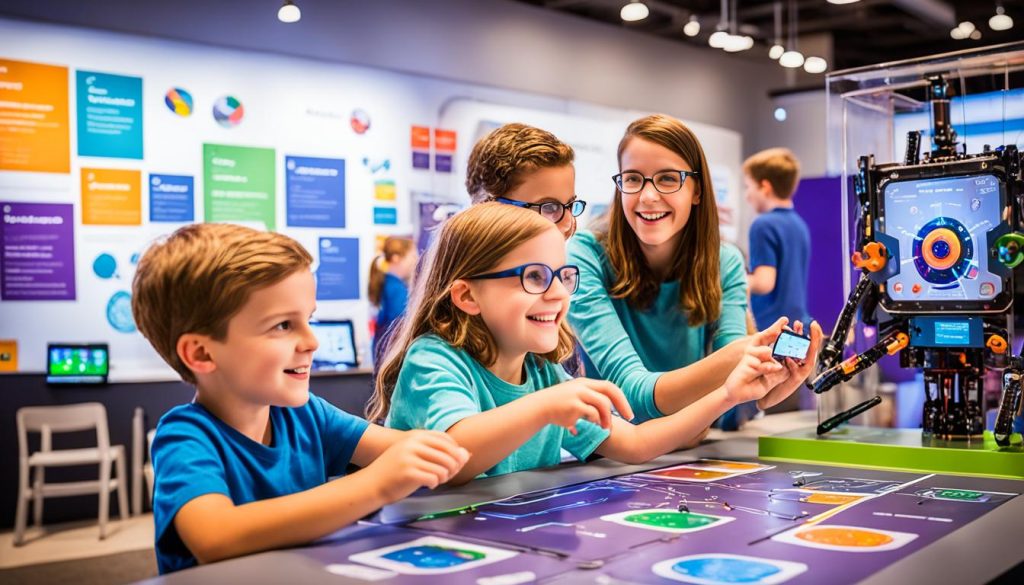
Science museums and planetariums are full of knowledge. They have exhibits that make hard things easy to understand. The Museum of Science and Industry in Chicago does this well.
Here are some tips for your visit:
Visiting tech centers and factories shows how things are made. A family loved watching a Kia car get built. These trips get kids interested in making things and how they work.
Aquariums and zoos teach about animals and the earth. The Shedd Aquarium in Chicago lets kids see marine life up close. This makes them care more about saving animals and their habitats.
"Eating popcorn for lunch at the Museum of Science & Discovery was a highlight of our homeschool field trips!"
Here's a comparison of popular science trip destinations to help plan your next outing:
| Destination | Focus Area | Age Range | Cost per Child |
|---|---|---|---|
| Atlas Science Center | Chemistry, Physics, Biology | K-12 | $7 |
| Museum of Science & Industry | Various Scientific Fields | All Ages | $21.95 |
| Adler Planetarium | Astronomy | All Ages | $19 |
| Shedd Aquarium | Marine Biology | All Ages | $39.95 |
Don't forget to look for group discounts and use Groupon for great deals. With good planning, these trips can be amazing learning moments for your family.
Homeschool moms find joy in taking kids on art and creativity field trips. It's a great way to have fun and learn. These trips show kids different ways to be creative.
One exciting place to visit is The Art Institute of Chicago. It has a lot of cool art that can get kids' imaginations going. Let's check out some cool exhibits:
| Exhibit | Details |
|---|---|
| Grandma Moses Collection | Diverse paintings showcasing her unique style |
| Horace Pippin Showcase | Notable paintings offering valuable learning experiences |
| French Impressionist Gallery | Permanent exhibit featuring Monet, Renoir, Pisarro, and Matisse |
| Electrifying Design: A Century of Lighting | Extensive selection appealing to technology enthusiasts |
| Calder-Picasso Exhibit | Over 100 artworks by two renowned artists |
Local art fests are also great for exploring creativity. They let kids try fun, hands-on crafts. Moms can organize visits to places like pottery studios. There, kids can make their art pieces.
Here are some tips for a great trip:
Art-focused trips help kids think creatively and appreciate art more. Moms can teach their children to enjoy different types of art this way.
Looking for homeschool field trip ideas? Focus on community service and volunteering. They offer more than just fun. Kids learn about helping others and feeling for them. Moms can use these trips to teach their kids to care about their community.
Joining in on clean-up projects is neat for homeschool families. It's a chance to keep your area nice and learn. Here are things you can do:
Going to nursing homes and hospitals can really touch kids. They get to meet older people and others who need cheering. You can do fun stuff together like:
Animal shelters are perfect for homeschoolers wanting to help pets. Your family can do things like:
| Volunteer Opportunity | Skills Developed | Age Suitability |
|---|---|---|
| Local Clean-Up Projects | Environmental awareness, teamwork | All ages |
| Nursing Home Visits | Empathy, communication | 5 and up |
| Animal Shelter Work | Responsibility, compassion | 8 and up |
These trips are cool because they help your child be smarter and kinder. And they make your child want to keep helping others. Moms really like using these to talk about big issues and urge their kids to stay involved.
Homeschool field trip ideas are different in every season. They bring kids outdoor fun all year. Each season, nature changes, offering new learning chances.
Homeschool families can make the most of seasons for learning. Studies show in a year, they take about 24 field trips. Six of these happen online. So, both in-person and digital trips are key.
| Season | Popular Field Trip | Educational Focus |
|---|---|---|
| Fall | Pumpkin Patch | Agriculture, Harvest |
| Winter | Science Museum | STEM Learning |
| Spring | Botanical Garden | Plant Life, Ecosystems |
| Summer | State Park | Nature, Conservation |
Planning trips for each season helps homeschooling kids learn in many ways. They mix classroom with hands-on learning. These outings help kids fully understand their world. They also grow to love learning for life.
Homeschool field trips often go to local places. Kids can learn a lot about jobs and how our community works. These trips mix fun and learning well.
Visiting fire stations and police is cool. Here, children see what first responders do up close. They learn about safety and see cool equipment. The tours often let kids try on firefighter gear and sit in a police car.
They also learn how to act in emergencies. Understanding community service is a big part of the fun.
Post offices and courthouses are great for learning about the law and government. On these trips, kids can see how mail gets sorted. They learn about courts and the need for good communication.
Going to city halls and other government places is interesting. Students learn about how cities work. They can attend city meetings and tour the mayor's office.
Learning local laws and rules is also part of the fun.
Trips to these places give kids real-world learning. They really help children understand how our communities work. And they might even spark interest in future careers.
| Location | Learning Opportunities | Fun Activities |
|---|---|---|
| Fire Station | Fire safety, emergency response | Sliding down fire poles, exploring fire trucks |
| Police Department | Law enforcement, community safety | Fingerprinting, K-9 unit demonstrations |
| Post Office | Mail system, communication | Stamping letters, following a package's journey |
| Courthouse | Legal system, civic duties | Mock trials, meeting judges |
| City Hall | Local government, community planning | Mayoral Q&A sessions, city planning activities |
Many of these places offer free tours, which is great for homeschoolers. These field trips are not just fun; they teach your kids a lot. They help make learning real and interesting.
Keeping learning fun is key for homeschool moms. They mix education with fun on field trips. Fun lessons add a break to the study routine. About 10% of these trips are just for fun.
Kids love outdoor adventures. Fall is perfect for visiting pumpkin patches and apple orchards. They learn about farming and nature. Zoos and aquariums also offer lots of educational fun.
Children's museums and discovery centers are big in the U.S. These places let kids learn by doing. Some places have special deals for families. Planning smart means more fun for less money.
Field trips offer real-world learning and fun experiences. They make the curriculum richer. They can also be scheduled every month.
Field trips let children learn by doing. They explore beyond books. These trips help with making friends and growing confidence.
They also lead to memories that last a lifetime. Kids get to see how experts do things in different fields.
Nature trips include hikes in parks and visits to farms. Kids can also go to botanical gardens and look at stars in observatories. These trips make learning about our planet fun.
Historical trips can be to museums or sites. Places like the Abraham Lincoln Presidential Library or Chinatown in Chicago are great.
So are visits to historic spots like Route 66. These places let kids see the past up close.
Science and tech trips are to museums and more. Kids can visit planetariums and see how things are made in factories. Places like the Museum of Science and Industry offer a lot to discover.
Art trips are to museums and live shows. Kids get to see all types of art. The Art Institute of Chicago is a top spot for this.
There are also local art fests where they can join in. Pottery or glass studios are good places to get creative.
Service trips are about helping others. Kids clean up local areas or cheer folks up in nursing homes. Volunteering at shelters is also a way to give back.
There's a trip for every season. Fall means pumpkin patches. Winter's for ice skating. In spring, kids visit gardens. Summer's for fun outdoor festivals.
Trips to local places show how communities work. Kids see fire stations and meet police. They learn about mail at post offices and government in courthouses.
Recreational trips include fun places and events. Like seeing sports or a show. Examples are the Chicago Bulls, Navy Pier, and the Symphony Orchestra.
Welcome to IDEA Homeschool, Alaska's best homeschooling program since 1997. It's the oldest and largest in the state, giving families lots of help and support. This program is perfect for delivering the greatest homeschool room ideas and teaching methods for your child.
Create an image of a family surrounded by books and educational materials in a cozy, home-like environment. Make sure to include different types of learning resources such as posters, visual aids, and hands-on tools. The image should convey the idea of homeschooling being a personalized, dynamic approach to education that caters to every child's individual learning needs. Use warm colors and soft lighting to create a welcoming atmosphere that beckons viewers to join in on the adventure of homeschooling.
IDEA Homeschool knows each child learns in their own way. So, we make learning fit just right for them. Our team is here to guide you, with great resources and a strong community. Whether you want top-notch schooling info, to choose your own study plans, or connect with other families, IDEA Homeschool can meet all your needs.
When you think about homeschooling in Alaska, IDEA Homeschool is a top pick. It gives families a lot of help and care. The school lets parents be really involved in their children's learning. They also help families with what they need to succeed.
Create an image of a homeschooling family surrounded by various curriculum options at IDEA Homeschool. The family should be engaged in selecting the right educational materials for their child's needs. The atmosphere should be bright and cheerful, with the family members looking happy and excited about the learning possibilities that IDEA Homeschool offers. The image should convey a sense of warmth, community, and support, as well as a commitment to excellence in homeschool education. Show a variety of curriculum options on shelves or tables around the family, including textbooks, workbooks, reference materials, and other resources. Use colors that evoke positivity and creativity, such as bright greens, blues, pinks, and oranges. Make the image feel busy but organized, with the family members interacting naturally with each other and with the curriculum items around them. Emphasize the flexibility and customization that IDEA Homeschool provides, while also highlighting the quality and rigor of its academic
IDEA Homeschool has a team with over 100 years of experience in homeschooling. They know a lot about the good and tough parts of teaching at home. This helps them offer great advice and support to all families.
IDEA Homeschool gives families special help from staff who are nearby. They help with any questions, share resources, and give support just for you. The school also makes sure its online tools are easy to use for both parents and students.
IDEA Homeschool lets families pick from many homeschool curriculum choices. Parents can choose the best for their kids' needs and goals. The school offers different ways of learning, like through stories or letting kids lead the way in their learning.
| Educational Philosophy | Key Features |
|---|---|
| Classical Education | Focuses on three stages: Grammar, Dialectic, and Rhetoric for grades K-12 |
| Waldorf Education | Emphasizes interdisciplinary learning, integrating practical, artistic, and conceptual elements |
| Montessori Education | Allows children freedom in a self-directed learning environment with specially designed materials |
| Literature-Based Learning | Utilizes engaging "living books" such as biographies and historical fiction instead of textbooks |
With IDEA Homeschool, families get big support and a chance to be flexible. The school is all about helping every child do their best. Idea Homeschool is perfect for parents who want their child's education to match their unique style and goals.
IDEA Homeschool gives families tons of resources for their homeschool journey. They focus on personalized learning and sparking creativity. IDEA has top-notch online tools like World Book, AKCIS, and BrainPOP. These help parents craft education that fits their kid's needs.
A young child sitting at a desk, surrounded by books and educational resources, with a bright light shining on them, symbolizing the unlocking of their potential through IDEA's homeschooling resources.
Every IDEA office has a packed resource room. It has lots of textbooks, curricula, and fun learning games. Families can also use the big library to borrow materials. This helps make homeschooling more personal and fun for each child.
IDEA also gives tech support through computer experts in every office. They make sure families have the tools and help for online learning.
| Resource | Description | Benefits |
|---|---|---|
| World Book | Comprehensive online encyclopedia | Encourages research skills and knowledge exploration |
| AKCIS | Alaska Career Information System | Helps students explore career options and plan for the future |
| BrainPOP | Engaging educational content across various subjects | Fosters critical thinking and reinforces learning concepts |
| Resource Rooms | Well-stocked with textbooks, curricula, and learning games | Provides a variety of materials to suit different learning styles and interests |
| Libraries | Extensive collection of books and resources | Encourages a love for reading and supports literacy development |
IDEA helps families unlock their child's full potential with many resources. Along with IDEA's helpful team, these resources build a great base for homeschooling. They make the homeschool journey enriching and successful.
At IDEA Homeschool, parents are seen as the real pros on their kids' learning. We work together with them closely to support their choices for their child's success. Our team gives parents what they need to homeschool well.
We make sure they have the right tools, materials, and methods. This lets parents make a learning place perfect for their child. We know every kid is different, so we help however we're needed.
Every family's homeschool journey is unique and special. We respect that and offer support based on each family's needs. Our main aim is to help parents make smart choices about their kid's education path.
Maybe it's using a usual school plan, or trying out different methods. We support either way. This supports the parent's deep involvement in their child's school life and making success happen.
At IDEA Homeschool, we know that not all kids learn the same way. So, we provide a lot of different resources and methods. These are focused on helping kids with various learning styles, joys, and abilities.
Our staff is always ready to help guide and support parents. We help them handle the ups and downs of homeschooling with ease.
| Learning Style | Teaching Techniques | Resources |
|---|---|---|
| Visual | Incorporate diagrams, charts, and videos | Online video lessons, educational posters |
| Auditory | Use audio recordings, discussions, and verbal explanations | Audiobooks, podcasts, online lectures |
| Kinesthetic | Engage in hands-on activities, experiments, and field trips | Science kits, art supplies, outdoor exploration guides |
We give parents a wide choice of resources and methods. Parents can pick what best suits their child's way of learning. Whether your child learns best through seeing, hearing, or doing, we support you. IDEA Homeschool has what you need to teach in the best way possible.
In 1997, IDEA Homeschool started giving great homeschool chances in Alaska. Being the biggest and oldest alaska homeschool program, it knows a lot. It helps parents and grows the special skills of each child. IDEA leads the way for homeschool programs in alaska.
IDEA Homeschool has lots of experience and covers more than others in Alaska thanks to its big team. This team includes experts like Mary Fowler, with IDEA since 1999, and Lisa Williams, a former Marine Officer. They offer many skills to help homeschoolers.
| IDEA Homeschool Experience | Impact |
|---|---|
| Established in 1997 | Over two decades of homeschooling expertise |
| Largest homeschool program in Alaska | Extensive reach and resources for families |
| Dedicated staff with diverse backgrounds | Comprehensive support for homeschoolers |
IDEA involves homeschoolers in making the program. IDEA always listens and learns from homeschooling families. This helps the alaska homeschool program meet their needs. It has made IDEA’s program very good at helping homeschoolers.
Brianna Gravelle, a mom who homeschooled her three kids, agrees: "IDEA's Curriculum Fair is exciting every year for us. Since I started going four years ago, I've seen how the program gets better from our ideas."
IDEA brings the homeschooling community together. It uses their knowledge to make a great program. With its long history, skilled team, and focus on working together, IDEA is the best choice for homeschool programs in alaska.
IDEA Homeschool knows how important a strong homeschool community is. We think it's key to having fun and doing well in homeschool. Our program lets families get together, share stuff, and make good friends.
IDEA Homeschool has special Facebook groups for parents. Here, our families can interact with many experienced homeschoolers. You can get advice, share stories, and ask questions. Our moderators keep it a helpful and safe space for everyone.
Parents in the groups can:
IDEA Homeschool has lots of fun clubs, events, and workshops. They're made just for our homeschooling families. These activities help students learn more about what they like, gain new skills, and make close friends.
| Club/Event | Description |
|---|---|
| Battle of the Books | A reading program that gets students talking about their favorite books with friends |
| Academic Decathlon | A big contest that tests students in many subjects, and it's fun for teamwork and thinking skills |
| STEAM Workshops | Fun workshops on Science, Technology, Engineering, Arts, and Math, all about getting creative and solving problems |
| Chess Club | Helps students learn chess, which is great for thinking and focusing |
| Lego Robotics Teams | Groups that build and program Lego robots, teaching STEM and working together |
| Sewing Clubs | Clubs that teach sewing, good for creativity and life skills |
Joining these offers IDEA Homeschool students a chance to meet like-minded friends. Together, they make a strong and supportive homeschooling community.
IDEA Homeschool knows how important it is to provide resources. They help families make learning awesome for kids. They give each student from preschool to 12th grade $2,700. This is for the 2024-2025 year. Families can use this money to buy books, tech, do fun things, and get help like tutoring.
IDEA has an easy way for families to get materials. It's called the FAST ordering system. Parents can pick what their kids need from many choices. Then, these things are sent right to their home. This means homeschooling can be great without spending extra money.
Families can keep any money they don't spend for later years. This is if the kids stay in IDEA. This is great for buying something big later, or to save for other school things. It makes sure all the money helps the kids learn the best way.
| Grade Level | Annual Allotment Amount | Eligible Expenses |
|---|---|---|
| K-12 | $2,700 | Curriculum, technology, activities, classes, tutoring |
Thanks to IDEA's help, families can pick the best for their kids. They could do online courses or get a really good book plan. Or they can try fun things in the area. The homeschool allotment lets parents choose well for their children's education.
Starting homeschooling can be exciting and a bit scary sometimes. But, with IDEA's help, families feel ready and supported. IDEA knows homeschooling in Alaska brings special challenges and joys. So, they offer lots of help to make sure every family succeeds.
IDEA has dedicated field representatives all over Alaska to help. These pros have over 100 years of combined homeschool experience. Whether you're just starting or you've been homeschooling for a while, they're here for you. They give tips, answer your questions, and help you find everything you need.
Now, more than ever, you need homeschool technology support. IDEA gets that. They have computer techs at each office to help you. This is the only Alaska homeschool program with its own tech support. They'll help you with any tech issues so your learning can run smoothly.
Each IDEA location has a big library and resources for homeschooling families. You can find a variety of learning materials there. This means you can save money but still give your kids everything they need to learn.
| IDEA Support Services | Benefits for Homeschooling Families |
|---|---|
| Dedicated Field Representatives | Personalized guidance and help from seasoned homeschoolers |
| Full-time Computer Technicians | Quick help with tech for a smooth learning experience |
| Extensive Library and Resource Room | Many educational materials available for use |
| Curriculum Fairs, Workshops, and Training Sessions | Chances for parents to learn, grow, and meet other homeschooling families |
IDEA's homeschool support system in Alaska gives families the tools they need. With lots of resources, expert knowledge, and help with technology, homeschooling becomes an amazing experience for every child.
IDEA Homeschool shines as a guiding light for many families. It offers strong support and guides parents on their homeschool journey. Our team is committed to making learning enjoyable and effective. We have helped numerous families achieve success in homeschooling. Now, let's take a look at what some of these IDEA families have to say about their experience:
"IDEA has brought great benefits to our family. Their staff has become like our own family, always there to help. IDEA's flexible approach has allowed us to teach our son in a way that suits him best. The outcome has been beyond amazing. We are thankful for the great outcomes we have achieved with IDEA's support." - Karen Jones, homeschooling parent
"For our military family, IDEA brings both liberty and stability. Wherever we move, our children receive an excellent education. IDEA's backing and resources are priceless. Through the program, we have met fantastic homeschooling families. The overall experience has been wonderful." - Robert Moore, homeschooling father
| Family | Years Homeschooling with IDEA | Favorite Aspect of IDEA |
|---|---|---|
| Lucas and Jennifer Barnlund | 7 years | Opportunity to educate each child according to their individual learning styles |
| Anna Thompson | 4 years | Helpfulness of IDEA staff and the encouragement and support they provide |
| Rebekah Harris | 9 years | Feeling like part of a big homeschooling family with IDEA |
These stories highlight IDEA Homeschool's positive impact on families. IDEA's personalized support and community have been key to their success. With IDEA, these families have seen their children excel in various aspects. They have built their own stories of homeschooling success, flourishing academically, socially, and emotionally.
Homeschooling is a big step full of joys and challenges. IDEA Homeschool has been helping families in Alaska for over 20 years. We support you as you teach your children in a way that works for your family.
With IDEA, you join a community of parents and staff ready to help. This supportive group is always there for advice. You are never alone in your homeschooling journey.
Today, AI technology makes homeschooling even more exciting. Tools like Alpha Innovator help make learning fit your child's style. They suggest activities and track progress along the way.
Don't wait to start your homeschooling story with IDEA. They will give you the tools and support you need for a great education at home. Reach out to IDEA to learn more. Together, let's unlock your child's full potential in a fun and memorable way.
IDEA Homeschool is the biggest, oldest homeschool program in Alaska. It has lots of homeschooling knowledge from its many years. This program offers special help, many study options, and a strong family group.
IDEA Homeschool helps parents a lot. They have people in many places to support everyone. Parents get advice on using technology and find a lot of learning tools. IDEA respects how every child learns and helps parents teach in the best way.
IDEA Homeschool gives many things for free. This includes top online resources like World Book, AKCIS, and BrainPOP. Every regional office has a big collection of books, learning things, and games. Families can take these items to use at home.
IDEA families can meet through special Facebook groups. These groups offer help, stories, and advice from people who have done homeschooling for long. IDEA also has many clubs and events, like a reading contest, school quiz, and science workshops.
Each child in IDEA can get $2,700 to spend for learning things from kindergarten to 12th grade. Families choose how to use this money. They can buy books, gadgets, lessons, or hire teachers. Any leftover money can be used next year too.
To start with IDEA Homeschool, talk to someone from their team. They can help you with the sign-up process and start you on a homeschool journey. The IDEA staff is always ready to answer your questions and be there for you.
Imagine being able to journey through time, witnessing the construction of the pyramids, the signing of the Declaration of Independence, or the invention of the wheel. For kids, history books are the closest thing to a time machine. They open up new worlds, introduce fascinating characters, and teach valuable lessons. But, most importantly, they can instill a lifelong love of learning.
History is not just about memorizing dates and facts. It's about understanding the story of humanity. By exploring history, kids learn about different cultures, empathize with people from the past, and gain a broader perspective on the world today. It helps them develop critical thinking skills as they analyze causes and consequences, and compare and contrast different periods.
Moreover, history books that are well-written and engaging can captivate young minds. They can encourage independent reading, boost literacy, and even inspire children to explore historical topics further, perhaps sparking a career in history, archaeology, or museum work.
Therefore, it's crucial to provide children with access to the best history books that not only inform but also entertain and inspire.
When selecting history books for young readers, there are several key factors to consider:
One of the joys of history is that it's boundless. There's a story for every interest and a book for every age. Let's set sail on the adventure of finding the perfect historical reads for different age groups.
Young children are naturally curious and full of wonder about the world around them. At this age, it's all about sparking that initial interest. Books with big, bright illustrations and simple text that can be read aloud are ideal. They should introduce broad concepts and famous figures in an accessible way.
For instance, 'A Street Through Time' by Anne Millard is a fantastic choice. It takes children on a journey through different historical periods, all while staying on the same street. With each page turn, they can see how life changes over time, providing a clear visual representation of history's progress.
As children grow, so does their ability to grasp more complex ideas. Books for this age group can start to delve into specific events or periods in more detail, and might include more text and fewer pictures.
These books not only inform but also entertain, keeping young readers engaged with the past.
Remember, history is not just a subject in school—it's a narrative of our collective human experience, and it's important to convey that sense of wonder and connection to kids through the books we choose for them.
When it comes to the American Revolution, there are countless stories of bravery, strategy, and the quest for freedom. Books on this topic should not only recount the pivotal events but also capture the spirit of the era. They should introduce young readers to the important figures and the foundational ideas that shaped the United States.
'Liberty's Kids' series is an excellent introduction to this period. While it's not a traditional book, this animated series is rich with educational content and can be paired with reading materials to create a multi-sensory learning experience. For a more traditional read, 'The American Story' by Jennifer Armstrong narrates the history of the United States through 100 true tales, making it a treasure trove for curious minds. For additional best history books for children, consider exploring curated lists that cater to young readers' interests in historical events and figures.
The mysteries of Ancient Egypt have fascinated people for centuries. For kids, learning about this era can be like unlocking the secrets of a lost world. Books on Ancient Egypt should include information on the pyramids, pharaohs, mummies, and the daily life of Egyptians, all presented in a way that's both educational and enthralling.
'Magic Tree House: Mummies in the Morning' by Mary Pope Osborne is a great pick for young adventurers. While it's a work of fiction, it's grounded in historical facts and can be a gateway to non-fiction reading about the time period.
The medieval era is a time of knights, castles, and quests. Children are often drawn to the romanticized aspects of the period, but it's also important to provide them with a realistic picture of life during those times. Books should cover the social hierarchy, daily life, and the significant historical events of the Middle Ages.
'The Usborne Book of Castles' by Lesley Sims and Jane Chisholm provides detailed illustrations and descriptions of castles and the people who lived in them, while 'Good Masters! Sweet Ladies! Voices from a Medieval Village' by Laura Amy Schlitz offers a unique perspective through monologues from various characters of the time.
These books help kids visualize and understand the complexities of medieval society.
Reading about history is one thing, but interacting with it is another. By incorporating hands-on activities, games, and projects, history can come alive for children in exciting new ways. This not only reinforces what they've read but also makes the learning process fun and memorable.
After reading a chapter or book, encourage kids to engage with the content through interactive activities. For example:
These activities help cement the information in young minds and provide a creative outlet for expressing their understanding of history.
One of the best ways to deepen a child's understanding of history is to visit historical sites, museums, or exhibitions. These visits can be tied back to the books they've read, making the connection between the written word and the physical remnants of history.
For example, after reading about the American Revolution, a trip to a historical battlefield or a colonial museum would be an invaluable experience. Seeing artifacts, reconstructions, and possibly reenactments can give kids a tangible sense of the past that reading alone can't provide.
Beyond the pages of history books, there are myriad ways to extend a child's learning. Documentaries, movies, and interactive websites offer additional layers of understanding and can bring history to life in vivid detail.
For instance, documentaries like 'Liberty's Kids' or 'Horrible Histories' provide visual narratives that complement the historical stories found in books. They can spark discussions about the differences between the interpretations and what might have actually happened.
Moreover, children can engage in projects like creating a family tree or a personal history journal. These activities not only teach them about history but also about their own place within it.
Remember, the goal is to inspire a love of history that will stay with children throughout their lives, turning them into lifelong learners and explorers of the past.
While books are an essential part of learning, documentaries and educational series offer a dynamic supplement that can make historical events come alive. They provide visual storytelling that can captivate children and adults alike. For instance, 'Horrible Histories' is not just entertaining but also packed with factual information that sticks with you long after watching.
It's beneficial to pair these visual resources with reading materials. After watching an episode about Ancient Rome, children could pick up 'Roman Diary: The Journal of Iliona' by Richard Platt to explore the daily life of a young girl in Roman times. This combination of media enriches the learning experience and caters to different learning styles.
Another exciting way to bring history into the present is by creating a time capsule. This project allows children to collect items that are significant to their lives or the current times, and then seal them away to be opened years in the future. It's a practical way to discuss how everyday objects can become historical artifacts.
Encourage kids to write a letter to their future selves, include current technology, toys, or even news clippings. This activity not only serves as a personal historical record but also sparks conversations about how future historians might interpret our current era.
Children can start learning history at any age. For younger kids, focus on broad stories and relatable concepts, like family life in the past or significant individuals. As they grow older, they can handle more complex topics and critical thinking about historical events.
Absolutely. History books can be a window into the customs, beliefs, and ways of life of people from different times and places. They help children develop empathy and respect for other cultures, which is vital in our interconnected world.
Parents and teachers can make history more engaging by connecting it to the children's lives, using interactive activities, and incorporating multimedia resources. Storytelling, role-playing, and field trips can also make the past more relatable and exciting.
There are many interactive digital resources available, such as the 'BBC History for Kids' website, the 'National Geographic Kids' site, and various apps that offer interactive timelines and maps. These tools can make history feel like an exploration rather than just a subject to study.
While history books for children tend to focus on past events, some do discuss current events in a historical context. It's important for children to understand that history is ongoing and that today's events are the history of the future.
Are you looking for a fun and educational activity to engage your kids? Look no further! Trivia for kids is the perfect way to entertain and educate your little ones simultaneously. Whether it's a rainy day indoors or a long car ride, trivia can keep their minds occupied and eager to learn. The great thing about trivia is that it covers a wide range of topics, from history to science to pop culture, meaning there's something for every curious mind. So, let's dive into the exciting world of fun and educational trivia for kids and start exploring!
Parents often underestimate the value of engaging their children in trivia games. While trivia for kids may seem like a simple and fun pastime, it actually offers numerous educational benefits. Playing trivia games allows children to expand their knowledge in a variety of subjects, from history and geography to science and literature. It promotes critical thinking skills, helping kids develop the ability to analyze information and make connections between different concepts. Trivia games also enhance memory retention as children have to recall facts and information, thus improving their overall cognitive abilities. Moreover, trivia fosters healthy competition and teamwork among kids, promoting social interaction and communication skills.
One of the major advantages of trivia for kids is its ability to promote learning in a fun and engaging way. Unlike traditional learning methods, trivia games provide an interactive and entertaining approach to education. Children are more likely to retain information when it is presented in an enjoyable manner. Moreover, trivia games spark curiosity and encourage children to seek more knowledge about various topics. They create a sense of excitement and enthusiasm, making learning an enjoyable experience for kids. Trivia for kids can be a valuable tool for parents and educators to introduce new concepts and reinforce existing knowledge.
Another benefit of trivia for kids is its influence on critical thinking skills. By presenting children with questions and challenges, trivia games encourage them to think analytically and logically. They learn to evaluate different options and make informed decisions based on the information available to them. Trivia promotes problem-solving skills as kids have to find solutions to questions they may not be familiar with. This process of trial and error allows children to develop resilience and perseverance in tackling challenging situations. These critical thinking skills are essential for their overall academic and personal development.
Trivia games also contribute to the development of children's social skills. Whether playing in teams or competing individually, trivia encourages healthy competition and cooperation. Kids learn to respect each other's knowledge and ideas, fostering a sense of camaraderie and teamwork. They also enhance their communication skills as they articulate their thoughts and explanations to answer questions or defend their answers. Trivia for kids provides an opportunity for children to interact with their peers, boosting their social confidence and building lasting friendships.
In conclusion, trivia for kids goes beyond just being a fun and entertaining activity. It offers numerous educational advantages, from expanding knowledge and promoting critical thinking to enhancing memory retention and fostering social skills. Parents and educators should incorporate trivia games into their children's learning experiences to make education more engaging and effective. By combining fun and learning, trivia for kids can have a lasting positive impact on their overall development.
If you're looking for a fun and educational activity for kids, look no further than trivia! Trivia for kids is a great way to engage their minds and provide them with interesting and entertaining facts. Not only does it challenge their knowledge, but it also helps improve their memory and critical thinking skills.
One of the best things about trivia for kids is that it covers a wide range of topics. Whether your child is interested in animals, history, science, or pop culture, there is trivia available for every interest. This not only keeps them entertained but also encourages them to explore different subjects and learn new things.
Moreover, trivia for kids can be enjoyed in various formats. From board games to online quizzes, there are countless options to choose from. This flexibility allows you to tailor the trivia experience to your child's preferences and age. Whether they prefer playing with friends, competing against siblings, or testing their knowledge solo, there is a trivia game out there for them.
In conclusion, trivia for kids is a fantastic way to combine fun and learning. It sparks curiosity, encourages exploration, and nurtures critical thinking skills. So the next time you're looking for an engaging activity to keep your little ones entertained, consider engaging them in trivia. Not only will they have a blast, but they'll also be expanding their knowledge along the way.
In an increasingly digital world, finding ways to engage young minds can be a challenge. However, one way to captivate and educate children is through interactive quizzes. Trivia for kids has become a popular tool for parents and educators alike, as it offers a wide range of benefits.
First and foremost, interactive quizzes encourage active learning. Rather than passively absorbing information, children are actively searching for answers and using critical thinking skills. This hands-on approach boosts cognitive development and enhances problem-solving abilities. Moreover, this type of engagement is more likely to make the learning process enjoyable and memorable.
Another benefit of interactive quizzes is their ability to foster a sense of competition amongst children. By introducing a quiz format, kids can challenge both themselves and their peers to test their knowledge. This healthy competition promotes a positive learning environment and motivates children to strive for greater achievements. Moreover, this type of interaction can lead to improved social skills as children collaborate and engage in friendly discussions.
Furthermore, interactive quizzes offer a diverse range of subjects and topics. Kids can explore a multitude of educational areas, from science and history to literature and geography. This variety ensures that children develop a well-rounded knowledge base and helps spark interests in different subjects. Additionally, interactive quizzes often provide immediate feedback, giving kids the opportunity to learn from their mistakes and continuously improve their understanding.
In conclusion, interactive quizzes, especially trivia for kids, have numerous benefits for young minds. From promoting active learning and critical thinking to fostering competition and creating new interests, these quizzes provide an engaging and effective approach to education. By incorporating interactive quizzes into children's learning routines, parents and educators can tap into their natural curiosity and enhance their overall educational experience.
Introducing children to the world of learning can sometimes be a challenging task. However, with the help of kid-friendly trivia, education can become an entertaining and engaging adventure. Trivia for kids is a fantastic way to stimulate their curiosity, expand their knowledge, and encourage a love for learning.
Trivia games designed specifically for children are a great way to make learning enjoyable. These games are not only fun but also highly educative, covering a wide range of topics such as science, history, geography, and more. By incorporating trivia into their daily routine, parents and educators can create a positive learning environment that encourages critical thinking, problem-solving, and teamwork.
One of the great benefits of trivia for kids is that it encourages active participation. Children can challenge themselves, compete with friends, or even participate in trivia competitions. This not only enhances their learning experience but also improves their cognitive skills, memory, and ability to recall important information. Moreover, trivia games often present information in a fun and interactive way, making it easier for children to understand, retain, and apply their newfound knowledge.
So, if you're looking for an innovative and exciting way to immerse your child in the world of learning, why not dive into the world of kid-friendly trivia? With numerous trivia apps, online platforms, and board games available, there are endless possibilities to engage your child and inspire a lifelong love for knowledge. Plus, seeing the joy and excitement on their faces as they conquer new challenges is an added bonus that makes the journey all the more worthwhile.
Learning can sometimes be seen as a boring and tedious task for children. However, incorporating trivia into the learning process can make it exciting and engaging. Trivia for kids is not only a fun way to test their knowledge, but it also helps them retain information better.
One of the benefits of trivia for kids is that it creates a competitive and interactive learning environment. Children love playing games and competing against each other, and trivia provides them with the perfect opportunity to do so while learning at the same time. This healthy competition stimulates their curiosity and motivates them to learn and remember facts.
Moreover, trivia for kids covers a wide range of topics, making it a versatile learning tool. Children can explore various subjects, from science and history to sports and pop culture, through trivia games. This allows them to develop a well-rounded knowledge base and encourages them to delve deeper into different areas of interest.
Incorporating trivia into the learning process also promotes critical thinking and problem-solving skills. Kids need to analyze the questions, recall information, and come up with the correct answers within a limited timeframe. This enhances their cognitive abilities and helps them think quickly on their feet.
Overall, trivia games for kids not only make learning exciting, but they also foster a love for learning. By combining fun and education, trivia creates an enjoyable atmosphere that encourages children to actively participate and engage in the learning process. So, next time you're looking for a way to make learning more exciting for your child, consider incorporating trivia games into their educational routine.
Curiosity is a powerful force within children that fuels their thirst for knowledge and discovery. As parents and educators, we have the responsibility to nurture and encourage this curiosity, allowing their minds to flourish. One effective way to do this is through trivia for kids. Trivia games appeal to children's inquisitive nature and provide an engaging platform for them to learn and explore.
Trivia for kids is more than just a game. It presents an opportunity for children to expand their knowledge in various subjects, from history and science to geography and pop culture. By incorporating fun facts and intriguing questions into their learning experience, trivia games enable children to absorb information effortlessly and retain it for longer periods. This not only enhances their general knowledge but also improves their critical thinking skills and boosts their confidence.
Moreover, trivia for kids promotes social interaction and teamwork. Playing trivia games together with their peers or family members creates a sense of camaraderie and builds communication skills. It encourages children to exchange knowledge and ideas, sparking thoughtful discussions and enhancing their ability to express themselves effectively. Trivia games can be a great addition to family game nights, promoting a healthy learning environment while having fun.
In conclusion, trivia for kids is a fantastic tool for unleashing the power of curiosity in children. It stimulates their minds, expands their knowledge base, and fosters social interaction. As parents and educators, we can harness the potential of trivia games to create an exciting and enriching learning experience for our children. So, let's encourage their thirst for knowledge and bring out the trivia enthusiasts in them!
If you're looking for a fun and educational way to engage your kids, look no further than our entertaining trivia for kids! Trivia games have long been enjoyed by people of all ages, and they offer a fantastic opportunity for your children to learn while having a blast. Our trivia questions cover a wide range of topics, from history and science to animals and sports, ensuring there's something for every curious mind. Whether you're playing at home, in the car, or on a family outing, our trivia for kids is sure to keep them entertained while expanding their knowledge.
Not only do our trivia games provide a fun way for kids to learn new facts, but they also promote critical thinking skills and improve memory retention. By engaging in trivia challenges, children develop their ability to recall information and make connections between various subjects. This can have a significant impact on their academic performance and overall cognitive development. Plus, our trivia questions are designed to be age-appropriate, so you can rest assured that your kids are learning valuable knowledge tailored to their level of understanding.
Furthermore, playing trivia with your kids is an excellent way to strengthen family bonds and create lasting memories. It provides an opportunity for quality time together, free from screens and distractions. Whether you choose to compete individually or in teams, the laughter, friendly competition, and shared excitement that come with playing trivia can foster a sense of togetherness and camaraderie. So, why not make trivia a regular part of your family routine and watch as your children eagerly anticipate the next round of brain-teasing fun?
In conclusion, our trivia for kids offers a unique blend of entertainment and education that can engage young minds in a meaningful way. Building knowledge, improving critical thinking skills, and fostering a stronger family connection are just a few of the benefits your children can experience through playing trivia. So, gather your family, grab our trivia game, and embark on a journey of fun-filled learning that will leave your kids excited to explore new facts and challenge their own understanding of the world.
When it comes to engaging activities for kids, trivia games are an absolute hit. Not only are they a fun way to pass the time, but they also offer numerous educational benefits. Whether it's playing with friends or family, trivia for kids provides an exciting opportunity to enhance their knowledge and spark their curiosity.
One of the top reasons why kids love trivia games is the element of competition. Children are naturally competitive, and trivia games allow them to show off their knowledge and skills. Whether they're answering questions about animals, history, or popular culture, the thrill of getting the right answer and earning points is undeniably exhilarating for kids of all ages.
Furthermore, trivia games help kids improve their critical thinking and problem-solving skills. By engaging in trivia, children are challenged to recall facts, make connections, and think critically under pressure. It encourages them to use their analytical abilities, allowing them to develop a stronger sense of logic and reasoning.
Another appealing aspect of trivia games for kids is the opportunity to learn new things in a fun and interactive way. Trivia questions cover a wide range of topics, which means children are exposed to various subjects they might not typically encounter in school or their daily lives. This exposure broadens their knowledge base and helps foster a love of learning in a dynamic and engaging manner.
In conclusion, trivia games for kids offer a plethora of benefits, making them a favorite pastime for children everywhere. From developing critical thinking skills and boosting competition to expanding their knowledge in a fun way, it's no wonder why kids are drawn to the world of trivia. So, the next time you're looking for an entertaining and educational activity, consider engaging your child in some trivia fun!
In today's digital age, where children are often glued to screens and immersed in technology, it is more important than ever to find ways to enhance their learning through play. One great way to achieve this is through trivia games designed specifically for kids. Trivia for kids not only helps them improve their knowledge and understanding of various subjects but also engages their curiosity and problem-solving skills.
Trivia games are an excellent resource for children to learn in a fun and interactive way. By presenting information in a question-and-answer format, these games stimulate critical thinking and encourage kids to seek out new information. Whether it's history, science, geography, or even pop culture, trivia games cover a wide range of topics, ensuring that children can expand their knowledge in various areas.
One of the significant benefits of trivia for kids is that it promotes healthy competition and social interaction. Whether played among siblings, friends, or classmates, trivia games encourage children to work together, discuss answers, and learn from one another. Moreover, these games can be enjoyed with family members or even in larger group settings, fostering a sense of camaraderie and teamwork.
In conclusion, trivia for kids is an excellent tool to enhance their learning through play. By introducing them to various subjects and promoting critical thinking, trivia games engage children's curiosity and problem-solving abilities. Furthermore, these games encourage healthy competition and social interaction, creating a positive and engaging learning environment. So why not incorporate some trivia games into your child's playtime and watch them thrive academically while having a blast?
Looking for a fun and educational activity to engage kids? Look no further than trivia for kids! Trivia games are a fantastic way to entertain and educate children while fostering their curiosity and love for learning. With a wide range of topics to choose from, trivia for kids covers everything from animals and history to science and popular culture. So, get ready to inspire and educate with fun trivia for kids, and watch as their knowledge and enthusiasm soar.
One of the primary benefits of trivia for kids is that it makes learning enjoyable. By presenting information in a playful and interactive manner, trivia games capture children's attention and keep them engaged. Kids love the challenge of answering questions, and they enjoy the sense of accomplishment that comes with getting them right. Trivia games also encourage healthy competition among children, motivating them to learn and retain knowledge.
Another advantage of trivia for kids is that it improves their cognitive skills. By participating in trivia games, children have the opportunity to enhance their memory retention, critical thinking abilities, and problem-solving skills. They are exposed to new facts and information, which helps broaden their knowledge base. Trivia for kids prompts them to think analytically and draw connections between different topics, fostering their creativity and enhancing their learning experience.
Moreover, trivia for kids provides a platform for interactive learning. It encourages communication and collaboration among children as they discuss answers and share their knowledge with one another. Trivia games can be played individually or in teams, promoting teamwork and social skills. This interactive element not only makes the learning process more enjoyable but also allows kids to learn from each other and exchange ideas.
In conclusion, trivia for kids is not only a fun pastime but also a beneficial tool for inspiring and educating. By incorporating trivia games into their routine, parents and educators can cultivate a love for learning in children, while enhancing their cognitive skills and promoting interactive learning. So, gather the little ones and get ready to embark on a journey of knowledge and fun, with trivia for kids!
Trivia for kids is a collection of fun and interesting questions and facts designed to educate and entertain children. It covers various topics, including science, history, animals, and general knowledge.
Trivia can benefit children by enhancing their knowledge, improving memory and cognitive skills, and encouraging curiosity and a love for learning. It can also be a fun way to engage with family and friends.
Trivia for kids is typically suitable for children aged 6 to 12. However, questions can be adjusted in difficulty to suit younger or older children.
You can use trivia questions in various ways, such as during family game nights, in the classroom, on road trips, or as part of a birthday party activity. They can be used to spark conversations and encourage critical thinking.
There are many sources for trivia questions for kids, including books, educational websites, apps, and printable PDFs. Some websites offer themed trivia based on popular interests like animals, space, or historical events.
Yes, trivia can help improve your child's school performance by reinforcing what they learn in school and introducing them to new concepts. It encourages active learning and retention of information.
Yes, there are numerous online trivia games and apps specifically designed for kids. These games often feature engaging graphics and interactive elements to make learning fun.
To ensure trivia content is appropriate, choose reputable sources and review the questions beforehand. Look for age-appropriate language and topics, and avoid any material that might be too complex or sensitive for your child's age group.
Absolutely! Teachers often use trivia as a fun and interactive way to review material, introduce new topics, and encourage student participation. It can be incorporated into lessons, quizzes, and group activities.
Creating your own trivia questions can be a fun and personalized experience. Start by choosing topics your child is interested in, research fun facts and questions, and make sure to vary the difficulty level to keep it challenging yet achievable.
Key Takeaways
Have you ever wondered why kids can spend hours tinkering with building blocks, yet they might squirm through a math worksheet? It's simple: they're engaged. Robotics classes for kids tap into this natural curiosity by blending the physical world with the magic of programming. It's like giving them the keys to a kingdom where they can create, experiment, and control the outcome.
Robotics is about more than just building a machine; it's about weaving together logic, design, and technology. When kids realize they can make a robot dance, avoid obstacles, or even solve a maze, it lights up a world of possibilities. That's why robotics is a powerful tool for learning—it's not just educational, it's downright exciting.
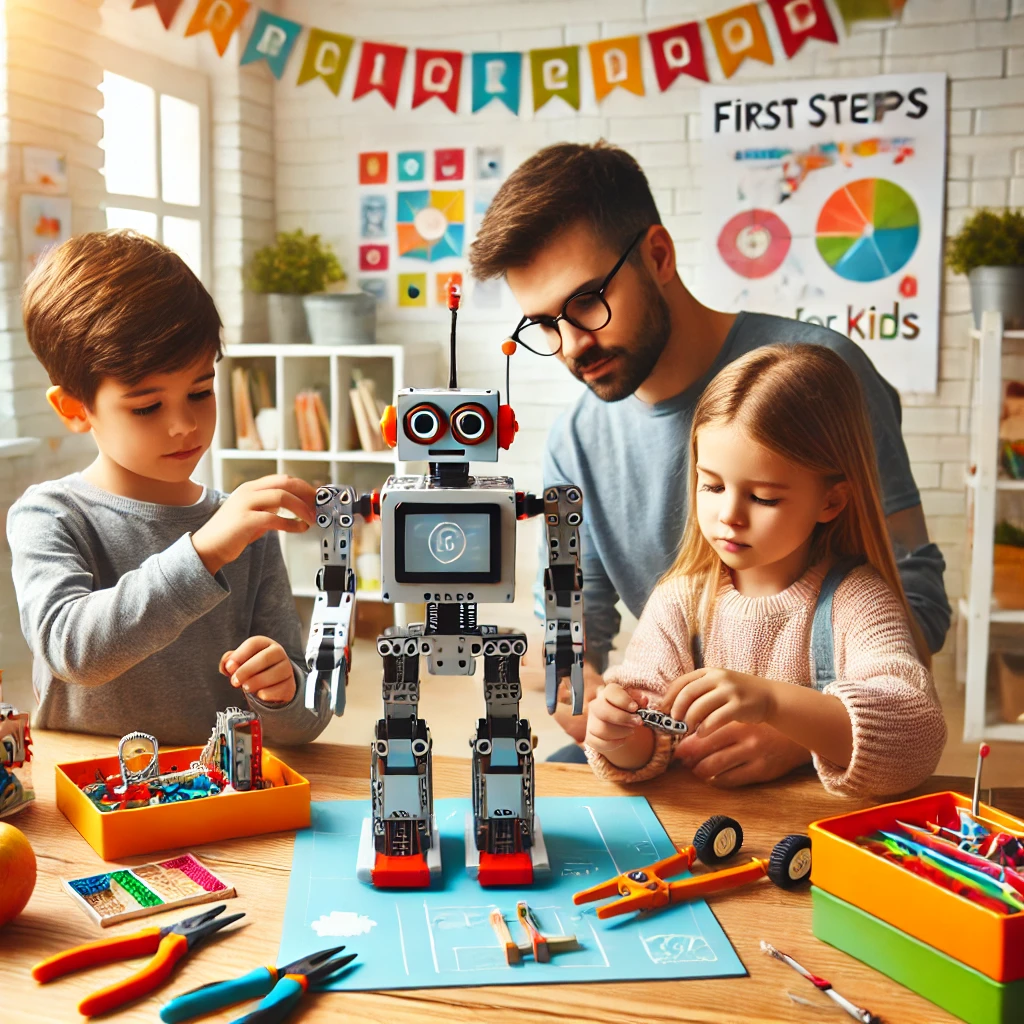
When kids take their first steps into robotics, they're not just learning how to put pieces together; they're learning to think like engineers. The initial foray should be all about exploration and fun. You might start with a story about a robot that needs to navigate through a space station, turning this narrative into a project where kids can build and code a solution.
Most importantly, this is a journey that should be free of frustration. That's why the right starting point is crucial. Look for classes that begin with the very basics and are age-appropriate. Remember, the goal is to ignite a spark, not to overwhelm.
Let's dive into the nuts and bolts. At the heart of any robot are sensors and motors, guided by the brain of the operation—the code. Sensors act like the robot's senses, letting it interact with the world, while motors are the muscles that bring it to life. And coding? That's the set of instructions that tells the robot what to do with those senses and muscles.
Here's the cool part: kids get to be the boss. They decide what the robot will sense and how it will react. They can make a robot that responds to light, sound, or touch. With motors, they can create movement in any direction. And with coding, the possibilities are truly endless. But how do we make these concepts fun? Through projects!
Imagine your robot is on a secret mission to deliver a message. To succeed, it needs to navigate a maze without touching the walls. Kids will learn to use sensors to detect proximity and program the motors to turn and move forward. And when they watch their robot escape the maze? That's a victory dance moment.
Building your first robot is a monumental step. It's where creativity meets functionality. You might start with something as simple as a cardboard box on wheels, but when you add a motor and some sensors, suddenly it's not just a box; it's a rover exploring distant planets.
Each part of the robot serves a purpose, and as kids piece them together, they're not just building; they're learning. They'll understand that the wheels need an axle, the motor requires power, and the sensors need to be placed where they can do their job. And once they press that 'on' button and their creation whirrs to life, the pride they feel is immeasurable.
Remember, the first robot doesn't have to be perfect. It's about the experience, the trial and error, and the joy of making something that works. And that's a lesson that will stick with them for life.
Before kids can build robots that will roam their living rooms, they can practice in a risk-free virtual environment. Simulations are a game-changer in robotics education. They allow young learners to experiment with different robot designs and programming logic without the need for physical materials. It's like having an infinite supply of robot parts and an undo button for every mistake.
These virtual platforms are more than just play; they teach fundamental concepts such as physics and geometry. As kids adjust angles and speeds in their simulations, they're unknowingly getting a math lesson. And the instant feedback from the simulation means they can quickly learn from their mistakes and try again, which is critical for developing resilience and a growth mindset.
Once kids have mastered the virtual world, it's time to get their hands dirty. Transitioning from simulations to physical robot construction is a thrilling step. It's where abstract concepts become tangible, and the lines between the digital and physical worlds blur. Kids learn that what works in the simulation might need tweaking in the real world, and that's where true engineering skills come into play.
Building a physical robot involves dealing with unexpected challenges, like a motor that doesn't turn as anticipated or a sensor that's a bit too sensitive. It's these 'oops' moments that often lead to the most learning, as kids have to troubleshoot and problem-solve, which are invaluable skills in any area of life.
Robotics courses for kids are designed with their natural learning progression in mind. They start simple and gradually increase in complexity, ensuring that each new skill is built on a solid foundation. But what's most important is that these courses are packed with fun, engaging content that keeps kids excited to learn more.
From designing robots that can navigate obstacle courses to programming a robotic arm to move objects, the courses are structured to provide a variety of challenges that cater to different interests and learning styles. It's this diversity that helps keep all students engaged, whether they're future artists or engineers.
Beginner courses might start with the basics of block-based coding, where kids can drag and drop commands to control their robots. As they advance, they'll move on to more complex programming languages like Python or C++, which offer more control and complexity. By the end of a comprehensive course, students won't just be playing with toys; they'll have a deep understanding of what it takes to build and program a fully functional robot.
The best robotics classes for kids use project-based learning to keep things interesting. Instead of just learning theory, kids apply what they've learned to solve real-world problems. They might design a robot that can clean up a spill or one that can deliver supplies in a hospital. These projects help kids see the relevance of their learning and inspire them to think about how they can make a positive impact on the world.
Project-based learning isn't just about building robots; it's about building confidence. When kids see their creations come to life and accomplish tasks, it's a powerful moment that encourages them to tackle even more complex challenges.
A typical robotics class is buzzing with energy and excitement. You'll find kids collaborating on designs, programming on their laptops, and testing their robots in makeshift arenas. It's a space where creativity and logic come together, and every student brings something unique to the table.
One of the most valuable aspects of robotics classes is the emphasis on teamwork. Students often work in groups to build and program their robots, learning to communicate effectively and share ideas. This collaborative environment mimics the real world, where engineers and programmers work together to solve complex problems.
It's not just about the robot; it's about the team. Through these collaborative projects, kids learn that listening to others and valuing different perspectives can lead to a better, more innovative solution. And when their robot successfully completes a task, it's a win for the whole team.
Robotics classes are full of challenges that require critical thinking. For example, a common activity is programming a robot to navigate a maze. To succeed, kids must break down the problem into smaller parts, testing and refining their code until the robot finds its way out.
This kind of problem-solving is a brain workout. It teaches kids to approach problems methodically, testing hypotheses and learning from the outcomes. And the best part? When they finally crack the code, the sense of accomplishment is unbeatable.
As a parent, you play a crucial role in your child's robotics journey. Your support and encouragement can make all the difference. But how do you choose the right course, and how can you help without being an expert in robotics yourself?
Choosing the right course for your child involves looking at the curriculum to ensure it matches their age and interests. It should offer a balance of instruction and hands-on activities, allowing kids to learn at their own pace. Also, consider the level of support provided—good courses offer resources for both kids and parents to make the learning experience as rewarding as possible.
Supporting your child's robotics journey means being there to celebrate their successes and help them through their frustrations. Encourage them to think critically and to see mistakes as learning opportunities. Your interest in their projects, even if it's just listening to them explain their latest robot design, can boost their confidence and motivation.

The world of robotics is accessible to children as young as 6 or 7 years old, primarily through visual programming and simple robotics kits. However, the ideal age might vary depending on the child's interest and cognitive abilities. Kids around 8 to 10 years old often have the patience and problem-solving skills needed to enjoy more in-depth robotics classes that involve both building and programming.
No, kids don't necessarily need prior coding experience before jumping into robotics classes. Many introductory courses start with the basics and use visual, drag-and-drop coding interfaces that make it easy for children to grasp the concepts. As they progress, they can move on to text-based coding, which will be taught as part of the curriculum.
Robotics classes offer a multidimensional learning experience that can profoundly impact a child's education and personal development. They foster problem-solving skills, encourage logical thinking, and promote creativity. Moreover, robotics can enhance a child's understanding of STEM subjects by providing a practical, hands-on application of math and science concepts. These skills are not only beneficial for academic success but are also highly valued in the workforce.
In robotics classes, kids get to work on a variety of exciting projects that may include designing robots to perform specific tasks, like navigating mazes, picking up objects, or even participating in robot battles. Projects are often themed around real-world scenarios, such as space exploration or environmental monitoring, which helps to contextualize their learning and demonstrate the impact of robotics in the world.
Absolutely. Robotics classes can be a stepping stone to a multitude of career paths in engineering, software development, artificial intelligence, and more. They help children develop technical skills and a mindset for innovation, which are critical in the rapidly evolving job market. Additionally, the teamwork and problem-solving skills acquired in robotics classes are transferable to virtually any career.
By participating in robotics classes, kids not only learn about technology but also about collaboration, perseverance, and thinking outside the box. These are the skills that will help them no matter where their future careers take them.
Introducing your child to robotics classes can be a transformative experience, offering them the opportunity to develop their problem-solving skills, ignite a passion for technology, and prepare for a future where technology will play a major role in every career field.
Math might seem like a serious subject, but believe it or not, it's full of hidden humor! Imagine math class as a live performance at Drybar Comedy, where every problem is a punchline waiting to happen. Ever tried dividing by zero? It's like the ultimate dad joke—completely impossible and guaranteed to make you chuckle. Picture the Pythagorean theorem as the funniest triangle in town, always squaring off against its sides with a wink and a nudge. And don't even get me started on fractions; they're just whole numbers having an identity crisis! So next time you're stuck on a tough math problem, just remember, even equations have a sense of humor!
Who said math has to be a chore? Think of it as a game, full of mysteries to solve and puzzles to crack. When we shift our perspective from seeing math as a series of equations and numbers to viewing it as a narrative with characters (the numbers) and plots (the problems), something amazing happens. Engagement soars, and suddenly, the classroom buzzes with excitement. Let's dive into how we can transform the math learning experience.
Games are not just for recess. They're a secret weapon for making math irresistible. By weaving puzzles and play into math lessons, we invite students to learn without even realizing it. Games like Sudoku and tangrams challenge students to use logic and spatial reasoning, sharpening their math skills in a playful environment.
For example, a simple game of 'math bingo' can turn a routine lesson on multiplication into a thrilling race to find the right answers.
Moreover, puzzles help students see patterns and connections, key skills in mastering math. But it's not just about adding games to the lesson plan; it's about fostering a game-like mindset where curiosity, experimentation, and a bit of healthy competition drive learning forward.
Every number has a story. When we frame math problems as stories, we tap into students' natural love for narratives. Storytelling adds context to abstract concepts, making them easier to grasp. It's one thing to solve an equation; it's another to help a character in a story find the treasure by cracking the code.
Imagine a math problem where students help a chef calculate the ingredients needed for a big feast. They're not just learning fractions; they're on a culinary adventure.
This approach not only makes math more relatable but also helps students develop empathy and imagination, skills that are invaluable both inside and outside the classroom.
Think of the classroom as a laboratory, a place where students can mix and match concepts like a scientist combines chemicals. Math labs encourage exploration and discovery, which leads to a deeper understanding of how math works in the real world.
Hands-on learning brings math concepts to life. When students manipulate objects, they can see the abstract become tangible. For instance, using blocks to demonstrate algebraic equations helps students visualize solving for x in a way that numbers on a page cannot.
You don't need fancy equipment to create a math lab. Simple, everyday items can become powerful tools for learning. A tape measure can teach measurement and geometry, while a set of weighing scales can demonstrate the principles of balance and equivalence.
For a fun and interactive experiment, have students create their own number lines with string and paper clips. As they physically move along the line to add or subtract, they'll develop an intuitive sense of number magnitude and the operations involved.
Competition can be a great motivator for learning. Math competitions and leaderboards tap into students' competitive spirits and can transform their attitude towards learning math.
Contests create a sense of urgency and excitement around math. They push students to apply their knowledge in new and challenging ways and to think outside the box. Plus, the recognition that comes from doing well in a competition can be a huge confidence booster.
A classroom leaderboard can provide ongoing motivation. It's not just about who's on top; it's about setting personal bests and celebrating individual progress. Be sure to recognize not just the highest scorers, but also those who have made the most improvement.
For example, after a series of math challenges, display the results on a leaderboard. This visual representation of achievement and growth can inspire all students to push their boundaries.
Let's take math on a shopping spree. Give students a budget and a list of items to 'purchase.' They'll need to add prices, calculate tax, and ensure they stay within budget. This exercise not only teaches practical math skills but also financial literacy.
Bring math into the kitchen. Cooking is full of math lessons, from measuring ingredients to adjusting recipes. Have students convert a recipe for a small group to one that will serve a larger party. This is a delicious way to learn about ratios and proportions.
These real-world connections show students that math isn't just a subject in school—it's a part of life. And understanding it can lead to tasty results!
Technology has opened up a world of possibilities for making math interactive and fun. From apps to websites, there's a wealth of digital resources at our fingertips.
Apps like DragonBox Algebra turn solving equations into a game that feels more like a puzzle adventure than a math lesson. These apps use the power of play to help students learn complex concepts without the pressure of a traditional classroom setting.
Websites like Khan Academy offer video lessons and practice exercises for a range of math topics. These resources allow students to learn at their own pace, revisit challenging concepts, and get instant feedback on their work.
By integrating these digital tools into math lessons, we can cater to different learning styles and keep students engaged.
When we present students with open-ended problems, we invite them to think creatively. There's no single right answer, so students can explore multiple pathways to a solution.
A classroom that encourages creative problem-solving is one where every student has the opportunity to contribute unique ideas. This fosters a collaborative learning environment where students can learn from each other.
Consider scenario-based challenges that require students to apply math to solve complex, real-world problems. For example, ask students to plan a community garden, calculating area and perimeter for planting beds and walkways.
These types of challenges not only make math relevant but also empower students to see how they can use math to make a difference in their communities.
One of the best ways to understand a concept is to teach it to someone else. Peer-to-peer teaching is a powerful tool for math education. It allows students to articulate their understanding and fill in any gaps in their knowledge.
Set up a system where students can tutor each other on different math topics. This not only reinforces their learning but also builds a supportive classroom community where students feel responsible for each other's success.
In conclusion, engaging math learning strategies are about more than just making lessons fun. They're about creating an environment where students are excited to learn, feel confident in their abilities, and see the value of math in the world around them. By integrating these strategies into your teaching, you're not just teaching math; you're inspiring a lifelong love of learning.
Study groups can turn the solitary act of studying into a collaborative and interactive session. Here's how to get started: first, group students by skill level or interest. Then, assign each group a specific math topic or problem set. Encourage them to work together to solve problems, explaining their reasoning to each other as they go. This peer-to-peer interaction not only reinforces their understanding but also builds communication skills.
But remember, the key to successful study groups is structure. Set clear goals for each session and provide guidance to ensure that the group stays on task. This could mean assigning roles within the group or providing a checklist of concepts to cover. With a little organization, study groups can become a cornerstone of your math class.
Let's tackle some common questions to help make math a blast for everyone.
First, normalize the struggle; math can be challenging for many, and that's okay. Introduce math games that align with their interests to make practice less intimidating. Use tools like number blocks or visual aids to break down complex problems into manageable parts. Celebrate small victories to build confidence, and most importantly, maintain a patient and supportive attitude.
Absolutely! Websites like Cool Math Games and Math Playground are filled with engaging, free games that cover a wide range of math concepts. For a more structured approach, Khan Academy offers practice exercises alongside their lessons. These resources can make math practice feel like playtime.
Storytelling transforms math from abstract to concrete. When students can follow a narrative, they're more likely to understand and remember the concepts. For instance, framing a word problem as a story about a character they can relate to helps them visualize the problem and work through it with more interest and empathy.
Get creative with household items. Use measuring cups to teach fractions, or create a homemade board game to practice addition and subtraction. Even sorting laundry can be a lesson in categorization and pattern recognition. The key is to relate math to everyday activities, making it relevant and practical.
Another fun idea is to have a 'math scavenger hunt' where kids search for objects of different shapes and sizes around the house. It's a great way to get them moving and thinking about geometry in a tangible way.
Yes, the competitive nature of math contests can be daunting. To prevent intimidation, emphasize that the goal is personal improvement, not just winning. Offer various levels of challenges so that all students can participate at their comfort level. Prepare them well, celebrate participation, and ensure that the competition is seen as a fun and exciting learning opportunity.
It's also important to offer alternative ways to shine in math, such as collaborative projects or creative math presentations. This way, every student can feel valued and included, regardless of their competitive nature.
