Imagine this: Sarah, a 10-year-old who struggles with traditional classroom lessons, is introduced to Minecraft during her math class. At first, her parents are skeptical—how could a video game help with her learning? But within weeks, Sarah is building complex structures, solving problems, and collaborating with her classmates—all while improving her math and spatial reasoning skills.
Her teachers notice a boost in her confidence, and her parents are amazed by how engaged she is in learning. Sarah’s story is just one example of how Minecraft is making a real difference in educational settings, proving that learning doesn’t have to be boring or difficult.
My son's request to play Minecraft surprised me. I thought it was just another game. Watching him build and solve problems changed my mind. This blocky world had great potential for education. Minecraft seemed overwhelming at first. The open world and crafting recipes were daunting. Research helped me use Minecraft's educational power. I learned to set up proper parental controls too. Years of family Minecraft sessions taught me a lot. This guide will help you turn playtime into learning time.
Minecraft's blocky universe offers more than just entertainment. It's a powerful tool for learning in over 7,000 classrooms worldwide.
Minecraft's open-world format allows for endless possibilities. Kids can build anything they imagine, from simple houses to complex cities.
This freedom nurtures creativity and problem-solving skills. Java and Bedrock versions share core principles of exploration and creation.
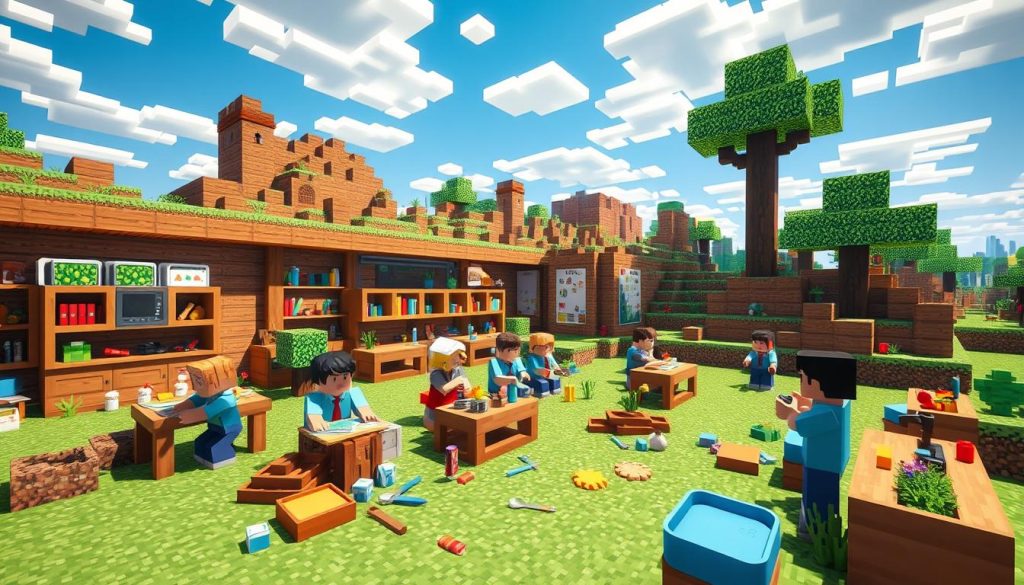
Game-based learning through Minecraft develops crucial skills:
Coder Sports uses Minecraft to teach Python programming. This integrates coding skills into gaming.
Minecraft offers various modes, each with unique learning opportunities:
The Education Edition simplifies setup for all types of educators. It lets students tackle real-world topics through play.
This inspires critical thinking and collaboration in unique ways. Students learn while having fun in Minecraft's engaging world.
Creating a secure Minecraft space for kids is crucial. With millions of players, online safety is a top priority.
Let's explore how to set up a fun yet protected environment. Parental controls are key for managing playtime and access.
On consoles and Windows 10, you can control purchases and multiplayer access. Use privacy settings on accounts to protect children's information.

Digital literacy is vital too. Talk openly about online behavior with kids. Teach them to report or block inappropriate conduct.
Minecraft offers three main modes: Adventure, Creative, and Survival. Each mode has unique benefits for learning and creativity.
Choose the right mode and use safety tools. This creates an engaging and secure Minecraft experience.
"Minecraft isn't just a game, it's a canvas for creativity and learning. Our job as parents is to ensure it's a safe one."
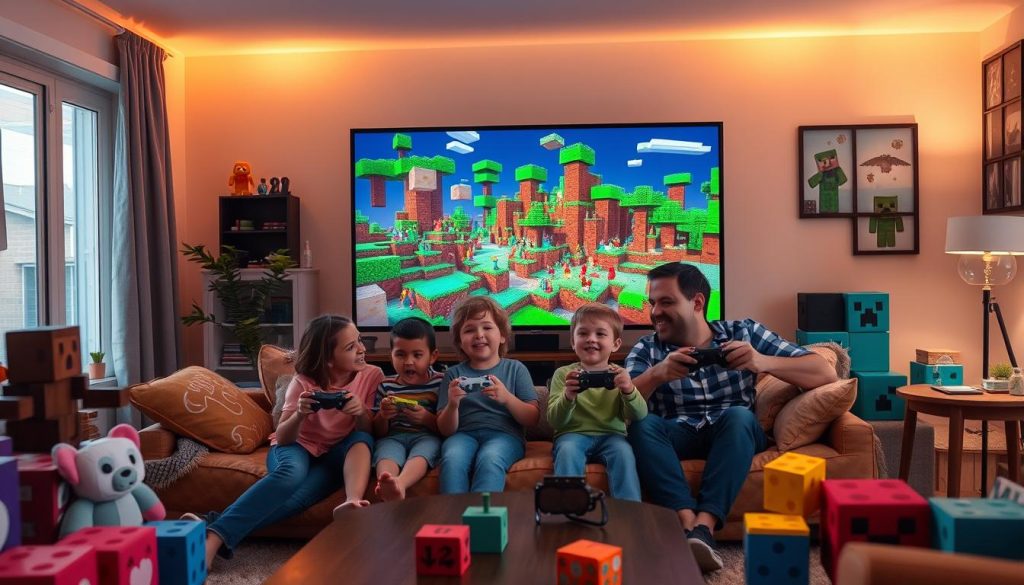
Family gaming in Minecraft can be fun and rewarding. Here are some tips to enjoy Minecraft adventures with your kids.
Minecraft has three main game modes: Creative, Survival, and Adventure. Creative mode is best for younger kids who like building freely.
Survival mode adds challenges and suits older children. Adventure mode works well for custom maps and storytelling.
A crafting guide helps new players learn the game. Online resources show how to make different items in Minecraft.
These guides teach game mechanics and boost creativity. Kids can learn while having fun.
Good time management is key for Minecraft play. Set a schedule to balance fun and other activities.
Start with short game sessions. Slowly increase playtime as your child shows responsibility.
Minecraft can be educational too. Some schools use it to teach history and science.
These tips can help create a fun Minecraft experience for your family.
"Minecraft is not just a game, it's a creative tool that can teach problem-solving and teamwork."
A virtual learning schedule with Minecraft can boost kids' education. It balances work and play, using the game to enhance learning.
A well-structured day is key. I set specific Minecraft times to complement regular studies.
Since the pandemic, new players increased by 25%. Multiplayer sessions rose by 40%.
Clear goals are vital in learning. Educational rewards work well with Minecraft.
Finishing math might earn extra Minecraft time. Over 7,000 classrooms use Minecraft worldwide!
After lessons, I plan Minecraft tasks that support learning. Kids might rebuild history or solve physics puzzles.
Minecraft Education Edition got two million downloads in its first year. It reached 115 countries!
Minecraft in learning builds creativity, teamwork, and critical thinking. It's fun and preps kids for real-world challenges.
Minecraft is a powerful tool for STEM education. It brings engineering concepts to life for kids.
Children build structures and solve problems in this virtual world. They learn coding while having fun.
The game's building mechanics teach engineering principles. Kids learn about balance, stability, and resource management.
Redstone is an exciting part of Minecraft for STEM learning. It acts like electricity, letting players create circuits and machines.
"Minecraft: Education Edition provides opportunities for children to develop computational thinking skills through Code Builder."
Here are some ways Minecraft supports STEM education:
Over 7,000 classrooms worldwide use Minecraft for learning. It helps kids understand science and math concepts.
Children have fun while reinforcing their STEM knowledge. Minecraft makes learning exciting and engaging.
Minecraft's open world sparks kids' imagination. It helps them develop essential skills through creative play.
In Minecraft, kids can build anything they dream up. I love challenging them to create their ideal homes or cities.
These projects make kids think creatively. They also learn to solve tricky design problems.
Redstone circuits in Minecraft teach engineering ideas. Kids get excited making working elevators or automatic farms.
They grasp these concepts quickly through fun gameplay. It's amazing to watch their progress.
Family challenges help everyone learn and bond. Try setting up weekly building contests.
One week, build a treehouse. The next, create a rollercoaster. These activities boost creativity and teamwork.
These activities help kids solve problems beyond the game. Minecraft offers a unique way to learn and grow.
"Minecraft isn't just a game, it's a canvas for creativity and a laboratory for young engineers."
Minecraft's multiplayer features help kids develop social skills. I've seen shy children become confident communicators through this game.
Kids learn to express ideas and listen to others while playing together.
Teamwork is key in many Minecraft activities. Kids often build towns or survive challenges together.
This gameplay teaches task division, resource sharing, and mutual support.
Players improve communication as they coordinate actions. They learn to give clear instructions and ask for help.
These skills are valuable in real-life situations too.
Minecraft enhances problem-solving and critical thinking. Kids face challenges together and brainstorm solutions.
This process improves teamwork and creative thinking.
"Minecraft: Education Edition promotes critical social-emotional skills like collaboration, empathy, and communication."
Multiplayer Minecraft helps kids develop crucial social and collaborative skills. These abilities will benefit them in future academic and work settings.
Tracking your child's Minecraft-based learning progress is vital. It ensures they benefit from this educational tool.
Keeping tabs on virtual learning engagement helps address online education challenges.
I watch my child's interest levels in their Minecraft projects. We talk about what they're creating and learning.
Minecraft videos have been streamed over 1 trillion times on YouTube. This shows how popular and motivating Minecraft can be for learning.
Learning assessment in Minecraft can be tricky. I look for late assignments or poor time management.
While many parents worry about gaming time, Minecraft can be educational. It's all about using it the right way.
I stay in touch with my child's teachers about their Minecraft work. We discuss their performance and progress regularly.
Over 35 million teachers and students use Minecraft Education worldwide. This creates a big, supportive learning community.
Stay involved and address challenges early. This helps children get the most from their Minecraft learning.
Minecraft is more than a game. It's a powerful tool for digital learning and education.
With 180 million copies sold, Minecraft captures players' imaginations worldwide. It offers entertainment and educational benefits for all ages.
Parents play a crucial role in maximizing learning. They can set up safe servers and use parental controls.
Balancing game time with other activities is important. This creates an ideal environment for children to thrive.
Minecraft's five modes cater to different age groups. Survival and Creative modes suit various learning styles and needs.
The game focuses on problem-solving and memorization. It even teaches coding through Java modifications.
We should guide children in using online resources responsibly. Encouraging collaboration with friends and family is also important.
By embracing Minecraft, we're building future skills. We're preparing our children for a digital world.
Minecraft offers various game modes for different educational purposes. Creative mode fosters creativity and problem-solving skills without limits.
Peaceful survival mode teaches resource management and goal-setting. Survival mode with monsters adds strategy and risk management elements.
Set up parental controls on all educational technology. Establish open communication with your child and their teachers.
Choose appropriate game modes and use online resources to enhance crafting skills. Establish a routine for Minecraft play.
Create a balanced schedule for work and play. Set educational goals and rewards to motivate progress.
Plan post-lesson activities in Minecraft to reinforce learning concepts. Consider virtual museum tours and STEM learning activities.
Minecraft's building mechanics introduce engineering principles. Redstone systems can be used to teach basic circuitry and logic.
Mining for resources at different depths introduces geological concepts. Encourage your child to engage with these elements.
Encourage open-ended building projects to stimulate imagination. Use Redstone systems to introduce basic engineering concepts.
Organize family building challenges to promote collaboration and creative thinking. These activities develop essential 21st-century skills.
Minecraft's multiplayer features help develop social skills and collaboration. Encourage your child to work on projects with friends or siblings.
This promotes teamwork, communication, and conflict resolution skills. Consider setting up LAN games for supervised multiplayer experiences.
Measure virtual learning engagement through discussions with teachers. Observe your child's interest levels and recognize signs of struggle.
Maintain open communication with teachers about Minecraft-based assignments. Discuss your child's performance in these activities regularly.
Teachers are always on the lookout for new and creative ways to engage their students in the ever-changing field of education. Minecraft, a sandbox video game, offers an interactive platform that combines learning and creativity. This article explores how using Minecraft for special education can effectively meet the diverse learning needs of students, fostering improved interaction, communication, and creativity.
Minecraft is a block-building game that allows players to explore a digital world, gather resources, and create structures. The game operates in various modes, including survival, where players must manage their health and resources, and creative mode, which offers unlimited resources for building. Its open-ended nature encourages exploration, making it an ideal educational tool.
Special education focuses on meeting the unique needs of students with disabilities, requiring tailored approaches that conventional teaching methods may not accommodate. Minecraft's interactive environment fosters engagement, allowing teachers to create customized lessons that help students develop essential skills in a low-pressure setting. Its visual and auditory stimuli cater to various learning styles, making it a versatile tool in the classroom.
Communication is a critical aspect of learning, particularly for students with speech or language impairments. Minecraft promotes verbal and non-verbal communication through collaborative play. Students must articulate their ideas, negotiate roles, and share responsibilities in projects, creating a rich environment for practicing communication skills.
Additionally, the game's chat feature enables students to communicate asynchronously, offering a platform for those who may be hesitant to speak in front of peers. This can be particularly beneficial for students on the autism spectrum, who may find social interactions challenging.
Social skills are essential for personal and academic success. In Minecraft, students collaborate on building projects, encouraging teamwork and social interaction. Working together fosters relationships and helps students understand social cues and dynamics, which are often challenging for those with special needs.
Moreover, the game's flexibility allows educators to create scenarios that require cooperation, problem-solving, and conflict resolution, further enhancing students' social skills in a controlled and supportive environment.
Creativity is a vital component of education, and Minecraft provides an expansive canvas for students to express themselves. It encourages imaginative thinking as students construct complex structures and devise solutions to in-game challenges. This creative freedom can significantly boost self-esteem and motivation.
Furthermore, the problem-solving aspect of Minecraft can help students develop critical thinking skills. Tasks like gathering resources or overcoming obstacles require planning, strategizing, and execution, all of which are crucial skills in any learning environment.
To start using Minecraft in the classroom, educators need to set up the game on computers or tablets. The installation process is typically straightforward, with options available for both Windows and macOS. Educators should familiarize themselves with the game's features and functionalities to guide students effectively.
Setting clear guidelines and rules is also essential to ensure a positive gaming experience. Educators can create a classroom code of conduct to help maintain a respectful and productive environment while playing.
Minecraft offers various versions, including Minecraft: Education Edition, which is specifically designed for classroom settings. This edition features additional tools for educators, such as classroom management options and built-in lesson plans. Choosing the right version is vital to maximize the benefits of the game in an educational context.
While the standard Minecraft version can also be used, it may lack certain educational features that can assist in managing a classroom effectively. Educators should weigh the pros and cons of each version based on their specific needs and the characteristics of their students.
Inclusivity is paramount in special education. When implementing Minecraft in the classroom, educators should ensure that all students have access to the game and that their individual learning needs are accommodated. This may involve providing additional resources or support for students who require it.
Moreover, fostering a culture of respect and empathy among students can create a supportive atmosphere in which everyone feels valued. Educators can facilitate discussions about diversity and inclusion to enhance understanding and acceptance among students.
Integrating Minecraft into existing lesson plans can enhance the overall educational experience. Educators can incorporate specific themes or subjects into the game, such as history, math, or science, allowing students to explore these topics in a fun and engaging way. For instance, a history project might involve recreating ancient civilizations, while a math unit might focus on geometric shapes through building activities.
Furthermore, educators can design assessment methods that align with the gameplay, enabling students to demonstrate their understanding of concepts in creative ways. This can include both individual and group assessments based on in-game achievements and collaborative projects.
One of the strengths of Minecraft is its adaptability. Educators can tailor experiences to meet the individual needs of students, offering personalized challenges or projects that align with each student's learning goals. This individualized approach can significantly enhance student engagement and motivation.
For instance, students who struggle with attention may benefit from short, focused tasks within the game, while those who excel may be given more complex challenges that require advanced problem-solving skills. This flexibility allows educators to differentiate instruction effectively, catering to the diverse needs of their students.
Collaboration is a cornerstone of effective learning. In Minecraft, students can work together on projects, fostering teamwork and cooperation. Educators can assign group tasks that require students to communicate, share ideas, and resolve conflicts as they build together. This collaborative environment encourages peer learning, where students can learn from one another's strengths and perspectives.
Additionally, collaborative projects can help develop leadership skills among students, as they navigate group dynamics and take on different roles within the team. This can be particularly beneficial for students who may struggle with social interactions, as it provides them with a structured format to practice and develop these essential skills.
Across various educational settings, educators have successfully integrated Minecraft into their curricula, yielding positive results. For example, a special education classroom in California utilized Minecraft to help students with autism develop social skills. The teacher reported a noticeable improvement in students’ ability to communicate and work together on projects, resulting in a more cohesive classroom environment.
Moreover, another case study in the UK highlighted how students with learning disabilities engaged more deeply with history lessons when using Minecraft to recreate historical landmarks. The hands-on experience allowed these students to connect with the subject matter in a way that traditional methods did not facilitate.
Feedback from educators and students alike underscores the effectiveness of Minecraft in special education. Many teachers have noted increased engagement and enthusiasm among students when lessons incorporate gaming elements. Students themselves often express excitement and enjoyment, making learning feel less like a chore and more like an adventure.
Furthermore, educators have reported that Minecraft can bridge gaps in understanding, allowing students to grasp complex concepts more easily. This positive feedback reinforces the idea that Minecraft is not just a fun distraction, but a powerful educational tool that can enhance learning outcomes.
Educators interested in integrating Minecraft into their classrooms can benefit from online communities and forums where they can share experiences, resources, and ideas. Platforms like Reddit and dedicated Facebook groups provide spaces for educators to connect with others who have successfully implemented Minecraft in their teaching practices.
These communities often feature discussions about lesson plans, troubleshooting tips, and the latest updates on Minecraft's educational tools. Engaging with peers can provide invaluable support and inspiration for educators looking to enhance their classroom experience.
There is a wealth of online resources available for educators seeking to implement Minecraft in their classrooms. Websites like Minecraft Education provide lesson plans and tutorials specifically designed for educators. These resources cover various subjects and grade levels, making it easier for teachers to find relevant content.
Additionally, YouTube channels dedicated to educational gaming often showcase creative ways to use Minecraft in the classroom, providing visual examples and step-by-step guides that can be incredibly helpful for educators new to the platform.
Minecraft is more than just a game; it is a versatile educational tool that can significantly enhance the learning experience for students in special education. By fostering communication, social interaction, creativity, and problem-solving skills, Minecraft can bridge gaps and cater to diverse learning needs.
As educators, exploring innovative tools like Minecraft can open doors to new learning possibilities. By experimenting with this engaging platform, educators can create a dynamic classroom environment that resonates with all students, encouraging them to unleash their potential and thrive in their educational journeys.
Minecraft promotes communication through its collaborative gameplay, where students must articulate ideas and work together on projects. The chat feature also allows students to communicate asynchronously, which can benefit those who are hesitant to speak aloud.
Minecraft’s adaptability allows educators to customize lessons and tasks to meet individual students' needs. Its visual and interactive elements appeal to various learning styles, helping students with disabilities engage in the learning process.
Yes, educators can integrate subjects like history, math, and science into Minecraft lessons, enabling students to explore and learn through hands-on building activities that are both fun and educational.
Minecraft: Education Edition is specifically designed for educational settings, offering additional tools like classroom management features and built-in lesson plans. However, the standard version can also be used with some adjustments.
Through collaborative tasks, Minecraft helps students learn teamwork, problem-solving, and conflict resolution. These interactions allow students to practice social skills in a controlled and supportive environment.
Online communities, such as Reddit forums and Facebook groups, along with educational websites like Minecraft Education, offer lesson plans, guides, and peer support to help educators effectively use Minecraft in their classrooms.
Are you confident your child is truly safe while playing Minecraft, or could there be risks you’re overlooking in this seemingly innocent game?
Minecraft is often seen as a digital playground where kids can unleash their creativity, building worlds block by block. But as much fun as it is, this online environment comes with its own set of challenges that many parents may not fully understand. Are there any hidden dangers in the Minecraft universe that can put your child at risk.
Understanding Minecraft and online safety is the first step in ensuring your child can enjoy the game while managing the risks, however small they may be. In this article, we’ll explore what you need to know to protect your child’s online experience in Minecraft, giving you peace of mind while they play.
Minecraft is the world's best-selling video game. Kids love this blocky sensation for its unique, pixelated world. Let's explore why it's so popular. We'll also discuss how to keep kids safe while they play. Minecraft is great for kids aged 8 and up. It's a sandbox game where players build, explore, and survive. You can adjust settings to suit your child. This makes it perfect for different ages and preferences. Minecraft offers multiplayer modes where kids interact online. Don't worry, there are ways to make this safe.
We'll cover parental controls and kid-friendly options. These tools help ensure your child's safety while gaming.
Minecraft blends creativity and adventure, captivating players of all ages. Let's explore the game's basics and what makes it special.
Minecraft is a sandbox game with a 3D world of blocks. Players build, explore, and survive in this digital LEGO-like universe.
The game's open-ended nature encourages creativity and problem-solving. It offers endless possibilities for players to express themselves.
Minecraft offers two main game modes:
Creative mode lets me build freely without threats. Survival mode challenges me to manage resources and stay alive.
Both modes provide unique experiences for different playstyles. Players can choose based on their preferences.
Minecraft has a PEGI 7 rating and an ESRB Everyone 10+ rating. It's generally safe for kids 8 and up.
Parental guidance is recommended for online play. Consider the game's complexity and potential online interactions.
"Minecraft isn't just a game, it's a canvas for creativity and a tool for learning."
Minecraft inspires players worldwide with its educational value and engaging gameplay. It offers new challenges and creative opportunities at every turn.
Minecraft education offers many learning chances for kids. It's a powerful STEM tool that sparks creativity and boosts problem-solving skills.
Minecraft's impact on education is clear. One U.S. class saw huge test score jumps after using the game.
Math scores rose from 18% to 84%. English scores went from 24% to 81%.
The game teaches kids useful skills like resource management. Children learn problem-solving as they build and explore in Minecraft.
Minecraft works well for many subjects. The Museum of London used it to show the Great Fire of 1666.
This fun approach makes learning exciting for students.
"Minecraft helps children learn practical skills such as resource management, problem-solving, and critical thinking."
Over 7,000 classrooms worldwide use Minecraft. It's a strong tool for teaching STEM skills in the digital age.
Educators see its power to foster creativity while teaching key skills.
Minecraft is hugely popular, with 173 million active monthly users. This brings both fun and potential risks for kids.
Multiplayer mode can be risky. Kids might interact with strangers among the 140 million players.
Cyberbullying is a real threat in online games like Minecraft. It can badly affect kids and teens.
Minecraft's chat lets players talk to each other. This can lead to unwanted conversations.
Minecraft now has tools to help. Players can report bad messages or behavior.
Minecraft offers safety controls for kids. These work in versions 1.16.4 and later.
Child accounts are for players under 16. Parents can manage game access and use safety tools.
Parents can make Minecraft safer by using these features. It's important to stay informed about safety tools.
Creating a secure Minecraft environment for kids is crucial. Start by making a Microsoft account for your child.
This lets you manage family settings and control their gameplay.
When setting up child accounts, I focus on these key areas:
For better safety, play offline or on private servers. This limits contact with strangers.
Family settings in Minecraft offer great tools for parents. You can whitelist approved players for your child.
Hostinger and Apex Hosting provide easy setup for servers.
Teaching kids about online safety is important. Here's what to cover:
Join your child in Minecraft to understand their interests. Set clear rules for server conduct.
"Setting up a dedicated Minecraft server creates a safe digital playground for children to explore and learn while ensuring peace of mind regarding online safety."
These strategies help create a secure Minecraft experience. Your child can have fun safely.
Minecraft offers many ways to play with friends. Let's explore safe online play and local multiplayer options.
These choices help parents pick the best experience for their kids.
Minecraft Realms is a private server service. It's safe for up to 10 players.
Kids can invite friends without worrying about strangers. Realms need an Xbox Live account for extra security.
Public servers can be fun but risky. They may expose kids to bad content.
Private servers are safer. Parents can set up their own or join trusted communities.
Official partners like CubeCraft use chat filters and have moderators.
Local multiplayer is the safest option. Kids play with friends on the same network.
It's easy to set up without internet. Parents can control multiplayer in game settings.
Child accounts under 13 have multiplayer blocked by default. Parents must allow it.
Choosing the right option ensures fun and safe Minecraft for kids.
Minecraft captivates kids. Parents face challenges balancing gameplay with other activities.
Setting screen time limits is vital. It helps foster healthy gaming habits.
An hour of daily video games can benefit psychological adjustment. However, gaming addiction affects 3-10% of children.
Kids with ADHD may have a harder time transitioning away from video games compared to their peers.
To promote balanced gameplay, try these tips:
Talk openly about gaming habits. Discuss the risks and benefits of Minecraft.
This helps kids understand the need for limits. Minecraft can boost creativity when played in moderation.
Create a healthy gaming environment. Help children enjoy Minecraft responsibly.
This approach can prevent excessive screen time issues.
Minecraft boosts creativity and problem-solving skills since 2011. It's more than just fun, it's a platform for new ideas.
Minecraft lets players build and explore virtual worlds freely. Its block system helps improve spatial skills, important for STEM fields.
Survival mode turns Minecraft into a problem-solving game. Players gather resources and plan carefully, improving critical thinking skills.
Multiplayer mode shows the power of working together. Players team up on projects, sharing ideas and tasks.
This builds teamwork and improves communication. It can even help develop leadership skills.
"Minecraft has influenced education by providing a platform for interactive learning, making it a valuable tool for developing STEM skills."
Minecraft makes learning more fun with virtual trips and math challenges. Updates and mods keep it exciting and useful for modern skills.
Minecraft greatly impacts creativity and problem-solving. It's shaping future innovators, making it valuable for fun and learning.
Parents often worry about violence in Minecraft. The game has combat, but it's not very intense.
Minecraft's graphics are blocky and cartoon-like. This makes any fighting less scary for kids.
Survival mode has enemies and player fights. The fighting is simple with no blood.
Minecraft is rated for kids 7 and up. It's mostly about being creative and solving problems.
Most children 8 and older can enjoy Minecraft safely.
"Open communication and the use of available tools can help ensure children enjoy online gaming safely."
Minecraft has tools for parents to control the game. You can limit multiplayer and change chat settings.
These options help make Minecraft safe for your child. You can create a fun environment they'll enjoy.
Minecraft mods and add-ons can make gameplay more fun. They can also add learning value to Minecraft.
There are over 100,000 mods on CurseForge. That's a lot to explore!
Kid-friendly add-ons can make learning more fun. Many mods add new educational content or game features.
Some teach coding languages like Python and Java. These mods help make Minecraft a top-selling video game.
Safe modding is key when exploring Minecraft mods. Always download from trusted sources and use antivirus software.
The Forge Mod Loader helps run multiple mods at once. Most mods are free, made by Minecraft fans.
In-game items like skins are optional. The base game costs about $26.95 for Java Edition.
The mobile version is around $6.99. Parents can control purchases through account settings.
It's about balancing fun and money in Minecraft's blocky world!
Minecraft is a sandbox-adventure video game for kids 8 and up. It has creative and survival modes with blocky graphics.
Players can explore and build in single-player or multiplayer modes.
Minecraft boosts creativity, problem-solving, and spatial reasoning skills. It can teach math, science, and history.
The game helps with resource management, planning, and teamwork.
Multiplayer mode may expose kids to inappropriate content and strangers. Chat features allow players to talk to each other.
Create a Microsoft account for your child and use family settings. This helps manage multiplayer access and control in-game purchases.
You can also set screen time limits. Try offline mode or private servers to limit stranger interactions.
Minecraft has Realms (private servers), public servers, and local multiplayer. Realms are controlled, while public servers can be risky.
Local multiplayer lets kids play safely with friends on the same network.
Set clear time limits and encourage breaks from the game. Balance gaming with other fun activities.
Watch for signs like neglecting duties or getting upset when not playing.
Minecraft helps kids design and build complex structures. This improves spatial awareness and architectural thinking.
Survival mode develops planning skills. Multiplayer projects boost teamwork and communication.
Minecraft has mild combat with no blood or gore. Players can choose peaceful mode to remove hostile mobs.
The game's cartoonish style helps lessen the impact of violent elements.
Mods and add-ons can make gameplay more fun and educational. Download from trusted sources and use antivirus software.
Manage in-game purchases like skins and texture packs through account settings.
Imagine the look of pure joy on your child’s face as they finally crack the code to make their very own Minecraft creation come to life. It's not just another game to them—it’s a world where their imagination takes shape, where every block laid is a step closer to building their dreams.
For a moment, think back to the times when you were a child, and the sheer thrill of creation was limitless. Now, picture that same excitement, but with a powerful twist: your child is not just playing; they’re learning the language of the future.
Coding with Minecraft isn’t just about building in a virtual world; it’s about building the skills, confidence, and creativity that will carry them through life. This is where their passion meets purpose, and together, you can unlock a world of endless possibilities.
Screen time can now be valuable learning time. Coding with Minecraft turns playtime into an educational adventure. Kids can now learn programming while exploring their favorite blocky world.
Minecraft's structure is ideal for teaching coding concepts. The familiar game helps kids grasp programming ideas easily. They pick up skills quickly when having fun. This approach works for many age groups. Programs suit second-graders to high school seniors. Kids can advance from block-based coding to Python or Java at their pace. Hundreds of hours of computer science lessons are available. Children can learn and grow their coding skills steadily.
Minecraft education is changing how kids learn to code. This game teaches complex ideas through fun learning.
Minecraft's world uses 1x1 blocks. This is like the binary code used in programming.
The game helps kids feel at ease as they start coding. Its familiar setting makes learning easier.
Kids learn key coding ideas while playing. For example, redstone circuits are like writing code statements.
Block-based coding in the game makes learning feel fun. Kids enjoy it without realizing they're learning.
Minecraft: Education Edition offers more learning tools. It includes 50 hours of computer science lessons.
These tools make hard coding ideas easy to understand. Students see their code work in the game right away.
"Minecraft allows learners to use block-based coding and JavaScript to see their code come to life in-game."
Computer science jobs will grow by 15% by 2031. Minecraft education helps prepare kids for this future.
It's more than a game. It's training for a digital world through fun learning.
Minecraft is a fun way for kids to start coding. Its interactive world helps children understand programming concepts easily.
Kids can build machines in Minecraft to see how coding works. This hands-on approach makes learning more exciting for them.
Minecraft: Education Edition uses visual programming. Children can drag and drop code blocks to create their projects.
This method is less scary for beginners. Kids can see their code work right away, which keeps them interested.
Making simple Minecraft mods is another great coding activity. Kids can change their game while learning important programming skills.
The platform has over 5,000 fun activities for children. It includes 6 courses and 360 activities for beginners.
Minecraft teaches coding through block-based programming, which helps in understanding computational thinking visually instead of text-based coding.
Tynker offers a step-by-step learning path for new coders. Kids can earn a Minecraft Modding certificate after finishing three courses.
This achievement boosts confidence and marks progress in their coding journey.
Minecraft turns screen time into learning time. It helps kids build tech skills for the future.
Minecraft can turn game time into learning time. It helps kids grow STEM skills and learn to think like coders.
Minecraft's block structure makes coding basics easy to learn. Kids solve problems as they build digital worlds.
They break big tasks into small steps. This is how coders think.
The game lets kids be creative and think logically. They can build cool stuff and make their own changes.
Minecraft teaches Java, a popular coding language. This can make kids interested in tech jobs.
The game builds skills like teamwork and 3D design. These are key for many jobs today.
Minecraft is more than just a game. It teaches skills for the digital world.
Kids can learn a lot about tech while having fun.
Minecraft has two versions: Education Edition and Standard. The Education Edition is made for classroom use.
The Education Edition allows 30 players to work together easily. This makes group projects and team learning fun.
Teachers have more control in the Education Edition. They can:
There's also a Minecraft CS Progression with 200 hours of content. It teaches coding from basic blocks to Python.
Standard Minecraft can teach coding too, but needs extra tools. The Education Edition is better for classrooms.
"Minecraft Education Edition transforms game time into valuable learning experiences, bridging the gap between fun and education."
The Education Edition is used in over 100 countries. It costs $5.04 per user yearly.
Some schools with MinecraftEdu licenses can get it for free.
Visual block coding in Minecraft sparks kids' creativity. It uses a fun drag-and-drop interface for easy coding.
This approach helps young minds grasp complex concepts easily. Kids can learn without feeling overwhelmed.
Block-based coding is simple and fun. Kids stack pre-written code blocks like puzzle pieces.
This method works great for coding beginners. It's like Scratch, which many teachers use to teach programming.
Visual coding in Minecraft gives instant feedback. Kids see their creations come to life right away.
This keeps them excited to learn more. They can build farms, design minigames, or create adventures.
As kids grow confident, they can try text-based languages. Minecraft's Command Blocks are a great first step.
Players use text commands to control game elements. This helps build a strong foundation for future coding.
Visual block coding teaches more than just code. It builds problem-solving, creativity, and teamwork skills.
These skills are very important in today's tech world. Kids learn while having fun in Minecraft.
Minecraft Java Edition runs on Java. This language forms the game's structure.
Java's simplicity shines in Minecraft. The game's block-based world fits coding concepts well.
Kids learn to use Java commands with blocks. This builds a base for more complex skills.
Minecraft Java Edition has 1.8 million lines of code. Kids start small, learning as they play.
Java is the perfect language for kids to start with. It's like building with digital LEGO blocks!
Java skills through Minecraft help with other languages. These skills prepare kids for future tech jobs.
Minecraft had 176 million players in 2023. This makes Java fun for young coders.
It's not just game time. It's learn-to-code time!
Minecraft modding lets young coders customize their game experience. Kids get excited when they create their first mod.
Game modification adds new features and elements to Minecraft. It opens up many possibilities for players.
Minecraft is great for learning to code. You can change item properties or add new features.
CodaKid has taught over 50,000 students Minecraft coding. It's an award-winning coding platform.
To start modding, you'll need specific software:
Mods are version-specific. A mod for Minecraft 1.18 won't work with version 1.19.
Try creating automated machines using redstone circuits. These circuits teach logic and engineering concepts.
Kids can build complex systems within the game. They learn advanced concepts through play.
"Minecraft modding isn't just fun - it's preparing kids for tech-driven careers of the future."
Eclipse IDE is used by developers at major tech companies. Kids get real-world coding experience with it.
Minecraft coding is a popular way to introduce programming. It helps children learn valuable skills.
Minecraft can be a powerful tool for teaching coding. As a parent, I know the importance of healthy gaming habits.
The key is finding the right balance. We need to mix educational screen time with other activities.
Parents play a crucial role in managing Minecraft coding sessions. I suggest setting time limits of about 1.5 hours per day.
This allows kids to learn from Minecraft. At the same time, it prevents too much screen time.
To keep a healthy balance, try these tips:
Studies show 85% of parents like Minecraft coding. They think it helps critical thinking skills.
Some worry about too much gaming. Using these tips can help balance learning and fun.
"Minecraft coding is a valuable educational tool that combines technology, creativity, and learning."
The goal is to make learning fun with Minecraft. We also want to keep a balanced lifestyle.
Good parental guidance can make game time a great learning experience.
Minecraft offers exciting ways to learn coding skills. Its popularity has sparked an educational revolution for kids.
I've found many coding resources and Minecraft education tools. These support programming for children.
Minecraft uses various programming languages. Kids can start with Scratch and move to Java or Python.
LearnToMod and Microsoft's MakeCode are great for young coders. These online platforms provide excellent starting points.
The Minecraft Hour of Code has had 220 million sessions since 2016. These free tutorials introduce basic coding concepts.
Advanced learners can take exclusive courses on Java mods. These classes offer more in-depth programming knowledge.
Minecraft Education Edition offers coding challenges like Minecraft Escape Estate. These tasks enhance problem-solving skills.
Free student workshops are available to boost Minecraft programming skills. These sessions help kids improve their coding abilities.
Live Minecraft classes with experts provide hands-on experience. They often cover coding, AI literacy, and cybersecurity.
The Minecraft Teachers' Lounge helps educators share lesson plans. This community support helps integrate coding into various subjects.
Resources like the Mods Creator App customize Minecraft experiences. These tools provide practical coding practice.
"Minecraft isn't just a game, it's a gateway to future tech careers."
Parents and educators can turn game time into learning experiences. These resources prepare kids for a tech-driven future.
Minecraft has amazing potential for STEM education and digital literacy. Since 2016, it has changed how we teach coding to kids.
Minecraft's blend of fun and learning attracts over 140 million players monthly. Research shows it's more engaging than traditional teaching methods.
Students focus better and feel more motivated with Minecraft. Challenge-based gamification improved student performance by 89.45% compared to regular classes.
Minecraft Education enhances all school subjects, from history to math. It offers 200 hours of computer science content for all skill levels.
The game's multiplayer mode builds communication and teamwork skills. These are crucial for future tech careers.
Tools like Minecraft make learning fun while teaching important skills. They prepare children for success in our digital world.
Minecraft's block structure mirrors the binary language used in programming. The game introduces basic coding concepts through its mechanics and features.
Minecraft: Education Edition's Code Builder allows real-time code modifications. This feature enhances the learning experience for young coders.
Coding in Minecraft boosts problem-solving skills and sparks creativity. It also sharpens logical thinking, preparing kids for tech-driven careers.
The game makes coding more fun and easy to grasp. Children learn through interactive gameplay, which keeps them engaged.
Minecraft: Education Edition is built for classrooms. It offers controlled multiplayer settings, lesson plans, and limited block availability.
The standard version lacks these teaching tools. However, it can still teach coding through mods and other resources.
Visual block coding uses pre-written code blocks like puzzle pieces. Kids can drag and drop these blocks to create programs.
This method gives instant feedback in the game. It helps kids learn before moving to more complex coding languages.
Minecraft mainly uses Java as its programming language. Learning Java through Minecraft can help understand other coding languages.
Java is widely used in many applications. It's also a good language for beginners to start with.
Begin with simple mods that change item properties. Then, move to more complex mods that add new features.
Use redstone circuits to make automated machines in Minecraft. This teaches logic and engineering concepts to kids.
Set time limits for Minecraft coding sessions. Aim for about 1.5 hours per day.
Make sure kids do other activities too. Use Minecraft as a reward for finishing other tasks.
Use books on Minecraft coding and modding. Look for online tutorials and courses.
Join Minecraft education communities for support. Try Code.org, Codecademy, and Khan Academy for extra coding lessons.
My son came home from school bursting with excitement. "Mom, we played Minecraft in class today!" he exclaimed. I was skeptical at first. How could a video game be educational?
This moment marked the start of our digital learning journey. Minecraft has transformed classroom technology worldwide. It's now a powerful platform for game-based education, changing how we view learning.
Minecraft Education is used in over 10,000 schools across 40 countries. It offers more than 600 pre-planned lessons on various subjects. These range from science and math to history and digital citizenship.
Minecraft learning benefits stand out in digital learning by blending creativity and problem-solving. Students actively build their own knowledge landscapes. They're not just passive receivers of information.
Teachers are adopting this interactive classroom technology. Minecraft sparks curiosity and boosts critical thinking in unique ways. It doesn't replace textbooks but adds immersive, hands-on experiences.
Minecraft has become a powerful tool for game-based learning. It sparks creativity and fosters collaboration among students. This popular game is transforming classrooms across the globe.
Minecraft has evolved into a classroom innovation powerhouse. It now boasts over 140 million users worldwide. Teachers report significant improvements in student performance after using Minecraft in lessons.
"My students' math scores jumped from 18% to 84% after we started using Minecraft in our lessons," shared an enthusiastic teacher from the United States.
Minecraft Education Edition launched in 2016, tailored for classroom use. It includes over 250 lessons covering various subjects, from math to history. Within its first year, it saw two million downloads across 115 countries.
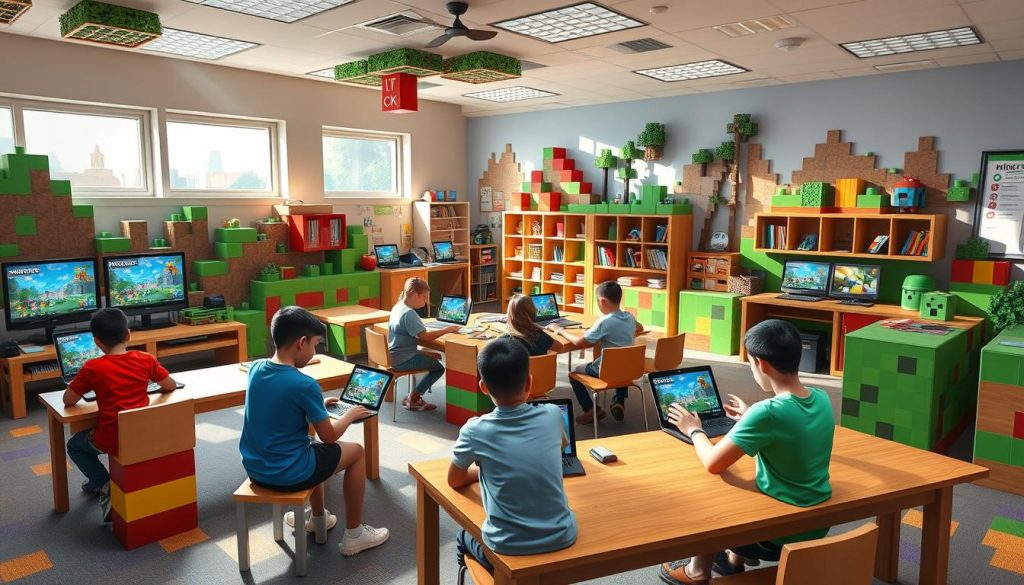
Minecraft Education is now used in over 7,000 classrooms worldwide. The game's versatility allows integration into various subjects, promoting STEM skills. It also enhances creativity and problem-solving abilities.
Minecraft continues to reshape the landscape of educational technology. Its growing popularity is changing how students learn and engage with content.
Minecraft Education Edition is revolutionizing digital learning tools. This educational gaming platform offers unique classroom features to enhance learning. It boasts over 100 million registered users worldwide, making it a global educational phenomenon.
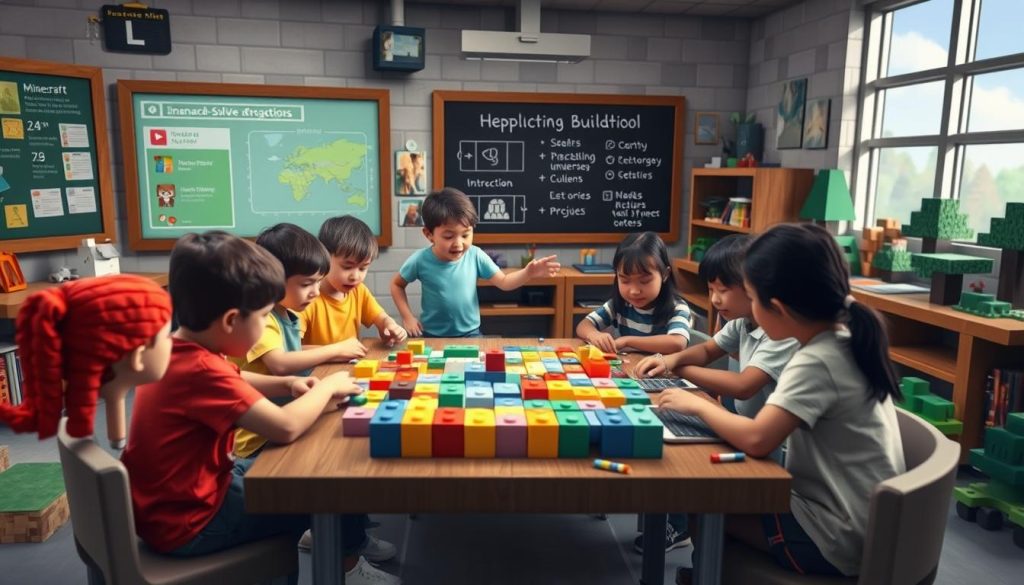
The platform allows up to 30 students to work together on projects. This collaborative environment nurtures teamwork and communication skills. Content can be adapted for different learning levels, making it ideal for diverse classrooms.
Minecraft Education Edition works on Windows, Mac, Chromebook, and iOS devices. This versatility ensures easy implementation in most schools. The platform provides an engaging learning environment and supports teachers with essential resources.
Video games like Minecraft help students express and control their emotions, build social ties, and enhance creativity, imagination, peer engagement, and teamwork.
Teachers rate Minecraft: Education Edition's engagement level highly, often scoring it 4 or 5 out of 5. Students show great interest in using Minecraft again for learning, especially in subjects like math.
This enthusiasm leads to improved self-perception of math abilities among students using the platform. The game supports various subjects including science, math, history, engineering, architecture, and computer coding.
Minecraft Education Edition is changing how we view digital learning tools in classrooms. Its innovative approach makes learning more engaging and effective for students worldwide.
Minecraft Education offers many learning opportunities for students. It builds 21st-century skills through fun gameplay and creative tasks. Students can grow while having a great time.
Minecraft encourages students to work together on team projects. They learn to solve conflicts and improve group interactions. This teamwork helps kids make friends in new schools.
The game's open world design sparks creative problem-solving. Tools like Code Connection help students tackle complex challenges. This approach has boosted math test scores, especially in fractions and spatial reasoning.
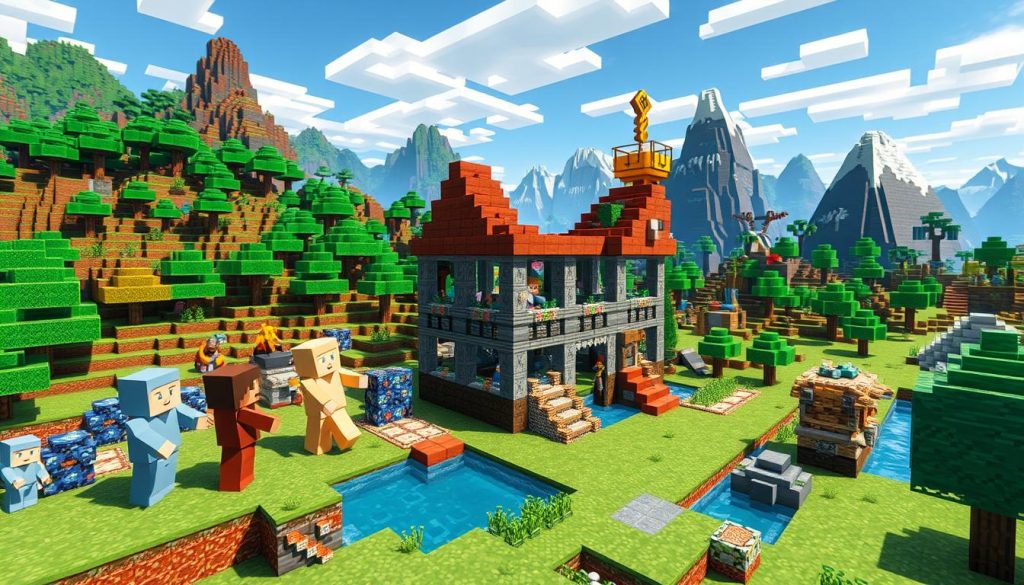
Minecraft's virtual sandbox ignites creativity in surprising ways. Students tell digital stories, improving their language skills. This freedom has led to better comprehension and vocabulary in English classes.
Students gain digital skills as they explore Minecraft. They learn safe online communication and develop leadership abilities. These skills prepare them for our tech-driven world.
Schools using Minecraft have seen positive changes. Attendance rates have gone up, while dropout rates have decreased. It's a powerful tool for engaging students and building essential skills.
Minecraft Education Edition enhances interdisciplinary learning. It offers 600 pre-planned lessons across various subjects. This platform is used in over 10,000 schools in 40 countries.
It transforms traditional classrooms into dynamic learning spaces. Students engage with subjects in new and exciting ways.
Minecraft excels in STEM education. Students build virtual beehives to study colony behavior. They use in-game grids to understand complex math concepts.
Kids tackle fractions and decimals with enthusiasm. The platform offers 200 hours of computer science content. This is ideal for young coders.
Virtual field trips in Minecraft bring history to life. Students explore World War One environments. They build historical monuments like the Great Pyramids.
These experiences make learning tangible and memorable. Up to 30 students can collaborate at once. This makes it great for group projects.
Digital storytelling takes new forms in Minecraft. Students write shipwreck stories based on in-game observations. This enhances their creative writing skills.
The platform allows for endless storytelling possibilities. Students can recreate classic literature scenes. They can also invent new worlds.
Minecraft Education's approach embodies interdisciplinary learning. It creates a holistic learning experience. This prepares students for future challenges.
Game-based learning has transformed student engagement. Minecraft Education Edition is a powerful tool for teaching innovation. It's changing how we approach learning in the digital age.
Many educators have embraced Minecraft in their classrooms. Students tackle complex problems with enthusiasm. They collaborate on creative projects and develop critical thinking skills while having fun.
Minecraft's flexibility allows integration across various subjects. We use it to build historical structures in social studies. In math, students explore geometric concepts through the game.
The game's versatility makes it popular among teachers. It helps them add creativity to their lessons. The possibilities for learning are endless.
"Minecraft has revolutionized my teaching approach. It's amazing to see students so engaged and motivated to learn," shares a high school science teacher from Michigan.
Implementing Minecraft in the classroom has its challenges. Technical hurdles can be daunting. Proper training is necessary for teachers.
However, many educators find the results worthwhile. The benefits outweigh the initial difficulties.
Minecraft is reshaping our approach to teaching and learning. It's an innovative platform for 21st-century education. The potential for growth and improvement is vast.
Minecraft can transform classrooms, but it's not without its hurdles. Educational technology barriers often arise when integrating new tools like Minecraft: Education Edition.
Schools face several technical challenges:
These issues can disrupt the learning process. They often frustrate both teachers and students alike.
Striking a balance between fun and education is key. Some students might get lost in the game. To prevent this, set clear objectives for each lesson.
Guide students towards specific learning outcomes. This helps keep the focus on education.
Teacher training is crucial for success. Many educators learn alongside their students. This can be both exciting and challenging.
Get familiar with basic gameplay and commands first. This preparation will help you introduce Minecraft to your classroom effectively.
"Minecraft is an excellent tool that decentralizes instruction, encourages creativity, and facilitates collaboration in class."
The benefits of Minecraft in education are clear. With proper planning and support, we can create engaging learning experiences.
These immersive lessons can overcome obstacles. They offer students unique ways to learn and grow.
Minecraft Education is transforming classrooms as virtual learning grows. This game is reshaping educational technology trends. It's an exciting tool for modern teaching methods.
Minecraft's impact on education is undeniable. It's the top-selling video game with over 600 standards-aligned lessons. Schools nationwide are using it innovatively.
Gamification in education is on the rise, with Minecraft leading. It teaches coding, electronics, and social skills. Students manage resources and improve reading and writing skills.
Minecraft helps rebuild historical landmarks in the game. Its built-in tools allow fun ways to assess learning. Students can collaborate in shared worlds, fostering community.
As education evolves, Minecraft will play a crucial role. It's set to make learning more engaging and effective. The game's future in education looks bright and promising.
Minecraft revolutionizes learning experiences. We must rethink how we measure student progress. Traditional tests fall short in capturing game-based learning skills.
New methods are vital to gauge Minecraft's educational impact. The Institute of Play found game-based learning boosted critical thinking by 30%. This underscores the need for fresh evaluation techniques.
Student engagement metrics reveal Minecraft-based lessons' effectiveness. A whopping 90% of students felt more motivated when learning through play. In my classroom, students eagerly tackle complex problems in Minecraft.
Assessing 21st-century skills is crucial for Minecraft's educational value. Game-based learning improved problem-solving skills by 14% compared to traditional classrooms. I observe how students collaborate and overcome challenges in-game.
New assessment approaches help us nurture skills developed through Minecraft. We're preparing students for the future workforce, not just teaching subject knowledge.
Minecraft in schools has transformed learning. It's used by 35 million teachers and students across 115 countries. Educational gaming benefits are now a reality, not just a trend.
Minecraft is more than entertainment. It enhances problem-solving skills and fosters creativity. Ireland's "Future is MINE" initiative brought Minecraft Education to classrooms nationwide.
Minecraft in schools is shaping a new generation of learners. Ireland's €210 million grant for school technology supports innovative education. This game creates engaging and collaborative learning environments.
The future of digital learning is bright. Minecraft leads the charge in effective education. It's building a new educational landscape, block by block.
Minecraft Education Edition is a classroom version of the popular game. It blends Minecraft gameplay with educational features. This platform offers collaboration, assessment, and programming tools for immersive learning.
Minecraft Education Edition is used globally. It's present in over 40 countries and more than 10,000 schools worldwide.
It provides teaching support, tutorials, and safety features. Up to 30 students can work together on projects. Content can be tailored to different learning levels.
The platform works on various devices. These include Windows, Mac, Chromebook/Android, and iPads/iPhones.
It encourages collaboration, teamwork, and critical thinking. Students develop problem-solving skills and digital literacy. They learn to self-organize and delegate tasks.
The platform helps build resilience and perseverance. Students work together to overcome challenges in the learning process.
Minecraft Education covers a wide range of subjects. These include science, math, history, and language arts. It also teaches computer science, architecture, digital citizenship, and sustainability.
Teachers can engage students through a familiar platform. They maintain control over the learning environment. The platform offers many lessons with cross-curricular links.
Teachers can use Minecraft for short and long-term projects. They notice increased student motivation and improved critical thinking skills.
Technical issues can arise with incompatible devices or software updates. Internet connectivity can also be a problem. Balancing gameplay with learning objectives is crucial.
Some students may get distracted by game aspects. Adequate training and support for educators are essential.
Minecraft Education's future looks promising with ongoing updates and expansions. It's ideal for transforming physical classrooms into virtual ones. The platform enables shared multiplayer worlds.
It maintains a sense of community in digital learning. This is especially useful as distance learning becomes more common.
Teachers look at various factors beyond traditional tests. They assess student engagement, motivation, and social skills. Problem-solving abilities and higher-level thinking are also considered.
Teachers value creativity in solving complex problems. They also look at life skills development. This includes time management and collaboration abilities.
There’s something magical about watching a child’s creativity unfold, especially when it happens in unexpected ways. Picture this: your child, eyes bright with concentration, carefully placing each block in Minecraft to create a pixel art masterpiece. It’s more than just a game—it’s a canvas where their imagination can run wild, where colors and shapes become a language of expression.
You might remember the first time you picked up a crayon and let your imagination take over, creating worlds on paper. Now, through Minecraft pixel art, your child is experiencing that same thrill of creation, but with endless possibilities at their fingertips. This is where their ideas come to life, one pixel at a time, and where they discover that creativity has no limits.
Minecraft pixel art is an exciting trend in gaming. Players create amazing in-game artwork using Minecraft blocks. It's like building giant, pixelated 3D drawings in your favorite game. This art form offers a unique way to express yourself.
From simple designs to complex masterpieces, everyone can shine. You don't need to be a pro to start making cool art. Let's explore how to make awesome Minecraft pixel art. We'll cover everything from finding ideas to creating your designs. With some practice, you'll be making eye-catching art soon. Get ready to unleash your creativity in Minecraft!
Minecraft pixel art unlocks a world of creativity. Players turn blocky landscapes into stunning visual masterpieces.
This unique art form has become a community favorite. It's a great way to show off artistic skills in the game.
Minecraft pixel art uses colored blocks to create images. It's like painting with blocks!
Players place blocks to form pictures when viewed from afar. This allows for detailed designs despite the game's blocky nature.

There's growing interest in pixel art among players. Many share their creations online, inspiring others to try it too.
Tutorials and showcases are becoming more common. Some artists even create one piece daily!
Pixel art in Minecraft lets you express yourself freely. You can recreate favorite characters or add flair to your world.
It improves spatial awareness and color theory skills. Pixel art offers endless creative opportunities in Minecraft's blocky universe.
Pixel art allows me to bring my imagination to life in Minecraft, one block at a time.
Minecraft offers many blocks for pixel art. Let's explore what you need to start creating!
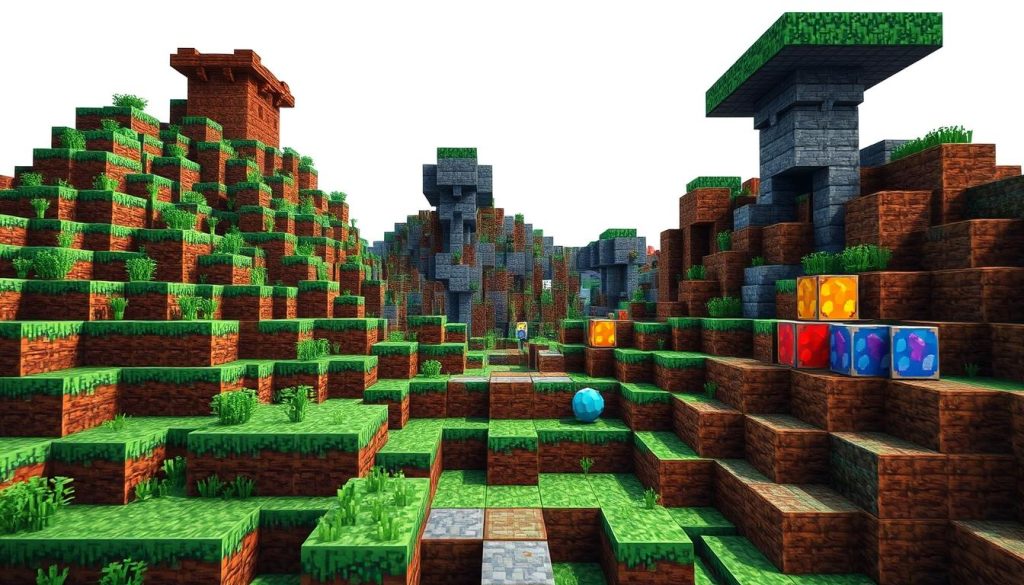
Wool, wood, concrete, stone, and terracotta are great for pixel art. These blocks come in various colors for diverse palettes.
A standard Minecraft block is 16x16 pixels. This allows for detailed designs in your artwork.
The smallest size is 1 block = 1 pixel. For bigger pieces, use 4 blocks for a 2x2 area.
Creative mode is best for pixel art. It gives unlimited resources and flying ability.
Try different block combinations to find your perfect color palette.
"Pixel art in Minecraft is like painting with blocks. Each placement is a brushstroke, bringing your digital canvas to life."
Pixel art in Minecraft is a fun way to express creativity. It brings favorite characters to life in the game.
Planning is key to making awesome designs. Let's look at the steps for pixel art projects.
First, pick an inspiration image. Popular themes include Star Wars, Pokemon, and Adventure Time characters.
I often use graph paper to sketch my ideas. Larger squares work for retro-style art. Smaller squares are better for detailed designs.
Next, break down the image into a pixel grid. This step is crucial for pixel art design.
I use online tools like Piskel to draft designs. It makes the process smoother and faster.
For Minecraft, I prefer Creative mode. It gives me unlimited resources and flying ability.
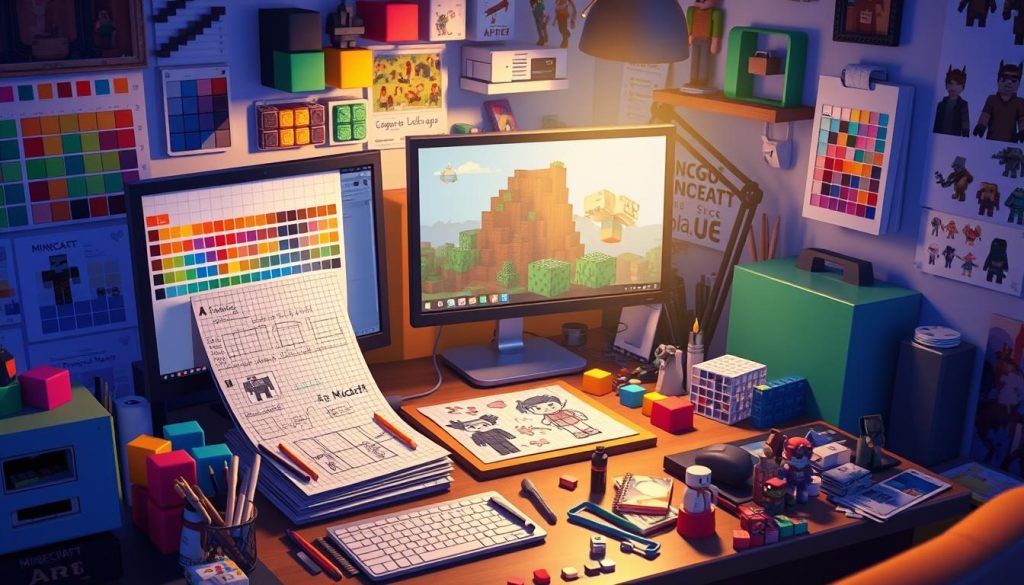
Color mapping is the final step. I match the colors in my design to Minecraft blocks.
This can be tricky due to the game's limited palette. I often use websites like PixelArt.com for color ideas.
Once I've mapped out the colors, I'm ready to build!
Pixel art has become very popular in Minecraft, with players from all over the world taking on the challenge of creating both two-dimensional and three-dimensional structures of their favorite characters or superheroes in the game.
These planning steps help create stunning pixel art in Minecraft. Simple image conversion can lead to impressive in-game creations!
Pixel art in Minecraft is fun and creative. Let's explore how to make cool designs in the game.
Start by picking an image to recreate. Simple 8-bit or 16-bit game designs work well for beginners.
Split your image into a 16x16 grid. This matches Minecraft's block system perfectly.
Gather wool, concrete, and terracotta blocks. These have bright colors perfect for pixel art.
Creative Mode gives you unlimited access to these blocks. This makes building easier.
Now, start placing blocks! Begin with a solid base and build up.
I like to start from the bottom left corner. Follow your grid plan closely.
Keep practicing to improve your skills. Each project will make you better.
Look for ideas from other Minecraft creators. The community has lots of cool art.
"Pixel art in Minecraft is like painting with blocks. Each placement is a brushstroke in your digital masterpiece."
Now you're ready to start your pixel art adventure. Have fun creating!
Minecraft's simple blocks offer endless pixel art possibilities. Let's explore some advanced techniques to boost your designs.
Shading adds life to your creations. I use different block shades for shadows and highlights.
This method brings depth to flat designs. Dark gray blocks work for shadows, light gray for highlights.
3D effects can transform flat images into eye-catching structures. I stack blocks strategically to create a 3D illusion.
This technique works great for logos or character designs. It adds depth and interest to your art.
Lighting is key in advanced pixel art. I place light sources near artwork to cast natural shadows.
This enhances the 3D effect and adds drama. For night scenes, glowstone or sea lanterns create soft glows.
These techniques help create stunning Minecraft designs. With practice, you'll bring your artistic visions to life.
Pixel art in Minecraft can be tricky. I've faced many issues while creating designs in the game.
Block texture variations and limited colors are common problems. These can challenge even skilled builders.
Let's look at some tips to help you overcome these hurdles.
Stone blocks come in different shades of gray. This can make detailed designs hard.
To fix this, view your art from far away. This helps you see the overall effect.
Minecraft's color options are limited. Sometimes, blocks don't match your inspiration image.
Try using block combinations to create new hues. Placing certain blocks together can trick the eye.
Pixel art in Minecraft is about being creative. Don't worry if your first tries aren't perfect.
With practice, you'll soon make amazing pixel art. Keep trying and have fun!
Minecraft's community is a hub of creativity. Let's explore how to capture and share your pixel art masterpieces.
Great screenshots are key to showcasing your pixel art. Use the game's built-in screenshot function for quick captures.
For advanced shots, try third-party software. Choose the right in-game time and angle to make your art shine!
The Minecraft community spans many art-sharing platforms. Reddit is popular for pixel artists to exchange ideas.
Twitter is perfect for quick shares and feedback. Pinterest serves as a great inspiration board for future projects.
Minecraft-specific sites offer more options. Submit your best work to FeatureMe@minecraft.net for a chance to be featured.
Engaging with other artists helps you improve. It also keeps you connected to this vibrant community.
The Minecraft community loves seeing new, creative designs. Your pixel art could inspire others or catch Mojang developers' eyes!
Start sharing your creations today. Become part of the growing world of Minecraft artistry.
The Minecraft pixel art community brims with creativity. I've seen amazing creations from simple mobs to hyper-realistic sketches.
These artists push the game's limits. They inspire others to explore their artistic talents.
Community pixel art often includes popular characters and famous artworks. Pokemon characters are a common trend in Minecraft art.
Pinterest has many tutorials for Pokemon pixel art. Over 10 different species are featured.
Pixel art sizes usually range from 16x16 to 30x30 blocks. Popular subjects include Charizard, Bulbasaur, and Eeveelutions.
Artists use shading techniques to add depth to their work. This makes the artwork more realistic.
Pinterest and kandipatterns.com are hubs for sharing creations. Artists showcase their work and inspire others here.
The community encourages growth and experimentation. It's supportive for both beginners and experienced artists.
"Pixel art in Minecraft is like painting with blocks. It's challenging, but the results are so rewarding!"
These community creations have given me new ideas. They've taught me techniques for my own projects.
The Minecraft pixel art community offers endless inspiration. You can recreate favorites or design something new.
Minecraft pixel art amazes me with its artistic potential. Players can turn blocks into stunning visual masterpieces.
Pixel art offers endless ways to show your imagination. From simple designs to complex portraits, the possibilities are vast.
This art form sharpens your eye for detail. It also boosts spatial awareness and problem-solving skills.
Your creations showcase patience and creativity. Colored wool, glass, and other blocks become your palette.
Tools like Schematica and Spritecraft make pixel art easier. These helpers welcome players of all skill levels.
The Minecraft community keeps pushing limits. They create retro game characters and modern Fortnite-inspired designs.
Try pixel art and let your vision shine. The blocky world of Minecraft awaits your creative touch.
Minecraft pixel art is in-game artwork made with blocks like wool and concrete. Players create images and scenes using the game's block-based system.
This art form has grown popular alongside traditional Minecraft builds. It results in a unique pixelated look.
Common materials include wool, wood, concrete, stone, and terracotta blocks. Players use both natural block colors and dyed or glazed variants.
Start by choosing or designing an image. Break it into color sections and map them to Minecraft blocks.
Use graph paper or computer programs to overlay a grid. Consider Minecraft's color palette and block textures when planning your design.
Begin with a foundation and build up and around it. Work section by section, referring to your planned grid.
Start in Creative mode for unlimited resources. The process includes choosing an image and obtaining resources.
Use different shades of blocks to create shadows and highlights. Experiment with block placement to achieve three-dimensional looks.
Add lighting effects by placing light sources near your artwork. These techniques can make your pixel art more complex.
Challenges include dealing with block texture variations and limited color options. Stone blocks have varying shades of gray, complicating detailed designs.
The game's color palette may not match your inspiration image perfectly. View your art from a distance to overcome these issues.
Take high-quality screenshots or share your world. Use Minecraft's screenshot function or third-party capture software.
Consider time of day and viewing angle when capturing your art. Share on Reddit, Twitter, and Pinterest for feedback.
The Minecraft community has created amazing pixel art. Examples include pixelated versions of characters, famous artworks, and original designs.
Artists like Pandorum have made detailed pixel art. These creations can inspire your own unique style.
What if I told you there’s a secret tool that could make your lesson plans not only more engaging but also incredibly fun for your students? Imagine the look on their faces when they realize that today’s lesson involves their favorite game—Minecraft! As an educator, you know how challenging it can be to capture and hold students’ attention, especially with so many distractions in their lives. But here’s the trick: by integrating Minecraft into lesson plans, you’re not just meeting them where they are—you’re taking their learning to a whole new level.
Think back to a time when you discovered a new way to explain a difficult concept, and it suddenly clicked for your students. That “aha” moment is priceless, and Minecraft can help create more of those moments. Whether it’s exploring ancient civilizations, mastering math through creative building, or even conducting virtual science experiments, Minecraft makes learning an immersive, hands-on experience. It’s like you’ve unlocked a hidden door to a world where education and excitement coexist, making your lessons something your students will look forward to with eager anticipation.
Educational Minecraft has changed classrooms. It's now a powerful tool for interactive learning. Teachers use Minecraft to boost student engagement. This blocky world brings subjects to life in new ways. Gamification in education is growing fast. Minecraft leads this trend with 97% of teens gaming. The game's open nature allows for endless teaching possibilities. It works for subjects from history to computer science. Minecraft isn't just about building virtual worlds. It teaches problem-solving, creativity, and teamwork. These skills are key for success today. Minecraft prepares students for future challenges in a fun way.
Minecraft has changed from a simple game to a powerful educational tool. It has brought excitement to classrooms across the United States.
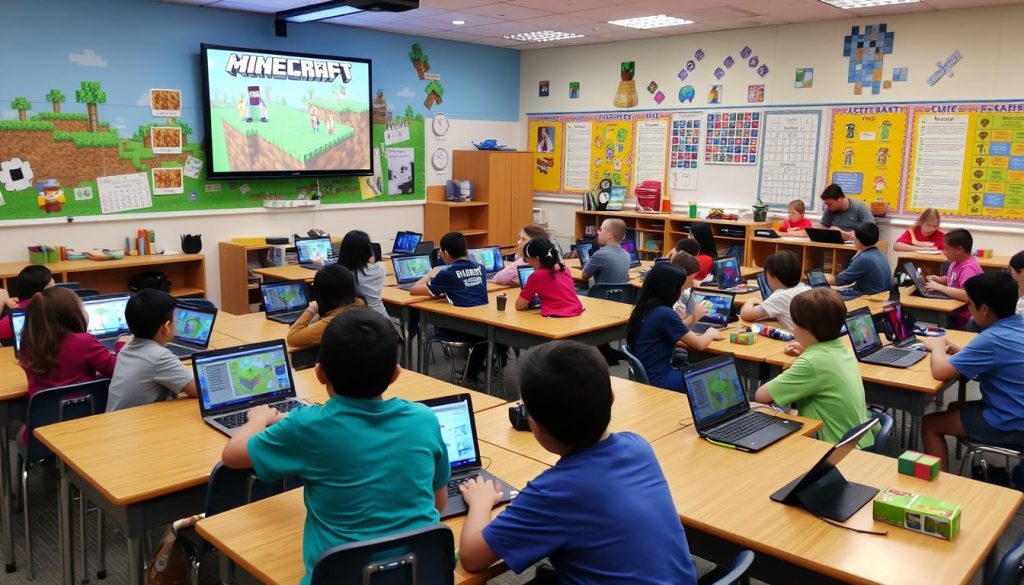
Minecraft's journey into education began with its ability to spark creativity. Teachers noticed how engaged students were and started using it in lessons.
Minecraft: Education Edition now offers over 250 lessons in various subjects. This makes educational gaming accessible to millions of students.
The game has changed how we teach. One study showed 2nd grade students were very interested in using Minecraft.
Minecraft helps develop skills like problem-solving and digital citizenship. These skills are essential in today's world.
Schools are now building entire curricula around Minecraft. It's used for many subjects, from math to social studies.
In its first year, Minecraft Education Edition had two million downloads. This shows how educators are using new ways to engage students.
Minecraft is more than a game. It's a window into how we can reimagine education for the digital age.
Minecraft has over 140 million users worldwide. Its impact on education keeps growing and shaping how we learn.
Minecraft transforms classrooms into exciting virtual learning environments. Since 2016, Minecraft Education Edition has revolutionized educational game design.
Teachers use Minecraft to bring subjects to life. Students build 3D replicas of historical structures, making history tangible.
In math classes, kids explore ratios through hands-on building. The game serves as a storytelling platform for vivid narratives.
Minecraft's power lies in fostering critical skills. These include problem-solving, creativity, collaboration, and digital citizenship.
The game's open nature encourages creative thinking and teamwork. It's about building minds, not just blocks.
"Minecraft Education Edition has transformed my classroom. Students are more engaged and enthusiastic about learning than ever before."
Parents love how Minecraft makes learning fun and relevant. It develops crucial 21st-century skills for students.
Minecraft reshapes education with its immersive platform. It proves that great learning can happen through play.
Minecraft is more than just a game. It's a tool for building important skills for the future.
Minecraft challenges players to find creative solutions. They learn to think carefully and try new ideas until they succeed.
This helps students get ready for real-world problems. They practice skills that will be useful later in life.
Minecraft lets players build anything they can imagine. This freedom helps students think in new and exciting ways.
By exploring and creating, kids learn important digital skills. They can bring their wildest ideas to life in the game.
Playing Minecraft with others teaches teamwork. Students work together on projects and share ideas with each other.
These group activities help improve talking and listening skills. Kids learn how to be good team players.
"Ireland's Future is MINE" initiative used Minecraft Education to support the development of transformative competencies and twenty-first century skills in primary school students.
Over 35 million teachers and students use Minecraft Education. This shows how well it works for teaching important skills.
Teachers can use Minecraft to make learning fun and interesting. It helps prepare students for the digital world we live in.
Minecraft curriculum integration is a game-changer in education. It offers hundreds of ready-to-teach lessons across various subjects.
Start by getting to know the platform. Minecraft Education needs a good device and internet connection.
Focus on specific learning goals when making lessons. Minecraft's open world allows for creative teaching methods.
Up to thirty students can work together in one world. This makes group projects and peer learning easy.
"Minecraft Education brings subjects to life in ways that traditional textbooks cannot achieve."
Minecraft creates fun learning experiences for different learning styles. The options are endless, just like the Minecraft world!
Minecraft is changing STEAM education. It lets students apply science, tech, engineering, art, and math in fun ways.
Minecraft coding lets students play with redstone mechanics. These work like electrical circuits and teach logic basics.
MinecraftEdu users show more interest in science class. This hands-on approach helps them learn programming concepts.
Virtual building in Minecraft boosts engineering skills. Students can design complex structures and improve spatial awareness.
The game allows for endless creative possibilities. Kids can copy real buildings or imagine future cities.
Minecraft's block style sparks creativity. Students make custom skins, pixel art, and beautiful landscapes.
This artistic work improves their digital design skills. It keeps them engaged while they learn.
Math is built into Minecraft's gameplay. Players use resource management and problem-solving skills all the time.
Building needs math for dimensions and inventory. This makes learning math fun and interactive.
"Minecraft Education has over 600 standards-aligned lessons covering various subjects like STEM, coding, digital citizenship, responsible AI use, history, language arts, and digital skills."
Minecraft's educational power creates exciting STEAM lessons. This boosts student interest and success in key subjects.
Minecraft turns classrooms into virtual teamwork hubs. Students now eagerly join in STEM talks and activities.
This game is a powerful tool for team-based learning. Students connect with peers worldwide in Minecraft's multiplayer mode.
They work on projects that mirror real-world scenarios. Students build an online classroom community, not just blocks.
Here's how Minecraft fosters teamwork:
Clear goals help students tackle challenges with confidence. Feedback improves critical thinking.
Showing off student creations boosts pride. It helps them feel accomplished.
Minecraft is revolutionizing education with its blend of play and learning.
A classroom Minecraft server needs 2GB of RAM per 10 players. Managing student permissions and accounts is crucial.
This setup creates a safe space for virtual teamwork. Students develop 21st-century skills through Minecraft.
They learn to share ideas and work as a team. This virtual world builds real-world skills for our connected society.
Minecraft's customization options open up a world of possibilities for educators. We can create custom educational content that fits our specific teaching goals.
This flexibility allows us to tailor the game to various subjects. We can adapt it to different learning styles too.
Minecraft mods can transform the game into a powerful educational tool. The Biology Education Mod brings science to life for students.
The History Blocks mod offers an immersive experience into historical events. These mods make learning interactive and engaging for students.
Custom skins and worlds add a personal touch to learning. Students can design characters and environments that relate to their studies.
This creative process enhances engagement and helps reinforce key concepts. It makes learning fun and memorable for students.
Redstone mechanics in Minecraft introduce students to basic programming concepts. Learners develop problem-solving skills by building complex machines and circuits.
They gain hands-on experience with logic and engineering principles. This practical approach makes learning more effective.
Minecraft's versatility allows us to create engaging learning environments. With the right mods, we can make education both fun and effective.
From coding challenges to historical recreations, the possibilities are endless. We can inspire a new generation of thinkers and creators.
"Minecraft Education Edition is designed specifically for classroom use, promoting creativity, collaboration, and problem-solving."
By using custom elements, we're not just teaching. We're inspiring students to think creatively and solve problems.
Minecraft can transform classrooms. It's popular, with over 100 million copies sold. Let's address some concerns about educational gaming.
Screen time is a big worry. Teens in Valencia game for 47 minutes daily. Minecraft: Education Edition helps balance fun and learning.
It's designed for classrooms and focuses on subjects like science and math. This keeps gaming educational and time-limited.
Cost and tech issues can be challenging. Some schools have tight budgets or lack tech skills.
In South Africa, 30% of 9th graders skip Physical Sciences. They find it too hard to understand.
Minecraft can make tough subjects fun. It's worth investing to boost student interest and learning.
Minecraft offers many benefits for education. It sparks creativity and promotes teamwork. With smart use, it can greatly improve learning.
Minecraft is a powerful tool for educational innovation. It helps students explore complex ideas and develop critical thinking skills.
The game's open-ended style matches how people learn best. Students build knowledge through active play and talking with others.
Minecraft's success in schools comes from its ability to be customized. Teachers use it to create engaging lessons across many subjects.
The game encourages hands-on learning. It can be adapted to fit different learning goals and standards.
Minecraft gets students excited about learning through hands-on experiences. It helps kids work together and improve their communication skills.
The game builds problem-solving and creative thinking. It's fun for all ages, from young kids to adults.
Minecraft challenges players to think creatively and try new things. Kids learn to solve problems and come up with clever ideas.
Players can explore at their own speed. This helps them take charge of their learning.
Teachers can create Minecraft worlds that match their lesson goals. These worlds can fit different learning styles and interests.
Minecraft can be used outside class too. It allows for fun, project-based learning in virtual spaces.
Minecraft lets kids apply science, tech, engineering, art, and math ideas. They can learn about circuits and coding with redstone mechanics.
Players build complex structures, learning engineering skills. Math is a big part of how the game works.
Minecraft helps students work together and share responsibilities. Kids learn to talk and work well with others.
This teamwork is like real-world situations. It prepares students for our connected world.
Minecraft can be changed to fit different learning goals. Teachers and students can make their own skins and worlds.
Redstone mechanics allow for advanced learning. Players can build complex machines in the game world.
It's important to balance fun and learning when using Minecraft. The game should help achieve learning goals, not replace regular teaching.
Adults need to watch screen time. Minecraft should add to learning, not take over.
We wanted to title this article "The Unintended Consequences of Social Emotional Learning Programs: How Minecraft Can Be a Better Solution for Kids' Mental Health". But that's quite a mouthful, and "Minecraft vs Social Emotional Learning" seems to capture the true essence of the issue.
Social Emotional Learning (SEL) programs have become a cornerstone of modern education, touted as essential for fostering emotional intelligence, empathy, and better interpersonal relationships among students. These programs aim to equip children with the skills they need to navigate the complexities of social interactions and emotional challenges. However, despite their good intentions, SEL programs may sometimes do more harm than good, inadvertently exacerbating the very issues they seek to address.
This article explores the unintended consequences of SEL programs, particularly their impact on children's mental health. We will also examine how playing Minecraft with friends—a seemingly simple and enjoyable activity—can be a more effective way to nurture social and emotional development in children.
SEL programs have gained widespread popularity in public schools across the United States. These programs are designed to teach children how to recognize and manage their emotions, set and achieve positive goals, demonstrate empathy for others, establish and maintain positive relationships, and make responsible decisions. The idea is that by integrating these skills into the curriculum, students will be better prepared to handle the social and emotional challenges they encounter in life.
The five core competencies of SEL—self-awareness, self-management, social awareness, relationship skills, and responsible decision-making—are taught through various activities, lessons, and discussions. In theory, these competencies should help students develop resilience, reduce instances of bullying, improve academic performance, and decrease behavioral problems.
While the goals of SEL programs are commendable, their implementation has not been without problems. In some cases, these programs have unintentionally contributed to increased anxiety, stress, and other mental health issues among students. There are several reasons why this happens:
SEL programs often place a strong emphasis on emotional regulation, teaching students to control their emotions in various situations. While emotional regulation is an important skill, the constant focus on managing emotions can create a sense of pressure and inadequacy in children. They may feel as though they are expected to be in control of their emotions at all times, leading to increased stress and anxiety when they struggle to meet these expectations.
SEL programs frequently involve group activities and discussions that require students to share their feelings and experiences with their peers. For some children, particularly those who are introverted or socially anxious, this forced socialization can be overwhelming and counterproductive. Instead of feeling supported, these students may feel exposed and vulnerable, which can exacerbate their anxiety and lead to social withdrawal.
SEL programs often operate under the assumption that all students experience and express emotions in similar ways. This standardization of emotions fails to account for the diverse range of emotional experiences among children. As a result, students who do not conform to the expected emotional norms may feel isolated or misunderstood, which can negatively impact their self-esteem and mental well-being.
One of the biggest challenges with SEL programs is their lack of individualization. Every child is unique, with their own emotional needs, strengths, and challenges. However, SEL programs often take a one-size-fits-all approach, which can leave some students feeling unsupported or even alienated. Children who need more personalized support may not receive it, leading to frustration and a sense of inadequacy.
By constantly focusing on emotions and social interactions, SEL programs may inadvertently reinforce the idea that students have emotional problems that need to be fixed. This increased focus on emotional issues can create a negative self-fulfilling prophecy, where students become more preoccupied with their emotional struggles, leading to heightened anxiety and stress.
While SEL programs have their flaws, this does not mean that social and emotional development should be ignored. On the contrary, fostering these skills is crucial for children's overall well-being. However, there may be more effective and less intrusive ways to achieve these goals—ways that align more naturally with children's interests and experiences.
One such method is through playing Minecraft with friends. Minecraft, a popular sandbox video game, offers a unique and engaging environment for children to develop social and emotional skills in a more organic and less pressured way.
In Minecraft, players often work together to build structures, gather resources, and explore virtual worlds. This collaboration requires communication, cooperation, and problem-solving—skills that are central to social and emotional development. Unlike the forced group activities in SEL programs, Minecraft allows children to collaborate in a way that feels natural and enjoyable. The game's open-ended nature encourages players to work together towards common goals, fostering a sense of camaraderie and mutual support.
Minecraft's creative mode allows players to express themselves through building and designing their own worlds. This form of creative expression can be a powerful outlet for emotions, providing children with a safe space to explore and process their feelings. Unlike the standardized approach of SEL programs, Minecraft allows for individualized emotional expression, helping children to develop a stronger sense of self-awareness and self-acceptance.
In multiplayer Minecraft sessions, players often encounter situations where they must consider the perspectives and feelings of others. For example, when working on a shared project, players need to respect each other's ideas and preferences. This experience of empathy and perspective-taking is crucial for developing strong social relationships. Unlike the scripted scenarios in SEL programs, these interactions in Minecraft are spontaneous and genuine, making them more impactful and meaningful.
Minecraft's survival mode presents players with various challenges and obstacles, such as hostile creatures, limited resources, and environmental hazards. Overcoming these challenges requires resilience, perseverance, and strategic thinking. These experiences can help children develop a growth mindset, where they learn to view setbacks as opportunities for learning and growth. This resilience is a key component of emotional well-being and can help children cope with stress and adversity in the real world.
For many children, playing Minecraft with friends provides a sense of social connection and belonging. The shared experiences and adventures in the game can strengthen friendships and create a supportive peer network. This sense of belonging is particularly important for children who may feel isolated or excluded in traditional school settings. Unlike the artificial socialization in SEL programs, the connections formed in Minecraft are based on shared interests and mutual enjoyment, making them more authentic and enduring.
Social Emotional Learning programs were introduced with the best of intentions, aiming to equip children with the skills they need to navigate the complexities of social interactions and emotional challenges. However, the implementation of these programs has not been without its challenges, and in some cases, they may even contribute to the very issues they seek to address.
Minecraft, on the other hand, offers a more organic and effective way to promote social and emotional development in children. Through collaborative play, creative expression, and genuine social interactions, Minecraft provides a supportive environment where children can naturally develop the skills they need to thrive socially and emotionally.
As we continue to explore the best ways to support children's mental health and well-being, it is essential to consider alternative approaches that align more closely with their interests and experiences. Minecraft, with its unique blend of creativity, collaboration, and fun, may be just the solution we need to better address the social and emotional challenges facing today's children.
SEL programs are educational initiatives designed to teach children essential skills like emotional regulation, empathy, relationship-building, and responsible decision-making. These programs aim to prepare students to handle social and emotional challenges effectively.
SEL programs can sometimes increase anxiety due to their heavy focus on emotional regulation, forced socialization, and standardization of emotions, which may create pressure and feelings of inadequacy in students.
Minecraft helps in developing social and emotional skills by encouraging collaboration, creative expression, empathy, resilience, and problem-solving in a natural and enjoyable environment. These skills are developed through play and interaction with friends, making the learning process more organic and less pressured.
While Minecraft can be a valuable tool for promoting social and emotional development, it should not necessarily replace SEL programs entirely. However, integrating Minecraft as a complementary approach can provide a more flexible and individualized way to support children's mental health and well-being.
Yes, Minecraft's versatile gameplay can be adapted to suit various age groups, making it a useful tool for fostering social and emotional development in both younger and older children. The key is to ensure that the game is used in a way that aligns with the developmental needs of each age group.
Games like Minecraft offer several educational benefits, including enhancing creativity, improving problem-solving skills, fostering teamwork and collaboration, and providing a safe space for emotional expression and social interaction. These benefits make Minecraft a powerful tool for both academic and social-emotional learning.
Remember the first time your child showed you something they built in Minecraft? Their excitement was contagious, and their creation—whether it was a towering castle or a simple house—was a reflection of their imagination and hard work. In that moment, you saw a glimpse of something powerful: the intersection of play and learning.
As parents, we often wonder how we can best support our children’s education, and it’s easy to feel overwhelmed by the fast pace of technology. But what if the answer was right in front of us, in a game our kids already love? With parent involvement in Minecraft education, we’re not just playing a game—we’re joining them on a journey of discovery, creativity, and learning. Your involvement can transform this digital playground into a powerful educational tool, where your guidance and encouragement unlock new levels of potential in your child.
Minecraft has taken the gaming world by storm since 2011. This blocky wonder offers more than just fun. It's a powerful tool for learning through gaming. Minecraft's open-world format allows kids to explore and create. They can build complex structures and learn basic coding principles. The game works on computers, consoles, and mobile devices. Its kid-friendly design makes it popular with young players and educators.
Parents can guide their child's Minecraft learning experience. Set boundaries and join in to work on projects together.
Minecraft has captivated players worldwide since 2010. This game blends creativity and adventure, appealing to all ages.
I've watched it become a key part of children's digital lives. Its blocky world has won hearts everywhere.
Minecraft lets players build, explore, and survive in a virtual world. It has two main modes: creative and survival.
Creative mode gives unlimited resources for building anything. Survival mode tests resource gathering, tool crafting, and monster fighting skills.
Minecraft's value in education is huge. Teachers use it to cover math, physics, history, and programming.
Students who struggle in regular classes often do well with Minecraft. It makes learning fun and engaging.
Minecraft's open world offers endless creative possibilities. Kids can play together on different devices.
The game's easy-to-use design appeals to many players. It builds a strong sense of community.
"Students are very familiar with Minecraft and show interest in using it for learning," notes Piia Martikainen, emphasizing the game's natural appeal to young learners.
Minecraft is more than just a game. It's a powerful tool for STEM learning that enhances problem-solving skills.
The game boosts creativity and improves spatial awareness. Its open-world format allows children to explore, build, and learn in unique ways.
Over 7,000 classrooms worldwide use Minecraft for education. One U.S. teacher saw amazing results after using it in lessons.
Math scores rose from 18% to 84%. English scores jumped from 24% to 81%.
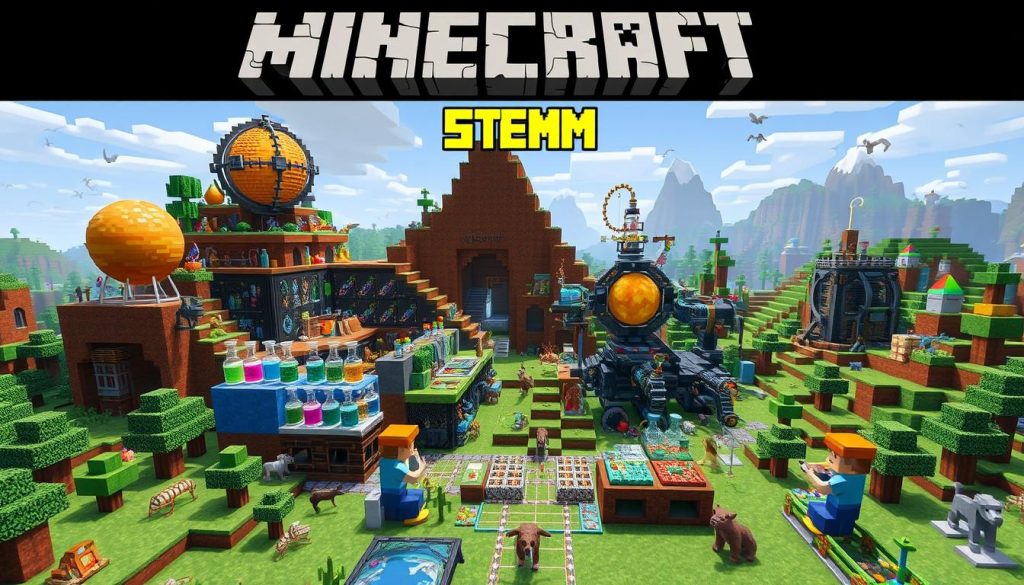
Minecraft teaches teamwork and collaboration. Players learn to solve problems and think creatively while having fun.
Minecraft lets kids change the game's code through command blocks. This hands-on coding experience can spark interest in computer science.
"Minecraft teaches children valuable future work skills, including technical skills, business skills like trading and relationship-building, and core STEM subjects critical for the 21st-century workplace."
35 million teachers and students use Minecraft Education across 115 countries. It's clear that this game is a powerful learning tool.
By using Minecraft, we help kids develop crucial skills. They can explore, create, and have fun at the same time.
Parents play a key role in Minecraft's educational benefits. I balance screen time with family gaming for positive learning.
Clear boundaries for Minecraft play are vital. I use "Gaming as Dessert" to manage screen time.
My child earns game time after finishing other tasks. This keeps a good balance between screen time and other activities.
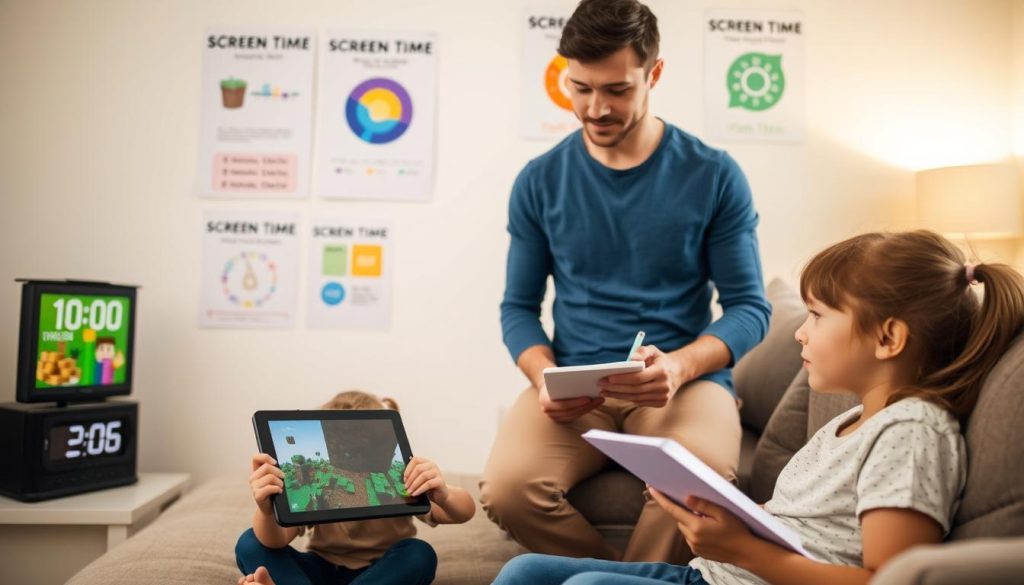
I spark my child's imagination in the game. Creative challenges improve problem-solving skills.
Once, I asked my child to design an eco-friendly city. This led to talks about sustainability and urban planning.
Family Minecraft sessions are great for bonding. We work on projects together, building teamwork skills.
This team approach has made our bond stronger. It also boosts my child's learning experience.
"Playing Minecraft with my child has opened up new avenues for learning and connection that I never expected."
Active involvement creates a fun learning environment. This improves my child's engagement with educational content.
It also strengthens our family bond through shared digital experiences.
Minecraft is more than just a game. It's a powerful tool for STEM education that's changing how kids learn.
In 2020, Minecraft had over 131 million monthly players. Its impact on education is clear and far-reaching.
Minecraft makes coding fun for kids. Redstone circuits and command blocks teach programming ideas.
Children quickly grasp these concepts. This builds a strong base for future tech skills.
The game's open world boosts problem-solving skills. Players face challenges that need creative solutions.
98% of teachers say Minecraft improves critical thinking. It helps kids think outside the box.
Minecraft teaches engineering basics through building. Kids learn about structure, resources, and design as they create.
This hands-on method makes complex ideas fun. It helps children understand engineering in a simple way.
Minecraft's effect on STEM education is huge. 71% of teachers see better math and thinking skills.
The game mixes play with learning. It's shaping a new group of problem-solvers and creators.
"Minecraft Education Edition fosters critical thinking, problem-solving, and collaboration skills among students."
Minecraft can boost STEM learning in amazing ways. It's building skills our children need for tomorrow.
Minecraft sparks kids' creative thinking. This digital sandbox lets children build amazing worlds with pixels.
It's more than a game. Minecraft is a canvas for digital art and architecture.
Minecraft excels in world-building for 9-11 year olds. Kids craft landscapes, castles, and cities while solving problems.
They bring their wildest dreams to life. Minecraft is useful across many subjects.
Minecraft also encourages teamwork. Kids chat, share ideas, and build together in this digital space.
"Minecraft isn't just a game, it's a catalyst for creativity and innovation in young minds."
Studies show Minecraft boosts creativity in schools. Teachers report increased creativity in 87% of students using Minecraft.
This blocky world nurtures imagination. It helps build creative skills that last a lifetime.
Minecraft's multiplayer mode helps kids build digital social skills. With 126 million monthly players, kids can practice online teamwork.
Kids learn to work together on big projects in Minecraft. They plan, share tasks, and use their skills for common goals.
This is like real-world teamwork. It gets them ready for future group work.
The game helps kids talk clearly. Players must share ideas and give instructions.
The Minecraft YouTube community shows this well. It has long talks about making content.
Minecraft is a safe place to practice solving problems. Kids learn to make deals and fix fights.
The Good Behaviour Game is often used here. Kids make rules together and follow them.
These skills help in real life too. Parents and teachers see better behavior at home and school.
"Minecraft is more than just a game. It's a platform for developing crucial social skills that will benefit children throughout their lives."
Minecraft's multiplayer mode isn't just for fun. It helps kids build key social skills for today's world.
Minecraft helps kids improve their language arts skills. It's a great platform for digital storytelling. Kids can create amazing stories in the game's blocky world.
This creative space helps build their storytelling skills. It also fires up their imagination.
Minecraft is perfect for creative writing. Players can write stories about their game adventures. They can describe their amazing buildings too.
The Education Edition has a Book & Quill feature. Young writers can use this to write down their ideas.
Here's how Minecraft boosts language arts skills:
Minecraft has a big impact on literacy. The Roald Dahl Estate held a writing contest. The winning story "Fluffletopolis" became a Minecraft build.
This shows how Minecraft can help improve storytelling skills. It blends old-school storytelling with new digital creation.
"Minecraft has engaged educators and students in 115 countries, proving its global appeal in education."
Minecraft offers more than just gameplay. It has hundreds of pre-made worlds and lesson plans. These make it easy to add language arts activities.
Using Minecraft can make learning fun and engaging. It helps kids become great storytellers and writers in today's digital world.
Minecraft is a powerful tool for virtual history lessons. It brings the past and world's landscapes to life in amazing ways.
This game offers an immersive platform for interactive learning. It can do things that textbooks simply can't match.
Students in Portugal use Minecraft to recreate ancient Olisipo (modern-day Lisbon). This project helps kids understand the Roman conquest of Iberia.
It's amazing to see 5th, 6th, and 7th graders building ancient cities. They create 1:1 scale models in the game.
Minecraft's diverse biomes are perfect for teaching digital geography. Students can explore various ecosystems, from deserts to tundras.
In one project, kids built models of ASEM member countries. They learned about different landscapes and cultures through this activity.
Minecraft allows for exciting virtual field trips. Students can create tours of ancient civilizations or faraway cities.
It's a great way to explore places hard to visit. Minecraft Education Edition offers a five-lesson sequence on World War I.
"Minecraft social studies and history projects are engaging and easy to implement," says a teacher using the platform. "They promote creativity, collaboration, and critical thinking skills."
Minecraft makes history and geography lessons truly unforgettable. It creates immersive experiences that go beyond just teaching facts.
Minecraft is a powerful tool for boosting math skills. It offers many chances for solving math problems in fun ways.
A study in Australia looked at 307 students and 14 teachers. They came from six schools in different areas.
Most teachers gave Minecraft: Education Edition high scores for math learning. Students showed more interest in math when using Minecraft.
As an educator, I've seen how Minecraft helps kids feel better about math. It makes geometry more fun and easy to understand.
Aaron Maurer, a top teacher from Iowa, uses Minecraft in cool ways. He turns boring homework into 3D games with LEGO and Minecraft.
This makes math homework fun for students. I think Minecraft is great for teaching math skills.
Minecraft is a sandbox video game. Players mine and craft blocks to create complex items.
It has Creative and Survival modes. You can build or face survival challenges.
Minecraft helps develop problem-solving skills and creativity. It teaches STEM concepts through fun gameplay.
Parents can set screen time limits. They can play with their kids to boost learning.
Minecraft teaches coding basics and problem-solving skills. It helps kids understand engineering by building complex structures.
Players can create their own worlds and design cool structures. This encourages innovative thinking and creative problem-solving.
Multiplayer mode lets kids practice teamwork and communication. It helps prepare them for future group work.
Yes, Minecraft can boost storytelling and writing skills. Players create stories and describe their creations.
Players can rebuild historical structures and explore different landscapes. This makes learning history and geography more fun.
Minecraft helps with geometry and spatial reasoning. Kids use math to build structures and solve puzzles.
Wouldn't it be great if learning history could feel as exciting as a treasure hunt, where kids don’t just read about ancient civilizations—they actually step into them. Picture them walking through the streets of Rome, building the Great Wall of China, or trading goods in a bustling medieval market. Here’s the secret: when learning history with Minecraft, it turns the past into a vivid, interactive experience that your kids won’t just learn from—they’ll remember it for years.
Think back to when you first discovered your love for history—maybe it was through a captivating book, an engaging documentary, or an unforgettable field trip. Now, you have the chance to give your students that same sense of discovery, but in a way that lets them become part of the story. With Minecraft, they can explore historical settings, recreate pivotal events, and even collaborate to solve the challenges of the past. It’s like handing them a time machine and a blank canvas, where each lesson becomes an adventure through time, sparking curiosity and making history come alive in a way traditional methods just can’t match.
Minecraft brings history to life for students. This block-building game is a powerful tool for teaching history. It makes abstract historical concepts tangible and exciting. Students can explore ancient worlds and recreate historical events. Minecraft Education Edition turns classrooms into virtual worlds. This hands-on approach sparks curiosity and encourages active learning. A New Zealand class used Minecraft to recreate the Battle of Gate Pa. Students became builders, landscapers, and warriors in this immersive experience. They understood the event better than textbooks could teach. This method brings the past to life.
Minecraft has grown from a simple game to an educational tool. It's now the best-selling video game ever, and learning history with Minecraft is making history fun again.
Minecraft Education Edition has transformed classrooms by turning them into virtual worlds, allowing students to actively engage in learning historical concepts. Through this immersive experience, students can recreate historical events and explore ancient civilizations, promoting active learning and sparking curiosity. By becoming builders, landscapers, and warriors in the game, students gain a deeper understanding of historical events, surpassing what traditional textbooks can offer. Minecraft's educational power lies in its ability to make history tangible and exciting, making it the bestselling video game ever for educational purposes.
Minecraft was created by Mojang in 2009 and bought by Microsoft. It's now a great platform for learning through games.
Its open world helps kids be creative and solve problems. This makes it perfect for teaching in fun ways.

Minecraft Education Edition came out in 2016. It has cool features like Code Builder and Chemistry Lab.
The platform offers lesson plans in many subjects. It even has lessons about World War I and Ancient Egypt!
Minecraft can create amazing virtual worlds for learning. Students can explore old places and work on projects together.
At Harvard Westlake School, Latin students built Roman buildings in Minecraft. This made ancient architecture come alive for them.
Minecraft turns learning into an exciting adventure. Teachers love using it to make their classes more fun.
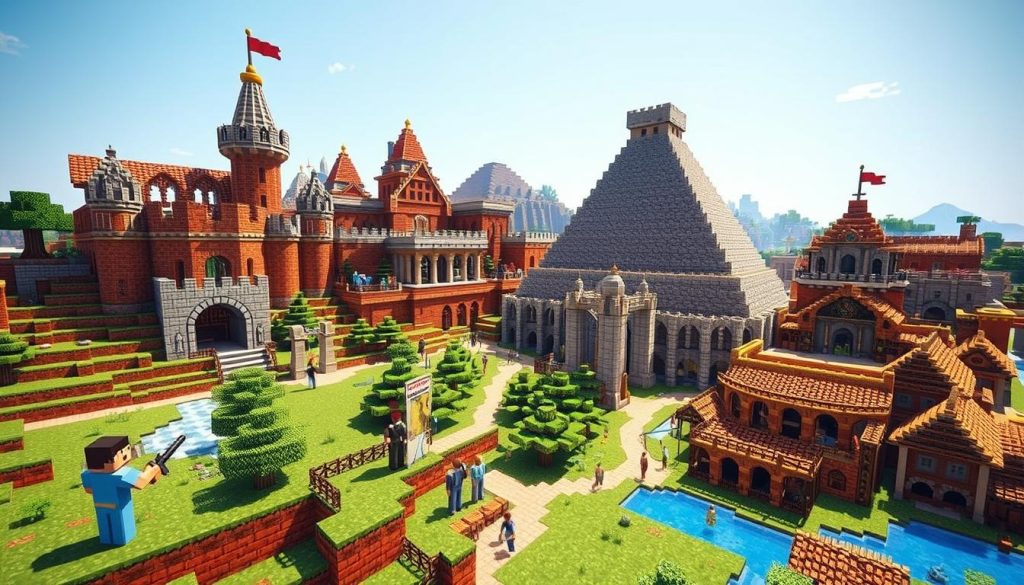
Minecraft is changing how we teach and learn history. It's a powerful tool for creating engaging, interactive history lessons.
Students are bringing the past to life through exciting historical recreations. These projects spark creativity and critical thinking in young learners.
Fifth-graders recreated ancient Olisipo, the Roman-era Lisbon, in Minecraft: Education Edition. They learned about Roman architecture and urban planning while building the city.
The World War I Lesson Pack for Minecraft: Education Edition is another great example. It covers five key aspects of the conflict in detail.
These lessons mix in-game activities with research, writing, and discussions. High school students gain a deeper understanding of World War I's complexities.
"Using Minecraft in history education has shown a positive impact on student creativity, critical thinking, and autonomous learning."
Minecraft lets students step into historical settings and assume new identities. They gain firsthand experience of geographical and historical contexts.
This hands-on approach boosts engagement and improves knowledge retention. Students enjoy learning history like never before.
Minecraft changes how students learn together. It's fun and teaches real-world skills at the same time.
Minecraft creates a space where all students can excel. Kids from different backgrounds work together on cool projects.
Almost every 10-year-old in America knows Minecraft. This means no one feels left out.
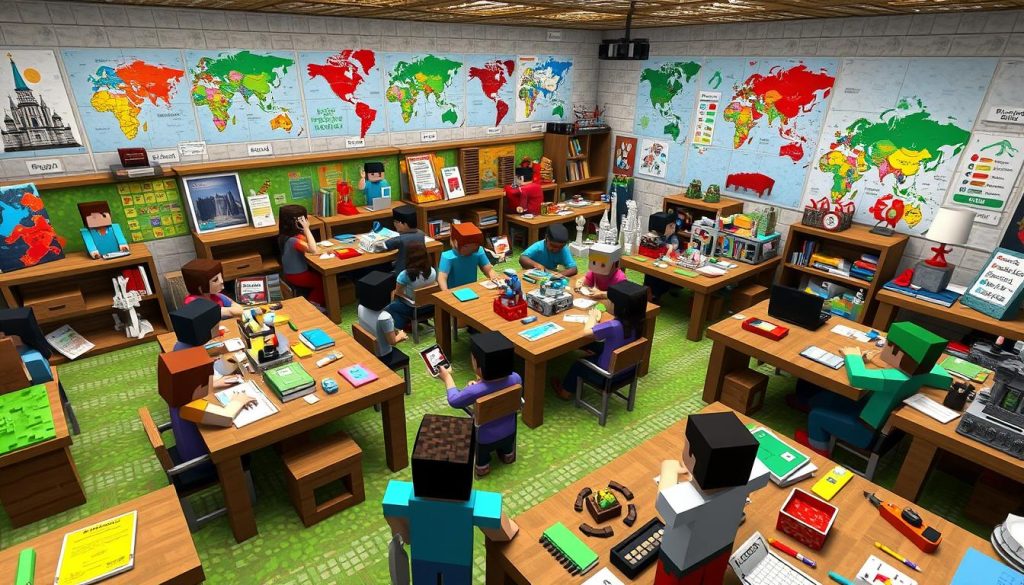
Minecraft teaches more than just building blocks. Students learn planning, problem-solving, and team management.
The game's chat features help improve communication skills. These are all important for future jobs.
A project called "My Country, Your Country" showed Minecraft's power. Students worked together to recreate Portugal in the game.
They learned about geography, history, and complex math. The project covered topics like volume and perimeter.
The results were amazing. Students were more engaged and did better on tests.
Minecraft proves to be more than just a game. It's a tool for learning real-world skills.
Minecraft sparks creative learning in history classes. Students dive into virtual worlds, tackling historical challenges with fresh eyes.
They're developing problem-solving skills that stick. Kids aren't just memorizing facts anymore.
93% of teachers saw better critical thinking with Minecraft Education Edition. This game is a powerful tool for historical thinking.
Kids recreate ancient cities and solve resource shortages. They experience past events in new ways.
Students rebuilt the Roman Colosseum in one exciting project. They researched architecture and debated design choices.
This hands-on approach boosted their understanding and engagement. Working together, they brought history to life.
"Minecraft helped my students think outside the box about historical problems. They're more curious and creative now," shared a history teacher I interviewed.
The game's open-ended nature encourages kids to experiment. They try different solutions to historical problems.
Students might test farming methods in a medieval village sim. Or they could try defense strategies in a castle build.
Minecraft blends history, technology, and imagination. It's changing how we teach about the past.
The game turns passive learners into active problem-solvers. Students are ready to tackle both historical and modern-day challenges.
Minecraft changes how students learn about history. It makes historical ideas real and easy to understand.
Students get more curious and interested in the past. I've seen how it brings history to life better than books.
Minecraft lets students build historical sites block by block. They can make the Roman Colosseum or walk through a virtual Globe Theatre.
This hands-on method helps students grasp and remember important historical ideas. It turns abstract concepts into concrete experiences.
With Minecraft, students don't just read about history. They live it through active learning experiences.
They can give speeches as Abraham Lincoln. Or they can walk the streets of ancient Florence.
Minecraft's open world lets students explore and discover freely. They can make timelines, virtual tours, or historical debates.
This freedom makes students curious. It turns history into an exciting adventure they want to learn about.
"Minecraft has revolutionized how we teach history. It's not just about dates and facts anymore. It's about experiencing the past and making it relevant to today's students."
Teachers can use Minecraft to make history lessons more fun. Students can interact with the past in new ways.
This method helps students think critically about complex historical stories. It also improves their problem-solving skills.
Minecraft turns history lessons into exciting adventures. Students team up to rebuild the past in this interactive game.
My recent workshop focused on recreating World War II events. We explored the incarceration of Japanese Americans through virtual building.
Historical reconstruction in Minecraft is both fun and educational. Students build ancient cities and battlefields, learning as they go.
This hands-on approach makes history easy to remember. It brings the past to life in a new way.
"Minecraft turns students into time travelers, architects, and historians all at once!"
Teamwork is key in these projects. Students work together to solve problems and divide tasks.
This teaches real-world skills they'll use later. Even reluctant learners get excited about history through Minecraft.
Minecraft creates a unique way to learn about history. It builds understanding, empathy, and critical thinking skills.
These skills will help students long after the game ends. Minecraft makes history come alive in amazing ways.
Minecraft transforms history lessons in amazing ways. It offers over 600 standards-aligned lessons for curriculum integration.
This game brings history to life in classrooms. Let's explore how we can use it effectively.
Planning lessons with Minecraft is fun and engaging. I choose a historical event or period to focus on.
Students can recreate key moments or build historical structures. They might construct the Great Wall of China.
Minecraft Education Edition meets educational standards well. It covers history and digital skills in various subjects.
My lessons meet learning goals while keeping students interested. This works great in schools across the U.S.
Assessing Minecraft learning needs creative methods. I use quizzes and project-based evaluations.
Students can submit screenshots or present their historical builds. This shows their understanding and creativity.
"Minecraft has revolutionized how we teach history. It's not just a game; it's a powerful educational tool that brings the past to life."
Minecraft makes history come alive for students. It's an exciting tool in educational technology.
This approach creates immersive experiences beyond just teaching facts. It's shaping our classrooms in new ways.
Minecraft has changed how we teach history. Its impact goes beyond just being a fun game.
With 125 million monthly players, Minecraft is a great tool for teaching history. Many people see its value in classrooms.
Minecraft Education Edition is used in over 6,500 schools worldwide. It helps students learn history in new ways.
Here's why Minecraft is so effective for teaching history:
Minecraft's YouTube community helps people learn about history. Students can explore history outside of school in fun ways.
Minecraft has become an educational tool used to teach critical content in various disciplines, including history.
Most students think games make classes more fun. Minecraft is changing how we teach history in the digital age.
Minecraft has transformed history education. It has engaged over 100 million users worldwide. This game is now used by 35 million teachers and students.
Students spend over 1 billion hours in Minecraft. They have created more than 130 million worlds. In Ms. Wenzel's class, students use Minecraft to present historical claims.
The future of history teaching looks bright with Minecraft. We can expect more exciting ways to learn about the past. Ireland's €210 million grant will help grow Minecraft's role in education.
Minecraft Education Edition is a special version of the popular game Minecraft. It helps students learn in fun and exciting ways.
Minecraft lets students build and explore historical places and events. This hands-on approach makes history more real and interesting for them.
Minecraft helps students learn in ways that connect to real life. It improves math skills and teamwork, as shown in studies.
In Minecraft, students can change their world to solve problems. This helps them think creatively about historical challenges.
Minecraft brings history to life through virtual worlds. Students can explore and learn on their own, making history more fun.
Students can work together in Minecraft to rebuild historical places. This teamwork helps them learn more about history and each other.
Teachers can use Minecraft lessons that fit their history classes. They can change these lessons to meet their students' needs.
Minecraft has a big impact on how people learn history. Its YouTube community helps people share knowledge and learn together.
