
Let's be honest—parenting in today's world feels overwhelming. You're trying to help your child succeed, but the rules keep changing. Will they need to know coding? Should they go to college? What if their dream job doesn't even exist yet? Preparing Children for the Future is about guiding them through these uncertainties.
Take a deep breath. You're not alone in this worry. Recent surveys show that 83% of parents worry about their children's academic success, and 65% stress about their future financial security. But here's the thing: the answer isn't trying to predict an unpredictable future. It's about building kids who can handle whatever comes their way.
This guide will show you how to raise resilient, capable children who will thrive—no matter what tomorrow brings.
Read this if you're short on time:

Remember when success meant good grades, college acceptance, and a stable career? Those metrics aren't wrong, but they're incomplete. The World Economic Forum reports that 65% of today's elementary students will work in jobs that don't exist yet. That's a game-changer.
Real success in the modern world includes:
"This post contains affiliate links. If you click these links and make a purchase, I may earn a commission at no extra cost to you."
Studies show that kids developed through this balanced approach are happier, have stronger relationships, and enjoy more career flexibility than those focused only on grades.
Preparing children for the future isn't about predicting what's coming—it's about building kids who can handle whatever shows up.
Track what actually matters for your child's future success.
Our comprehensive monitoring tool helps you focus on the skills that predict real-world success:
Perfect For: Parents who want to focus on the big picture instead of obsessing over every test grade.
➡️ [Get Your Peace of Mind Dashboard - Free Assessment Tool]

Here's something that might surprise you: protecting your child from every challenge actually makes them weaker. Research shows that kids who face age-appropriate difficulties develop better coping skills and stronger self-confidence than those who are over-protected.
This concept is called "antifragility"—the ability to grow stronger from stress, not just survive it.
Age-Appropriate Challenges That Build Strength:
Ages 3-7:
Ages 8-12:
Ages 13-18:
The key is being present without rescuing. Let them struggle a bit, offer emotional support, but allow natural consequences to teach the lesson. This builds confidence, problem-solving skills, and emotional strength all at once.
Some abilities matter no matter what career path your child chooses or how technology changes. These are your best investment:

1. Communication Skills
Being able to listen, resolve conflicts, speak confidently, and write clearly will serve your child in every job, relationship, and life situation. These skills can't be automated.
2. Critical Thinking
As AI takes over routine tasks, the ability to solve complex problems, evaluate information, and think creatively becomes more valuable. Teach your child to ask good questions, spot misinformation, and generate innovative solutions.
3. Emotional Intelligence
Understanding emotions—both their own and others'—predicts success better than academic achievement. Kids with strong emotional intelligence perform better in school, have fewer behavioral problems, and build stronger relationships.
Practical ways to build these skills:
Complete K-12 curriculum that adapts to your child's pace and learning style.
Why Parents Choose Global Student Network:
Price: Competitive pricing with military and multi-child discounts available
Best For: Homeschooling families or students needing flexible alternatives to traditional school
➡️ [Explore Global Student Network Programs]
Financial literacy directly impacts your child's future security, yet only 23 states require it for high school graduation. This is your opportunity to give them a major advantage.

What to teach at each age:
Elementary Years:
Middle School:
High School:
Beyond just managing money, teach them to think entrepreneurially—how to identify problems and create solutions. This mindset helps in any career, whether they start a business or work for someone else.
Visualize potential career paths based on your child's current interests and strengths.
Our projection tool helps you explore possibilities by considering:
Perfect For: Parents and teens exploring career options without the pressure of making immediate decisions.
➡️ [Get Your Future Success Predictor - Free Projection Tool]
Physical and mental wellness aren't extras—they're the foundation everything else is built on. Kids who develop strong self-care habits perform better academically, have stronger relationships, and bounce back from setbacks faster.
Build these habits early:
Research shows that kids who exercise regularly demonstrate better focus, emotional control, and social skills. Mental health skills—like recognizing stress signals and using calming techniques—help them maintain balance during tough times.
Make self-care automatic through consistent routines and environmental design. For example, keeping screens out of bedrooms naturally improves sleep, while having healthy snacks visible encourages better food choices.

Strong relationships might be the most powerful predictor of life success. Kids with good social skills are more likely to succeed academically, show leadership, and maintain mental health during challenges.
Help your child build relationship skills:
Beyond peer relationships, kids benefit enormously from adult mentors outside the immediate family. These connections provide different perspectives, opportunities, and support.
Create opportunities for mentorship:
These relationships become safety nets during difficult periods and expand your child's vision of what's possible for their future.
Here's something many parents don't realize: traditional four-year college isn't the only path to a stable, successful career. Trade schools, apprenticeships, military service, and specialized training programs often provide faster, more affordable routes to well-paying jobs.

Careers with strong prospects that don't require traditional college:
Many of these careers offer excellent pay, job security, and work-life balance. Plus, graduates often enter the workforce without student loan debt.
Help your child explore options:
Small group online classes where kids explore interests and potential careers.
Why Parents Love Outschool:
Price: Pay per class with flexible booking
Best For: Kids exploring interests, needing personalized attention, or supplementing traditional education
➡️ [Browse Outschool Classes]
Peace of mind comes from taking systematic action, not worrying. Here's your framework:

Quarterly Family Check-Ins:
Schedule family meetings every three months to:
Assessment Areas to Review:
Daily Investments That Compound:
Remember: you're not trying to be perfect. You're building a foundation through consistent, small actions that add up over time.
When you focus on preparing children for the future, you're not trying to guess what jobs will exist or what skills they'll need. You're simply building confident, adaptable kids who can figure things out as they go.
Your peace of mind doesn't come from guaranteeing specific outcomes—that's impossible in our changing world. It comes from knowing you're preparing your child with the skills, mindset, and character to handle whatever comes.
Small, consistent efforts compound dramatically. Daily conversations about feelings, weekly family activities, monthly budget discussions, and quarterly goal-setting might seem insignificant individually, but together they shape your child's confidence and capabilities.
Trust the process. Celebrate progress. And maintain confidence that your comprehensive approach is creating exactly what your child needs to flourish in any future.
How do I know if I'm focusing on the right skills for my child?
Use the Peace of Mind Dashboard tool above to track development across multiple domains. If your child is progressing in emotional intelligence, problem-solving, relationships, and life skills—not just academics—you're on the right track.
What if my child resists challenges and prefers to stay in their comfort zone?
Start very small. Introduce tiny challenges with high success probability, celebrate those wins, then gradually increase difficulty. The key is making progress feel achievable rather than overwhelming.
Should I push my child toward college or alternative paths?
Neither—yet. Focus on exposure and exploration rather than pushing. Let them try different activities, meet professionals in various fields, and discover what genuinely interests them. The right path often becomes clear through experience.
How much time should I spend on life skills versus academic work?
Life skills often integrate naturally with daily activities—cooking teaches math and following instructions, family discussions build communication skills, managing allowance teaches finance. You're not choosing between them; you're weaving them together.
What if my child has already experienced significant setbacks or struggles?
Past struggles can actually build resilience if processed properly. Focus on what they learned, how they grew, and what strengths they discovered. Reframe past difficulties as preparation for future challenges.
How do I balance preparing for the future with letting my child enjoy childhood?
The strategies in this guide don't require sacrificing childhood joy. Playing freely, pursuing interests, building friendships, and trying new things—these ARE the preparation. Childhood doesn't compete with preparation; it is the preparation.
When should I start focusing on these broader life skills?
Start now, whatever your child's age. The specific skills vary by developmental stage, but the comprehensive approach works from preschool through high school. It's never too early or too late to begin.
What if other parents think I'm not focused enough on academics?
Remember that strong academics emerge from foundational skills like emotional regulation, curiosity, and confidence. Your broader approach supports academic success while also preparing for life beyond report cards. Trust your comprehensive strategy.
The world your kids will grow up in looks nothing like the world we knew. Jobs that exist today might disappear tomorrow. New careers we can't even imagine yet will emerge. And artificial intelligence will change… well, pretty much everything.
Here's the reality: By 2030, experts predict 92 million jobs will vanish while 170 million brand-new ones pop up. That's just a few years away. The question isn't whether your child will face massive change—it's whether they'll be ready for it.
Traditional education teaches kids WHAT to think. But in a world where AI can answer almost any question instantly, that's not enough anymore. What matters now is teaching kids HOW to think—critically, creatively, and independently.
This guide for teaching critical thinking to kids shows you how to prepare your child for a future we can't fully predict by developing skills that will never go out of style.
📌 What You'll Learn in This Guide:
⏱️ Read time: 12-15 minutes | Action items: Start with one skill this week

Remember when having a good memory meant something? When knowing facts made you valuable? Those days are fading fast.
Today's kids face challenges we never imagined:
The scary part? Studies show people can only identify fake news correctly about 54% of the time—barely better than flipping a coin. For kids, it's even worse. Research found that only 20% of high school students questioned whether obviously manipulated images might be fake.
This isn't about being "media savvy" anymore. This is about survival in the information age.
Discover which future-ready skills your child has mastered—and which need attention.
Our interactive assessment evaluates your child across five core future skills:
Perfect For: Parents who want a clear picture of their child's readiness for future challenges and a personalized roadmap for skill development.
➡️ [Get Your 21st Century Skills Assessment - Free Tool]
This post contains affiliate links. If you click these links and make a purchase, I may earn a commission at no extra cost to you.
Your child's brain is drowning in information. And that's not an exaggeration.
Children today encounter more information in a single day than their great-grandparents did in entire months. Their brains haven't evolved to handle this. So what happens? They develop mental shortcuts—quick ways to process information that sacrifice accuracy for speed.
These shortcuts make kids vulnerable to:
The solution isn't to cut them off from information. That's impossible (and not even helpful). Instead, we need to teach them better mental frameworks for handling complexity.
Think of it like this: We can't control the flood of information. But we CAN teach our kids to swim.

Here's where it gets tricky. Artificial intelligence is both the problem AND part of the solution.
The Problem Side:
When kids rely too heavily on AI for answers, they stop developing critical thinking muscles. Research shows younger people (ages 17-25) who depend on AI tools score significantly lower on critical thinking tests. It's like using a calculator so much you forget how to do basic math in your head.
The Solution Side:
But AI can also enhance critical thinking when used correctly. It can:
The key difference? Using AI as a thinking partner instead of a thinking replacement.
Real coding skills that teach real problem-solving—not just gaming.
Why Parents Love CodaKid:
Price: $29/month or $199/year (works out to $16.58/month)
Best For: Kids ready to learn serious programming skills that prepare them for future tech careers
➡️ [Start Your Child's Coding Journey - Get $100 Off]
Use referral program for credits
Information literacy used to mean finding reliable sources in the library. Today, it means so much more.
1. Source Triangulation
Never trust a single source—even if it seems reliable. Teach your child to automatically check information across multiple sources. This isn't about being paranoid; it's about being thorough.
Try this exercise: Have your child research a topic using three completely different sources. Compare what each source says, what they leave out, and why they might differ.
2. Context Reconstruction
Information on social media arrives with zero context. Who created it? When? Why? For whom?
Try this exercise: Show your child a viral image or claim. Together, work backward to find its original source. You'll be surprised how often the original context changes everything.
3. Bias Detection
Everyone has bias—including your child. The goal isn't to eliminate bias (impossible) but to recognize and account for it.
Try this exercise: Have your child examine the same news story from three sources with different political leanings. Identify how each source frames the issue differently.
4. Emotional Regulation
Content designed to make us angry, scared, or excited bypasses our critical thinking. Teach your child to notice when information triggers strong emotions—that's exactly when they need to slow down and think carefully.
Try this exercise: When you see an emotionally charged headline together, pause. Ask: "What emotion is this trying to make me feel? Why would someone want me to feel that way?"

Ages 6-8: The Foundation
At this age, keep it simple:
Ages 9-12: Pattern Recognition
Now they can handle more complexity:
Ages 13-15: Critical Analysis
Teenagers are ready for systematic approaches:
Ages 16+: Advanced Skills
Older teens can tackle sophisticated concepts:
Learn which skills AI can't replace—in a fun, interactive way.
Our educational game challenges kids with real scenarios:
Perfect For: Kids aged 10+ who need to understand what makes human thinking irreplaceable in an AI-powered world.
➡️ [Play the AI vs Human Skills Game - Free Access]
In the age of AI, asking the right question is more valuable than knowing answers.
Think about it: AI can answer almost any question. But it can't figure out which questions matter most. That's a uniquely human skill.
Level 1: Basic Facts (Who, What, When, Where)
These are important but just the beginning. "What is photosynthesis?" gets you started.
Level 2: Understanding (How, Why)
These dig deeper. "How does photosynthesis actually work? Why does it matter?"
Level 3: Evaluation (Should, Could, What if)
These require judgment. "Should we focus on photosynthesis research? What if plants couldn't photosynthesize?"
Level 4: Creation (What else, How might, What hasn't been considered)
These generate new ideas. "What else could convert sunlight to energy? How might we improve on photosynthesis?"
Level 5: Self-Awareness (How do I know, What am I assuming)
The highest level. "What assumptions am I making? How is my thinking being influenced?"
The Socratic method—teaching through questions—is ancient but perfect for the AI age.
Example conversation about a news story:
See how questions lead to deeper thinking? That's the goal.

Personalized learning that grows with your child—and tracks every step.
Why Parents Love IXL:
Price: Starting at $9.95/month per subject
Best For: Families wanting systematic skill-building with clear progress tracking across multiple subjects
➡️ [Start Your IXL Free Trial Today]
Computational thinking means breaking problems into manageable pieces, recognizing patterns, and creating step-by-step solutions.
Here's the amazing part: These skills help EVERYONE, not just future programmers.
1. Decomposition: Breaking Problems Apart
Taking overwhelming challenges and splitting them into smaller, doable tasks.
Real-life example: Planning a birthday party becomes:
2. Pattern Recognition: Spotting Similarities
Finding patterns helps kids apply what they know to new situations.
Real-life example: If your child figured out long division, they can use that same step-by-step process for other multi-step problems.
3. Abstraction: Focusing on What Matters
Filtering out unnecessary details to see core principles.
Real-life example: When following a recipe, the exact brand of flour might not matter—but the amount definitely does.
4. Algorithm Design: Creating Step-by-Step Solutions
Planning logical sequences helps with everything from studying to solving conflicts.
Real-life example: Creating a morning routine:
Computational thinking doesn't require computers:
The key is helping kids recognize these thinking patterns everywhere.

As AI handles routine tasks, creativity becomes THE human superpower.
But creativity isn't just about art. It's about:
Step 1: Divergent Thinking (Generate Lots of Ideas)
Teach your child to brainstorm without judgment. Every idea counts—even silly ones.
Activity: Set a timer for 5 minutes. Come up with as many uses as possible for a paperclip. No idea is too weird!
Step 2: Convergent Thinking (Evaluate and Refine)
Now look at all those ideas. Which ones actually work? Can you combine some?
Activity: From your paperclip list, pick the 3 most interesting ideas. How could you actually use them?
Step 3: Analogical Reasoning (Connect Different Domains)
Some of the best ideas come from connecting unrelated fields.
Activity: How is learning math like playing basketball? Find 5 similarities. This trains the brain to see unexpected connections.
Step 4: Design Thinking (Focus on People)
The best solutions start with understanding what people actually need.
Activity: Interview someone about a problem they face. Design a solution specifically for them.
Teach your child to use AI as a creative partner:
The human part? Deciding what's meaningful, valuable, and worth pursuing.
Hands-on creativity delivered monthly—no Pinterest fails allowed.
Why Parents Love KiwiCo:
Price: Starting at $16.95/month (discounts for longer subscriptions)
Best For: Parents who want hands-on STEM learning without the stress of planning and gathering materials
➡️ [Get 30% Off Your First KiwiCo Crate]
Use code SMARTER30
The World Economic Forum's 2025 Future of Jobs Report lists emotional intelligence as one of the top 10 most important skills for future success.
Why? Because as work becomes more automated, understanding and connecting with humans becomes MORE valuable, not less.
1. Self-Awareness
Understanding your own emotions, especially how technology affects your mood and decisions.
Activity: Keep an "emotion diary" for a week. Note how you feel before and after using different apps or devices.
2. Self-Regulation
Managing emotions, especially when digital platforms try to manipulate them.
Activity: Practice the "pause rule"—wait 10 seconds before reacting to anything that makes you angry or excited online.
3. Motivation
Maintaining your own goals instead of being passively influenced by algorithms.
Activity: Write down 3 personal goals. Each week, check if your tech use is helping or hurting those goals.
4. Empathy
Understanding others' emotions, even through digital communication.
Activity: Video call a relative. Afterward, discuss what emotions you noticed in their facial expressions and tone.
5. Social Skills
Building real relationships and resolving conflicts constructively.
Activity: Practice "I" statements: "I feel _ when because ___." This helps express feelings without blaming.
The future will be unpredictable. Kids who can adapt quickly will thrive. Those who can't… well, they'll struggle.

Growth Mindset
Kids who believe abilities can be developed handle challenges better.
How to cultivate it:
Metacognitive Awareness
Understanding HOW you learn helps you adapt to new situations.
How to build it:
Comfort with Uncertainty
The AI age will be full of unknowns. That's okay.
How to practice:
Rapid Skill Acquisition
Learning how to learn beats knowing specific facts.
How to develop it:
Accredited online education that adapts to YOUR family's needs and schedule.
Why Parents Love GSN:
Price: Competitive pricing with payment plans available (10% military discount, 10% multi-student discount)
Best For: Homeschooling families wanting accredited, flexible online education with professional curriculum and support
➡️ [Explore Global Student Network - Request Information]
As AI influences more decisions—from college admissions to medical diagnoses—kids need sophisticated ethical reasoning.
1. Consequentialist Thinking: Focus on Outcomes
What are all the possible results of this action?
Example scenario: An AI system recommends your social media posts. Should you always follow its advice?
2. Rules and Duties: Some Things Are Always Right/Wrong
Certain principles matter regardless of outcomes: honesty, privacy, fairness, human dignity.
Example scenario: You find a way to cheat using AI. No one would know.
3. Character Development: Being a Good Person
What habits and traits do you want to develop?
Example scenario: You could use AI to write all your papers.
4. Care and Relationships: Consider How Actions Affect Others
How do our choices impact people and communities?
Example scenario: Sharing someone's embarrassing photo could get lots of likes.
Don't just talk about ethics—practice it:
Weekly discussion: Find a current AI-related news story. Discuss the ethical questions it raises.

Decision journal: When facing tough choices, write down:
Future challenges—climate change, technological governance, economic inequality—will require massive collaboration across cultures, languages, and viewpoints.
1. Cultural Intelligence
Understanding and respecting different perspectives, values, and communication styles.
How to build it:
2. Digital Communication
Much collaboration happens online without facial expressions or tone.
How to improve it:
3. Conflict Resolution
Disagreements are normal. Handling them constructively is a skill.
How to practice:
4. Project Coordination
Complex work requires planning and organization.
How to develop it:

Real teachers, small groups, real-time learning—on topics your child actually cares about.
Why Parents Love Outschool:
Price: Varies by class (typically $10-30 per hour-long class)
Best For: Kids who want to explore specific interests, develop new skills, or connect with peers who share their passions
➡️ [Browse Outschool Classes - \$20 Credit for New Families]
Feeling overwhelmed? Don't be. You don't need to do everything at once.
Week 1-2: Observe and Notice
Week 3-4: Set Up for Success
Information Literacy Focus
Problem-Solving Practice
Creative Thinking
Ethical Reasoning
Project Time
Choose a real problem your child cares about:
Reflection and Refinement

Q: When should I start teaching critical thinking skills?
A: Start now, regardless of your child's age. Even young children (6-8) can learn basic source evaluation and questioning skills. The specific activities change with age, but the foundation starts early. The earlier you begin, the more natural these thinking habits become.
Q: My child hates doing anything that feels like "learning." How can I make this fun?
A: Disguise it! Critical thinking doesn't require worksheets or lectures. Play "spot the fake news" as a game. Turn fact-checking into a treasure hunt. Make ethical dilemmas into story discussions. Use their interests—if they love video games, analyze game design decisions and ethical questions in games.
Q: Isn't all this just common sense?
A: You'd think so, but research shows people—including adults—struggle with these skills. Common sense isn't so common anymore in our complex information environment. These skills need to be explicitly taught and practiced regularly to become habits.
Q: How do I teach these skills when I'm not great at them myself?
A: Learn together! Model the process: "I don't know if this source is reliable. Let's figure it out together." Your willingness to question, research, and learn alongside your child teaches more than being an expert ever could.
Q: What if my child's school doesn't teach these skills?
A: Then it's even more important that you do at home. These skills can be woven into everyday activities—dinner table conversations, shopping decisions, news discussions, planning family activities. You don't need a curriculum; you need consistent practice.
Q: Should I limit my child's technology use to develop these skills?
A: Thoughtful use beats total restriction. Instead of banning technology, teach discernment. Set up tech-free times for reflection and face-to-face interaction, but also practice using technology wisely together. Balance is key.
Q: How will I know if my child is actually developing these skills?
A: Watch for:
Q: What's the most important skill to focus on first?
A: Information literacy. In today's world, the ability to evaluate sources and detect misinformation is foundational. Without it, kids can be easily manipulated and misled. Start there, then build other skills on that foundation.
Q: Can these skills really make a difference in my child's future?
A: Absolutely. The World Economic Forum consistently ranks critical thinking, problem-solving, and adaptability among the top skills for future success. These aren't just academic skills—they're life skills that determine how your child navigates an increasingly complex world.
Q: What if my child is neurodivergent or has learning differences?
A: These skills are valuable for ALL learners—and often even more important for neurodivergent kids who may process information differently. Adapt activities to your child's strengths and interests. Many neurodivergent children excel at pattern recognition, systematic thinking, or creative problem-solving when given the right approach.
Q: How much time should we spend on this daily?
A: Think integration, not addition. Instead of scheduling "critical thinking time," weave these skills into your existing routines. A 10-minute conversation at dinner analyzing a news story. Five minutes before bed discussing "what was the best decision you made today and why?" Quality conversations beat scheduled lessons every time.
Q: What resources do you recommend for different ages?
A:
The future is uncertain. Jobs will change. Technology will evolve. Information will flood our world.
But one thing is absolutely certain: Kids who can think critically, solve problems creatively, adapt quickly, and connect with others will thrive no matter what comes.
You can't predict the future. But you CAN prepare your child for it.
Start small. Pick one skill from this guide. Practice it regularly. Watch your child grow more confident, capable, and ready for whatever tomorrow brings.
The time to begin is right now. Because the future—your child's future—starts with the skills you help them develop today.
Ready to start? Here's your first step:
Take our free 21st Century Skills Assessment to see where your child is right now. You'll get a personalized roadmap showing exactly which skills to focus on first.
➡️ [Take the Free Assessment Now]
Then come back and tackle this guide one section at a time. You've got this. And more importantly, your child's got this—with your support.
Remember: Perfect parents don't exist, but present parents make all the difference.
Remember when you used to spend hours playing board games with your family as a kid? Or those Sunday afternoons cooking with your parents? Turns out, those weren't just fun memories—they were powerful learning experiences that shaped who you are today.
Here's something that might surprise you: families who learn together don't just have a good time. Their kids actually do better in school, handle stress more easily, and build stronger relationships that last into adulthood. The best part? You don't need expensive programs or fancy equipment to make this happen.
This post contains affiliate links. If you click these links and make a purchase, I may earn a commission at no extra cost to you.
Let's be honest—modern life can feel like everyone's running in different directions. Between work, school, activities, and screens, quality family time often gets squeezed out. But research shows that when families make time to learn together, something magical happens.
Kids whose parents actively participate in home-based learning activities show:
Think of it as building "family capital"—a foundation of trust, shared experiences, and open communication that helps your kids navigate challenges throughout their lives.
When you learn alongside your child, you're not just teaching them facts. You're:
Discover which activities work best for YOUR unique family dynamic.
Our multi-user assessment helps you understand:
Perfect For: Families who want to stop forcing activities that don't work and start creating experiences everyone actually enjoys.
➡️ [Get Your Family Learning Style Compatibility Test - Free Assessment]

Here's a stat that'll blow your mind: 96% of families who play games together report feeling closer. And 91% say their mood immediately improves. But here's what's even cooler—board games are secretly building your kids' executive function skills.
What Are Executive Function Skills?
These are the brain skills that help your child:
And these skills? They're huge predictors of academic success.
Pick Age-Inclusive Games:
Make It a Learning Experience (Sneakily):
Turn game night into brain night—without the eye rolls!
Why Parents Love MindWare:
Price: $15-$50 per game
Best For: Families who want their game nights to do double-duty—entertainment AND education.
➡️ [Browse MindWare Educational Games]

Cooking together isn't just about food—it's a full-blown STEM lab disguised as family time. When you cook with your kids, they're:
Studies show that kids who regularly help prepare meals are more adventurous eaters, have better hand-eye coordination, and score higher on self-confidence tests. Plus, family meals without devices lead to better mental health and stronger family bonds.
The 60-Second Educational Moment:
Bonus: Your kids will remember these moments forever—and so will you.
K-8 STEM lessons that make science actually fun (not textbook boring).
Why Parents Love Generation Genius:
Price: $99/year for family subscription
Best For: Parents who want to answer "why?" questions with actual science, not just "because I said so."
➡️ [Get 30 Days Free to Try Generation Genius]
Ready for a mind-blowing stat? Kids who are read to five times daily hear 1.48 million MORE words by age five compared to kids who never hear stories. That's a massive vocabulary advantage before kindergarten even starts.

But it's not just about the words. Reading together:
Keep It Flexible:
Add a Modern Twist:
Turn car rides, chores, and bedtime into story time—without the arm wrestling over who holds the book.
Why Parents Love Audible:
Price: $14.95/month (one credit = one book)
Best For: Busy families who want reading time but struggle to sit still together, or kids who resist traditional reading.
➡️ [Get Your First Book Free with Audible]
Want to know a secret? Your backyard (or local park) is an incredible learning lab—and it costs exactly zero dollars. Outdoor family learning:

Easy Nature Learning Activities:
The best part? Even brief outdoor time (15-20 minutes) shows measurable benefits for attention and mood.
Hands-on learning delivered to your door—no Pinterest-fail frustration!
Why Parents Love KiwiCo:
Price: Starting at $16.95/month
Best For: Busy parents who want quality STEM activities without the prep work, or families who love hands-on projects but hate the cleanup of failed experiments.
➡️ [Get 30% Off Your First KiwiCo Box]
Use code SMARTER30
Here's something powerful: exploring your family's heritage isn't just interesting—it's academically beneficial. Kids who engage with their family history show:

Start Simple:
Make It Interactive:
These projects teach research skills, strengthen writing abilities, and build a strong sense of belonging—all while creating memories that last generations.
Technology often gets blamed for pulling families apart, but when used intentionally, it can be an incredible bonding tool. The key? Co-creation instead of passive consumption.
Family Tech Projects:
Make It Multi-Generational:
These projects teach design thinking, problem-solving, and digital literacy—while keeping everyone engaged together. Plus, you're modeling healthy screen time (creating vs. consuming).
Turn family goals into a game everyone actually wants to play.
Our gamified task manager helps your family:
Perfect For: Families who want to work toward goals together without nagging, bribing, or forcing anyone to participate.
➡️ [Get Your Family Challenge Board - Free Tool]
Here's the secret to making family learning stick: consistency. Not perfection—consistency. Regular, predictable learning times become something your kids look forward to, not dread.
Create Your Learning Rhythm:
Document Your Journey:
When you review past projects together, it strengthens metacognition (thinking about thinking) and helps your kids see their own growth over time.
The Martinez Family:
"We started doing science Sundays six months ago. My 8-year-old used to say 'science is boring.' Now she's asking if we can do experiments during the week too. Last week, she taught her whole class about density using our kitchen experiments. I cried happy tears."
The Johnson-Park Family:
"Our family game nights saved our sanity during stressful times. We play every Friday without devices. Our teens actually look forward to it—they invite friends over to join us. It's become the highlight of everyone's week."
The O'Brien Family:
"We started a family book club with audiobooks during dinner prep. Our picky eater is suddenly more adventurous with food because she's so engaged in the story. Plus, we're having the most amazing conversations about characters and choices. It's brought us so much closer."
Don't feel overwhelmed by trying to do everything at once. Start with ONE thing this week:
Beginner Level:
Intermediate Level:
Advanced Level:
Remember: The structure matters more than the cost. Regular frequency, interactive dialogue, and genuine curiosity beat expensive programs every single time.
Complete online curriculum that adapts to YOUR family's schedule and learning style.
Why Homeschooling Families Love GSN:
Price: Multiple payment plans available with military and multi-student discounts
Best For: Families considering homeschooling or looking to supplement their current education with flexible, accredited courses that actually work.
➡️ [Explore GSN Curriculum Options]
Interest-free payment plans available
When families learn together—through games, cooking, reading, nature exploration, heritage projects, or technology—they weave a tapestry of shared memories, academic momentum, and unshakeable trust.
The research is clear: it's not about how much money you spend or how perfectly you execute each activity. It's about:
Start small. Pick one thing. Make it a regular tradition. Watch what happens.
Your family bonds will grow stronger. Your kids' love of learning will flourish. And you'll create memories that last a lifetime—while building the foundation for your children's success in school and beyond.
Ready to get started? Grab one of the free tools above, or try one simple activity this week. Your future self (and your kids) will thank you.

Q: How do we find time for family learning with our crazy busy schedules?
A: Start small—even 15 minutes makes a difference. Try combining learning with things you already do: cook dinner together, listen to audiobooks during car rides, or turn game night into learning time. You don't need to add hours to your schedule; just make existing time more intentional.
Q: What if my family members have very different interests?
A: Use the Family Learning Style Compatibility Test to find activities that work for everyone. Also, rotate who chooses the activity—this teaches compromise and exposes everyone to new interests. Many families find success with activities that have multiple entry points (like cooking, where one person reads recipes, another measures, another stirs).
Q: My teenager refuses to participate. Any suggestions?
A: Give them more control. Let them choose the activity, set the rules for game night, or pick the family project. Also, consider activities that align with their current interests (if they love gaming, try coding together; if they're into social media, create content together). Sometimes resistance drops when they feel respected, not forced.
Q: How do we include our toddler in family learning with older children?
A: Look for activities with multiple complexity levels. For example, during cooking, toddlers can pour pre-measured ingredients while older kids handle the actual measuring and reading recipes. During game night, toddlers can sort pieces or roll dice while older kids handle strategy. The key is everyone participates at their level.
Q: What if one parent isn't interested in educational activities?
A: Start with activities that don't feel "educational"—game nights, cooking, nature walks. Focus on fun and connection rather than learning goals. Once everyone sees the benefits (closer relationships, less stress), the reluctant parent often comes around. Also, respect different involvement levels—not every parent needs to participate in every activity.
Q: Are these activities worth sacrificing free play time?
A: These activities ARE free play—just with a learning bonus. The goal isn't to eliminate unstructured time (which kids desperately need) but to make some structured time more meaningful. Aim for balance: plenty of pure play time PLUS regular learning-together time. They're not competing priorities.
Q: How do divorced parents coordinate family learning?
A: Each household can have its own traditions (Saturday science at Dad's, Sunday cooking at Mom's). You can also share projects that travel between homes (family journal, ongoing research project, audiobook you're listening to together). The key is consistency within each household, not coordination between them.
Q: We can't afford expensive educational outings or subscriptions. Can we still do this?
A: Absolutely! Some of the best family learning costs nothing: library books, nature walks, cooking together, free museum days, DIY science experiments with household items. The most expensive programs aren't necessarily the most effective. Start with free options and add paid resources only if they genuinely add value to your family.
Q: How often should we schedule family learning activities?
A: Quality beats quantity. One consistent weekly tradition (like Friday game night) is better than sporadic daily attempts. Most successful families aim for 2-3 regular traditions: one weekly (game night), one monthly (special project), and daily mini-moments (bedtime reading, dinner conversations).
Q: What if an activity isn't working? Should we stick it out?
A: No! If something consistently creates stress or resistance, change it. The goal is connection and learning, not suffering through "educational" activities. Be willing to pivot. What works for other families might not work for yours—and that's completely okay.
Q: How do we measure if family learning is actually making a difference?
A: Look for softer indicators: Are family relationships stronger? Do your kids ask more questions? Are conversations richer? Do they approach challenges with more confidence? These matter more than test scores. Also, notice if your kids start independently pursuing interests you discovered together—that's the ultimate sign of success.
Q: My kids are different ages (toddler to teen). How do we find activities that work for everyone?
A: Focus on "low floor, high ceiling" activities—easy to start, hard to master. Examples: cooking (toddlers pour, teens read recipes), nature walks (toddlers collect leaves, teens identify species), storytelling (toddlers act out scenes, teens analyze themes). Also consider splitting into smaller groups sometimes—it doesn't always need to be the entire family.
Have you ever watched your bright, curious child transform into someone who says "I'm just not good at math" or "I'm stupid"? If your heart just sank a little reading those words, you're not alone. Thousands of parents watch their children's academic confidence crumble in traditional classrooms every single day. But here's what might surprise you: it doesn't have to be this way.
Unlock personalized learning benefits that transform struggling students. See how 24/7 adaptive programs and immediate feedback build unshakeable academic confidence in weeks.
Sarah's 8-year-old daughter Emma used to love school. She'd bounce out of bed excited to learn new things and would chatter endlessly about her day. But by third grade, something changed. Emma started getting stomachaches on Sunday nights. She'd cry during homework time and say things like "I'm the dumbest kid in my class."
Sound familiar? You're witnessing what experts call the "academic confidence crisis" – and it's affecting over 70% of students in traditional classrooms today.
Here's the thing that breaks my heart: Emma isn't struggling because she lacks ability. She's struggling because the system isn't designed for how her individual brain learns best. And when children repeatedly experience failure in academic settings, they don't think "this method isn't working for me." They think "I'm not smart enough."
Traditional education operates on a one-size-fits-all model. Imagine if shoe stores only sold size 8 shoes and told everyone with different sized feet that they just needed to "try harder" to fit into them. That's essentially what happens in most classrooms.
When your child sits in a classroom of 28 other students, they might get about 7 minutes of individual attention from their teacher during the entire day. Seven minutes. That's less time than it takes to brush their teeth.
But here's where it gets worse: if your child doesn't grasp a concept during those precious few minutes, the class moves on anyway. Math builds on previous concepts, so missing one foundational piece creates a domino effect. Soon, your child is falling further behind, and their confidence plummets with each "failed" attempt.
The result? Children start avoiding challenges, giving up quickly, and developing what psychologists call "learned helplessness" – the belief that their efforts don't matter because they're "just not good at school."
But what if I told you that struggling students can typically achieve success rates of 94-96% when given the right learning environment? Research involving over 11,000 students proves this isn't wishful thinking – it's entirely possible with personalized learning approaches.

Every child has what educators call a "learning sweet spot" – the perfect balance between too easy (boring) and too hard (overwhelming). When children work in this zone, they experience what researchers call the "confidence-competence spiral." Success builds confidence, which motivates more effort, which leads to more success.
Think of it like learning to ride a bike. You wouldn't start a 5-year-old on a mountain bike trail, but you also wouldn't keep them on training wheels forever. The key is finding that just-right challenge level where they feel stretched but not defeated.

See your child's confidence journey in real-time and celebrate every win along the way. Our tracker helps you:
Here's something that might surprise you: the difference between traditional homework and modern adaptive learning isn't just technology – it's timing. When your child completes a worksheet and waits three days to find out they've been practicing the wrong method, they've spent 72 hours reinforcing incorrect patterns.
But when they get immediate feedback – knowing instantly whether they're on the right track – something magical happens. Their brain can course-correct in real-time, preventing frustration and building confidence with each correct response.
Studies show that students who receive immediate feedback demonstrate 25% greater learning gains and report significantly higher confidence levels compared to traditional delayed-feedback environments.
Marcus was a bright 9-year-old who broke down in tears every time he saw a math worksheet. His mom, Jennifer, was at her wit's end. "He would literally shake when I pulled out his math homework," she recalls.
Jennifer discovered that Marcus learned better with hands-on manipulatives and visual representations rather than abstract numbers on a page.
This post contains affiliate links. If you click these links and make a purchase, I may earn a commission at no extra cost to you.
Hands-on learning delivered to your door – no Pinterest-fail frustration!
Why Parents Love KiwiCo:
"Within three weeks, Marcus started asking for 'math time,'" Jennifer says. "The key was meeting him where he was and building up slowly. Now he's actually ahead of his grade level in math!"
Ten-year-old Aisha struggled with reading fluency in her traditional classroom. She was labeled a "slow reader" and placed in the lowest reading group, which only damaged her confidence further.
Her father started supplementing with specialized adaptive reading programs that adjusted to Aisha's exact reading level and provided immediate encouragement for every small improvement.
Proven reading program that meets children exactly where they are – no more tears over homework!
Why Parents Love Reading Eggs:
"The difference was night and day," her father reports. "Reading Eggs met her exactly where she was and celebrated every tiny step forward. Six months later, she's reading at grade level and actually enjoys it."
This might be the most important mindset shift you'll make as a parent: your child's current level isn't a judgment of their potential – it's simply their starting point.
The Small Wins Strategy
Research shows that children build confidence most effectively when they achieve 80-90% accuracy before moving to the next challenge level. This isn't "dumbing down" the content – it's smart scaffolding that creates a foundation of success.
Create perfectly calibrated daily challenges that build confidence through consistent success. Our generator provides:
Here's a simple phrase that can transform your child's entire approach to learning:
Instead of: "You're so smart!"
Try: "I can see how much effort you put into that!"
Instead of: "You're naturally good at this!"
Try: "Your hard work is really paying off!"
This isn't just feel-good parenting – it's backed by research. Children who learn that abilities can be developed through effort and good strategies show greater resilience, take on more challenges, and recover faster from setbacks.

Every child has natural strengths, even if traditional school hasn't discovered them yet. Maybe your child is a visual learner stuck in a lecture-heavy classroom, or a kinesthetic learner forced to sit still for hours.
Every child has natural strengths, even if traditional school hasn't discovered them yet. Maybe your child is a visual learner stuck in a lecture-heavy classroom, or a kinesthetic learner forced to sit still for hours.
Comprehensive adaptive learning that builds on your child's strengths while addressing challenge areas!
Why Parents Love IXL:
"IXL changed everything for us," says parent Maria Rodriguez. "Instead of fighting through generic worksheets, my daughter could see her progress happening in real-time. The platform adapts to her learning style and celebrates every improvement."
In traditional classrooms, the pace is set by the curriculum calendar, not by when your child actually masters concepts. But with personalized learning approaches, your child can:
Global Student Network (GSN) exemplifies this flexibility, offering Cognia-accredited online curriculum with 24/7 access from any internet-connected device. With over 2,000 courses across seven different curriculum programs, GSN allows children to learn at their own pace and schedule while providing automated grading for immediate feedback. Parents report that removing the pressure of keeping up with arbitrary timelines allows their children to focus on actually learning rather than just getting through material.
Start by understanding your child's current confidence level and learning preferences. This isn't about finding deficits – it's about discovering strengths to build upon.
Use our Confidence Building Progress Tracker to establish baseline confidence levels across different subjects. Ask your child to rate how they feel about various school subjects on a simple scale, and discuss what makes them feel successful versus frustrated.
Choose one subject where you'll focus on building confidence first. Using specialized adaptive learning programs, create daily 15-minute success sessions. The key is consistency and ensuring your child experiences wins every single day.
Math practice that feels like playing video games – finally, no more math homework battles!
Why Parents Love Prodigy:
Focus on celebrating effort and progress, not perfection. Keep a "success journal" where you write down one thing your child improved at each day.
As your child's confidence builds, slowly introduce more challenging material. With adaptive programs like IXL Learning, this happens automatically as the system recognizes your child's growing competence.
Continue using our Small Wins Generator to ensure challenges remain appropriately calibrated. Remember: we want your child to feel stretched, not stressed.
Confidence really solidifies when children can apply their skills in different situations. This might mean using math skills during cooking, applying reading skills to their favorite hobby, or teaching a younger sibling what they've learned.
KiwiCo's STEM projects are perfect for this phase, as they combine multiple skills in engaging, real-world applications that don't feel like "school work."
Children who develop strong academic confidence don't just perform better in school – they approach all of life's challenges with greater resilience. They're more likely to:
Parents consistently report that as their children's academic confidence improves, they see positive changes in other areas too: better social relationships, improved self-advocacy skills, and a more optimistic outlook overall.
The academic confidence crisis is real, but it's not permanent. With the right approach, your child can rediscover their love of learning and develop unshakeable confidence in their abilities.
Start today by:
Remember: you're not trying to fix your child because they're not broken. You're simply providing them with learning experiences that honor how their unique brain works best.
Ready to start your family's confidence revolution? Join our community of parents who are transforming their children's academic experience. Get weekly strategies, success stories, and early access to new confidence-building tools.
Q: How long does it take to see improvements in academic confidence?
A: Most parents notice small changes within 1-2 weeks of consistent, appropriately-leveled practice. Significant confidence shifts typically occur within 6-8 weeks. Remember, we're undoing potentially years of negative experiences, so patience and consistency are key.
Q: What if my child has been struggling for years?
A: It's never too late to build academic confidence. In fact, older children often make faster progress because they can better understand the process. The key is starting with material where they can achieve 80-90% accuracy and building from there, regardless of grade level.
Q: Should we avoid challenging subjects to preserve confidence?
A: No! Avoiding challenges actually undermines confidence long-term. The goal is to provide appropriate challenges within your child's learning zone. Use adaptive programs that automatically adjust difficulty, and celebrate effort and growth rather than just ease.
Q: How do I address negative self-talk about academic ability?
A: Challenge fixed mindset language immediately but gently. When your child says "I'm bad at math," respond with "You're learning math, and your brain is getting stronger every time you practice." Focus on the learning process rather than innate ability.
Q: Can personalized learning replace traditional school entirely?
A: While many families successfully homeschool using personalized approaches, these methods can also supplement traditional school beautifully. Even 15-30 minutes daily of personalized practice can significantly impact confidence and competence.
Q: What if I can't help with subjects I don't understand myself?
A: This is exactly why adaptive learning platforms are so valuable! Programs like IXL, Reading Eggs, and Prodigy provide the instruction and feedback, so you can focus on encouragement and celebration. You don't need to be the teacher – you just need to be the cheerleader.
Q: Are these programs worth the monthly cost?
A: Most parents find that improved confidence and reduced homework battles more than justify the investment. Consider that a single tutoring session often costs more than a month of adaptive learning, and these programs provide unlimited practice and instruction.
Q: How do I know if a learning program is actually helping?
A: Look for both academic progress and emotional indicators. Your child should show growing confidence, increased willingness to tackle challenges, and more positive attitudes toward learning. Most quality programs also provide detailed progress reports to track skill development.
Q: What if my child prefers the social aspect of traditional classroom learning?
A: Confidence and social learning aren't mutually exclusive! Use personalized learning to build skills and confidence, which actually enhances your child's ability to participate successfully in group learning environments. Many families use both approaches complementarily.
Q: Should I tell my child's teacher about the confidence issues we're addressing at home?
A: Absolutely! Most teachers appreciate knowing about confidence challenges and will often be willing to provide extra encouragement or adjust their approach when possible. Share the positive progress you're seeing at home – it helps teachers understand your child's full potential.
Your five-year-old asks "Why is the sky blue?" for the hundredth time this week. Your ten-year-old wants to know how YouTube actually works. Your teenager wonders if they'll ever use algebra in real life.
These questions might test your patience, but here's something amazing: each one is actually growing your child's brain. Science now shows us that curiosity isn't just cute—it's the secret weapon for raising kids who love learning throughout their entire lives. Curiosity driven education is the key to their success.
Think of your child's brain like Play-Doh that's still soft. Scientists call this "neuroplasticity"—basically, the brain's ability to reshape itself based on experiences. During childhood and teenage years, this flexibility is at its peak. Every time your child learns something new, their brain literally builds new connections between cells.

Here's what's really cool: your child's brain is especially good at this reshaping during the first 25 years of life. It's like having a construction site that's actively building, with learning experiences as the blueprints. The more varied and rich these experiences, the stronger the brain's architecture becomes.
This means that when you encourage your child's questions, let them explore, or even watch them make mistakes, you're not just teaching them facts. You're actually helping build a brain that's wired for lifelong success.
Try This Today: Next time your child asks a question, instead of immediately answering, say "That's interesting! What do you think?" This simple shift fires up more brain connections than just giving them the answer.

Remember the last time your child got obsessed with something—dinosaurs, space, or maybe slime recipes? That obsession wasn't random. Their brain was riding what scientists call the "curiosity loop," and it's one of the most powerful learning tools we have.
Here's how it works: When your child gets curious about something, their brain releases dopamine—the same feel-good chemical that makes video games addictive. But unlike games, this natural high actually helps them learn better. Studies show that when kids are curious, they remember not just what they wanted to know, but also random information they encountered along the way.

Think about it like this: curiosity puts your child's brain into "super learner mode." Everything sticks better—even the boring stuff—when they're genuinely interested in something.
This post contains affiliate links. If you click these links and make a purchase, I may earn a commission at no extra cost to you.
Discover the 'why' behind their questions! Our tracker helps you notice patterns in your child's curiosity and interests.
What You Get:
Perfect For: Parents who want to understand and nurture their child's natural curiosity.
➡️ [Start Your Free Week of Tracking Now] (No email required for free version)
This isn't about pushing your child—it's about noticing what they're already drawn to and feeding that natural hunger to learn.
You've probably heard about growth mindset, but here's what's actually happening in your child's brain when they believe they can improve: their brain waves literally change when they make mistakes.
Kids with a growth mindset (those who believe they can get smarter through effort) show increased brain activity when they mess up. Their brains are essentially saying, "Ooh, important information coming in!" Meanwhile, kids with a fixed mindset (those who think they're either smart or not) only show this brain activity when they get things right—they're trying to avoid mistakes rather than learn from them.

The difference is huge. Studies show that kids who learn about growth mindset—even in just one lesson—get better grades. Why? Because they see challenges as chances to grow, not threats to avoid.
Turn challenges into triumphs with personalized stories! Our generator helps you craft tales where your child is the hero who grows stronger through difficulties.
What You Get:
Perfect For: Children who get discouraged by setbacks or are afraid to try new things.
➡️ [Create Your Free Personalized Story Now] (No email required to start)
Parent Win: Instead of saying "You're so smart!" try "You worked really hard on that!" This simple switch helps build a growth mindset. Focus on effort, strategy, and improvement—not natural talent.
Here's something that might surprise you: when your child makes a mistake, their brain grows more than when they get something right. Seriously! Brain scans show that errors trigger the formation of new neural pathways—basically, new roads in the brain for information to travel.
This is why kids in Montessori schools, where mistakes are treated as learning opportunities, show different brain patterns than traditional students. Their brains actively engage with errors to figure things out, while traditional students' brains mostly light up when they get correct answers.
What does this mean for you? Stop rescuing your child from every mistake. Obviously, keep them safe, but let them put their shirt on backward, use too much glue on their art project, or struggle with that math problem for a bit.
Real Parent Example: "My daughter used to melt down over math mistakes. Now we call them 'brain grows'—as in 'Ooh, you just had a brain grow!' She actually gets excited to find her errors now because she knows her brain is getting stronger." —Sarah, mom of a 3rd grader
Scientists call it "metacognition"—thinking about thinking. We call it teaching your kid to be their own learning coach. This skill is like giving your child a superpower that works in every subject, every grade, and throughout their life.
For younger kids (4-7 years), keep it simple:
For older kids (8+), level up:
Kids who develop these skills don't just get better grades—they become more confident and independent learners. They know how to tackle new challenges because they understand how their own brain works best.
Here's a quick guide to proven curiosity-driven learning strategies, based on neuroscience research:
| Strategy | Best Age | How to Do It | Brain Benefits | What You'll See |
|---|---|---|---|---|
| Socratic Questioning | 5+ years | Ask open-ended questions, wait for thinking time | Builds critical thinking networks | Deeper thinking, better questions |
| Nature Observation | 2+ years | Regular outdoor time with observation tools | Strengthens attention and sensory processing | Scientific mindset, environmental awareness |
| Project-Based Learning | 6+ years | Multi-week investigations on chosen topics | Integrates brain regions, boosts creativity | Self-directed learning, research skills |
| Mistake Analysis | 4+ years | Celebrate errors as learning opportunities | Develops resilience pathways | Growth mindset, learning from failure |
| Wonder Journals | 7+ years | Daily questions and observations | Strengthens curiosity networks | Increased curiosity, observation skills |
| Cross-Disciplinary Connections | 8+ years | Connect subjects through themes | Neural pathway integration | Creative connections, integrated understanding |
| Choice and Autonomy | 3+ years | Learning menus, self-directed time | Activates motivation systems | Intrinsic motivation, independent learning |
| Metacognitive Reflection | 6+ years | Think-aloud protocols, self-assessment | Develops self-awareness networks | Learning awareness, strategy selection |
| Real-World Applications | 5+ years | Community connections, practical tasks | Builds real-world neural connections | Relevant learning, practical skills |
| Collaborative Discovery | 4+ years | Peer teaching, group investigations | Strengthens social learning networks | Communication, collective knowledge |
Pick one or two strategies that match your child's age and interests. You don't need to do everything—consistency with a few approaches beats trying to do it all.
When your child connects their Minecraft obsession to architecture, or their love of cooking to chemistry, magic happens in their brain. These cross-connections create what scientists call "robust neural networks"—basically, superhighways for learning.

This is why project-based learning works so well. When kids build a cardboard castle (engineering), calculate the drawbridge angle (math), research medieval times (history), and present it to the family (communication), they're not learning four subjects—they're building an interconnected web of understanding.
Hands-on learning delivered to your door – no Pinterest-fail frustration!
Why Parents Love KiwiCo:
Price: Starting at $16.95/month
Best For: Busy parents who want quality STEM activities without the prep work
➡️ [Get 30% Off Your First Box] Use code SMARTER30
Want to boost your child's observation skills, patience, and wonder all at once? Step outside. Nature journaling—basically drawing and writing about what kids see outside—builds the exact same skills they need for academic success.
When your child sketches a leaf and notices its veins, they're practicing the same detailed observation they'll need in science class. When they wonder why birds fly in a V-formation, they're developing the questioning skills that drive all learning.
You don't need to be a nature expert. In fact, discovering together is even better. "I don't know, let's find out!" is one of the most powerful phrases in parenting.
Quick Start: Give your child a notebook and colored pencils. Spend 15 minutes outside once a week. Draw one thing. Write three observations. Ask one question. That's it. You've just started a practice that can transform how your child sees and learns about the world.
The questions you ask your child matter more than the answers you give them. Good questions are like gym equipment for the brain—they make kids think harder and deeper.
Instead of asking "What did you learn today?" (which usually gets "Nothing"), try:
For younger kids:
These aren't trick questions—they're thinking questions. They teach kids that learning isn't about memorizing right answers; it's about exploring ideas.
The habits your child builds now will last a lifetime. But here's the trick: the younger they are when they start, the easier these habits become. It's like learning a language—much easier at 5 than 25.
Start small. Really small. Here's a proven formula:
An entire library in their backpack – making the reading habit easy!
Why Parents Love Epic!:
Best For: Parents who want to provide endless reading variety and make screen time more enriching.
➡️ [Start Your Epic! Free Trial]
When you nurture your child's curiosity today, you're not just helping with this week's homework. You're raising someone who will approach life with wonder, tackle challenges with confidence, and never stop growing.
Research shows that curious, engaged learners:
This isn't about creating a genius or getting into Harvard. It's about raising a human being who sees learning as an adventure, not a chore. Someone who says "I wonder…" instead of "I'm bored."

Final Thought: Your child's curiosity is not extra—it's essential. Every question they ask, every mistake they make, and every connection they discover is building a brain designed for lifelong learning. Your job isn't to have all the answers. It's to keep the questions coming.
A: It's never too late! Children's brains remain highly adaptable through their teenage years and beyond. If they're bored when trying to learn, it could be a sign that traditional school isn't working. Start by finding just one thing that sparks even mild interest—video games, sports, fashion, anything. Then help them see the learning hidden inside it. Gaming involves strategy and problem-solving. Sports combine physics and biology. Fashion includes history, chemistry, and business. Once they see learning everywhere, curiosity often returns naturally.
A: Use their screen interest as a launching pad! If they love YouTube, ask them to create their own video about something they've learned. Tools like Khan Academy Kids gamify learning while building real skills. The key is active versus passive screen time. Creating, problem-solving, and interactive learning beat passive watching every time.
A: Perfect! Not knowing makes you an even better curiosity partner. Say "I don't know—let's find out together!" This shows your child that adults keep learning too. National Geographic Kids offers family-friendly explorations, while The Great Courses has engaging video lessons you can watch together. Your curiosity about the world is more important than your knowledge of it.
A: Start by sharing your own mistakes and what you learned from them. Normalize struggle by saying things like "This is hard—that means your brain is growing!" Create a family "Mistake of the Week" celebration where everyone shares a mistake and what they learned. The Growth Mindset Generator app can help create personalized stories showing your child as a hero who grows stronger through challenges.
A: Think of yourself as a coach, not a player. Let them struggle for about 5-10 minutes (depending on age) before offering help. When you do help, ask questions rather than give answers: "What have you tried?" "What part is confusing?" "What would happen if…?" This builds problem-solving skills while showing you're there for support.
A: The principles work at any age! Older kids can use Montessori-inspired materials for hands-on learning in advanced subjects. Self-directed exploration, real-world connections, and learning from mistakes benefit teenagers just as much as toddlers. The key is adapting the approach to their developmental level and interests.
Here's a guide to specific Montessori materials that support brain development at different ages:
| Material | Age Range | Learning Area | Key Benefits | How It Builds the Brain |
|---|---|---|---|---|
| Pink Tower | 3-6 years | Spatial/Math | Size gradation, concentration | Develops spatial reasoning and executive function |
| Moveable Alphabet | 4-7 years | Language/Literacy | Word building, writing prep | Strengthens language networks and memory |
| Sandpaper Letters | 3-5 years | Language/Literacy | Letter formation, muscle memory | Integrates visual-tactile processing |
| Number Rods | 4-6 years | Mathematics | Number concepts, counting | Builds mathematical thinking and logic |
| Constructive Triangles | 5-8 years | Geometry | Spatial relationships, creativity | Enhances spatial processing and problem-solving |
| Nature Materials | 3-12 years | Science/Nature | Scientific observation, wonder | Activates curiosity networks and observation skills |
| Practical Life Tools | 2-6 years | Life Skills | Independence, coordination | Develops motor planning and self-regulation |
| Sensorial Materials | 3-6 years | Sensory Development | Sensory refinement, attention | Strengthens sensory processing and attention |
| Geography Puzzles | 4-8 years | Geography/Culture | World knowledge, spatial skills | Builds spatial cognition and memory systems |
| Botany Cabinet | 5-10 years | Biology/Science | Plant structure, classification | Develops scientific thinking and nature connection |
You can find many of these materials through Montessori Services or create DIY versions at home. The magic isn't in the materials themselves—it's in how they let kids learn through touch, movement, and discovery.
A: This is actually a gift! Multi-interested kids often become innovative thinkers because they see connections others miss. Help them finish small projects before moving on, but don't force specialization too early. Use the Curiosity Quotient Tracker to find patterns in their interests—you might discover unexpected connections.
A: Success isn't just grades. Watch for: increased questions, longer attention on self-chosen tasks, willingness to try challenging things, excitement about discoveries, and connecting new learning to previous knowledge. If your child says "I wonder…" or "What if…" more often, you're on the right track!
I spent 147 hours researching educational platforms so you don't have to.
After testing dozens of educational apps for kids, comparing hundreds of reviews, and watching my own kids struggle with "award-winning" programs that put them to sleep, I finally cracked the code. The truth? 69% of the best educational resources are completely free, but most parents are spending $200+ monthly on the wrong tools.
If you're feeling overwhelmed by the 300,000+ educational apps out there, you're not alone. Last week, a mom in my Facebook group posted: "I've downloaded 23 learning apps and my daughter still hates math. What am I doing wrong?"
Nothing. She just didn't have a roadmap.
This post contains affiliate links. If you click these links and make a purchase, I may earn a commission at no extra cost to you.
Before we dive into specific resources, let me share something that will save you hours of research and hundreds of dollars in wasted subscriptions.
We've created a free Educational Resource Scorecard tool that takes the guesswork out of choosing learning platforms. Think of it as your personal education consultant, minus the $500 price tag.
Find the perfect learning tool without the endless research! Our scorecard matches resources to your child's specific needs and your family's reality.
What You Get:
Perfect For: Parents feeling overwhelmed by options and wanting a data-driven way to choose the right learning resources.
➡️ [Try Our Free Resource Scorecard - Get Personalized Recommendations in 5 Minutes]
One parent told us: "I went from 3 hours of comparing spreadsheets to 10 minutes of clarity. The scorecard showed me exactly why ABCmouse wasn't working for my visual learner and what would work instead."
The best part? It remembers your preferences, so when new resources launch, you'll know immediately if they're worth your time.

This post contains affiliate links. If you click these links and make a purchase, I may earn a commission at no extra cost to you.
Let's start with the heavy hitters - complete curriculum programs that can replace or supplement traditional schooling.
Cost: Starting at $46/month (with 6-month plans)
Best For: Families wanting flexibility without sacrificing structure
GSN isn't just another online school. It's seven different curriculums in one platform, which means when your child hits a wall with one teaching style, you can switch without starting over. They offer over 2,000 courses from kindergarten through high school.
Why Parents Love It:
Parent Pro Tip: "We use Apex for math because of the virtual labs, but switched to Accelerate for English since my daughter prefers their storytelling approach. Can't do that with most programs!" - Tanya B., homeschooling mom
Your Next Step: If you need a complete curriculum, start GSN's free trial and use our Scorecard to compare it with your other options.
Cost: $9.95/month (one subject) or $19.95/month (all core subjects)
Best For: Filling learning gaps and providing extra practice
With over 17 million students using IXL worldwide, there's a reason it's everywhere. The platform adapts to your child's exact level - not just "3rd grade math" but "understanding equivalent fractions with denominators of 10."
The Game-Changer Features:
Time-Saver Alert: IXL's diagnostic test can identify a full year of knowledge gaps in 45 minutes. That's faster than a parent-teacher conference and way more useful.

Cost: 14-day FREE trial; $25-29/month per child; Annual and Family plans
Best For: Hands-On Learners Who Need to SEE Results
Here's something amazing: CodaKid teaches kids ages 8-15 to code using actual programming languages - Python, JavaScript, Java - not those simplified baby blocks that don't translate to real skills.
And here's why that matters for critical thinking: when your child builds a Minecraft mod or creates their own game, they're not just following instructions. They're learning to break down complex problems into bite-sized pieces, think through logical sequences, spot patterns, and - this is huge - develop what I call the "debugging mindset."
That's when they hit an error, analyze what went wrong, test their hypothesis, adjust, and try again. That iterative problem-solving? That's the exact critical thinking skill they'll use for everything from algebra to adult decision-making.
I love recommending CodaKid to overwhelmed parents because it solves that nagging worry: "How do I prepare my child for an AI-driven future when I barely understand technology myself?"
The platform is completely self-paced with live mentor support (yes, real humans!), so your child learns independently while you're working or making dinner. No hovering required! And honestly? Watching a child go from "I can't do this" to confidently debugging their own code and explaining their logic is one of the most beautiful confidence transformations you'll see.
Cost: Free basic version, $8.95/month for premium
Best For: Kids who think math is boring
Imagine if solving math problems let you battle dragons and explore magical worlds. That's Prodigy. Over 100 million students use it because it works.
The Reality Check: Kids spend 40% more time practicing math with Prodigy than traditional worksheets. My nephew went from "I hate fractions" to asking for extra math time. True story.
Cost: $7.99/month
Best For: Building reading habits without library fines
Epic! gives you instant access to 40,000+ books. But here's what they don't advertise: the read-to-me feature is a game-changer for struggling readers. They can follow along with highlighted text while building confidence.
Budget Breakthrough: One Epic! subscription replaces about $100 worth of monthly book purchases. Schools using Epic report kids read 2.8x more than with traditional classroom libraries.
Cost: $10-30 per class average (some as low as $5)
Best For: Specialized subjects and social learning
Want your kid to learn Japanese? Ancient mythology? Minecraft architecture? Outschool has 140,000+ live classes with real teachers in small groups of 3-8 students.
Hidden Gem Alert: Try one-time classes for $5-15 before committing to full courses. It's like test-driving education. Many parents use Outschool to supplement homeschooling in subjects they're not confident teaching.
Chemistry experiment subscription boxes with AR technology that bring molecular science to life.
Why Parents Love MEL Science:
Price: Starting at $34.90/month (subscription options available)
Best For: Kids ages 5-16 fascinated by science, visual learners who need to "see" concepts, families wanting screen time that educates, and children who've lost interest in textbook science
➡️ [Start Your MEL Science Subscription]
Cost: $19.95/month average (varies by age)
Best For: Screen-free, creative learning
Each month, a box arrives with everything needed for an age-appropriate STEM project. No Pinterest fails. No missing supplies. Just open and create.
Parent Sanity Saver: "I stopped feeling guilty about screen time when my kids started begging for their KiwiCo box instead of the tablet." - Maria D.
Cost: $12.99/month
Best For: Ages 2-8 who need foundational skills
With 10,000+ activities across reading, math, science, and art, ABCmouse creates a complete learning path that adapts to your child's pace.
[Use Our Resource Matchmaker Quiz to Find Your Perfect STEM Solution]

Before you spend another dollar, try these completely free options that rival paid programs:
Money-Saving Reality Check: These three free resources alone can replace $50+/month in subscriptions for many families.

Here's where most parents get stuck. You've got 20 browser tabs open, three free trials running, and a headache from comparison charts.
Stop. Breathe. Use the Scorecard.
Find the perfect resources by evaluating what truly matters to your family. Our scorecard helps you evaluate any resource based on:
Perfect For: Parents who want to make informed, personalized choices about educational tools without the guesswork.
➡️ [Get Your Personalized Education Roadmap - Free Scorecard Tool]
Remember: The best educational resource is the one your child will actually use. Start with one or two tools, master them, then expand.
Q: How do I know which resource is right for my child?
A: Start with our free Scorecard tool. It asks about your child's specific needs and matches them with resources that fit. No more guessing or reading hundreds of reviews.
Q: What if I can't afford subscription services?
A: Start with free resources like Khan Academy and PBS Kids. They're genuinely excellent. Add one paid resource only after maximizing free options. GSN and IXL offer discounts for multiple children and military families.
Q: How many resources should we use at once?
A: Less is more. Start with one comprehensive platform (like GSN or IXL) plus one engagement tool (like Prodigy or Epic). Adding more usually decreases focus rather than improving results.
Q: Can free resources really be as good as paid ones?
A: Absolutely. Khan Academy's curriculum rivals $200/month programs. The difference? Paid resources often offer better progress tracking, parent controls, and customer support. Decide what matters most to your family.
Q: My child gets bored with everything. Which resource will hold their attention?
A: Try Prodigy Math for gamification, Outschool for live interaction, or KiwiCo for hands-on projects. Our Scorecard can identify which type of engagement works best for your child's learning style.
Q: Should I choose different resources for different children?
A: Yes! What works for your visual learner might frustrate your hands-on kid. Use the Scorecard for each child to get personalized recommendations. Many platforms offer sibling discounts.
Q: How do I know if a resource is actually working?
A: Look for: increased time spent learning without prompting, improved confidence, and measurable skill progress. Most good platforms provide parent dashboards. If you don't see improvement in 30 days, try something else.
Q: What about screen time concerns?
A: Balance is key. Mix digital resources (IXL, Prodigy) with hands-on options (KiwiCo) and physical books. Set daily limits and use parental controls. Quality educational screen time is different from passive video watching.
Stop researching. Start doing:
Week 1: Take the Scorecard assessment. Try 2-3 recommended free resources.
Week 2: Start free trials of your top 2 paid recommendations.
Week 3: Commit to the resources that showed the best engagement.
Week 4: Establish a routine and track progress.
The perfect educational toolkit isn't about having every resource - it's about having the right resources for your family. Whether that's GSN's comprehensive curriculum, IXL's targeted practice, or a combination of free tools, you now have a roadmap to find what works.
Ready to simplify your search? [Start with Your Free Personalized Scorecard]
Remember: You're not failing if the first resource doesn't work. You're gathering data. Every "failed" app teaches you something about how your child learns best.
Trust your instincts, use the tools available, and know that finding the right educational resources is a journey, not a destination. You've got this, and now you've got the toolkit to prove it.
Remember when your five-year-old wouldn't stop asking "why?" When they turned the living room into a science lab, mixing soap and water just to see what would happen? When bedtime was delayed by "just one more page" of their favorite book?
Now you're lucky if you can get them to look up from their phone long enough to mumble about their day. Homework feels like pulling teeth. And that dreaded phrase – "When will I ever use this?" – has become their response to everything school-related.
If this sounds familiar, you're not alone. And more importantly, you're not failing as a parent.
The truth is, your child's natural love of learning hasn't disappeared. It's just buried under years of worksheets, standardized tests, and being told there's only one right answer. The good news? You can help them find it again. And it might be easier than you think. This will help you make learning fun again.
Time to Read: 12 minutes | Time to Change Everything: 30 days
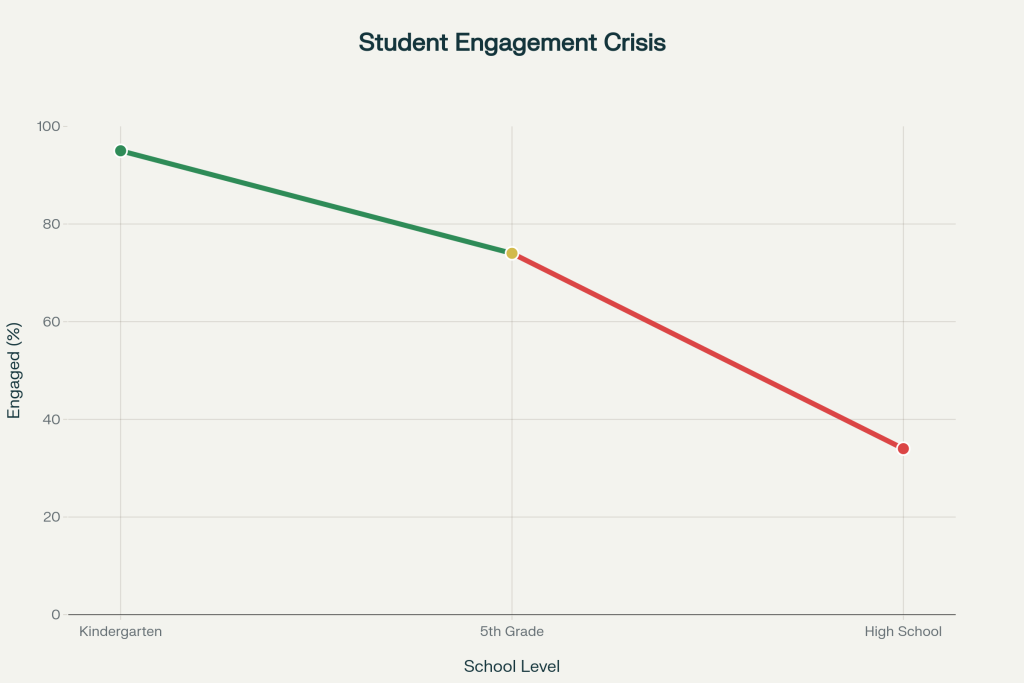
Here's something that might surprise you: kids don't naturally hate learning. In fact, their brains are literally wired for curiosity. When children discover something interesting, their brains release dopamine – the same feel-good chemical that makes us love chocolate or a great song. Learning is supposed to feel good!
But somewhere between finger painting and algebra, something goes wrong. Research shows that while nearly all kindergarteners are excited about school, only about one-third of high schoolers feel engaged with their learning. That's a heartbreaking drop, and it happens for a reason.
Traditional schools often replace natural curiosity with external rewards. Instead of learning because something is fascinating, kids learn for grades, gold stars, or to avoid getting in trouble. It's like replacing a home-cooked meal with fast food – it might fill you up, but it doesn't nourish you the same way.
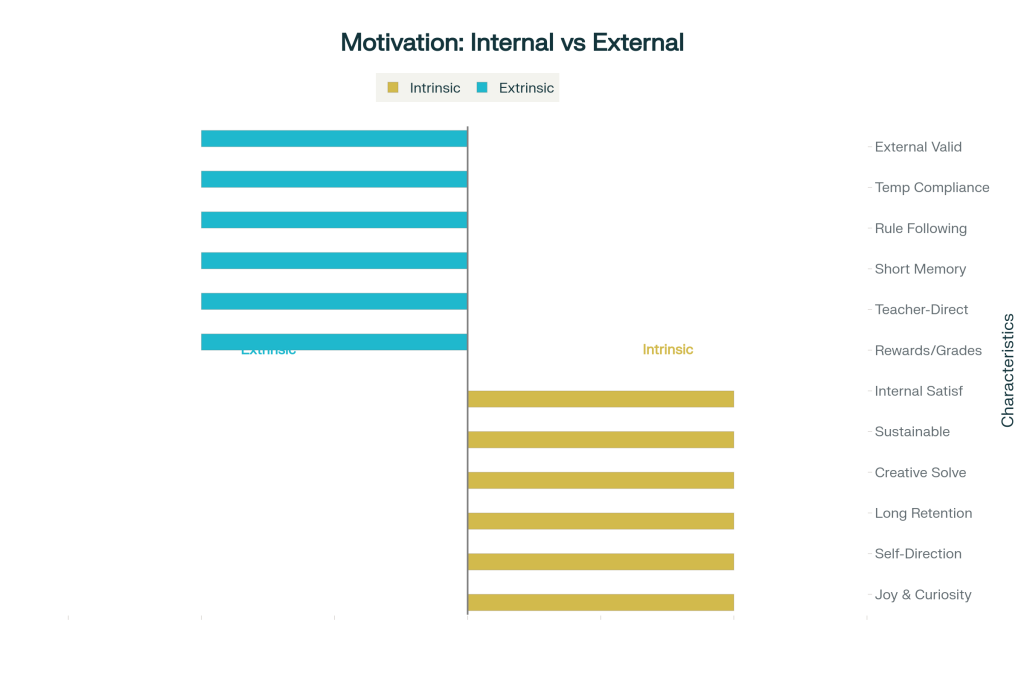
When kids are constantly told what to learn, when to learn it, and how to show they've learned it, their inner motivation starts to fade. They stop asking "why" and start asking "will this be on the test?"
Before you can reignite your child's learning spark, you need to find what interests are still glowing, even if they're just embers. This is where you put on your detective hat.
For the next week, watch your child when they think you're not looking. What do they choose to do with free time? What YouTube videos do they watch? What do they talk about with friends? Even seemingly "worthless" interests can be learning goldmines. That obsession with Minecraft? That's architecture, physics, and resource management. Their love of sports statistics? That's math, data analysis, and pattern recognition.
Transform detective work into a fun adventure! Our interactive app helps uncover your child's hidden passions in just 15 minutes.
What You Get:
Perfect For: Ages 6-18 who say "I don't know" when asked what they like
➡️ [Start Your Free Treasure Hunt Now] (No email required for basic version)
Create a simple "curiosity journal" – just a notebook where you jot down moments when your child seems genuinely interested in something. Don't judge or evaluate; just observe. You might be surprised by patterns you discover.
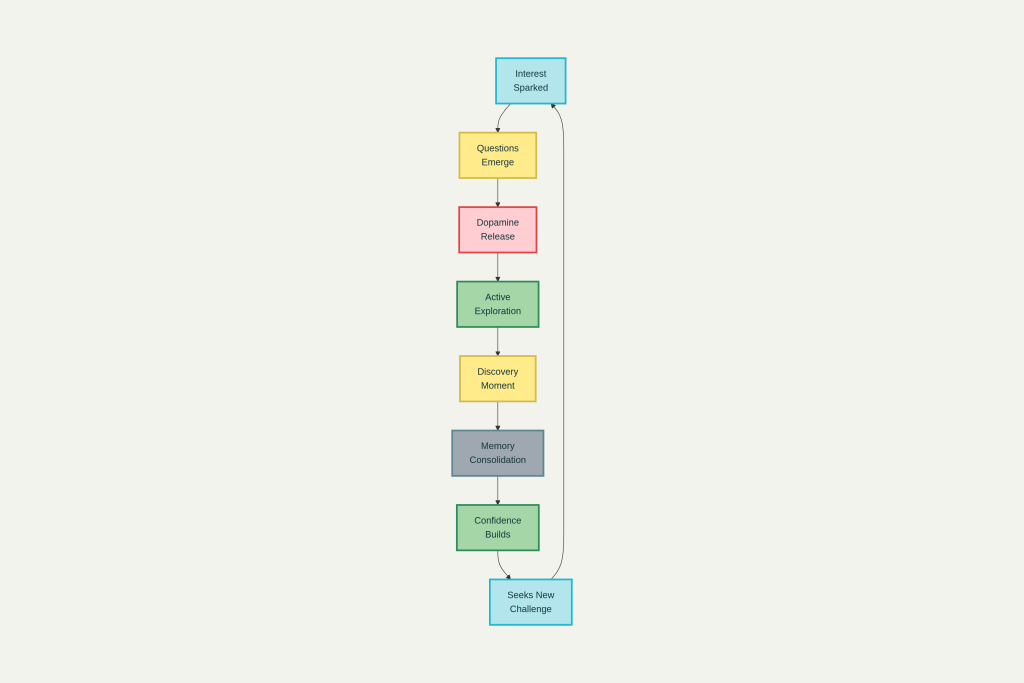
The secret to reigniting your child's love of learning? Stop calling it learning. Start calling it exploring, discovering, creating, or investigating. The best education happens when kids don't realize they're being educated.
Instead of worksheets about fractions, bake cookies and let your child figure out how to double the recipe. Instead of reading about ecosystems, create a terrarium and watch how everything works together. Instead of memorizing historical dates, help them research your family tree and discover the history that led to them.
When kids work on projects they care about, they naturally learn multiple subjects at once. Building a treehouse teaches geometry, physics, and problem-solving. Starting a small business selling handmade items teaches math, communication, and creativity.
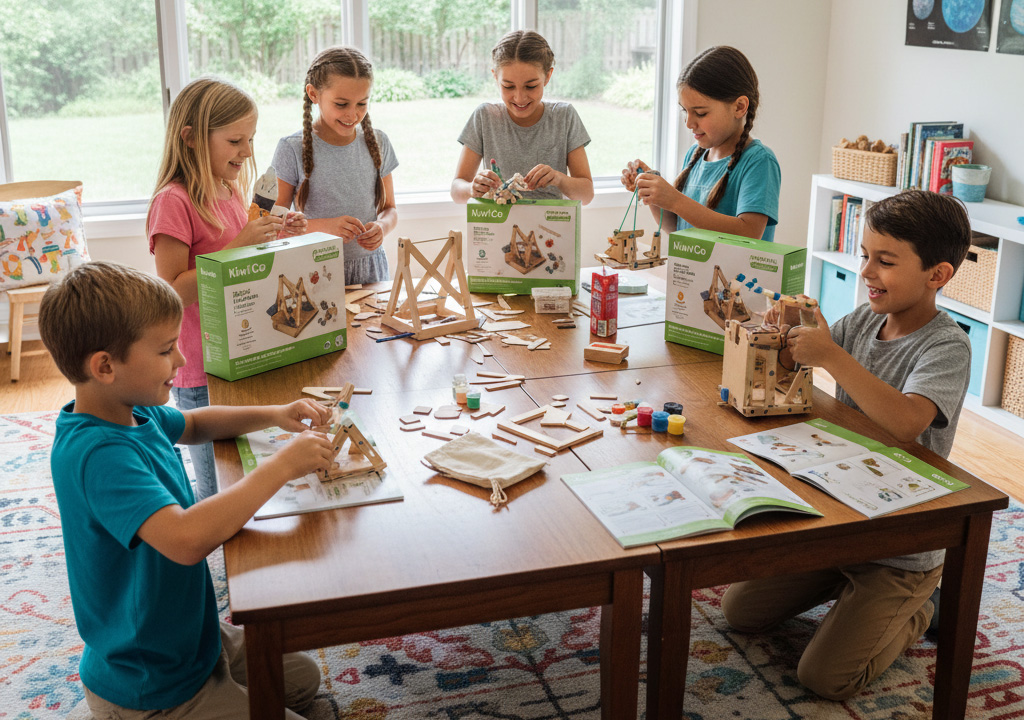
Hands-on learning delivered to your door – no Pinterest-fail frustration!
Why Parents Love KiwiCo:
Price: Starting at $16.95/month
Best For: Busy parents who want quality STEM activities without the prep work
➡️ [Get 30% Off Your First Box] Use code SMARTER30
Encourage your child to ask "what if?" questions, then explore the answers together. What if gravity was twice as strong? What if the South had won the Civil War? What if we could breathe underwater? These questions lead to research, experiments, and discussions that are way more engaging than any textbook.
One of the hardest things for parents to do is let go of the curriculum and follow their child's interests. But research shows that kids learn best when they have some control over their education.
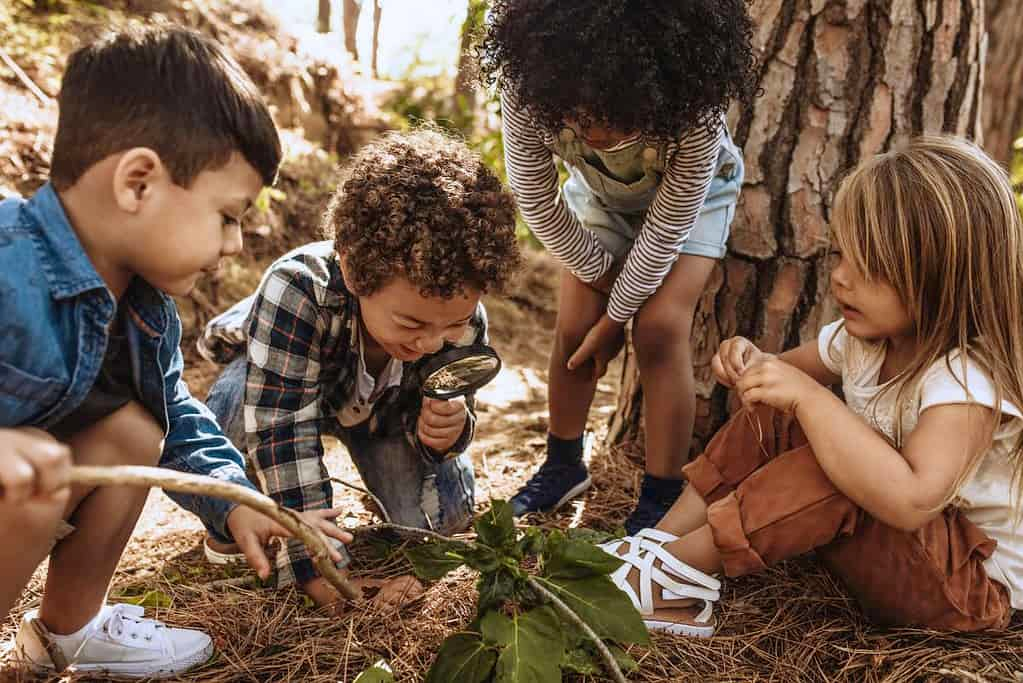
This doesn't mean letting them play video games all day. It means giving them choices within boundaries. Would they rather learn about the Revolutionary War through a documentary, a historical fiction book, or by visiting a local museum? Would they prefer to show their understanding through writing, art, or a presentation?
When kids feel like they have a say in their learning, they're more likely to engage with it. They're not passive receivers of information; they're active participants in their education.
Track your child's learning spark day by day – spot patterns, adjust approach
How It Works:
Parents Report: "Finally understood why Tuesdays were so hard – now we do hands-on projects that day!"
➡️ [Start Tracking for Free] (Unlock unlimited tracking with email signup)
Different ages need different approaches. Here's what works best for each stage:
Little kids learn through their senses. They need to touch, build, and experiment. Try:
Kids this age can focus longer and love becoming "experts." Try:
Teens want to matter. They need to see how learning connects to real life. Try:
Turn gaming obsession into future-ready skills!
What Makes CodaKid Different:
Price: Starting at $25/month
Ages: 8-18
Best For: Kids who love gaming and want to create, not just consume
➡️ [Try CodaKid Free for 14 Days] No credit card required
How do you know if your efforts are working? Watch for these positive signs:
Sometimes, despite our best efforts, kids need extra support. Watch for these warning signs:
If you see multiple red flags, it might be time to investigate deeper issues like learning differences, anxiety, or depression. There's no shame in getting professional help – it's actually a sign of good parenting.
Ready to see real change? Here's a simple 30-day plan to reignite your child's learning spark:
When you successfully reignite your child's love of learning, something magical happens. They stop seeing challenges as threats and start seeing them as puzzles to solve. They develop what experts call a "growth mindset" – the belief that abilities can be developed through effort.
Chemistry experiment subscription boxes with AR technology that bring molecular science to life.
Why Parents Love MEL Science:
Price: Starting at $34.90/month (subscription options available)
Best For: Kids ages 5-16 fascinated by science, visual learners who need to "see" concepts, families wanting screen time that educates, and children who've lost interest in textbook science
➡️ [Start Your MEL Science Subscription]
Kids who rediscover their learning joy become more confident, creative, and resilient. They're better prepared for a world where the ability to learn new things matters more than what you memorized in school. They become the adults who adapt to change, solve problems creatively, and never stop growing.
But here's the best part: when your child's learning spark reignites, it often rekindles your own. You'll find yourself curious about things you haven't thought about in years. Family dinners become more interesting. Car rides turn into fascinating discussions. Learning becomes something your family does together, not something imposed on your child.
Your child's disengagement with learning isn't permanent. It's not a character flaw or a sign of laziness. It's a normal response to a system that often values compliance over curiosity, test scores over deep understanding, and one-size-fits-all over individual brilliance.
You have the power to change this. Not by adding more pressure or finding better worksheets, but by creating an environment where learning feels like an adventure again. Where mistakes are interesting, not shameful. Where questions matter more than answers.
Start small. Pick one strategy from this guide and try it this week. Watch for tiny sparks – a moment of "huh, that's interesting" or "can we do that again?" Those sparks, no matter how small, are the beginning of transformation.
Remember: your child was born curious. That curiosity is still there, waiting to be awakened. All it needs is permission to come out and play again.
Trust yourself. Trust your child. Trust the process. The journey from bored to brilliant isn't always straight, but it's always worth it.
Ready to start? Download our free Interest Discovery Treasure Hunt app and spend 15 minutes today uncovering what makes your child's eyes light up. Because every brilliant journey begins with a single spark.
A: Start by becoming a detective. For one week, don't try to fix anything – just observe. What does your child choose when they have free time? What YouTube videos do they watch? What do they talk about with friends? Even "time-wasting" activities like gaming or social media can reveal interests. Our Interest Discovery Treasure Hunt app can help uncover hidden passions in just 15 minutes. Once you find even a tiny spark of interest, you can build from there.
A: Every child is different, but most parents report seeing small positive signs within 2-3 weeks of consistent effort. These might be subtle – asking one more question, spending five extra minutes on something, or saying "that's kind of cool." Major transformation typically takes 2-3 months. Remember, it took years for their curiosity to be suppressed; it's okay if it takes time to resurface.
A: Every interest has learning potential! Video games involve strategy, problem-solving, and often complex storytelling. TikTok creators need to understand algorithms, video editing, and audience engagement. Instead of fighting these interests, dig deeper. If they love Minecraft, explore architecture or coding (try CodaKid's Minecraft modding course). If they're obsessed with TikTok, learn about digital marketing or video production together. The key is building bridges from their interests to broader learning.
A: You don't need to become a full-time teacher! Focus on quality over quantity. Even 15 minutes of engaged conversation at dinner can make a difference. Use tools that work while you're busy – KiwiCo boxes provide hours of independent learning, and apps like our Engagement Level Meter help you track progress with minimal time investment. Also, remember that giving your child more autonomy in their learning actually requires less hands-on time from you.
A: Peer pressure peaks during teen years, making visible effort seem risky. Combat this by: 1) Celebrating process privately rather than publicly, 2) Finding "cool" role models who value learning (YouTubers, athletes, entrepreneurs who talk about their learning journey), 3) Connecting learning to their goals (want to be a gamer? Learn coding. Want to be an influencer? Study psychology and marketing), and 4) Creating a home environment where curiosity is normal and mistakes are safe.
A: Instead of fighting screens, make them work for you. Set a "learning first" rule where educational screen time (coding, educational videos, creative apps) doesn't count toward screen limits. Balance passive consumption with creative production – if they watch YouTube for an hour, they create content for 30 minutes. Also, many digital interests can lead to offline activities. Love of digital art can lead to physical drawing; interest in YouTube science videos can inspire real experiments.
A: Start small and show results. Rather than overhauling everything, pick one area where you both agree change is needed (like homework battles or Sunday night anxiety). Try the approach for 30 days and document changes. Share articles about growth mindset and intrinsic motivation from reputable sources. Often, reluctant partners come around when they see their child becoming happier and more engaged. If disagreement persists, consider designating certain areas where each parent takes the lead.
A: Deep, passionate interest in one area (even if it seems narrow) is actually a gift! This kind of focused passion builds expertise, confidence, and learning skills that transfer to other areas. History shows that many successful people started with one deep interest that branched out over time. Support the passion while occasionally showing connections to other subjects. A dinosaur obsession naturally leads to geology, history, biology, and even math (measuring and comparing sizes).
A: Consider professional evaluation if you see: persistent anxiety or depression, complete refusal to engage with any learning for 6+ weeks, physical symptoms (headaches, stomachaches) that don't have medical causes, statements about being "stupid" or "broken," or regression in previously mastered skills. Learning differences, ADHD, anxiety, or other challenges might need professional support. Getting help isn't giving up – it's giving your child the tools they need to succeed.
A: Model mistake-making yourself! Share your daily mistakes and what you learned. Create "failure parties" where you celebrate attempts that didn't work. Change your language: instead of "wrong," say "not yet" or "interesting approach." Share stories of famous failures (did you know WD-40 is named after 39 failed attempts?). Use our Engagement Level Meter to track progress over process. Remember, fear of mistakes often comes from years of conditioning, so be patient with the transformation.
A: Absolutely! Kids who love learning naturally perform better on tests because they understand concepts deeply rather than just memorizing facts. They develop critical thinking skills that are essential for SATs and ACTs. College admissions officers increasingly value genuine passion and self-directed projects over perfect grades. Students who've reignited their love of learning often write more compelling application essays and show the intellectual curiosity colleges seek. Plus, they're more likely to thrive in college because they know how to learn independently.
Remember: You're not alone in this journey. Join thousands of parents in our newsletter community who are successfully reigniting their children's love of learning. Get weekly tips, success stories, and exclusive access to our tools and resources. Your child's transformation starts with your first step.
Textbooks and notes used to be my study tools. Late-night sessions left me feeling overwhelmed and unsure. Then I found AI-powered learning. It changed everything for me, because I discovered I could learn anything with AI.
I found Mindgrasp while prepping for a tough test. The AI helper made hard topics easy to grasp. It felt like having a tutor any time I needed. The AI adapted to my unique way of learning. AI-assisted education makes personal learning real. Smart systems now fit each student's needs.
AI is changing how we learn. It unlocks knowledge that was hard to reach before. Let's explore the future of learning. With AI, you can learn anything easily and it no longer feels like drudgery. It's just fun.
Education has changed a lot in the last hundred years. We've gone from chalkboards to computers in classrooms.
Let's look at how this happened. We'll see how AI helps students learn better now.
In 1900, few kids went to high school. By 1992, almost all kids did.
In 2009, most classrooms had computers and internet. Now, most college students have laptops.
AI is changing how we learn. In 2023, ChatGPT became popular in schools.
These tools help each student learn better. It's like having a teacher ready all the time!
AI helps all kinds of students learn. In the 1970s, many teachers didn't like calculators.
Now, AI tools are just as important. They help everyone learn in their own way.
We need to be careful about privacy. Teachers also need to learn how to use AI.
AI is changing how we learn. It's making learning more fun and easy for everyone.
AI learning platforms are changing education. These tools help us learn better in our fast-paced world.
AI platforms use smart algorithms for personalized learning. They adapt to each student's needs, making learning more effective.
Students can master new skills faster with this approach. The platforms offer many helpful features.
These tools are changing how we learn. They help create courses faster and track student progress better.
AI is the backbone of suggestion engines on platforms like Amazon, Spotify, or Netflix. Now, it's revolutionizing how we learn.
AI's impact on education is huge. Many people will need new skills soon.
AI platforms offer quick ways to learn these skills. They help us grow in a changing world.
ChatGPT is changing how we learn. This AI tool helps both students and teachers.
I've seen it reshape our educational landscape. It's making a big impact.
ChatGPT uses smart language tech to answer student questions. It's like a brainy buddy ready to chat about any topic.
This AI tool explains tricky ideas simply. It makes learning easier for everyone.
ChatGPT can give personal tutoring. It looks at how students learn and progress.
Then, it makes custom learning plans. This helps students learn at their own speed.
Learning doesn't stop after school with ChatGPT. It's always ready to help with questions.
It can assist with writing and research too. This ongoing support is great for students.
ChatGPT makes learning more fun and personal. It's easier to access information now.
As AI learning grows, we'll see more cool ways to learn.
While many are familiar with popular AI learning tools like ChatGPT and Perplexity, Google's learning.google.com stands out as a comprehensive, yet often overlooked, resource in the AI-enhanced learning ecosystem. This free platform serves as Google's central hub for digital skills education, offering a unique blend of structured learning paths and AI-powered personalization.
Unlike the conversational approach of ChatGPT or the research-focused nature of Perplexity, learning.google.com takes a more systematic approach to skill development. The platform offers carefully curated courses across various domains, from digital marketing to data analytics, with a particular emphasis on Google's own tools and technologies. What makes it especially relevant in the AI learning landscape is its adaptive learning system, which uses machine learning algorithms to personalize the learning experience based on user progress and preferences.
One of the platform's standout features is its integration with Google's AI-powered career tools. The system can analyze current job market trends and recommend specific learning paths that align with in-demand skills. This is particularly valuable for learners looking to upskill in AI-related fields or adapt to the rapidly evolving digital workplace.
The platform offers several key advantages:
While ChatGPT excels at providing immediate answers and Perplexity shines in research synthesis, learning.google.com focuses on structured, long-term skill development. The platform's AI components work behind the scenes to optimize the learning journey, rather than serving as the primary interface for information delivery.
For those specifically interested in AI education, the platform offers dedicated courses on machine learning, TensorFlow, and other AI-related technologies. These courses benefit from Google's extensive expertise in AI development and implementation, providing learners with both theoretical knowledge and practical applications.
As we continue to explore ways to leverage AI for learning, learning.google.com represents an important piece of the puzzle – one that combines traditional educational structure with modern AI-enhanced personalization. Whether you're looking to build specific technical skills or broaden your digital literacy, this platform offers a robust foundation for AI-assisted learning in the digital age.
In the evolving landscape of AI-powered learning tools, Perplexity stands out as a remarkable platform that's revolutionizing how we search for and process information. Unlike traditional search engines or even ChatGPT, Perplexity combines the power of real-time web searches with AI-driven comprehension to deliver accurate, sourced responses to your queries.
What sets Perplexity apart is its unique approach to information retrieval. When you ask a question, the platform doesn't just pull from a static knowledge base – it actively searches the internet, analyzes multiple sources, and synthesizes the information into coherent, well-structured answers. Each response comes with citations and links to source materials, allowing you to verify information and dive deeper into topics that interest you.
The platform offers two distinct modes: Focus Mode and Copilot Mode. Focus Mode provides direct, concise answers to specific questions, perfect for quick fact-checking or straightforward queries. Copilot Mode, on the other hand, enables a more interactive, conversation-style experience where you can explore topics in depth through follow-up questions and related discussions.
Compared to learning.google.com, which primarily focuses on structured courses and specific skills, Perplexity serves as a dynamic research assistant that can help you learn about virtually any topic. While ChatGPT excels at explaining concepts and generating content, Perplexity's real-time web search integration ensures you're getting the most current information available, making it particularly valuable for research and learning about recent developments.
One of Perplexity's most powerful features is its ability to handle complex, multi-part questions while maintaining context throughout the conversation. This makes it an excellent tool for students, researchers, and lifelong learners who need to explore topics from multiple angles or understand the relationships between different concepts.
The platform also offers a Pro version that includes features like GPT-4 integration, image generation, and custom AI models, enhancing its capabilities as a comprehensive learning tool. Whether you're conducting academic research, exploring a new hobby, or staying updated on current events, Perplexity provides a sophisticated yet user-friendly approach to AI-assisted learning.
In the context of learning anything with AI, Perplexity represents a significant step forward in how we can leverage artificial intelligence to enhance our understanding of the world. By combining the breadth of internet knowledge with advanced AI comprehension, it exemplifies how technology can make learning more efficient, accurate, and accessible than ever before.
AI-powered learning is changing education. Newark School District's program with Khanmigo shows digital tutoring's potential in classrooms.
Teachers use this tool to improve their methods. Leticia Colon and Cheryl Drakeford are leading the way.
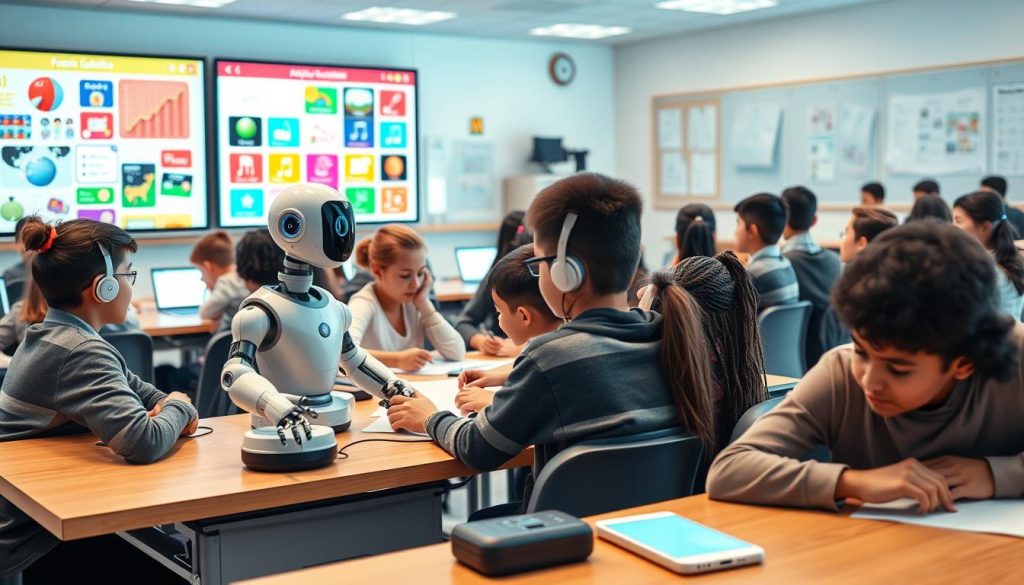
Self-paced education is key in this new frontier. AI assistants help students learn at their own speed.
Personal dashboards track progress. The Gates Foundation helps bring these tools to all students.
AI tutoring tools are now easier to make. Jill Watson took 1,000 hours to create.
New systems like Agent Smith only need 10 hours. This allows for more custom learning experiences.
AI brightens education's future. Korbit is making online courses with AI tutoring faster to create.
This tech opens doors to learning anything, anytime, anywhere.
"The evolution of instructional XR with AI is expected to provide personalized instruction for every child, creating true personalized learning experiences."
Only 4% of K-12 budgets go to education technology. There's huge room for growth in this area.
As we improve AI learning tools, we enter an exciting new era of education.
AI-assisted learning is changing education. It's reshaping how we learn and teach.
Let's explore the key AI learning benefits in education.
Self-paced education is a game-changer. AI lets me learn at my own speed.
This approach boosts student engagement by up to 30%. It's like having a tutor that fits my style.

AI tools give instant feedback, helping me improve. This cuts academic gaps by 15%.
It's like having a teacher available 24/7 for help.
AI tailors content to my needs by analyzing my work. This boosts academic performance by 20%.
It's like having a custom curriculum that grows with me.
"AI in education is not just about technology; it's about unlocking the full potential of every learner."
AI is a tool to enhance, not replace, traditional teaching. The goal is to create a balanced learning environment.
This combines the best of both worlds for effective learning.
AI study tools have changed how I learn. They make studying more efficient and fun.
AI-powered education offers personalized learning. I use software that adjusts task difficulty to match my skills.
This approach makes my study sessions more productive. It also makes them less overwhelming.
Here are some ways I've integrated AI into my studies:
The results have been great. In Mrs. Henderson's class, AI tools boosted test scores by 20%.
This success made me want to try more AI study tools.
AI should be approached responsibly as a learning supplement, not a replacement for engagement with study materials.
Using AI study tools the right way is important. My school offers workshops on using AI for studying.
These workshops help me get the most out of AI tools.
AI tools have improved my learning in many ways. I'm excited to be part of this new way of studying!
AI is changing education, but human teachers are still crucial. Most teachers believe their main job is guiding and mentoring students.
AI tools give quick feedback and spot where students need help. However, teachers bring empathy and creativity that AI can't match.
Most teachers say adapting to students' needs is vital. This flexibility is something only humans can truly provide.
Teachers now help students work together in class. They use AI to spark discussions and group projects.
Some 10th graders use AI chatbots in small groups. This helps them get feedback as they learn.
AI and human teachers can create a balanced education. Teachers use AI for routine tasks, freeing time for teamwork.
This mix of tech and human touch helps students. They develop critical thinking and problem-solving skills for the future.
"Technology should not replace teachers, but AI can serve as a valuable tool in their toolkit to enhance teaching and learning experiences."
AI is a powerful tool, but human teachers are irreplaceable. They inspire, empathize, and adapt for well-rounded learning.
AI technology is changing education. It enhances learning experiences and boosts student success.
Let's explore how AI can help us achieve better learning outcomes.
AI tools analyze data to understand each learner's pace and needs. This allows for personalized learning goals that adapt as students progress.
AI-powered analytics provide real-time insights into student performance. This instant feedback helps identify strengths and areas for improvement.
It allows for quick adjustments to learning strategies.
AI excels at study optimization. It identifies the most effective learning methods for each student.
AI creates a more effective and engaging learning environment. The future of education is here, powered by AI.
AI-assisted learning has amazing potential but faces some hurdles. In 2023, 60% of teachers will use AI in classrooms.
This change puts digital literacy at the front of educational concerns. Both educators and students need to adapt to new technologies.
Data privacy is a big AI learning challenge. Nearly half of teachers worry about security in AI education.
Training on data protection and GDPR compliance is crucial. It helps handle student information responsibly.
Cheating and plagiarism are also pressing issues. About 70% of teachers worry students might misuse AI tools.
Ensuring inclusivity with AI is vital. We must assess AI tools and bridge the digital divide.
We can provide alternative learning pathways. This helps harness AI's power while addressing its challenges in education.
"The key to successful AI implementation in education lies in balancing innovation with ethical considerations and inclusivity."
The future of education depends on how we adapt to AI. We must address digital literacy, data privacy, and ethical concerns.
This will create a stronger and more inclusive AI-assisted learning environment.
AI education is growing fast. Most leaders see its benefits, but few schools use it yet.
This gap means big chances for growth. AI will change education in exciting ways.
Many teachers use AI daily. Soon, smart systems will give quick feedback to students.
These tools will make custom lessons. They'll fit each student's own speed.
AI will use data to help teachers. It can spot students who need help early.
This tech could make test scores much better. It will make study plans for each kid.
VR will make learning more fun. Kids might take virtual trips or see 3D models.
AI-powered VR will make classes more real. It will help all students learn better.
AI-powered learning uses artificial intelligence to enhance education. It offers personalized experiences and adapts to each student's needs.
These tools provide round-the-clock support, changing how we approach learning.
ChatGPT acts as a digital tutor, giving quick answers to questions. It helps with research, writing, and language learning.
It's like having a smart friend ready to help anytime.
AI-assisted learning lets you learn at your own pace. It gives instant feedback and adjusts to your needs.
You get personalized content based on how you perform and what you like.
AI-powered learning can't fully replace human teachers. Teachers are key for building empathy and critical thinking skills.
The best approach mixes AI tools with human interaction for complete learning.
Use platforms like ChatGPT for research and writing help. AI tools are great for learning languages too.
Try different AI tools to find what works best for you.
Challenges include ensuring digital literacy and addressing data privacy concerns. It's important to avoid relying too much on AI.
Use AI tools responsibly while developing your critical thinking skills.
AI gives detailed info on your performance and spots areas to improve. It suggests personalized resources to help you learn better.
This data-driven approach helps optimize study habits and set achievable goals.
Future AI trends include automated grading and virtual tutors. Advanced learning analytics and virtual reality for immersive learning are coming.
These innovations will change how we learn in exciting ways.
AI gives quick access to info and personal help anytime, anywhere. It adapts to different learning styles and paces.
This makes education more accessible for everyone.
Adaptive learning adjusts to each student's needs and pace. It uses smart algorithms to give custom learning experiences.
These systems analyze your work to offer tailored content and tips.
Imagine this: Sarah, a 10-year-old who struggles with traditional classroom lessons, is introduced to Minecraft during her math class. At first, her parents are skeptical—how could a video game help with her learning? But within weeks, Sarah is building complex structures, solving problems, and collaborating with her classmates—all while improving her math and spatial reasoning skills.
Her teachers notice a boost in her confidence, and her parents are amazed by how engaged she is in learning. Sarah’s story is just one example of how Minecraft is making a real difference in educational settings, proving that learning doesn’t have to be boring or difficult.
My son's request to play Minecraft surprised me. I thought it was just another game. Watching him build and solve problems changed my mind. This blocky world had great potential for education. Minecraft seemed overwhelming at first. The open world and crafting recipes were daunting. Research helped me use Minecraft's educational power. I learned to set up proper parental controls too. Years of family Minecraft sessions taught me a lot. This guide will help you turn playtime into learning time.
Minecraft's blocky universe offers more than just entertainment. It's a powerful tool for learning in over 7,000 classrooms worldwide.
Minecraft's open-world format allows for endless possibilities. Kids can build anything they imagine, from simple houses to complex cities.
This freedom nurtures creativity and problem-solving skills. Java and Bedrock versions share core principles of exploration and creation.
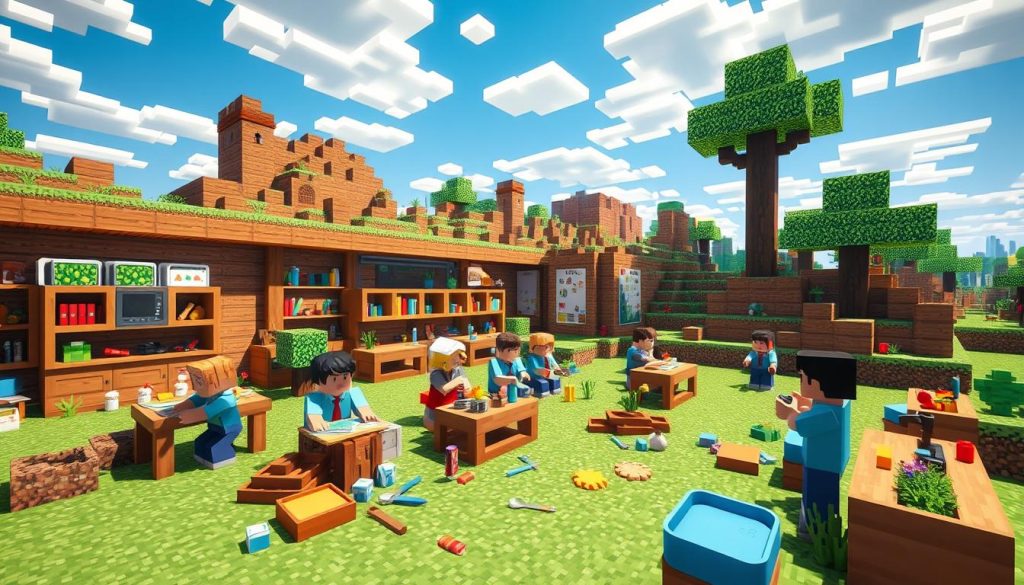
Game-based learning through Minecraft develops crucial skills:
Coder Sports uses Minecraft to teach Python programming. This integrates coding skills into gaming.
Minecraft offers various modes, each with unique learning opportunities:
The Education Edition simplifies setup for all types of educators. It lets students tackle real-world topics through play.
This inspires critical thinking and collaboration in unique ways. Students learn while having fun in Minecraft's engaging world.
Creating a secure Minecraft space for kids is crucial. With millions of players, online safety is a top priority.
Let's explore how to set up a fun yet protected environment. Parental controls are key for managing playtime and access.
On consoles and Windows 10, you can control purchases and multiplayer access. Use privacy settings on accounts to protect children's information.

Digital literacy is vital too. Talk openly about online behavior with kids. Teach them to report or block inappropriate conduct.
Minecraft offers three main modes: Adventure, Creative, and Survival. Each mode has unique benefits for learning and creativity.
Choose the right mode and use safety tools. This creates an engaging and secure Minecraft experience.
"Minecraft isn't just a game, it's a canvas for creativity and learning. Our job as parents is to ensure it's a safe one."
Family gaming in Minecraft can be fun and rewarding. Here are some tips to enjoy Minecraft adventures with your kids.
Minecraft has three main game modes: Creative, Survival, and Adventure. Creative mode is best for younger kids who like building freely.
Survival mode adds challenges and suits older children. Adventure mode works well for custom maps and storytelling.
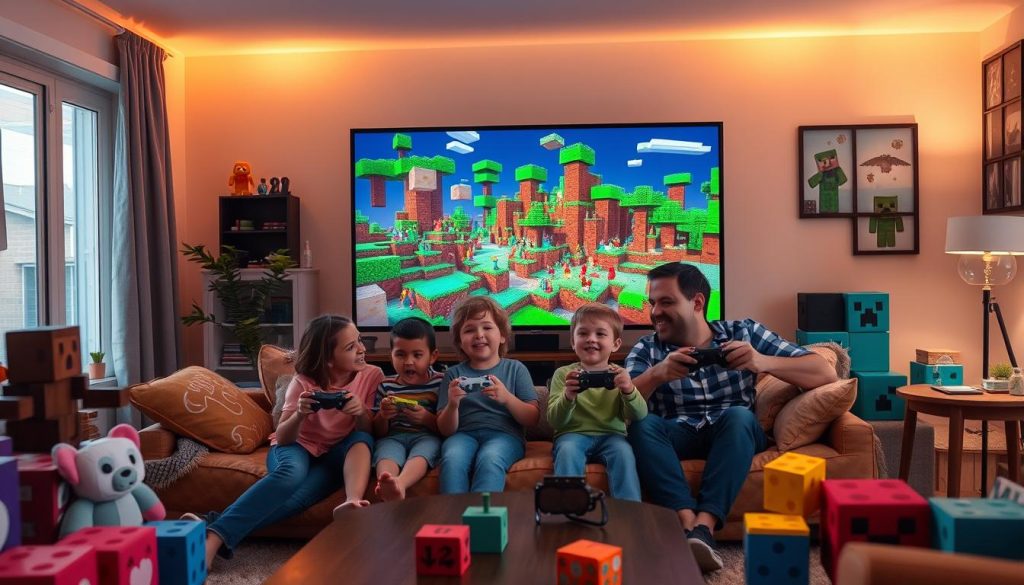
A crafting guide helps new players learn the game. Online resources show how to make different items in Minecraft.
These guides teach game mechanics and boost creativity. Kids can learn while having fun.
Good time management is key for Minecraft play. Set a schedule to balance fun and other activities.
Start with short game sessions. Slowly increase playtime as your child shows responsibility.
Minecraft can be educational too. Some schools use it to teach history and science.
These tips can help create a fun Minecraft experience for your family.
"Minecraft is not just a game, it's a creative tool that can teach problem-solving and teamwork."
A virtual learning schedule with Minecraft can boost kids' education. It balances work and play, using the game to enhance learning.
A well-structured day is key. I set specific Minecraft times to complement regular studies.
Since the pandemic, new players increased by 25%. Multiplayer sessions rose by 40%.
Clear goals are vital in learning. Educational rewards work well with Minecraft.
Finishing math might earn extra Minecraft time. Over 7,000 classrooms use Minecraft worldwide!
After lessons, I plan Minecraft tasks that support learning. Kids might rebuild history or solve physics puzzles.
Minecraft Education Edition got two million downloads in its first year. It reached 115 countries!
Minecraft in learning builds creativity, teamwork, and critical thinking. It's fun and preps kids for real-world challenges.
Minecraft is a powerful tool for STEM education. It brings engineering concepts to life for kids.
Children build structures and solve problems in this virtual world. They learn coding while having fun.
The game's building mechanics teach engineering principles. Kids learn about balance, stability, and resource management.
Redstone is an exciting part of Minecraft for STEM learning. It acts like electricity, letting players create circuits and machines.
"Minecraft: Education Edition provides opportunities for children to develop computational thinking skills through Code Builder."
Here are some ways Minecraft supports STEM education:
Over 7,000 classrooms worldwide use Minecraft for learning. It helps kids understand science and math concepts.
Children have fun while reinforcing their STEM knowledge. Minecraft makes learning exciting and engaging.
Minecraft's open world sparks kids' imagination. It helps them develop essential skills through creative play.
In Minecraft, kids can build anything they dream up. I love challenging them to create their ideal homes or cities.
These projects make kids think creatively. They also learn to solve tricky design problems.
Redstone circuits in Minecraft teach engineering ideas. Kids get excited making working elevators or automatic farms.
They grasp these concepts quickly through fun gameplay. It's amazing to watch their progress.
Family challenges help everyone learn and bond. Try setting up weekly building contests.
One week, build a treehouse. The next, create a rollercoaster. These activities boost creativity and teamwork.
These activities help kids solve problems beyond the game. Minecraft offers a unique way to learn and grow.
"Minecraft isn't just a game, it's a canvas for creativity and a laboratory for young engineers."
Minecraft's multiplayer features help kids develop social skills. I've seen shy children become confident communicators through this game.
Kids learn to express ideas and listen to others while playing together.
Teamwork is key in many Minecraft activities. Kids often build towns or survive challenges together.
This gameplay teaches task division, resource sharing, and mutual support.
Players improve communication as they coordinate actions. They learn to give clear instructions and ask for help.
These skills are valuable in real-life situations too.
Minecraft enhances problem-solving and critical thinking. Kids face challenges together and brainstorm solutions.
This process improves teamwork and creative thinking.
"Minecraft: Education Edition promotes critical social-emotional skills like collaboration, empathy, and communication."
Multiplayer Minecraft helps kids develop crucial social and collaborative skills. These abilities will benefit them in future academic and work settings.
Tracking your child's Minecraft-based learning progress is vital. It ensures they benefit from this educational tool.
Keeping tabs on virtual learning engagement helps address online education challenges.
I watch my child's interest levels in their Minecraft projects. We talk about what they're creating and learning.
Minecraft videos have been streamed over 1 trillion times on YouTube. This shows how popular and motivating Minecraft can be for learning.
Learning assessment in Minecraft can be tricky. I look for late assignments or poor time management.
While many parents worry about gaming time, Minecraft can be educational. It's all about using it the right way.
I stay in touch with my child's teachers about their Minecraft work. We discuss their performance and progress regularly.
Over 35 million teachers and students use Minecraft Education worldwide. This creates a big, supportive learning community.
Stay involved and address challenges early. This helps children get the most from their Minecraft learning.
Minecraft is more than a game. It's a powerful tool for digital learning and education.
With 180 million copies sold, Minecraft captures players' imaginations worldwide. It offers entertainment and educational benefits for all ages.
Parents play a crucial role in maximizing learning. They can set up safe servers and use parental controls.
Balancing game time with other activities is important. This creates an ideal environment for children to thrive.
Minecraft's five modes cater to different age groups. Survival and Creative modes suit various learning styles and needs.
The game focuses on problem-solving and memorization. It even teaches coding through Java modifications.
We should guide children in using online resources responsibly. Encouraging collaboration with friends and family is also important.
By embracing Minecraft, we're building future skills. We're preparing our children for a digital world.
Minecraft offers various game modes for different educational purposes. Creative mode fosters creativity and problem-solving skills without limits.
Peaceful survival mode teaches resource management and goal-setting. Survival mode with monsters adds strategy and risk management elements.
Set up parental controls on all educational technology. Establish open communication with your child and their teachers.
Choose appropriate game modes and use online resources to enhance crafting skills. Establish a routine for Minecraft play.
Create a balanced schedule for work and play. Set educational goals and rewards to motivate progress.
Plan post-lesson activities in Minecraft to reinforce learning concepts. Consider virtual museum tours and STEM learning activities.
Minecraft's building mechanics introduce engineering principles. Redstone systems can be used to teach basic circuitry and logic.
Mining for resources at different depths introduces geological concepts. Encourage your child to engage with these elements.
Encourage open-ended building projects to stimulate imagination. Use Redstone systems to introduce basic engineering concepts.
Organize family building challenges to promote collaboration and creative thinking. These activities develop essential 21st-century skills.
Minecraft's multiplayer features help develop social skills and collaboration. Encourage your child to work on projects with friends or siblings.
This promotes teamwork, communication, and conflict resolution skills. Consider setting up LAN games for supervised multiplayer experiences.
Measure virtual learning engagement through discussions with teachers. Observe your child's interest levels and recognize signs of struggle.
Maintain open communication with teachers about Minecraft-based assignments. Discuss your child's performance in these activities regularly.
Teachers are always on the lookout for new and creative ways to engage their students in the ever-changing field of education. Minecraft, a sandbox video game, offers an interactive platform that combines learning and creativity. This article explores how using Minecraft for special education can effectively meet the diverse learning needs of students, fostering improved interaction, communication, and creativity.
Minecraft is a block-building game that allows players to explore a digital world, gather resources, and create structures. The game operates in various modes, including survival, where players must manage their health and resources, and creative mode, which offers unlimited resources for building. Its open-ended nature encourages exploration, making it an ideal educational tool.
Special education focuses on meeting the unique needs of students with disabilities, requiring tailored approaches that conventional teaching methods may not accommodate. Minecraft's interactive environment fosters engagement, allowing teachers to create customized lessons that help students develop essential skills in a low-pressure setting. Its visual and auditory stimuli cater to various learning styles, making it a versatile tool in the classroom.
Communication is a critical aspect of learning, particularly for students with speech or language impairments. Minecraft promotes verbal and non-verbal communication through collaborative play. Students must articulate their ideas, negotiate roles, and share responsibilities in projects, creating a rich environment for practicing communication skills.
Additionally, the game's chat feature enables students to communicate asynchronously, offering a platform for those who may be hesitant to speak in front of peers. This can be particularly beneficial for students on the autism spectrum, who may find social interactions challenging.
Social skills are essential for personal and academic success. In Minecraft, students collaborate on building projects, encouraging teamwork and social interaction. Working together fosters relationships and helps students understand social cues and dynamics, which are often challenging for those with special needs.
Moreover, the game's flexibility allows educators to create scenarios that require cooperation, problem-solving, and conflict resolution, further enhancing students' social skills in a controlled and supportive environment.
Creativity is a vital component of education, and Minecraft provides an expansive canvas for students to express themselves. It encourages imaginative thinking as students construct complex structures and devise solutions to in-game challenges. This creative freedom can significantly boost self-esteem and motivation.
Furthermore, the problem-solving aspect of Minecraft can help students develop critical thinking skills. Tasks like gathering resources or overcoming obstacles require planning, strategizing, and execution, all of which are crucial skills in any learning environment.
To start using Minecraft in the classroom, educators need to set up the game on computers or tablets. The installation process is typically straightforward, with options available for both Windows and macOS. Educators should familiarize themselves with the game's features and functionalities to guide students effectively.
Setting clear guidelines and rules is also essential to ensure a positive gaming experience. Educators can create a classroom code of conduct to help maintain a respectful and productive environment while playing.
Minecraft offers various versions, including Minecraft: Education Edition, which is specifically designed for classroom settings. This edition features additional tools for educators, such as classroom management options and built-in lesson plans. Choosing the right version is vital to maximize the benefits of the game in an educational context.
While the standard Minecraft version can also be used, it may lack certain educational features that can assist in managing a classroom effectively. Educators should weigh the pros and cons of each version based on their specific needs and the characteristics of their students.
Inclusivity is paramount in special education. When implementing Minecraft in the classroom, educators should ensure that all students have access to the game and that their individual learning needs are accommodated. This may involve providing additional resources or support for students who require it.
Moreover, fostering a culture of respect and empathy among students can create a supportive atmosphere in which everyone feels valued. Educators can facilitate discussions about diversity and inclusion to enhance understanding and acceptance among students.
Integrating Minecraft into existing lesson plans can enhance the overall educational experience. Educators can incorporate specific themes or subjects into the game, such as history, math, or science, allowing students to explore these topics in a fun and engaging way. For instance, a history project might involve recreating ancient civilizations, while a math unit might focus on geometric shapes through building activities.
Furthermore, educators can design assessment methods that align with the gameplay, enabling students to demonstrate their understanding of concepts in creative ways. This can include both individual and group assessments based on in-game achievements and collaborative projects.
One of the strengths of Minecraft is its adaptability. Educators can tailor experiences to meet the individual needs of students, offering personalized challenges or projects that align with each student's learning goals. This individualized approach can significantly enhance student engagement and motivation.
For instance, students who struggle with attention may benefit from short, focused tasks within the game, while those who excel may be given more complex challenges that require advanced problem-solving skills. This flexibility allows educators to differentiate instruction effectively, catering to the diverse needs of their students.
Collaboration is a cornerstone of effective learning. In Minecraft, students can work together on projects, fostering teamwork and cooperation. Educators can assign group tasks that require students to communicate, share ideas, and resolve conflicts as they build together. This collaborative environment encourages peer learning, where students can learn from one another's strengths and perspectives.
Additionally, collaborative projects can help develop leadership skills among students, as they navigate group dynamics and take on different roles within the team. This can be particularly beneficial for students who may struggle with social interactions, as it provides them with a structured format to practice and develop these essential skills.
Across various educational settings, educators have successfully integrated Minecraft into their curricula, yielding positive results. For example, a special education classroom in California utilized Minecraft to help students with autism develop social skills. The teacher reported a noticeable improvement in students’ ability to communicate and work together on projects, resulting in a more cohesive classroom environment.
Moreover, another case study in the UK highlighted how students with learning disabilities engaged more deeply with history lessons when using Minecraft to recreate historical landmarks. The hands-on experience allowed these students to connect with the subject matter in a way that traditional methods did not facilitate.
Feedback from educators and students alike underscores the effectiveness of Minecraft in special education. Many teachers have noted increased engagement and enthusiasm among students when lessons incorporate gaming elements. Students themselves often express excitement and enjoyment, making learning feel less like a chore and more like an adventure.
Furthermore, educators have reported that Minecraft can bridge gaps in understanding, allowing students to grasp complex concepts more easily. This positive feedback reinforces the idea that Minecraft is not just a fun distraction, but a powerful educational tool that can enhance learning outcomes.
Educators interested in integrating Minecraft into their classrooms can benefit from online communities and forums where they can share experiences, resources, and ideas. Platforms like Reddit and dedicated Facebook groups provide spaces for educators to connect with others who have successfully implemented Minecraft in their teaching practices.
These communities often feature discussions about lesson plans, troubleshooting tips, and the latest updates on Minecraft's educational tools. Engaging with peers can provide invaluable support and inspiration for educators looking to enhance their classroom experience.
There is a wealth of online resources available for educators seeking to implement Minecraft in their classrooms. Websites like Minecraft Education provide lesson plans and tutorials specifically designed for educators. These resources cover various subjects and grade levels, making it easier for teachers to find relevant content.
Additionally, YouTube channels dedicated to educational gaming often showcase creative ways to use Minecraft in the classroom, providing visual examples and step-by-step guides that can be incredibly helpful for educators new to the platform.
Minecraft is more than just a game; it is a versatile educational tool that can significantly enhance the learning experience for students in special education. By fostering communication, social interaction, creativity, and problem-solving skills, Minecraft can bridge gaps and cater to diverse learning needs.
As educators, exploring innovative tools like Minecraft can open doors to new learning possibilities. By experimenting with this engaging platform, educators can create a dynamic classroom environment that resonates with all students, encouraging them to unleash their potential and thrive in their educational journeys.
Minecraft promotes communication through its collaborative gameplay, where students must articulate ideas and work together on projects. The chat feature also allows students to communicate asynchronously, which can benefit those who are hesitant to speak aloud.
Minecraft’s adaptability allows educators to customize lessons and tasks to meet individual students' needs. Its visual and interactive elements appeal to various learning styles, helping students with disabilities engage in the learning process.
Yes, educators can integrate subjects like history, math, and science into Minecraft lessons, enabling students to explore and learn through hands-on building activities that are both fun and educational.
Minecraft: Education Edition is specifically designed for educational settings, offering additional tools like classroom management features and built-in lesson plans. However, the standard version can also be used with some adjustments.
Through collaborative tasks, Minecraft helps students learn teamwork, problem-solving, and conflict resolution. These interactions allow students to practice social skills in a controlled and supportive environment.
Online communities, such as Reddit forums and Facebook groups, along with educational websites like Minecraft Education, offer lesson plans, guides, and peer support to help educators effectively use Minecraft in their classrooms.
