
There's a new way to make your Language Arts lessons as captivating as the latest adventure novel? Imagine turning your students into storytellers, where every block they place in Minecraft builds not just a structure, but a narrative that they create, explore, and share. It might sound like a dream, but this is the secret trick: integrating and teaching Language Arts with Minecraft can transform writing, reading, and comprehension into a dynamic and engaging experience.
Remember the thrill of getting lost in a good book as a child, the way the story would come alive in your mind? Now, picture your students feeling that same excitement, but with the added power of building their own stories in a virtual world. Whether they’re crafting a setting, developing characters, or even acting out scenes from classic literature, Minecraft offers endless possibilities for bringing Language Arts to life. It’s like giving your students a magic pen that writes stories in 3D, making every lesson an adventure they can’t wait to dive into.
Minecraft: Education Edition is changing how we teach language arts. This digital tool makes writing and storytelling more fun for students. It mixes interactive learning with regular lessons. This opens up new ways for kids to be creative.
The National Writing Project and Minecraft made 10 cool lessons. These lessons focus on building worlds in the game. Students learn about writing through fun game activities. This new method speaks to kids who love technology. Students explore deserts to write stories. They also create characters and write dialogue in the game. The Denver Writing Project asked young experts to try these activities. They made sure the lessons were both fun and helpful.
Minecraft Education Edition is a game-changing tool for teaching. This virtual world opens up endless possibilities for digital storytelling.
Millions of students worldwide use it for game-based learning. Minecraft's diverse game modes spark imagination.
In "Adventure" mode, students explore and solve problems. "Creative" mode lets them build freely, designing worlds.
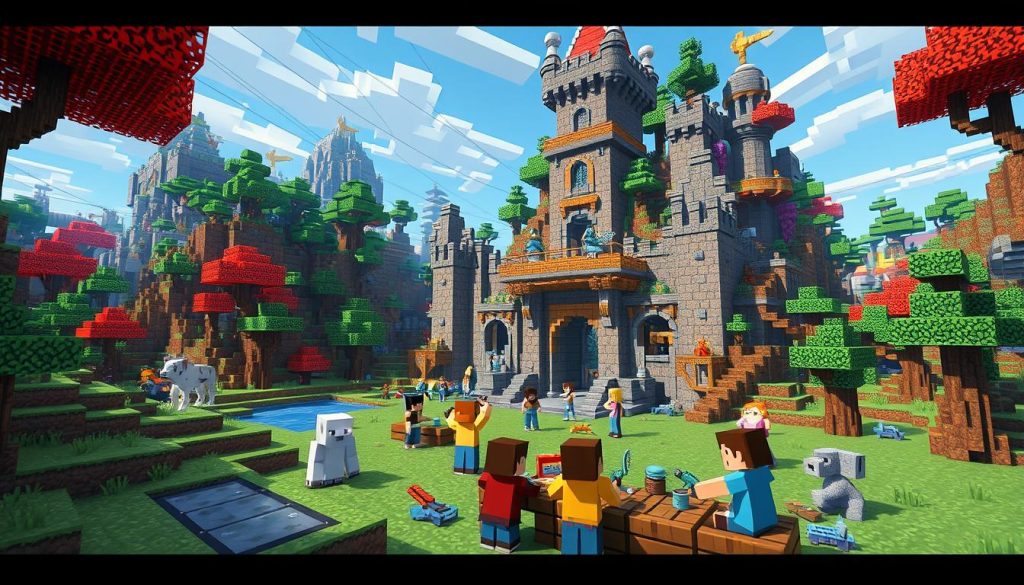
The game's versatility is amazing. Students recreate ancient civilizations and conduct virtual experiments.
In English class, we use Minecraft for narrative creation. It's a powerful educational tool.
Minecraft servers enable students to work together from anywhere. This feature has been invaluable for remote learning.
It creates a safe environment for students to flex their creative muscles. They can bring their stories to life.
Minecraft isn't just about building blocks; it's about building imagination, collaboration, and critical thinking skills.
Integrating Minecraft into lessons has increased student engagement. They're excited to write, create, and share their digital stories.
It's transformed my classroom into a hub of creativity. Students are more innovative than ever before.
Minecraft is an exciting way to teach language arts. This popular game is becoming a powerful tool in education.
Let's explore how Minecraft lessons are changing writing and storytelling teaching. Students can express their creativity through this unique platform.
Kids build virtual worlds and develop storytelling skills unknowingly. They create characters, settings, and plots in Minecraft.
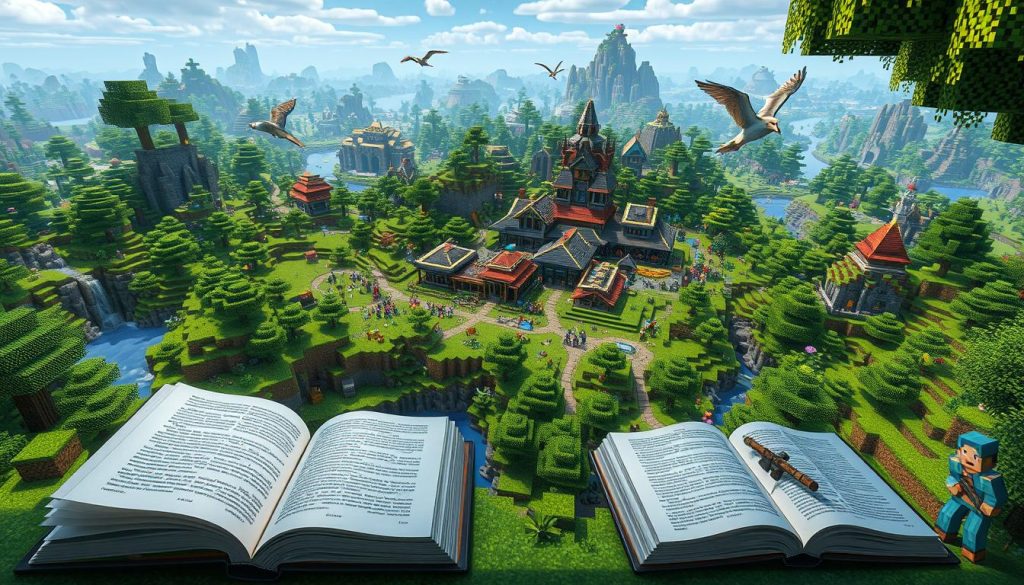
The National Writing Project sees Minecraft's potential. They've made 10 writing lessons using the game's world-building features.
Students don't just write stories - they live them. They can walk through their narratives and interact with characters.
"Minecraft allows students to step into their stories, making writing a truly interactive experience."
Gaming and writing combine to open new education possibilities. Students are more motivated when their stories come alive.
Minecraft boosts student writing skills in an exciting way. Its world-building features create unique chances for digital storytelling.
Students can now see and touch their story parts. This makes writing more fun and engaging.
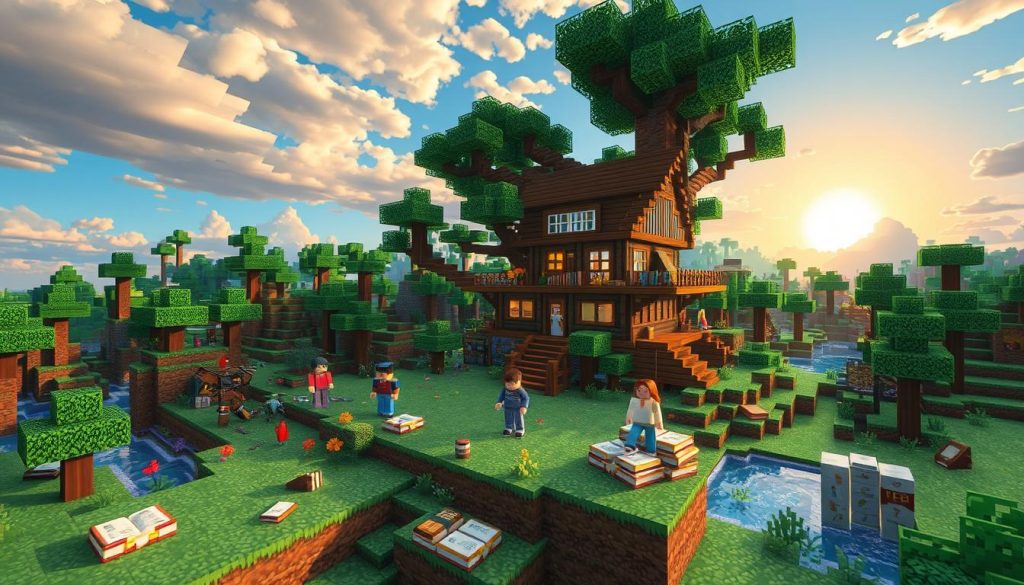
Jim Pedrech uses Minecraft's survival mode for fiction writing. His students play the game to help craft survival stories.
This method has shown great results. Students write more and feel proud of their work.
Minecraft helps students create rich settings, characters, and conflicts. They write in first-person, using vivid words inspired by their missions.
This hands-on world-building leads to more detailed stories. Students can easily describe their game experiences.
"I wrote more for the Minecraft tasks than any previous assignment I can remember. It was easy because I had so much to work with from my gameplay experiences."
Minecraft is a powerful tool for inspiring creativity. It offers a fresh way to build stories.
The game makes writing more fun and easy for students. They can explore and create while improving their skills.
Minecraft lessons blend gaming with language arts. These activities make narrative writing fun for students.
Let's explore some exciting options!
Students venture into a Minecraft desert biome. They use the vivid landscape to inspire their storytelling.
Character creation comes alive in Minecraft! Students design unique avatars and develop backstories.
This approach helps them understand character depth and motivation.
On a Minecraft island, students craft conversations between characters. They practice dialogue writing by role-playing different scenarios.
Students collaborate to create bizarre stories in the Minecraft world. It's a fun way to explore creativity.
These Minecraft lessons offer exciting ways to teach writing skills. By combining gaming with education, students engage with language arts.
Minecraft makes learning feel like play. It fosters a love for storytelling and creative expression.
Minecraft Education breathes new life into classic writing exercises. It turns ordinary assignments into captivating digital adventures.
This approach combines interactive learning with gaming's allure. It makes writing more engaging for students.
The "Where I'm From" poem activity is a standout example. Students explore virtual spaces that bring youth-written stanzas to life.
They craft their own verses and build Minecraft worlds. This merges creativity with technology.
A recent undergraduate seminar showcased this method's power. Seven out of 17 students chose Minecraft for their assignments.
A freshman created "Amari," a fictional 1939 African American dancer. This shows how digital platforms foster historical empathy.
Digital writing activities in Minecraft Education allow students to think like individuals from different time periods, creating an immersive learning environment.
This blend of writing and digital tools offers many benefits. It enhances engagement and promotes digital literacy.
It also encourages creativity and supports diverse learning needs. Instant feedback is another advantage.
Interactive Minecraft experiences transform writing exercises. They prepare students for a digital future.
This approach makes learning fun and memorable. It goes beyond teaching language arts.
Teaching poetry writing just got fun with Minecraft. The Six-Room-Poem Maze takes kids on a poetic journey in a digital world.
This maze brings poetry to life. It makes writing exciting for young authors.
Students explore six rooms in this Minecraft adventure. Each room focuses on a different part of poetry writing.
They learn about rhythm, rhyme, and imagery. This makes poetry less scary and more fun.
Students meet digital guides called NPCs in the maze. These guides give tips and ask questions about poetry.
This keeps kids interested and helps them remember better.
Students can take pictures in the game world. These snapshots give them ideas for their poems.
It helps them link what they see to what they write.
"Poetry is when an emotion has found its thought and the thought has found words." - Robert Frost
We mix gaming and poetry to make learning fun. This teaches poetry and boosts creativity in class.
Minecraft: Education Edition is changing how students learn together. This virtual playground creates many peer learning chances.
Kids team up on fun projects. They solve problems while building and exploring.
The game's multiplayer features work well in today's distant classrooms. Students from around the world can meet in Minecraft's blocky world.
They go on virtual field trips. They visit far-off places and historic sites from their desks.
Minecraft is great for all types of learners. Shy or outgoing, every child finds a place here.
The game boosts creativity and respect for others' ideas. This digital world builds real-world skills like talking and leading.
The numbers are impressive. Minecraft has 126 million monthly players for over a decade.
Its school version launched in 2016. A study found sixth-graders did better in math after Minecraft lessons!
Minecraft offers a platform for creative problem-solving, collaboration, and critical thinking in an open, student-centered learning environment.
Minecraft is shaping the future of education. It's a powerful tool for virtual teamwork and peer learning.
Minecraft's educational potential aligns with modern educational theories. The game's structure incorporates projects, peers, passion, and play.
This approach engages students across various subjects. It has shown remarkable success in the classroom.
Minecraft Education Edition offers a unique platform for project-based learning. It's available in 115 countries with over two million users.
Students work together, driven by their love for the game. This keeps them engaged, improving retention and critical thinking skills.
Minecraft's virtual worlds bring self-determination theory to life. The game's modes give students freedom and build skills.
Over 6,500 schools use Minecraft. This shows it's popular with teachers and students.
A survey of 89 future teachers found strong support for game-based learning. This backs up Minecraft's role in transforming education.
Minecraft: Education Edition boosts creativity, teamwork, and communication skills. The National Writing Project created 10 lessons on world-building to teach writing.
Minecraft lets students build digital worlds with various settings and creatures. This makes it perfect for creative writing and composition practice.
The National Writing Project made 10 world-building lessons for Minecraft. These link creative writing with gaming.
Lessons include desert settings for stories and character creation. Students also write dialogues about island adventures and play surrealist games.
Minecraft turns writing tasks into fun, interactive experiences. Students explore digital spaces showing youth-written stanzas.
They then write their own stanzas in the game. The Six-Room-Poem becomes a Minecraft maze with poetry writing tips.
Minecraft: Education Edition allows multiplayer games for team projects. This helps students work together, even when learning from home.
Minecraft lessons use Mitch Resnick's 4 Ps: projects, peers, passion, and play. They also use self-determination theory to motivate students.
Storytelling has been a fundamental part of human culture and communication for centuries. In the context of education, it is more than just an entertaining activity; it is a powerful pedagogical tool that fosters a range of developmental benefits in children. From enhancing cognitive abilities to nurturing emotional and social skills, storytelling plays a crucial role in shaping young minds. Educators can make learning more memorable and impactful for students by weaving information into engaging narratives, which enhances the social development in children.
Key Takeaways:
Definition and Elements of Storytelling
Storytelling uses words, images, and sounds to portray imagined or real-life experiences. Plot, characters, environment, conflict, and resolution are all essential components of a novel. A compelling story draws the audience in and increases the impact and memorability of the information.
Historical Context and Cultural Significance
One of the earliest modes of communication is storytelling, which predates written language. Traditionally, stories were used to pass down knowledge, cultural values, and historical events from one generation to the next. Every culture has unique storytelling traditions reflecting its values, beliefs, and history.
Modern Applications in Education
In contemporary education, storytelling is used as an instructional strategy to make learning more engaging and effective. It can be used in various disciplines to support students' comprehension of complex ideas, memory retention, and growth as critical thinkers. Digital storytelling, which combines traditional storytelling with multimedia tools, is also gaining popularity as a modern educational practice.
Enhancing Language Skills
Imagine embarking on a thrilling adventure where dragons soar, knights bravely quest, and hidden treasures await discovery—this is the magical world of storytelling! When kids dive into stories, they're not just entertained; they're also boosting their language skills in a way that's as exciting as finding a pirate's treasure map. Through tales of daring heroes and clever tricksters, children expand their vocabulary, grasp the rhythm and melody of language, and learn the art of expressing their thoughts vividly. Each story is a new journey where they encounter words and phrases that light up their imagination, helping them become confident speakers and creative writers. So, next time you share a story, know that you're not just spinning a yarn; you're also weaving the rich tapestry of your child's language development.
Vocabulary Development
Storytelling introduces children to new words in context, helping them understand and remember them better than through rote memorization. Stories' rich and varied vocabulary can significantly enhance a child’s language proficiency.
When children engage with stories, they not only enjoy themselves, but they also enhance their language skills. Stories featuring brave heroes and cunning tricksters contribute to expanding their vocabulary, improving their grasp of language's rhythm and melody, and teaching them how to express their thoughts vividly. Each story is a unique adventure brimming with words and phrases that ignite their imagination, fostering confidence in their speaking abilities and nurturing their creativity in writing. Therefore, remember that when you share a story, you are not just spinning a tale, but also cultivating your child's language development.
Grammar and Syntax
By listening to well-constructed stories, children learn the natural flow of language, including grammar and syntax. This exposure helps them construct sentences more accurately and fluently in their speech and writing.
Improving Memory and Attention
Stories naturally capture children's attention with their engaging narratives and relatable characters. The structured format of a story, with a clear beginning, middle, and end, aids in developing sequential memory. Regular exposure to storytelling can improve both short-term and long-term memory in children.
Each story builds a unique adventure that sparks imagination, boosts confidence in speaking, and nurtures creativity in writing. Sharing stories not only entertains but also aids in language development for children. Listening to well-constructed stories helps kids grasp the natural flow of language, improving their grammar and syntax in speech and writing. Additionally, stories capture children's attention, enhance their memory, and develop their ability to focus. The structured format of a story, with its clear narrative arc, supports the development of sequential memory in children. Regular exposure to storytelling can have a positive impact on both short-term and long-term memory.
Stimulating Imagination and Creativity
Children's imagination is sparked through stories, which transport them to various realms and familiarize them with a range of characters and scenarios. This imaginative involvement is vital for fostering creativity, as it prompts children to surpass their present reality and delve into fresh concepts and opportunities. The cultivation of creativity via storytelling forms a fundamental basis for fostering innovative thinking and problem-solving skills.
Building Empathy and Understanding
Through storytelling, children can put themselves in the shoes of many characters and experience their problems, triumphs, joys, and sorrows. Children learn empathy through this vicarious experience, which enables them to comprehend and relate to the thoughts, feelings, and viewpoints of others. They appreciate variety, compassion, and tolerance as they relate to the characters.
Developing Emotional Intelligence
Through stories, children are exposed to various emotions and situations, teaching them how to recognize and manage them. Through storytelling, children can safely explore complicated emotions, comprehend the repercussions of their actions, and learn appropriate responses to emotional issues. This development of emotional intelligence is crucial for their personal growth and mental well-being.
Enhancing Social Skills and Cooperation
Engaging in storytelling activities, whether as listeners or storytellers, helps children improve their communication skills. Group storytelling sessions encourage collaboration, active listening, and turn-taking. These social interactions teach children the importance of cooperation, respect for others' viewpoints, and effective communication, all essential for building healthy relationships.
Choosing Age-Appropriate Stories
Selecting stories suitable for the children's age and developmental stage is crucial. Younger children benefit from simple, repetitive tales with clear moral lessons, while older children can handle more complex narratives with nuanced characters and themes. Age-appropriate stories ensure children remain engaged and can understand and relate to the content.
Incorporating Multimedia and Technology
Multimedia tools such as videos, animations, and digital storybooks can enhance the storytelling experience. Technology allows for interactive and visually stimulating presentations, making stories more engaging and accessible. Educators can use apps and online platforms to create and share digital stories, integrating audio, visual, and interactive elements to capture children's attention.
Interactive Storytelling Methods
Interactive storytelling involves engaging children actively in the storytelling process. Techniques such as role-playing, puppetry, and group discussions encourage participation and creativity. Teachers can deepen students' connections with the material by having them create and act out tales. This will make studying more dynamic and participatory.
Integrating Storytelling in Language Arts
Storytelling is a natural fit for language arts, where it can be used to teach reading, writing, and comprehension skills. Stories can introduce literary devices, themes, and genres, providing a rich context for language learning. Creative writing assignments based on storytelling can enhance students' narrative skills and imagination.
| Language Arts Integration |
| Reading comprehension |
| Creative writing |
| Literary analysis |
| Vocabulary building |
| Grammar and syntax |
Using Stories in Science and Mathematics
In science, stories about scientific discoveries and inventors can make abstract concepts more relatable and exciting. Similarly, in mathematics, stories that incorporate mathematical problems and scenarios help students understand and apply mathematical principles in real-world contexts.
| Science Integration | Mathematics Integration |
| Stories of scientific discoveries | Mathematical problem-solving stories |
| Biographies of scientists | Real-world math applications |
| Explanation of scientific concepts | Math in everyday life |
Historical Narratives and Social Studies
Historical narratives bring history to life, making past events and figures more engaging and memorable. Social studies storytelling fosters a greater understanding of history and its influence on the present by assisting students in comprehending other cultures, historical contexts, and social dynamics.
| Social Studies Integration |
| Historical events |
| Biographies of historical figures |
| Cultural stories |
| Social and political movements |
Successful Storytelling Programs in Schools
Several schools have implemented storytelling programs with notable success. For example, the "Story Time Project" in New York City public schools integrates storytelling into the daily curriculum, enhancing students' literacy and engagement. Another program, "Storycraft," in a California elementary school, uses digital storytelling to teach various subjects, resulting in improved student performance and enthusiasm for learning.
Anecdotal Evidence from Teachers and Students
Teachers often report that storytelling makes lessons more engaging and enjoyable for students. One elementary school teacher noted that her students were more eager to participate and showed improved retention of material when stories were incorporated into lessons. Students have shared that they find storytelling sessions fun and that it helps them understand and remember the content better. These personal accounts highlight the positive impact of storytelling on the classroom experience.
Research Findings on Storytelling in Education
Research supports the effectiveness of storytelling in education. Studies have shown that storytelling can significantly enhance language skills, comprehension, and critical thinking. For instance, a survey by the University of Florida found that children exposed to regular storytelling sessions markedly improved their vocabulary and narrative skills. According to a separate study published in the Journal of Educational Psychology, storytelling helps students retain material longer than conventional teaching techniques.
Common Challenges in Implementing Storytelling
Implementing storytelling in the classroom can come with several challenges. These include finding appropriate stories that align with curriculum goals, engaging students with diverse interests and backgrounds, and managing the time required for storytelling activities. Additionally, some educators may feel unequipped to use storytelling techniques effectively.
Solutions and Best Practices
To overcome these challenges, educators can:
Resources for Educators
Several resources are available to help educators incorporate storytelling into their teaching practice:
Why is storytelling essential for children’s cognitive development?
Storytelling is crucial for mental development as it enhances language skills, improves memory, and stimulates imagination. It helps children understand complex concepts and fosters critical thinking.
How does storytelling build emotional intelligence in kids?
Through storytelling, children learn to empathize with characters, understand different perspectives, and express their emotions better. This helps them develop emotional intelligence and manage social relationships.
What are some effective storytelling techniques for educators?
Effective strategies include choosing age-appropriate stories, multimedia tools, and interactive methods like role-playing and discussions. Tailoring stories to students' interests and cultural backgrounds can also enhance engagement.
Can storytelling be integrated into subjects other than language arts?
Yes, storytelling can be integrated into various subjects. For example, stories about famous scientists in science can inspire interest, while historical narratives in social studies can make learning more relatable and engaging.
What challenges might educators face when using storytelling in the classroom?
Challenges include finding the correct stories that align with curriculum goals, engaging students with diverse interests, and managing time effectively. Solutions involve using a variety of storytelling formats, incorporating technology, and seeking professional development opportunities.
Storytelling is a powerful educational tool that offers children numerous cognitive, emotional, and social benefits. It enhances language skills, stimulates creativity, and fosters empathy and cooperation. Despite challenges in implementation, practical strategies and resources can help educators successfully integrate storytelling into their teaching practices. The positive impacts observed in various case studies and supported by research highlight the importance of storytelling in creating a dynamic and engaging learning environment. By embracing storytelling, educators can enrich their curriculum and provide students with memorable and meaningful learning experiences.
Minecraft Heroes Adventure stories captivate players with their rich blend of magic, mystery, and camaraderie. The central narrative revolves around two main characters, Flash and Bones, who embark on a journey filled with challenges and epic quests. Their mission? To uncover Flash’s past, understand his magical abilities, and ultimately defeat the undead lord, Herobrine.
The series begins with Flash waking up in a mysterious world with no memories of who he is or where he came from. He quickly meets Bones, a brave and loyal village hunter. Together, they set off on an adventure to uncover the secrets of Flash’s past and the extent of his hidden magical powers.
Herobrine is the main antagonist in the series. An undead lord with a thirst for revenge, Herobrine’s dark influence and relentless pursuit of Flash and Bones drive much of the conflict in the story. His presence adds an element of danger and urgency to the heroes’ quest.
Magic plays a crucial role in the Minecraft Heroes Adventure stories. Flash discovers that he possesses hidden magical abilities, which are essential in his battle against Herobrine. The series also includes various magical items and ingredients that Flash and Bones must find to aid them in their quest.
Understanding the main characters is key to appreciating the depth and excitement of the Minecraft Heroes Adventure series. Each character brings unique skills and traits that contribute to the overall narrative.
Flash is the central character of the series. He wakes up with no memories of himself or the world he’s in. On his journey to discover his identity, Flash learns that he possesses powerful magical abilities. These abilities are crucial in his battle against Herobrine.
Bones is a village hunter who encounters Flash early in the series. Known for his bravery and loyalty, Bones becomes Flash’s closest ally. Throughout their journey, Bones undergoes significant character development, facing numerous challenges and growing stronger with each one.
Launa is a young witch’s apprentice who joins Flash and Bones on their adventure. She provides valuable knowledge about magic and assists them in their quest to defeat Herobrine. Her character adds depth and intrigue to the story.
Leetah the Wicked Witch is a pivotal character in the Minecraft Heroes Adventure series. She is the only one who can help Flash and Bones discover the truth about Herobrine's story, his revenge, and how they can stop him. Leetah's knowledge of magic and her mysterious background make her an intriguing and essential part of the heroes' journey.
The Bloodrock Mountains are one of the most dangerous and mysterious locations in the Minecraft Heroes Adventure series. Flash and Bones must navigate through treacherous terrain and face numerous challenges as they search for clues about Herobrine's past. The mountains are rumored to hold powerful magical artifacts that could aid in their quest.
Exploring the Bloodrock Mountains is no easy task. The heroes encounter hostile creatures, hidden traps, and other perils that test their courage and skills. Despite these dangers, the mountains also offer opportunities for growth and discovery, making them a crucial part of the adventure.
The final duel with Herobrine is the climax of the Minecraft Heroes Adventure series. After mastering his powers and gathering the necessary magical items, Flash faces Herobrine in a decisive battle. The outcome of this duel determines the fate of the world and concludes the central narrative arc.
This epic showdown tests Flash's abilities and the strength of his bond with Bones and their allies. It is a moment of high tension and drama, showcasing the culmination of their journey and the growth they have experienced along the way.
The Minecraft Heroes Adventure series is filled with exciting quests and objectives that drive the narrative forward. Each quest presents unique challenges and opportunities for the heroes to grow and develop their skills.
One of the key quests in the series involves finding magic ingredients for Leetah the Wicked Witch. These ingredients are crucial for a potion that can help defeat Herobrine. Flash and Bones must travel to various dangerous locations, each with its own set of challenges, to gather these ingredients.
Another significant quest involves defeating Agramon, a powerful creature that serves Herobrine. Agramon is a formidable opponent, and defeating him requires strategic planning and the use of Flash's magical abilities. This quest not only tests the heroes' combat skills but also their ability to work together as a team.
Successfully defeating Agramon brings the heroes one step closer to their ultimate goal of defeating Herobrine and restoring peace to their world.
The Creeper Canyon Quest is a thrilling adventure that takes Flash and Bones through a canyon filled with Creepers. These explosive creatures pose a significant threat, and the heroes must use their wits and skills to navigate the canyon safely. Along the way, they uncover valuable information and resources that aid them in their quest against Herobrine.
Playing through the Minecraft Heroes Adventure series can be challenging, but with the right strategies, players can master the game and enjoy the journey. Here are some tips and strategies to help you succeed.
One of the most important aspects of the game is mastering Flash's magical abilities. These powers are crucial for defeating enemies and overcoming obstacles. Players should focus on practicing and upgrading these abilities to ensure they are prepared for the challenges ahead.
Another key strategy is forming alliances and partnerships with other characters in the game. Allies like Bones and Launa provide valuable support and skills that can make a significant difference in difficult situations. Building strong relationships with these characters is essential for success.
Players may encounter various challenges while playing the Minecraft Heroes Adventure series. These can include difficult combat scenarios, complex puzzles, and navigating dangerous terrain. By staying patient, practicing regularly, and using strategic thinking, players can overcome these challenges and enjoy the game to its fullest.
The Minecraft Heroes Adventure series is rich with character backstories and development. Understanding these backstories adds depth to the narrative and enhances the overall gaming experience.
The Minecraft Heroes Adventure series is rich with character backstories and development. Understanding these backstories adds depth to the narrative and enhances the overall gaming experience.
Flash's journey to uncover his past is a central theme in the series. As he explores the world and faces various challenges, Flash gradually learns about his origins and the extent of his magical abilities. These revelations are often tied to key plot points and quests, making them integral to the story.
Flash's hidden powers are a source of intrigue and excitement. As he masters these abilities, he becomes a formidable force against Herobrine and other enemies. This progression not only adds depth to his character but also provides players with a sense of growth and achievement.
Bones undergoes significant character development throughout the series. Initially introduced as a brave and loyal village hunter, Bones faces numerous challenges that test his resolve and strength. These experiences shape him into a more complex and resilient character.
One of the most notable aspects of Bones' transformation is his unwavering support for Flash. Despite facing his own inner turmoil and physical transformations, Bones remains steadfast in his loyalty. This bond between Flash and Bones is a cornerstone of the series, highlighting themes of friendship and camaraderie.
The Minecraft Heroes Adventure series offers a captivating blend of magic, mystery, and epic quests. With its rich character development, thrilling plot, and engaging gameplay, it has captured the hearts of players worldwide. The adventures of Flash and Bones inspire gamers to explore new worlds, face challenges head-on, and forge lasting friendships.
As the series continues to evolve, players can look forward to new episodes, quests, and characters that will further enrich the Minecraft Heroes Adventure universe. Whether you're a seasoned player or new to the series, the journey of Flash and Bones promises to be an unforgettable experience.
Flash wakes up in the Minecraft world with no memories of himself or his past. As the series progresses, he uncovers clues about his origins and the circumstances that brought him to this mysterious world. His journey to discover his identity is a central theme of the series.
Herobrine's main goal is to seek revenge and dominate the Minecraft world. As an undead lord with powerful abilities, Herobrine poses a significant threat to Flash, Bones, and their allies. The heroes must stop Herobrine's plans to ensure the safety and peace of their world.
Players can unlock special abilities by progressing through the series, completing quests, and finding magical items. Practicing and upgrading these abilities is crucial for overcoming challenges and defeating powerful enemies like Herobrine.
The key allies in the series include Bones, Launa the witch's apprentice, and Leetah the Wicked Witch. Each ally brings unique skills and knowledge that aid Flash in his quest. Building strong relationships with these characters is essential for success.
Flash and Bones face numerous challenges throughout their adventure. These include battling powerful enemies like Herobrine and Agramon, navigating dangerous terrains like the Bloodrock Mountains, and solving complex puzzles to find magical ingredients. Overcoming these challenges requires strategic thinking, teamwork, and mastery of magical abilities.
In conclusion, the Minecraft Heroes Adventure series offers a rich and immersive experience for players. With its engaging characters, thrilling quests, and captivating storyline, it continues to inspire gamers globally. Embark on the journey of Flash and Bones, and discover the magic and mystery that awaits in the Minecraft world.
Imagine your child nestled in a cozy corner, completely absorbed in their favorite book. A reading pillow can make this vision a reality. These specially designed pillows provide the comfort and support that young readers need, making reading time more enjoyable and less physically straining.
Reading pillows, also known as reading supports, are structured to support the back, neck, and arms, promoting good posture. They come in various designs and sizes, making them a versatile tool for creating a cozy reading nook. Whether your child is reading a book, using a tablet, or doing homework, a reading pillow can make the experience more enjoyable.
Reading pillows are designed with ergonomics in mind. They promote proper posture, reducing the risk of neck and back pain associated with poor reading positions. The right reading pillow can provide the necessary support for the arms and shoulders, making it easier for your child to hold a book or a tablet.
Moreover, a reading pillow can help your child focus better on reading or studying by providing physical comfort. This can be particularly beneficial for children with attention issues, as it provides a defined study space.
Comfort is crucial when it comes to encouraging children to read. If your child is uncomfortable, they are less likely to enjoy reading and may even avoid it altogether. Reading pillows offer the support needed to make reading a pleasant experience.
Reading pillows for kids are designed with ergonomics in mind. They promote proper posture, reducing the risk of neck and back pain associated with poor reading positions. Here are some key ergonomic benefits of reading pillows:
Besides that, a reading pillow can help your child focus better on reading or studying by providing physical comfort, making it a valuable tool in their learning journey.
When selecting a reading pillow for your child, size and firmness are essential factors to consider. The pillow should be large enough to support your child's back and arms but not so large that it overwhelms them. A medium firmness is usually best, providing enough support without being too hard or too soft.
Involving your child in the selection process can also make them more excited to use their new reading pillow. This can motivate them to read more often, fostering a love for reading.
Safety is always a top concern when it comes to kids' products. For reading pillows, it's important to check the materials used. They should be non-toxic and safe for children. Additionally, the materials should be soft and comfortable to ensure a pleasant reading experience.
Easy-to-clean materials are also a plus, as they ensure the pillow remains hygienic and long-lasting. Look for pillows with removable, washable covers for easy maintenance.
Kids love things that are fun and colorful. A reading pillow with their favorite character or theme can make reading time more exciting. It can also make the reading pillow more appealing to them, encouraging them to spend more time reading and less time on screens.
Themed reading pillows can turn reading into a fun and engaging activity. Whether it's a superhero, princess, or animal theme, a pillow that reflects your child's interests can make them more eager to read. For more ideas on how to make reading fun, check out boost studying with a kids reading pillow.
For example, a reading pillow featuring a popular character from a beloved book series can make your child more excited to dive into their next reading adventure.
There are many popular characters and themes available for reading pillows, ensuring that you can find one that your child will love. Some popular options include:
These themes can make reading time more enjoyable and help foster a love for reading in your child.
Personalized reading pillows can add a special touch to your child's reading experience. Many companies offer options to customize the pillow with your child's name or initials, making it a unique and cherished item.
Besides that, you can also choose colors and patterns that match your child's room decor, creating a cohesive and inviting reading space.
A dedicated reading nook can make a significant difference in your child's reading habits. By creating a special space just for reading, you can help your child associate that area with relaxation and enjoyment.
Setting up a dedicated reading space doesn't have to be complicated. A corner of your child's room or a cozy spot in the living room can work perfectly. Add a comfortable reading pillow, a small bookshelf, and good lighting to create an inviting reading nook.
Encourage your child to use this space regularly, making it a part of their daily routine. This can help them develop a habit of reading and make it a cherished part of their day.
To make the reading nook even more inviting, consider adding some additional accessories. A soft blanket, a few stuffed animals, and a small table for snacks or a drink can make the space more comfortable and enjoyable.
Good lighting is also essential. A reading lamp or a string of fairy lights can provide the perfect amount of light for reading without straining your child's eyes.
Creating an inviting reading nook goes beyond just setting up the basics. Adding personal touches can make the space feel special and encourage your child to spend more time there. Here are some tips to make the nook more inviting:
Developing good reading habits early on can set the foundation for a lifelong love of reading. A reading pillow can play a significant role in this process by making reading time more comfortable and enjoyable.
Incorporating a reading pillow into your child's daily routine can help establish a consistent reading habit. Encourage your child to use the pillow every time they read, whether it's for school assignments or leisure. This consistency can help reinforce the habit and make reading a regular part of their day.
When kids are involved in choosing their reading pillow, they are more likely to use and appreciate it. Take your child shopping, either online or in-store, and let them pick a pillow that they find appealing. This involvement can make them feel more invested in their reading time.
To encourage regular reading, integrate reading time into your child's daily schedule. Set aside a specific time each day for reading, whether it's before bed, after school, or during a quiet afternoon. Consistency is key to building a habit.
Reading pillows are not just for reading. They are versatile tools that can be used for various activities, providing comfort and support in different scenarios.
Besides reading, a reading pillow can be used for watching TV, playing video games, or even studying. The support it provides can help maintain good posture during these activities, reducing the risk of discomfort or strain.
Good posture is essential for overall health, especially for growing children. A reading pillow can help promote good posture not only during reading but also during other activities. By providing the necessary support, it encourages your child to sit up straight, reducing the risk of neck and back pain.
When it comes to kids' products, safety and maintenance are paramount. Ensuring that the reading pillow is safe and easy to maintain can provide peace of mind for parents.
Always check the materials used in the reading pillow. They should be non-toxic and safe for children. Look for pillows made from hypoallergenic materials to reduce the risk of allergies. Additionally, ensure that the pillow is free from small parts that could pose a choking hazard.
Easy cleaning and maintenance are also crucial. Choose a pillow with a removable, washable cover to keep it clean and hygienic. Regular cleaning can help prolong the life of the pillow and ensure it remains a safe and comfortable place for your child to read.
A reading pillow is more than just a comfortable accessory; it's a tool that can significantly enhance your child's reading experience. By providing the necessary support and comfort, a reading pillow can make reading a more enjoyable and less straining activity. This can foster a love for reading that can last a lifetime.
Incorporating a reading pillow into your child's daily routine can make a world of difference. From promoting proper posture to making reading time more fun and engaging, a reading pillow can be a valuable addition to your child's study space.
Creating a cozy reading nook with a themed or personalized reading pillow can make reading time something your child looks forward to. By involving them in the selection process and setting up a dedicated reading space, you can encourage good reading habits and make reading a cherished part of their day.
Most importantly, a reading pillow can help your child develop a love for reading. By making the experience more comfortable and enjoyable, you can inspire them to read more often and for longer periods, setting the foundation for a lifelong love of books.
To summarize, here are the key benefits of using a reading pillow for kids:
Here are some frequently asked questions about reading pillows for kids:
Reading pillows are suitable for a wide range of age groups, from toddlers to teenagers. The key is to choose a pillow that is the right size and firmness for your child's age and body size. For younger children, a smaller, softer pillow may be best, while older kids may benefit from a larger, firmer pillow.
When choosing a reading pillow, consider the following factors:
Yes, reading pillows are designed to promote proper posture by providing support for the back, neck, and arms. This can reduce the risk of neck and back pain associated with poor reading positions. By encouraging your child to use a reading pillow, you can help them develop good posture habits that can benefit their overall health.
To keep a reading pillow clean and hygienic, follow these tips:
When choosing a reading pillow, ensure that it is made from non-toxic, hypoallergenic materials to reduce the risk of allergies and other health issues. Additionally, avoid pillows with small parts or decorations that could pose a choking hazard for younger children. Regular cleaning and maintenance can also help ensure the pillow remains safe and hygienic for your child to use.
In conclusion, a reading pillow can be a valuable tool in fostering a love for reading in your child. By providing comfort, support, and an inviting reading space, a reading pillow can make reading a more enjoyable and regular part of your child's daily routine.
Imagine transforming a small corner of your home into a magical and inviting space where your kids can immerse themselves in the world of books. Setting up a reading nook is a wonderful way to inspire a love for reading, encourage imagination, and provide a quiet retreat for children to explore stories.
Whether you have a dedicated room or a small corner to work with, follow these tips to design a reading nook that will spark joy and curiosity in your young readers.
Reading nooks are more than just a cozy spot to sit and read. They create a dedicated space that encourages children to spend time with books, away from the distractions of screens and noise. This special area can help foster a love for reading and improve literacy skills, which are crucial for a child's development.
A well-designed reading nook can provide numerous benefits for children. Besides enhancing their reading skills, it can also nurture creativity and imagination. Here are some key benefits:
When it comes to creating a reading nook, the location is crucial. You want to choose a spot that is quiet, comfortable, and free from distractions. Here are some tips for finding the perfect location in your home:
Think about areas in your home that are naturally quiet and receive plenty of natural light. Some ideal locations include:
While indoor locations are more common, don't overlook the potential of outdoor spaces. An outdoor reading nook can be a delightful option, especially during pleasant weather. Here are some considerations for both:
Creating a reading nook in a quiet area is essential for helping children concentrate on their reading. Here are some tips to ensure the space is free from distractions:
Lighting plays a crucial role in creating a cozy and inviting reading nook. Whenever possible, use natural light to illuminate the space. Natural light not only creates a warm and welcoming atmosphere but also reduces eye strain. Place the reading nook near a window to take advantage of sunlight during the day. However, be mindful of glare and consider using sheer curtains to diffuse the light.
When natural light isn't available, or for evening reading sessions, supplement with artificial lighting. A combination of different light sources can create a magical ambiance:
Organizing the books and materials in your reading nook is essential for creating an inviting and functional space. Proper organization makes it easy for children to find and access their favorite books, encouraging them to read more often.
Start by choosing the right type of bookshelves and storage solutions. Low, accessible shelves are ideal for young children, allowing them to reach books without assistance. Consider using a mix of open shelves and bins to store different types of reading materials.
Keep the space tidy by regularly decluttering and rotating books. This not only keeps the nook looking neat but also keeps the selection fresh and engaging for your child.
When selecting bookshelves and storage options, prioritize accessibility. Children should be able to reach their books easily to foster independence and encourage frequent reading. Here are some ideas:
Children are often drawn to colorful and engaging book covers. Displaying books with their covers facing out can make them more appealing and easier to choose. Use a mix of favorite titles and new additions to keep your child's interest piqued.
Consider rotating the displayed books regularly to introduce new stories and keep the selection fresh. This can also help highlight seasonal or themed books that align with holidays or special events.
To maintain your child's interest in the reading nook, rotate the books periodically. Swap out older titles for new ones, or reintroduce forgotten favorites. This keeps the selection exciting and encourages children to explore different genres and authors. For more ideas on creating a special reading space, check out Kids Read Now.
Besides that, you can use themed rotations based on your child's interests or current events. For example, during Halloween, feature spooky stories and during summer, highlight adventure books.
Personalizing the reading nook can make it a special and inviting space for your child. Adding personal touches that reflect their interests and personality can enhance their love for reading and make the nook feel like their own little sanctuary.
Decorate the reading nook with artwork and inspirational quotes to create a visually appealing and motivating environment. Hang up your child's artwork or posters of their favorite book characters. Use frames or clipboards to display these items neatly.
Incorporate inspirational quotes about reading and learning to encourage a positive mindset. You can create custom prints or use pre-made ones that resonate with your child's interests.
Choose a theme for the reading nook based on your child's favorite books, characters, or interests. This can make the space more engaging and exciting. For example, if your child loves outer space, decorate the nook with starry wallpapers, space-themed cushions, and astronaut figurines. For more ideas, check out these kids reading nook ideas.
Use colors, patterns, and accessories that align with the chosen theme. This can help create a cohesive and immersive environment that sparks your child's imagination.
Involve your child in the decoration process to make the reading nook truly their own. Let them choose colors, themes, and decor items that they love. This not only makes the space more personal but also gives them a sense of ownership and pride.
Encourage your child to create DIY crafts and decorations for the nook. This can include painting picture frames, making bookmarks, or designing their own artwork. Display these creations in the nook to add a personal touch. For more ideas, check out these kids reading nook ideas.
"Let your child participate in decorating their reading nook. It gives them a sense of ownership and makes the space feel truly special." - Expert Tip
Creating a reading nook is just the first step. To truly inspire a love for reading, it's important to foster good reading habits. Here are some strategies to encourage your child to spend more time with books:
Establish a reading routine, encourage independent reading, and incorporate reading-related activities into their daily life. Additionally, make the reading nook a technology-free zone to minimize distractions and promote focus.
Establishing a consistent reading routine can help make reading a regular part of your child's day. Set aside a specific time each day for reading, whether it's before bed, after school, or during a quiet afternoon.
Make this time special by creating a cozy atmosphere in the reading nook. Encourage your child to look forward to their reading time by incorporating elements like a favorite blanket, a warm drink, or a special reading light.
Encourage your child to read independently by providing a variety of books that match their interests and reading level. Offer a mix of fiction and non-fiction, picture books, and chapter books to keep their options diverse.
Allow your child to choose what they want to read, even if it's the same book multiple times. The goal is to foster a love for reading, so let them explore stories that captivate their imagination.
Besides reading, incorporate activities that complement and enhance the reading experience. Here are some ideas:
To promote focus and concentration, make the reading nook a technology-free zone. This means no tablets, phones, or other electronic devices that can distract from reading.
By creating a dedicated space for reading, free from digital distractions, you help your child immerse themselves in the stories and develop a deeper connection with books.
To promote focus and concentration, make the reading nook a technology-free zone. This means no tablets, phones, or other electronic devices that can distract from reading.
By creating a dedicated space for reading, free from digital distractions, you help your child immerse themselves in the stories and develop a deeper connection with books.
Reading nooks can do more than just provide a place to read. They can be a springboard for creativity and imagination. Here are some ways to enhance the reading nook experience:
Include journals and sketchbooks in the reading nook to encourage your child to jot down thoughts, draw scenes from their books, or create their own stories. This not only enhances their reading experience but also nurtures their creative writing and artistic skills.
Incorporate mindfulness activities such as breathing exercises or quiet reflection time. This can help children relax and focus, making the reading experience more enjoyable and immersive. You can use simple guided meditations or breathing exercises to start or end their reading time.
Mindfulness activities can also include visualization exercises where children imagine themselves in the story they are reading. This can deepen their engagement with the book and enhance their imaginative skills.
Use props to make storytime more interactive and engaging. For example, if you're reading a book about pirates, include a pirate hat and a treasure map. These props can make the story come alive and make reading a more immersive and fun experience for your child.
Besides props, consider using sound effects or background music that matches the theme of the book. This can create a more dynamic and captivating reading environment. For more ideas, check out Kids Reading Nook Ideas.
Creating a kids' reading nook is a wonderful way to inspire a love for reading and foster creativity in your child. By choosing the right location, designing a cozy and inviting space, organizing books and materials effectively, and personalizing the nook, you can create a magical retreat where your child can explore the world of books.
Let's recap the key points to remember when building a kids' reading nook:
By creating a dedicated reading nook, you're not just providing a space for your child to read. You're inspiring a lifelong love of reading, nurturing their imagination, and helping them develop essential skills that will benefit them throughout their lives.
Remember, the goal is to make reading a joyful and engaging experience. With the right setup, your child's reading nook can become their favorite spot in the house, a place where they can escape into the magical world of books and let their imagination soar.
You don't need a lot of space to create a reading nook. Even a small corner of a room can be transformed into a cozy reading area with the right seating and lighting. The key is to make the space inviting and comfortable.
Include a variety of books that match your child's interests and reading level. Offer a mix of fiction and non-fiction, picture books, and chapter books. Rotate the selection regularly to keep it fresh and engaging.
Keep the reading nook exciting by rotating the books, adding new decorations, and incorporating themed decor based on your child's current interests. Involve your child in the decoration process to give them a sense of ownership and pride in their reading space.
A reading nook can be created for children of all ages, from toddlers to teenagers. The key is to tailor the space to their needs and interests. For younger children, focus on soft seating and accessible books. For older kids, include more advanced reading materials and a comfortable chair or bean bag.
Yes, you can create a reading nook on a budget by using items you already have at home. Repurpose furniture, use DIY decorations, and shop for affordable cushions and blankets. The most important thing is to create a cozy and inviting space where your child can enjoy reading.
Hey there, fellow Minecraft enthusiast! Have you ever felt like you've seen it all in Minecraft? Think again! Beyond the familiar creepers and endermen lies a realm of characters shrouded in mystery. These are the figures that don't make it to the posters or merchandise, but they hold secrets and experiences that can transform your gameplay. Let's dive into the depths and meet the most epic Minecraft characters you never knew existed.
While many players focus on the mainstays of the game, there's a whole other level of play waiting for those who seek it. From the depths of the mines to the heights of the Nether, rare characters lurk, each with their own stories and powers. By seeking them out, you not only add to your knowledge of the game but also unlock new strategies and rewards.
Imagine stumbling upon a character that can trade items you can't find anywhere else, or encountering a mob with a behavior pattern you've never seen. These moments are what make Minecraft an endlessly surprising adventure.
And it's not just about the thrill of the unknown. These characters can challenge you in ways you've never been challenged before, pushing you to develop new techniques and approaches to the game.
So, who are these mysterious characters? Some are variations of familiar mobs, others are entirely unique entities, and a few are the stuff of legends. Let's get acquainted with some of the most intriguing hidden characters in Minecraft.
Among the vast roster of Minecraft characters, some are less prominent yet equally captivating. For instance, the Illusioner, an illager that casts spells and creates clones to confound players, is a formidable adversary you might not have encountered. Or consider the Iron Golem, a towering protector of villagers that many players overlook as a potential ally.
Each of these lesser-known characters comes with its own set of unique abilities and traits that can significantly impact your gameplay. The Illusioner's spells, for example, can disorient even the most seasoned players, while the Iron Golem's strength can be harnessed to defend against hostile mobs. Understanding these abilities is key to mastering the game.
Let's not forget the mysterious Enderman, often seen but rarely understood. With their ability to teleport and their penchant for picking up blocks, Endermen can be both a nuisance and an asset. Learn their quirks, and you'll find they can actually help you in your building endeavors.
Most importantly, remember that these characters aren't just obstacles; they're opportunities. By engaging with them, you can gain access to rare resources, discover hidden parts of the game, and experience Minecraft in a whole new way.
Now, let's gear up and set forth on our quest to uncover these hidden gems of the Minecraft world. Keep your eyes peeled and your wits about you, because you never know what—or who—you might find.
When you're deep into your Minecraft adventure, stumbling upon a rare character isn't just a surprise—it's a game-changer. These characters do more than just add a sense of wonder to your world; they can alter the very way you play the game. But why do they matter so much?
These rare characters matter because they breathe life into the world of Minecraft, making it feel like a living, breathing ecosystem. They add depth and complexity to the game, challenging you to adapt and strategize. Whether it's a mob with a unique behavior or a passive entity with a rare drop, each one enriches the experience, making the game feel more immersive and engaging.
Interacting with these characters isn't just about combat. It's about observation, learning, and sometimes even diplomacy. Take the Witch, for instance. While often hostile, if you approach a Witch with caution, you can learn about potion effects by watching which ones they use. Similarly, bartering with Piglins, a practice introduced in the Nether Update, can yield valuable items if done correctly. Here's what you should do:
In Minecraft, you’ll meet two main kinds of beings: characters and mobs. Characters are like you and me, such as Steve and Alex. You get to control them, making them explore, build, dig, and craft cool things. They do whatever you want, helping you have all sorts of adventures in the game.
Mobs are different. They aren’t controlled by players but by the game itself. There are three types of mobs: passive, neutral, and hostile. Passive mobs, like cows and chickens, are friendly and won’t hurt you. They give you things like milk and eggs. Neutral mobs, like Endermen, won’t bother you unless you bother them first. Hostile mobs, like Creepers and Zombies, are always out to get you and make the game exciting and sometimes a bit scary.
The big difference is that you control characters, making them do all the fun stuff, while mobs just do their own thing. They make the game world lively and full of surprises, giving you both friends and challenges as you play. Together, characters and mobs make Minecraft an awesome place to explore and create!
Once upon a time, in the vast and pixelated world of Minecraft, there lived a character known to many as Steve. Steve was not just any ordinary character; he was the embodiment of adventure, creativity, and resilience. With his iconic blue shirt and trusty pickaxe, Steve set out to explore a seemingly endless world filled with mysteries and wonders.
Steve's journey began in an unknown land, where he quickly learned to harness the resources around him. From crafting simple wooden tools to building elaborate structures, Steve's ingenuity knew no bounds. He braved dark caves and towering mountains, encountering strange creatures like Creepers, Endermen, and Zombies. Each day brought new challenges, but Steve’s courage and curiosity drove him to uncover the secrets of his blocky universe.
One of Steve’s most remarkable adventures led him to the fabled End, where he faced the fearsome Ender Dragon. With determination and skill, Steve emerged victorious, proving himself a true hero of the Minecraft realm. But Steve's story didn't end there. He continued to explore, build, and inspire others to create their own epic tales.
In the world of Minecraft, Steve stands as a symbol of endless possibilities and the spirit of adventure. His legacy lives on in every player who dares to dream and craft their own adventures in this limitless sandbox world.
In the vibrant world of Minecraft, there exists a character as iconic as Steve: Alex. With her distinctive green tunic and fiery red hair, Alex embodies the spirit of exploration and creativity. She is a master builder, capable of crafting intricate structures and surviving the harshest environments. Whether she’s delving deep into mysterious caves or scaling towering mountains, Alex approaches every challenge with ingenuity and bravery. Her adventures have led her to discover hidden treasures, tame wild animals, and build awe-inspiring creations. Alex's story is one of resilience and endless possibilities, inspiring players to explore and create in the boundless world of Minecraft.
Herobrine is the stuff of Minecraft legend—a mysterious character rumored to appear in the game, causing havoc and fear. Despite being a myth and not actually part of the game, the tale of Herobrine has captivated players for years. Some say he's a vengeful spirit; others think he's a glitch or a leftover from the game's development. While you won't encounter Herobrine in a standard game, the mythos surrounding him has inspired mods and custom maps that allow players to "meet" this enigmatic figure.
Shrouded in mystery and legend, Herobrine is the most enigmatic figure in Minecraft lore. Often described as a ghostly version of Steve with white, empty eyes, Herobrine is said to haunt players’ worlds, leaving behind eerie structures and watching from the shadows. Some say he can manipulate the environment, creating traps and causing strange occurrences. Though officially denied by the game’s creators, the myth of Herobrine continues to intrigue and terrify players. Whether as a spooky campfire tale or a real threat lurking in the darkness, Herobrine’s legend adds a layer of mystery and suspense to the Minecraft experience.
Deep beneath the surface, in the darkest corners of the Minecraft world, dwells the Warden. This formidable mob is blind but highly sensitive to sound and vibrations, making it a deadly opponent in the ancient cities of the Deep Dark biome. Covered in a mossy, skeletal armor, the Warden is both awe-inspiring and terrifying. Players who venture too close without caution may find themselves facing this fearsome guardian. The Warden adds a thrilling element of danger and intrigue to the game, challenging even the bravest players to tread carefully and respect the secrets of the deep.
Markus "Notch" Persson, the creator of Minecraft, is a legendary figure in the game’s lore. Although not a character within the game itself, his influence is felt throughout the world of Minecraft. Notch’s vision brought this sandbox universe to life, allowing millions of players to unleash their creativity and embark on endless adventures. His contributions to the gaming community are immense, and his legacy lives on in the continued evolution and popularity of Minecraft. Notch’s story is a testament to the power of imagination and the impact one person can have on the world of gaming.
"Flash and Bones" is an engaging Minecraft comic series that follows the thrilling adventures of two main characters, Flash and Bones, as they navigate a world filled with magic, danger, and mystery. The series combines elements of fantasy, action, and friendship, creating a captivating narrative for readers.
Flash is a young man who wakes up in a strange world with no memories of his past. As he explores this new world, he discovers that he possesses hidden magical abilities. His quest revolves around uncovering his identity and understanding his powers, which are crucial in his battle against the evil god, Herobrine.
Bones is a village hunter who encounters Flash early in the series. Known for his bravery and loyalty, Bones becomes Flash’s closest ally. Throughout their journey, Bones undergoes significant transformations, including losing his human form and dealing with a zombie curse. Despite these challenges, Bones remains steadfast in his support for Flash.
Leetah, a young alchemist, is lured into a haunted mansion by a magical wolf, where she must thwart Herobrine's plan to use her potion-making skills to dominate the world. Captured and imprisoned, she learns Herobrine's intentions and corrupts his potion ingredients to prevent his rise to power. In a final showdown, Leetah battles Herobrine and his mutant minion to save her village and the world, relying on her alchemical prowess and newfound abilities
Launa is a witch’s apprentice who joins Flash and Bones on their quest. She plays a vital role in teaching Flash how to control his magic. Launa’s knowledge of alchemy and potions is crucial in several episodes, helping the team overcome numerous obstacles.
Angel is a small-town bandit who forms a temporary alliance with Flash and Bones. Though initially driven by her own agenda, Angel's resourcefulness and combat skills prove invaluable to the group. Her complex background and evolving motivations add depth to her character.
Herobrine is the primary antagonist of the series. An exiled god with immense power, Herobrine aims to reclaim his dominion by any means necessary. His dark influence and relentless pursuit of Flash and Bones drive much of the conflict in the story.
The series begins with Flash waking up in a mysterious world and meeting Bones. Together, they embark on a journey to uncover Flash’s past and understand his magical abilities. Along the way, they encounter various allies and enemies, each contributing to their quest in different ways.
In the early episodes, Flash and Bones face immediate threats from hostile creatures and must learn to work together to survive. Their first significant ally, Launa, introduces them to the deeper mysteries of magic and alchemy. Her guidance helps Flash begin to harness his powers.
As the story progresses, the group faces increasingly formidable challenges. They must navigate treacherous landscapes, solve intricate puzzles, and combat powerful adversaries. One of their recurring foes is Herobrine, who seeks to thwart their efforts at every turn. The series delves into the backstories of several characters, revealing their motivations and connections to the overarching plot.
Episodes such as "Escape with the Ruby Eye" and "Secrets in the Wild West Stronghold" highlight the group’s tactical ingenuity and determination. In "The Demon Zombie Curse," Bones grapples with his transformation, while "The Jungle Demon Agramon" and "Agramon's Nether Fortress" showcase the team's resilience against supernatural threats.
The climax of the series involves an epic confrontation with Herobrine. In "The Final Duel with Herobrine," Flash, having mastered his powers, faces Herobrine in a decisive battle. The outcome of this duel determines the fate of the world and concludes the central narrative arc.
The series also explores the origins and backstories of its characters through various side comics. For instance, "Leetah the Witch" delves into Leetah's background and her initial encounters with dark forces. These side stories enrich the main narrative by providing deeper context and understanding of the characters' motivations and histories.
Overall, "Flash and Bones" is a richly woven tale of adventure, magic, and camaraderie, set in the imaginative world of Minecraft. The series captivates readers with its blend of action, mystery, and character development, making it a standout in the genre of Minecraft comics.
As you become more experienced in Minecraft, you'll want to seek out these uncommon characters to level up your gameplay. They can provide you with rare resources, help you discover new areas of the game, and give you an edge in survival mode. Here's how you can leverage them:
Engaging with rare characters requires strategy. Here's a quick guide to help you make the most of these encounters:
By following these strategies, you'll be able to turn rare character encounters into opportunities for growth and excitement in your Minecraft adventures. Remember, the world of Minecraft is vast and full of surprises, and with a little bit of courage and a lot of curiosity, you can uncover all its secrets.
Now that we've embarked on a journey through the lesser-known corners of Minecraft, you might have some questions. Let's tackle some of the most common inquiries to help you on your quest to uncover these hidden characters.
An 'unknown' or 'epic' character in Minecraft is one that is rare, has unique abilities, or adds a significant challenge or value to the game. These characters often have special interactions or are part of the game's deeper lore, making them intriguing and sought after by players who wish to go beyond the surface level of gameplay.
Yes, many of these rare characters can be found across different Minecraft modes. However, some may be more prevalent in specific modes. For example, survival mode is where you'll most likely encounter hostile mobs with unique behaviors, while creative mode allows you to spawn and study these characters at your leisure.
Absolutely! The Minecraft community is known for its creativity, and fans have created countless characters through mods and custom content. These fan-made characters can be as 'epic' as any found in the vanilla game, with some even surpassing the original content in complexity and intrigue.
Characters like Flash and Bones, which stem from fan fiction, are prime examples of community-created content that has enriched the Minecraft universe. Their stories and abilities have captivated players and inspired them to create their own epic characters and narratives.
To search for hidden characters in Minecraft, follow these steps:
Once you've discovered a rare character, the way you interact with them will vary depending on the character's nature. Here's what you need to keep in mind:
Remember, each character brings something unique to the table, so take the time to learn about them and adapt your approach accordingly. With these tips and a sense of adventure, you're well on your way to becoming a Minecraft character expert!
And there you have it, the final piece to our exploration of Minecraft's hidden characters. From the eerie Enderman to the mythical Herobrine, the world of Minecraft is brimming with secrets waiting to be uncovered. So grab your pickaxe, potion, or map, and set out on an adventure that will take you beyond the familiar. Who knows what epic characters you'll meet along the way?
Imagine a space where your child is curled up, lost in a world of dragons, adventure, and discovery. This can be a daily reality with the right setup—a cozy corner equipped with a kids reading chair. It's more than just a piece of furniture; it's an invitation to explore, learn, and grow.
When you choose a chair specifically for reading, you're sending a powerful message: reading is important. But it's not just about the message. It's about creating a spot that's irresistibly comfortable and uniquely theirs. It's where the magic of reading comes alive, and where your child willingly chooses to dive into books.
The right environment can significantly influence your child's attitude towards reading. A special reading chair can serve as the centerpiece of a nurturing environment that's conducive to reading. With a chair they love, your child is more likely to make reading a daily habit, laying the groundwork for a lifetime of learning.
Not all chairs are created equal, especially when it comes to kids. You'll want to consider several factors to find the perfect throne for your little reader.
First and foremost, the chair must be comfortable. If your child can't sit still for a story, chances are the chair isn't doing its job. But comfort isn't just about soft cushions. The chair should support your child's back and encourage good posture—after all, they'll be spending a lot of time in it.
And remember, a chair that's comfortable for a toddler won't necessarily work for a preteen. Size matters. Their feet should be able to touch the floor, and their arms should rest easily on the armrests. This isn't just about comfort; it's about physical health and developing good habits.
Let's talk style. The chair should be something that your child is drawn to, that reflects their personality. Whether it's a vibrant color, a fun shape, or a theme that aligns with their interests, the chair should shout, "This is your special spot!"
Functionality is key, too. It needs to be the right size for their body and for the space you have. It should be easy to clean—because spills happen—and durable enough to withstand the rigors of childhood. You want a chair that grows with them, at least for a few years.
Having a space to call their own is important for kids. It gives them a sense of independence and control. A reading chair can be that space where they make the rules: what to read, how to sit, and when to use it. It's a small kingdom where they're in charge, and that's a powerful motivator for self-directed learning.
Think about it: when something is truly yours, you care for it, you use it, and it becomes a part of your daily life. The same goes for your child's reading chair. It's a place that belongs solely to them, which naturally draws them into using it regularly. Because it's their very own, they'll want to spend time in it, and that means more time spent reading.
Once you've found the perfect chair, it's time to set up a reading nook. This should be a quiet corner of the house, away from the hustle and bustle, where your child can retreat with a good book. Add a small bookshelf within arm's reach and proper lighting, and you've just created an environment that's conducive to reading. A personalized reading nook can help make reading a special, enjoyable experience for your child.
Comfort is the key that unlocks concentration and enjoyment. When your child is comfortable, they're more likely to stay put and get lost in a book. And the more they read, the better they get at it. It's a virtuous cycle that starts with something as simple as a cozy chair.
When we relax, our minds open up to new possibilities. For kids, a comfortable reading chair can be the gateway to a relaxed state where they're more receptive to reading. By associating the comfort of their chair with the pleasure of reading, they'll be more inclined to make reading a regular part of their life.
Therefore, selecting a chair that cradles your child in comfort is not just about physical coziness—it's about creating a mindset where reading is a pleasurable and calming activity.
Now, consider the chair itself. Is it inviting? Does it have a fun design or characters from their favorite books? A chair that captures your child's imagination will do more than just provide a place to sit—it will beckon them to come, read, and discover.
As children grow, their needs change, and so should their reading chairs. The cute animal-shaped chair perfect for your toddler won't suit a child who's outgrown its size and design. It's important to update the reading chair to match your child's development.
This evolution in seating can be an exciting opportunity for your child to recommit to their love of reading with a chair that reflects their growing personality and interests.
For the little ones, safety and simplicity are key. Chairs should be low to the ground to prevent falls and have no sharp edges or small parts. Soft, plush chairs or small foam chairs are often the best choices for toddlers. They're just the right size and provide the softness and support a young child needs.
And because toddlers can be messy, look for chairs with washable covers. You'll thank yourself later.
Older children need a reading chair that can support them through longer periods of reading and studying. A sturdy, ergonomically designed chair that promotes good posture is essential. It should be adjustable to keep up with their growth spurts, ensuring that it remains comfortable year after year.
For example, the 'ErgoKids' chair is a popular choice among parents for its adjustable height settings, durable materials, and fun color options that appeal to kids.
With the right chair, your school-aged child can stay comfortable, focused, and motivated to read and learn.
An ideal reading chair for kids is one that combines comfort, support, and appeal. It should be proportionate to their size, allowing their feet to rest flat on the floor and their arms to comfortably reach the armrests. The backrest should support their posture, and the material should be both durable and cozy. Aesthetically, the chair should spark joy and interest, making it a place they're excited to return to time and time again.
Bean bags can be a fantastic choice for kids' reading chairs as they offer a fun and flexible seating option. Kids love to plop down into the welcoming arms of a bean bag. It's important, however, to choose a bean bag that provides enough support to encourage good reading posture. Look for bean bags with built-in structure or consider adding a small pillow to support their back if necessary.
To make a reading area more inviting, focus on creating a warm and personal space. Incorporate your child's favorite colors or themes, add a soft rug or pillows for extra coziness, and ensure there's sufficient lighting for reading without straining the eyes. Keep a variety of books within easy reach to entice them with choices. Making the space distinct and separate from high-traffic areas can also help in making it a special retreat for your child.
Safety is paramount when selecting a kids reading chair. Look for stable, sturdy designs that won't easily tip over. Avoid sharp edges and opt for materials that are non-toxic and flame-retardant. If the chair has a folding mechanism, ensure it has a reliable lock to prevent accidental collapses. For bean bag chairs, make sure the filling is contained within a secure inner bag to prevent any risk of choking.
A reading chair can significantly benefit your child's development. It provides a dedicated space for reading, which can help with concentration and the development of a routine. Comfortable seating encourages longer periods of reading, which can improve literacy skills. Additionally, by having their own special place, children can feel a sense of ownership and independence, boosting their confidence and willingness to engage with books and learning.
There's nothing quite like the light in a child's eyes when they discover something new about the world around them. Science books for kids have the power to ignite that spark of curiosity and wonder. They serve as a gateway to a lifetime of exploration and learning. And the best part? There's a whole universe of topics to dive into, from the tiny world of atoms to the vast expanse of space.
Science books are more than just educational—they're an adventure. They allow children to explore distant planets, understand the forces that shape our world, and even travel back in time to the age of dinosaurs. But why should we encourage kids to read science books?
For starters, science literacy is crucial in today's technology-driven world. Understanding basic scientific principles helps children make informed decisions and sparks an interest in potentially pursuing a career in science, technology, engineering, or math (STEM). Moreover, science books develop critical thinking skills. They teach kids to ask questions, form hypotheses, and seek evidence. This type of analytical thinking is invaluable in all areas of life.
When choosing science books for children, consider these key factors:
Young minds are naturally inquisitive, and what better way to nurture that curiosity than with books that turn them into little scientists? From interactive lab journals to stories of groundbreaking discoveries, the following books are perfect for young explorers eager to learn about the world.
Hands-on learning is one of the most effective ways to engage children. Books that include experiments or activities bring science to life. They transform abstract concepts into tangible experiences. Here are some recommendations:
"The Everything Kids' Science Experiments Book" by Tom Robinson is a fantastic resource that allows kids to turn their kitchen into a science lab, with simple, safe experiments using household items.
Another excellent choice is "National Geographic Kids Brain Games" by Jennifer Swanson, which includes a variety of challenges and puzzles to stimulate young minds and introduce them to the scientific method.
For a book that covers a range of topics, "The Curious Kid's Science Book" by Asia Citro offers over 100 creative hands-on activities for children to explore biology, chemistry, physics, technology, and engineering.
Most importantly, these books emphasize the fun in fundamental science, showing that learning can be as entertaining as it is educational.
For the youngest readers, picture books about nature and animals can foster a love for science early on. These books often combine stunning visuals with fascinating facts about the natural world.
"The Big Book of the Blue" by Yuval Zommer takes kids on a journey under the sea, introducing them to the creatures that inhabit our oceans. The detailed illustrations and playful text are perfect for budding marine biologists.
"Over and Under the Pond" by Kate Messner, with art by Christopher Silas Neal, is another gem. It showcases the ecosystem of a pond through the seasons and the interconnectedness of life above and below the water surface.
Books like these not only teach scientific facts but also instill a sense of wonder and respect for the environment, which is crucial in raising environmentally conscious individuals.
Space is a subject that captivates children of all ages, and books about the cosmos can spark imaginations and dreams of future exploration. Whether it's understanding the moon's phases or the complexity of a black hole, space-themed books are sure to enchant and educate.
"The Magic School Bus Lost in the Solar System" by Joanna Cole and Bruce Degen is an adventurous introduction to the planets. Ms. Frizzle's class embarks on a trip through the solar system, making complex ideas accessible and fun for young readers. Discover more about early science books for kids to continue the learning journey.
For a more fact-driven approach, "National Geographic Kids First Big Book of Space" by Catherine D. Hughes and David A. Aguilar provides a comprehensive overview of our solar system with stunning visuals and engaging text that's perfect for young astronomers.
Space exploration is not just about places, but also about the brave individuals who venture into the unknown. "Astronaut Handbook" by Meghan McCarthy gives a playful yet informative look at what it takes to become an astronaut, from training to liftoff.
And for those curious about the possibility of life beyond Earth, "Life on Mars" by Jon Agee offers a whimsical tale of a young astronaut's search for life on the red planet. It's a story that combines humor with the spirit of discovery.
The ocean covers more than 70% of our planet's surface and is home to a vast array of life. Books about marine science introduce children to the wonders of aquatic environments and the importance of their conservation.
"The Big Book of the Blue" by Yuval Zommer, which we mentioned earlier, is an excellent start. For an even deeper dive, "Shark Lady: The True Story of How Eugenie Clark Became the Ocean's Most Fearful Fish" by Jess Keating celebrates the life of a pioneering marine biologist and her dedication to shark conservation.
Conservation is a crucial aspect of marine science, and "The Brilliant Deep: Rebuilding the World's Coral Reefs" by Kate Messner and Matthew Forsythe tells the true story of Ken Nedimyer and his coral restoration efforts. It's a tale of hope and action that can inspire kids to think about how they can help protect our oceans.
"Manfish: A Story of Jacques Cousteau" by Jennifer Berne explores the life of the famous oceanographer and his passion for the sea. It's a biography that encourages children to dream big and make a difference in the world.
The fields of engineering and robotics are shaping our future, and introducing children to these disciplines can open their minds to endless possibilities. Books on these topics can be both fun and foundational for young innovators.
"Rosie Revere, Engineer" by Andrea Beaty is a story that inspires perseverance and creativity. It follows a young girl who dreams of becoming an engineer and learns that failure is just a step towards success.
Robotics is not just about building machines; it's about problem-solving and innovation. "Hello Ruby: Adventures in Coding" by Linda Liukas introduces coding concepts without a computer, using stories and activities that encourage logical thinking.
For a hands-on experience, "The LEGO MINDSTORMS EV3 Discovery Book" by Laurens Valk is a comprehensive guide to creating and programming robots using LEGO pieces. It's a book that combines play with learning, a perfect combination for budding engineers.
Understanding plants and ecosystems is vital for appreciating the delicate balance of life on Earth. Botany and ecology books for kids can nurture a sense of responsibility towards our environment and spark a lifelong interest in the natural world.
"The Tree Book for Kids and Their Grown-Ups" by Gina Ingoglia offers a beautiful exploration of trees, their life cycles, and their importance to our ecosystem. The detailed illustrations and accessible text make it a great resource for young environmentalists.
"Up in the Garden and Down in the Dirt" by Kate Messner and illustrated by Christopher Silas Neal, takes readers on a journey through the seasons, observing the changes and cycles in a garden, and the critters that live there. It's a story that shows the interconnectedness of life and the importance of taking care of our planet.
Books that include eco-friendly projects encourage kids to apply what they learn and make a tangible impact. "The Kid's Guide to Exploring Nature" by Brooklyn Botanic Garden educators is not only a field guide but also includes activities and observations that promote outdoor exploration and conservation.
"Compost Stew: An A to Z Recipe for the Earth" by Mary McKenna Siddals and illustrated by Ashley Wolff is a delightful introduction to composting. It uses a rhyming recipe format to teach children how to create compost and why it's beneficial for the Earth.
Chemistry is all about the building blocks of matter, and it's a fascinating subject for kids who love to see how things transform and react. Chemistry books for kids can make this seemingly complex subject fun and approachable.
"The Elements Book: A Visual Encyclopedia of the Periodic Table" by DK is a visual feast that brings the periodic table to life. It presents each element with facts, figures, and real-world applications that show chemistry's relevance in everyday life.
"The Periodic Table of Elements Coloring Book" by Teresa Bondora and Ty Mullery offers a unique approach to learning about elements. As kids color, they become familiar with the periodic table in a way that's both educational and relaxing.
For the aspiring chemist, "The Everything Kids' Easy Science Experiments Book" by J. Elizabeth Mills provides safe and simple experiments that can be done at home to explore the principles of chemistry.
"Kitchen Science Lab for Kids: 52 Family Friendly Experiments from Around the House" by Liz Lee Heinecke is another fantastic resource. It turns the kitchen into a lab where families can discover the chemistry of cooking, cleaning, and more.
Physics is the study of matter, energy, and the forces that interact with them. It's a subject that can be intimidating, but with the right books, kids can start to understand the invisible forces that shape our world.
"Explore Gravity! With 25 Great Projects" by Cindy Blobaum breaks down the concept of gravity into manageable chunks, with projects that illustrate the principles in action. It's an interactive way to learn about one of the fundamental forces of physics.
"Motion: Push and Pull, Fast and Slow" by Darlene R. Stille is a primer on the laws of motion, tailored for young readers. It introduces Newton's laws through simple language and real-world examples that make the concepts clear and relatable.
Learning about the lives of famous physicists can be a source of inspiration for kids. "On a Beam of Light: A Story of Albert Einstein" by Jennifer Berne provides an intimate look at Einstein's curiosity and his groundbreaking theories.
"Marie Curie and the Power of Persistence" by Karla Valenti is a biography that tells the story of the renowned scientist and her relentless pursuit of knowledge, despite the obstacles she faced as a woman in science.
Dinosaurs are a perennial favorite among children, and books about these ancient creatures can be both thrilling and educational. Paleontology, the study of fossils, offers a window into Earth's distant past and the evolution of life.
"Dinosaurs, Dinosaurs" by Byron Barton is a classic introduction for the youngest readers, with bold illustrations and simple text. It's a great way to start a child's journey into the world of dinosaurs.
"The Dinosaur Book" by DK and Smithsonian Institution takes readers on a detailed exploration of the prehistoric world, with profiles of dinosaurs, information on the Earth's geology, and the history of paleontology.
"When Fish Got Feet, Sharks Got Teeth, and Bugs Began to Swarm: A Cartoon Prehistory of Life Long Before Dinosaurs" by Hannah Bonner humorously presents the timeline of life on Earth, making it accessible and entertaining for kids.
"The Great Dinosaur Discoveries" by Darren Naish is a more advanced read that covers significant paleontological discoveries and the scientists behind them. It's a book that shows the ongoing adventure of science, as new findings continually reshape our understanding of the past.
Our bodies are complex, fascinating systems, and it's never too early to start learning about anatomy and physiology. Books on this topic can take kids on an adventure through the human body, explaining how our organs work together to keep us alive and well.
"The Magic School Bus Inside the Human Body" by Joanna Cole and Bruce Degen is an excellent way for kids to learn about human anatomy. Through the whimsical story, readers journey inside the body and learn about the functions of different organs.
"My First Human Body Book" by Patricia J. Wynne and Donald M. Silver offers an introduction to the parts of the body and their functions, complete with illustrations and simple explanations suitable for young readers.
Interactive books that focus on health and how the body works can be particularly engaging for children. "The Human Body: A Shine-A-Light Book" by Carron Brown and Rachael Saunders is a unique book that reveals hidden images when a light is shined behind the page, engaging children in discovering the secrets of the body.
"See Inside Your Body" by Katie Daynes and Colin King provides an interactive experience with flaps to lift and explore, making the complex workings of the body accessible and fun for curious minds.
Inspiring children with stories of real-life scientists and inventors can plant the seeds of ambition and perseverance. Biographies of famous figures in the STEM fields can show kids that with hard work and determination, they too can contribute to the world of science.
"The Boy Who Harnessed the Wind" by William Kamkwamba and Bryan Mealer tells the true story of a young boy from Malawi who built a windmill to bring electricity to his village. It's a powerful tale of innovation and resilience.
"Girls Think of Everything: Stories of Ingenious Inventions by Women" by Catherine Thimmesh celebrates the achievements of women inventors, from the creator of Liquid Paper to the inventor of Kevlar, inspiring girls and boys alike to think creatively.
Understanding that failure is a part of success is a valuable lesson for children. "Mistakes That Worked: 40 Familiar Inventions & How They Came to Be" by Charlotte Foltz Jones provides a fun and reassuring look at how many common products were the result of accidents and mistakes.
"The Inventors of LEGO® Toys" by Erin Hagar is a story about the famous toy's creation, detailing the many trials and errors that the Kristiansen family went through before succeeding, showing the importance of persistence and imagination.
To instill a love of science in children, surround them with books that make learning feel like an adventure. Choose topics they're naturally curious about, and look for books with hands-on activities that bring science concepts to life. Share your own enthusiasm for discovery and encourage their questions and experiments.
For toddlers, pick books with bright illustrations and simple explanations. Board books like "Baby Loves Aerospace Engineering!" by Ruth Spiro introduce basic science concepts through a story that's easy for little ones to follow. Interactive books with textures or flaps also keep young children engaged.
Absolutely! Fiction books with a science theme can teach important concepts while telling a captivating story. "The Wild Robot" by Peter Brown, for example, weaves in ideas about robotics, survival, and the environment, all while entertaining young readers.
Consider the child's reading level and interest in the subject. For younger kids, choose books with lots of visuals and simple text. Older children might enjoy more detailed information and complex stories. Always look for books that explain concepts in a clear and engaging way.
Combine reading with real-world exploration. After reading a book about plants, go on a nature walk to see what you can identify. If you've read about the stars, spend a night stargazing. Science kits can also provide hands-on learning opportunities that complement the concepts in books.
Remember, the goal is to turn the curiosity of today's young readers into the scientific breakthroughs of tomorrow. By choosing the right books and fostering a love of learning, you're not just entertaining children—you're helping them build the future.
Imagine a playground for the mind where every challenge is an opportunity for growth. That's precisely what logic puzzles offer. They aren't just fun; they're a workout for the brain, designed to sharpen young minds and equip kids with the problem-solving skills they'll use for a lifetime.
Logic puzzles are a type of brain teaser that requires reasoning to solve. They come in many forms, from number grids and word problems to complex riddles and visual brainteasers. Unlike other puzzles that rely on trial and error, logic puzzles demand a systematic approach, encouraging kids to think critically and make connections.
When kids engage with logic puzzles, they're doing more than just filling time. These puzzles are akin to strength training for the brain, building mental muscles in areas like:
Most importantly, logic puzzles are a stealthy way to keep learning outside the classroom. They're so engaging that kids often don't realize they're honing vital skills as they play.
Ready to dive into the world of logic puzzles? Here's how you can ease kids into the fun while nurturing their cognitive development.
Patterns are everywhere, and recognizing them is a fundamental cognitive skill. Start with puzzles that have clear patterns, like sequences of shapes or colors. Ask kids to predict what comes next in the sequence or to identify the odd one out. This kind of teaser strengthens their ability to spot patterns in math, language, and even in social interactions.
Beyond numbers and shapes, word puzzles are fantastic for improving language skills. Crosswords, word searches, and anagrams help kids to recognize letter patterns and build their vocabulary. They also encourage lateral thinking, as children must consider different meanings and uses of words to find the solution.
Remember, the key to success with logic puzzles is to start simple and gradually increase the difficulty. This approach builds confidence and ensures that kids feel challenged without becoming discouraged. So, let's get those brain gears turning!
As kids' abilities grow, classic logic problems offer a fantastic way to test their reasoning skills. These problems often come in the form of stories or scenarios that require careful thought to unravel. They're not just about finding the right answer; they're about understanding why it's the right answer.
For instance, take the well-known river crossing puzzles. They present a scenario where a group of individuals with specific rules for traveling must all cross a river using a single boat. These puzzles force kids to consider the order of operations and the consequences of each move they make.
Another great example is the classic 'Who owns the zebra?' puzzle. Kids are given a set of clues about several houses, each with different characteristics, and they must determine which house owns the zebra. This type of puzzle requires deductive reasoning and the ability to hold multiple pieces of information in mind at once.
Riddles are the quintessential brain teasers that play with language and concepts to present a problem that seems simple but requires a twist in thinking to solve. For example, consider the riddle: "What has keys but can't open locks?" The answer, of course, is "a piano," which uses the word 'keys' in a different context than expected.
For those kids who have a knack for detail and love a good mystery, advanced logic puzzles like Sudoku, nonograms, or even escape room challenges can be particularly engaging. These puzzles can be complex and require several steps to solve, which is perfect for developing advanced cognitive skills. They teach kids to recognize patterns, use logic to eliminate possibilities, and deduce the correct solution from the information given.
Take Sudoku, for example. It's a number puzzle that teaches kids to think ahead and keep track of multiple pieces of information. As they fill in the grid, they learn the importance of planning and the satisfaction of finding the solution through logical deduction.
When faced with a logic puzzle, it's crucial to have a strategy. Jumping in without a plan can lead to confusion and frustration. Instead, encourage kids to take a moment to understand the puzzle's rules and objectives. What are they trying to find out? What information do they have, and what's missing?
Next, it's helpful to start with what they know and build from there. If a puzzle involves a sequence, what's the pattern? If it's a word problem, what are the key pieces of information? By starting with the basics, kids can build a foundation that will help them solve more complex parts of the puzzle.
One effective method is to break the puzzle into smaller pieces. Look at each part individually before trying to solve the whole thing. This approach can make even the most intimidating logic puzzles for tweens and teens seem manageable.
For example, if you're working on a logic grid puzzle, start by filling in what you know for certain. Then, use the process of elimination to narrow down the possibilities. By dealing with one element at a time, kids can avoid feeling overwhelmed and make steady progress toward the solution.
Encourage kids to keep track of their thoughts as they work through the puzzle. Writing down notes or even drawing a diagram can help them visualize the problem and see connections they might otherwise miss. Plus, it provides a record of their thought process that they can refer to if they get stuck.
And remember, it's okay to make mistakes. Sometimes the best way to learn is through trial and error. What matters is that kids understand where they went wrong and why, so they can apply that knowledge to future puzzles.
While logic puzzles are a fantastic tool for development, there are common pitfalls that can hinder progress. Here are a few to watch out for:
By being aware of these potential stumbling blocks, kids can navigate logic puzzles more effectively and enjoy the sense of accomplishment that comes with solving them.
Now that we've covered the essentials of solving logic puzzles and the benefits they offer, let's put those skills to the test with some interactive logic challenges. These activities will not only solidify the problem-solving techniques we've discussed but also provide a fun and engaging way for kids to apply their newfound knowledge.
Interactive challenges are a great way to bring logic puzzles to life. They can be played solo or with friends, and they're perfect for kids who love a hands-on approach to learning. From board games that require logical deduction to card games that test pattern recognition, there's a wealth of options to keep young minds engaged.
Printable puzzles are fantastic resources for screen-free puzzle-solving. Websites and books often offer a variety of puzzles that you can print and solve at your leisure. These can range from simple connect-the-dots for younger kids to intricate logic grid puzzles for older children. By working on paper, kids can practice their pencil skills and have a physical record of their accomplishments.
In today's digital age, there are countless online games designed to test logic and reasoning skills. These interactive puzzles provide instant feedback and often come with varying levels of difficulty, making them suitable for all ages. Plus, many online platforms offer hints and tips, which can be especially helpful for kids who are just starting out with logic puzzles.
As kids become more adept at solving logic puzzles, it's important to track their progress and gradually increase the level of difficulty. This helps maintain a sense of challenge and prevents boredom. It also gives kids a clear sense of how much they've improved, which is a great confidence booster.
One way to track progress is to keep a puzzle journal. Each time a child completes a puzzle, they can record the date, the type of puzzle, the level of difficulty, and the time it took to solve. Over time, they'll be able to see their improvement in black and white. Another option is to use a progress chart, where kids can add a sticker or a checkmark for each puzzle they solve.
When increasing the difficulty, it's important to do so gradually. If a child is breezing through 9x9 Sudoku puzzles, for example, try moving up to a 12x12 grid before jumping to the more complex 16x16. The key is to keep the challenge just right – not so easy that it's boring, but not so hard that it's discouraging.
And there you have it – a comprehensive guide to the wonderful world of logic puzzles for kids. By starting with simple teasers and gradually working up to more complex problems, kids can develop their cognitive abilities in a fun and engaging way. So grab a puzzle and start solving – your brain will thank you!
Introducing children to logic puzzles at an early age can be an excellent way to help them develop critical thinking and problem-solving skills. These types of puzzles not only provide fun challenges but also enhance cognitive functions and encourage kids to think outside the box. Whether it's classic riddles, brain teasers, or more complex logic problems, there's a wide variety of puzzles to engage young minds. Starting with simpler puzzles and gradually increasing the difficulty can help maintain a child's interest and motivation as they develop their abilities.
Logic puzzles are brain-teasers that challenge you to think critically and use reasoning skills to solve them. They're fantastic for kids because they make learning fun, improve problem-solving abilities, and boost cognitive development. Plus, they're a great way to keep kids entertained without screens!
Logic puzzles help children develop crucial skills like analytical thinking, concentration, and perseverance. They encourage kids to approach problems methodically and think outside the box, fostering creativity and resilience. It's like a workout for their brains, making them stronger and sharper!
Absolutely! There are logic puzzles designed for all age groups, from simple pattern recognition games for younger kids to more complex riddles for older children. The key is to find puzzles that match their developmental stage and interests. Even parents might find themselves hooked!
There are countless types of logic puzzles to explore! Here are a few favorites:
Start with something simple and fun! You can find puzzle books, apps, and online resources tailored for kids. Make it a part of their daily routine, like a bedtime brain-teaser, or turn it into a family activity. Encourage them to tackle puzzles at their own pace and celebrate their successes to keep them motivated.
Literacy is not just about reading and writing; it's the gateway to your child's overall development and future success. When kids learn to read, they're opening up a world of knowledge and imagination that goes beyond the pages of a book. It's about understanding and interacting with the world around them. Therefore, literacy is a crucial skill we must cultivate from an early age.
Reading is more than a basic skill—it's a foundation for educational achievement, personal growth, and future job prospects. Studies have shown that children who are strong readers are more likely to perform well in school and go on to higher education. Besides that, reading also enhances empathy, critical thinking, and cultural understanding.
From the moment a child is born, their brain is like a sponge, soaking up words, sentences, and stories. Early childhood is a critical time for developing literacy skills. Engaging with books helps children develop language skills, attention span, and memory. It also sets them up for success in school and beyond.
Finding the best reading program for your child can be daunting with so many options out there. Let's dive into some of the most effective and engaging programs available. Remember, the goal is to match the program with your child's needs and interests to make reading a fun and rewarding experience.
Phonics is a method of teaching reading by correlating sounds with symbols in an alphabetic writing system. With a phonics-based approach, children learn to decode words by sounds, which is a crucial step in becoming proficient readers. Phonics-based programs are especially beneficial for beginners as they provide a solid foundation for reading.
These programs offer structured lessons that progress in difficulty as your child masters each level. They combine visual and auditory learning, often with interactive components, to keep your child engaged.
In this digital age, interactive reading apps are a fantastic way to keep children engaged with literacy. These apps turn reading into a game, with animations, voice-overs, and interactive activities that make learning to read fun and interactive.
For example, Reading Eggs offers a variety of games and activities designed to teach reading skills while keeping kids entertained. Similarly, ABCmouse provides a comprehensive online curriculum for young learners, making it an excellent choice for supplementing traditional reading programs.
As children grow older and their reading skills develop, they need programs that not only focus on fluency but also on comprehension. Programs like Read Naturally aim to improve reading fluency and comprehension through repeated reading and progress monitoring. This method helps children become more confident readers and better understand what they read.
Every child is unique, and some may face challenges with reading. For struggling readers, it's important to have access to supportive tools that can help them overcome difficulties. Programs like Barton Reading and Spelling System provide multisensory instruction that's research-based and highly effective for children with dyslexia or other reading challenges.
For families where English is not the first language, multilingual resources can be invaluable. These resources support children in maintaining their native language while also learning English. Programs like Raz-Kids offer books in multiple languages, allowing children to practice reading in both their home language and English.
Choosing the right reading program for your child is about finding the balance between educational content and engagement. The best program is one that your child looks forward to using, one that challenges them just enough to keep them progressing without feeling overwhelmed.
Let's break down the next steps into more detail.
Before you can choose the best reading program, you need to know where your child stands. Are they a beginner who's just learning their ABCs, or are they already starting to read simple books? Understanding their current level will help you select a program that's just right—not too easy, not too hard.
To assess your child's reading level, you can:
Once you have a clearer picture of their abilities, you'll be better equipped to make an informed decision about which program will benefit them the most.
Once you've assessed your child's reading level, the next step is to set clear and achievable goals. This could be as simple as learning a certain number of new words, reading a book independently, or understanding the main idea of a story. It's important to celebrate every victory, no matter how small, to keep your child motivated.
To measure progress:
Seeing their own progress will give your child a sense of accomplishment and encourage them to keep improving.
Finding a reading program that aligns with your child's interests can make a significant difference in their enthusiasm for reading. If they love animals, look for programs with a variety of animal stories. If they're into space, find books and apps that explore the cosmos. Tailoring the content to their interests makes reading personally rewarding and fun.
Consider your child's needs as well. Some children may need more phonics instruction, while others might benefit from a focus on comprehension. A program that offers a mix of both, along with vocabulary building, is often a good bet.
Don't overlook the power of comic books in fostering a love for reading. With their vibrant illustrations and dynamic storytelling, comics can be a great way to engage reluctant readers. They combine visuals with text to create a reading experience that's both entertaining and educational.
For the young gamer in your life, Minecraft comic adventures can be an exciting way to dive into reading. These comics take the world of Minecraft and expand it into stories full of adventure and creativity, allowing children to follow their favorite characters while practicing their reading skills.
By connecting reading with their favorite games, kids are more likely to pick up a book on their own.
Superhero comics are another fantastic resource for encouraging reading. With a mix of action-packed scenes and dialogue, they can help children improve their reading speed and comprehension. Plus, the themes of good versus evil and heroism can spark conversations about values and character.
Remember, the key is to find what captures your child's imagination and use that as a gateway to more advanced reading materials.
Creating a reading-friendly environment at home is essential. Dedicate a cozy corner for reading, with comfortable seating and good lighting. Make sure books are easily accessible on low shelves or in baskets, so children can choose what they want to read.
Encouraging reading as a daily habit can make a significant difference in your child's literacy development.
A reader-friendly environment is one where books are celebrated and stories are shared. Fill your home with books that are within your child's reach, and don't forget to include a mix of genres and formats. Picture books, chapter books, non-fiction, and poetry all have a place on your child's bookshelf.
Additionally, consider the following:
By making books an integral part of your home, you're sending the message that reading is important and enjoyable.
Make reading a part of your child's daily life. Read a story together before bed, listen to audiobooks during car rides, or start your weekend with a family reading breakfast. Consistency is key. When reading becomes a regular part of their routine, children are more likely to develop strong literacy skills.
It's crucial to select books that are appropriate for your child's age and reading level. Books that are too difficult can be frustrating, while those that are too easy may bore them. Strike a balance with a mix of books that challenge them and books they can read comfortably.
To find age-appropriate books:
Remember, the right book at the right time can spark a lifelong love of reading.
Every child learns differently, and what works for one may not work for another. Pay attention to how your child learns best. Do they enjoy hands-on activities, or do they prefer listening and discussing? Customizing the learning experience to their preferences can make reading more enjoyable and effective.
For example, if your child is a kinesthetic learner, consider reading programs that incorporate physical activity, like acting out stories. If they're an auditory learner, audiobooks and read-aloud sessions can be very beneficial.
Let's explore how to adapt reading programs for different learning styles.
Some children may be visual learners, responding well to colorful illustrations and visual aids in books. Others might be auditory learners who benefit from listening to stories and discussing them. And then there are kinesthetic learners who grasp concepts better through hands-on experiences and movement.
To cater to these different styles, you can:
By considering your child's learning style, you can make reading a more personalized and successful experience for them.
Recognizing your child's learning style is essential for selecting the right reading program. If they're visual learners, opt for programs with lots of images and visual aids. Auditory learners might prefer programs that include read-aloud features or interactive discussions. For kinesthetic learners, look for programs that incorporate physical activities or allow children to interact with the text in hands-on ways.
It's normal for children to face challenges as they learn to read. Some might struggle with phonics, while others might find it hard to stay focused. When these challenges arise, it's important to stay patient and get creative. Try turning reading into a game, using flashcards for tricky words, or breaking reading sessions into shorter, more manageable segments.
Technology can be a powerful ally in teaching your child to read. Digital reading programs often offer personalized learning experiences that can adapt to your child's pace and level. They can also make reading more interactive and fun with games, animations, and rewards for progress.
For example, an app like Reading Eggs uses games and activities to teach reading skills, making the learning process feel more like play than work.
While technology can be a great supplement, it's important to balance screen time with traditional reading to develop a well-rounded literacy foundation.
As your child moves from learning the basics to becoming a more advanced reader, it's important to keep track of their progress and continue to challenge them. This means gradually introducing more complex texts, asking deeper questions about the stories they read, and encouraging them to express their thoughts and opinions about what they're reading.
Seeing their name in print can be a huge motivator for young readers. Personalized books, where the child is the protagonist, can provide a thrilling reading experience and boost their desire to read.
As they advance, introduce a variety of genres to broaden their understanding and appreciation of different types of literature. This will not only improve their literacy skills but also their general knowledge and empathy for different perspectives.
Moreover, encourage them to write their own stories. This not only practices their writing skills but also reinforces their reading abilities as they learn to structure narratives and develop characters.
Keep a record of your child's reading milestones and accomplishments. This could be a simple chart where they can add a sticker for each book they finish or a reading journal where they write a sentence or two about what they've read. Celebrating these achievements can motivate them to keep reading and set new goals.
Don't forget to set aside time to read together. This shared activity not only helps improve their reading skills but also strengthens your bond with them. As they grow more confident, encourage them to read to younger siblings, grandparents, or even pets. Reading aloud builds fluency and confidence.
To enhance reading comprehension, encourage your child to ask questions about the text, make predictions, and connect the story to their own experiences. Discussions about books should go beyond "What happened?" to "Why do you think it happened?" and "How would you feel if you were in the character's shoes?"
Use graphic organizers like story maps or Venn diagrams to help them visualize and compare story elements. This not only aids in comprehension but also in critical thinking and analytical skills.
As your child becomes a proficient reader, the focus shifts from learning to read to reading to learn. This is where they use their reading skills to acquire new knowledge, explore different subjects, and gain deeper insights. Encourage them to read non-fiction books, newspapers, and other informative materials to satisfy their curiosity and learn about the world.
Let's address some common questions parents have about fostering literacy in their children.
It's never too early to start a reading program. Even infants can benefit from hearing stories and being exposed to books. As they grow, tailor the program to their developmental stage, starting with picture books and gradually moving to books with more text as they become ready.
Most importantly, make reading a consistent part of your child's life from the start. This establishes a foundation for a lifelong love of reading.
Digital reading programs are a fantastic resource, but they shouldn't completely replace physical books. There's value in the tactile experience of holding a book, turning the pages, and even the smell of the paper. Balance is key—use digital programs for their interactive features and convenience, but also have a collection of physical books for your child to enjoy.
An effective reading program will result in noticeable improvements in your child's reading skills. Look for increased fluency, a growing vocabulary, and the ability to comprehend and discuss what they've read. Additionally, an effective program will keep your child engaged and motivated to read more.
If your child is resistant to reading, try to find out why. Are the books too challenging, or not interesting to them? Once you understand the reason, you can address it by finding books that match their interests and reading level. Also, lead by example. Let them see you enjoying reading, and share your excitement about books with them.
One strategy is to connect reading to activities they already enjoy. If they like cooking, read a recipe and cook together. If they're into sports, read about their favorite athlete or team.
Patience and persistence are key. Sometimes, it just takes time to find the right book or the right approach to spark their interest in reading.
To help your child progress beyond grade level, challenge them with a variety of texts and ask open-ended questions that require critical thinking. Encourage them to express their opinions and to think about the broader themes and messages in the stories they read.
Expose them to different literary genres and authors to broaden their horizons. Discussing books, participating in book clubs, and even writing their own stories can also contribute to advanced literacy skills.
Choosing the right reading program for your child is crucial for their development. It can make the difference between a lifelong love of reading and a struggle with literacy skills. There are many options available, so it's important to consider your child's learning style and interests when making a decision.
