
There's nothing quite like the light in a child's eyes when they discover something new about the world around them. Science books for kids have the power to ignite that spark of curiosity and wonder. They serve as a gateway to a lifetime of exploration and learning. And the best part? There's a whole universe of topics to dive into, from the tiny world of atoms to the vast expanse of space.
Science books are more than just educational—they're an adventure. They allow children to explore distant planets, understand the forces that shape our world, and even travel back in time to the age of dinosaurs. But why should we encourage kids to read science books?
For starters, science literacy is crucial in today's technology-driven world. Understanding basic scientific principles helps children make informed decisions and sparks an interest in potentially pursuing a career in science, technology, engineering, or math (STEM). Moreover, science books develop critical thinking skills. They teach kids to ask questions, form hypotheses, and seek evidence. This type of analytical thinking is invaluable in all areas of life.
When choosing science books for children, consider these key factors:
Young minds are naturally inquisitive, and what better way to nurture that curiosity than with books that turn them into little scientists? From interactive lab journals to stories of groundbreaking discoveries, the following books are perfect for young explorers eager to learn about the world.
Hands-on learning is one of the most effective ways to engage children. Books that include experiments or activities bring science to life. They transform abstract concepts into tangible experiences. Here are some recommendations:
"The Everything Kids' Science Experiments Book" by Tom Robinson is a fantastic resource that allows kids to turn their kitchen into a science lab, with simple, safe experiments using household items.
Another excellent choice is "National Geographic Kids Brain Games" by Jennifer Swanson, which includes a variety of challenges and puzzles to stimulate young minds and introduce them to the scientific method.
For a book that covers a range of topics, "The Curious Kid's Science Book" by Asia Citro offers over 100 creative hands-on activities for children to explore biology, chemistry, physics, technology, and engineering.
Most importantly, these books emphasize the fun in fundamental science, showing that learning can be as entertaining as it is educational.
For the youngest readers, picture books about nature and animals can foster a love for science early on. These books often combine stunning visuals with fascinating facts about the natural world.
"The Big Book of the Blue" by Yuval Zommer takes kids on a journey under the sea, introducing them to the creatures that inhabit our oceans. The detailed illustrations and playful text are perfect for budding marine biologists.
"Over and Under the Pond" by Kate Messner, with art by Christopher Silas Neal, is another gem. It showcases the ecosystem of a pond through the seasons and the interconnectedness of life above and below the water surface.
Books like these not only teach scientific facts but also instill a sense of wonder and respect for the environment, which is crucial in raising environmentally conscious individuals.
Space is a subject that captivates children of all ages, and books about the cosmos can spark imaginations and dreams of future exploration. Whether it's understanding the moon's phases or the complexity of a black hole, space-themed books are sure to enchant and educate.
"The Magic School Bus Lost in the Solar System" by Joanna Cole and Bruce Degen is an adventurous introduction to the planets. Ms. Frizzle's class embarks on a trip through the solar system, making complex ideas accessible and fun for young readers. Discover more about early science books for kids to continue the learning journey.
For a more fact-driven approach, "National Geographic Kids First Big Book of Space" by Catherine D. Hughes and David A. Aguilar provides a comprehensive overview of our solar system with stunning visuals and engaging text that's perfect for young astronomers.
Space exploration is not just about places, but also about the brave individuals who venture into the unknown. "Astronaut Handbook" by Meghan McCarthy gives a playful yet informative look at what it takes to become an astronaut, from training to liftoff.
And for those curious about the possibility of life beyond Earth, "Life on Mars" by Jon Agee offers a whimsical tale of a young astronaut's search for life on the red planet. It's a story that combines humor with the spirit of discovery.
The ocean covers more than 70% of our planet's surface and is home to a vast array of life. Books about marine science introduce children to the wonders of aquatic environments and the importance of their conservation.
"The Big Book of the Blue" by Yuval Zommer, which we mentioned earlier, is an excellent start. For an even deeper dive, "Shark Lady: The True Story of How Eugenie Clark Became the Ocean's Most Fearful Fish" by Jess Keating celebrates the life of a pioneering marine biologist and her dedication to shark conservation.
Conservation is a crucial aspect of marine science, and "The Brilliant Deep: Rebuilding the World's Coral Reefs" by Kate Messner and Matthew Forsythe tells the true story of Ken Nedimyer and his coral restoration efforts. It's a tale of hope and action that can inspire kids to think about how they can help protect our oceans.
"Manfish: A Story of Jacques Cousteau" by Jennifer Berne explores the life of the famous oceanographer and his passion for the sea. It's a biography that encourages children to dream big and make a difference in the world.
The fields of engineering and robotics are shaping our future, and introducing children to these disciplines can open their minds to endless possibilities. Books on these topics can be both fun and foundational for young innovators.
"Rosie Revere, Engineer" by Andrea Beaty is a story that inspires perseverance and creativity. It follows a young girl who dreams of becoming an engineer and learns that failure is just a step towards success.
Robotics is not just about building machines; it's about problem-solving and innovation. "Hello Ruby: Adventures in Coding" by Linda Liukas introduces coding concepts without a computer, using stories and activities that encourage logical thinking.
For a hands-on experience, "The LEGO MINDSTORMS EV3 Discovery Book" by Laurens Valk is a comprehensive guide to creating and programming robots using LEGO pieces. It's a book that combines play with learning, a perfect combination for budding engineers.
Understanding plants and ecosystems is vital for appreciating the delicate balance of life on Earth. Botany and ecology books for kids can nurture a sense of responsibility towards our environment and spark a lifelong interest in the natural world.
"The Tree Book for Kids and Their Grown-Ups" by Gina Ingoglia offers a beautiful exploration of trees, their life cycles, and their importance to our ecosystem. The detailed illustrations and accessible text make it a great resource for young environmentalists.
"Up in the Garden and Down in the Dirt" by Kate Messner and illustrated by Christopher Silas Neal, takes readers on a journey through the seasons, observing the changes and cycles in a garden, and the critters that live there. It's a story that shows the interconnectedness of life and the importance of taking care of our planet.
Books that include eco-friendly projects encourage kids to apply what they learn and make a tangible impact. "The Kid's Guide to Exploring Nature" by Brooklyn Botanic Garden educators is not only a field guide but also includes activities and observations that promote outdoor exploration and conservation.
"Compost Stew: An A to Z Recipe for the Earth" by Mary McKenna Siddals and illustrated by Ashley Wolff is a delightful introduction to composting. It uses a rhyming recipe format to teach children how to create compost and why it's beneficial for the Earth.
Chemistry is all about the building blocks of matter, and it's a fascinating subject for kids who love to see how things transform and react. Chemistry books for kids can make this seemingly complex subject fun and approachable.
"The Elements Book: A Visual Encyclopedia of the Periodic Table" by DK is a visual feast that brings the periodic table to life. It presents each element with facts, figures, and real-world applications that show chemistry's relevance in everyday life.
"The Periodic Table of Elements Coloring Book" by Teresa Bondora and Ty Mullery offers a unique approach to learning about elements. As kids color, they become familiar with the periodic table in a way that's both educational and relaxing.
For the aspiring chemist, "The Everything Kids' Easy Science Experiments Book" by J. Elizabeth Mills provides safe and simple experiments that can be done at home to explore the principles of chemistry.
"Kitchen Science Lab for Kids: 52 Family Friendly Experiments from Around the House" by Liz Lee Heinecke is another fantastic resource. It turns the kitchen into a lab where families can discover the chemistry of cooking, cleaning, and more.
Physics is the study of matter, energy, and the forces that interact with them. It's a subject that can be intimidating, but with the right books, kids can start to understand the invisible forces that shape our world.
"Explore Gravity! With 25 Great Projects" by Cindy Blobaum breaks down the concept of gravity into manageable chunks, with projects that illustrate the principles in action. It's an interactive way to learn about one of the fundamental forces of physics.
"Motion: Push and Pull, Fast and Slow" by Darlene R. Stille is a primer on the laws of motion, tailored for young readers. It introduces Newton's laws through simple language and real-world examples that make the concepts clear and relatable.
Learning about the lives of famous physicists can be a source of inspiration for kids. "On a Beam of Light: A Story of Albert Einstein" by Jennifer Berne provides an intimate look at Einstein's curiosity and his groundbreaking theories.
"Marie Curie and the Power of Persistence" by Karla Valenti is a biography that tells the story of the renowned scientist and her relentless pursuit of knowledge, despite the obstacles she faced as a woman in science.
Dinosaurs are a perennial favorite among children, and books about these ancient creatures can be both thrilling and educational. Paleontology, the study of fossils, offers a window into Earth's distant past and the evolution of life.
"Dinosaurs, Dinosaurs" by Byron Barton is a classic introduction for the youngest readers, with bold illustrations and simple text. It's a great way to start a child's journey into the world of dinosaurs.
"The Dinosaur Book" by DK and Smithsonian Institution takes readers on a detailed exploration of the prehistoric world, with profiles of dinosaurs, information on the Earth's geology, and the history of paleontology.
"When Fish Got Feet, Sharks Got Teeth, and Bugs Began to Swarm: A Cartoon Prehistory of Life Long Before Dinosaurs" by Hannah Bonner humorously presents the timeline of life on Earth, making it accessible and entertaining for kids.
"The Great Dinosaur Discoveries" by Darren Naish is a more advanced read that covers significant paleontological discoveries and the scientists behind them. It's a book that shows the ongoing adventure of science, as new findings continually reshape our understanding of the past.
Our bodies are complex, fascinating systems, and it's never too early to start learning about anatomy and physiology. Books on this topic can take kids on an adventure through the human body, explaining how our organs work together to keep us alive and well.
"The Magic School Bus Inside the Human Body" by Joanna Cole and Bruce Degen is an excellent way for kids to learn about human anatomy. Through the whimsical story, readers journey inside the body and learn about the functions of different organs.
"My First Human Body Book" by Patricia J. Wynne and Donald M. Silver offers an introduction to the parts of the body and their functions, complete with illustrations and simple explanations suitable for young readers.
Interactive books that focus on health and how the body works can be particularly engaging for children. "The Human Body: A Shine-A-Light Book" by Carron Brown and Rachael Saunders is a unique book that reveals hidden images when a light is shined behind the page, engaging children in discovering the secrets of the body.
"See Inside Your Body" by Katie Daynes and Colin King provides an interactive experience with flaps to lift and explore, making the complex workings of the body accessible and fun for curious minds.
Inspiring children with stories of real-life scientists and inventors can plant the seeds of ambition and perseverance. Biographies of famous figures in the STEM fields can show kids that with hard work and determination, they too can contribute to the world of science.
"The Boy Who Harnessed the Wind" by William Kamkwamba and Bryan Mealer tells the true story of a young boy from Malawi who built a windmill to bring electricity to his village. It's a powerful tale of innovation and resilience.
"Girls Think of Everything: Stories of Ingenious Inventions by Women" by Catherine Thimmesh celebrates the achievements of women inventors, from the creator of Liquid Paper to the inventor of Kevlar, inspiring girls and boys alike to think creatively.
Understanding that failure is a part of success is a valuable lesson for children. "Mistakes That Worked: 40 Familiar Inventions & How They Came to Be" by Charlotte Foltz Jones provides a fun and reassuring look at how many common products were the result of accidents and mistakes.
"The Inventors of LEGO® Toys" by Erin Hagar is a story about the famous toy's creation, detailing the many trials and errors that the Kristiansen family went through before succeeding, showing the importance of persistence and imagination.
To instill a love of science in children, surround them with books that make learning feel like an adventure. Choose topics they're naturally curious about, and look for books with hands-on activities that bring science concepts to life. Share your own enthusiasm for discovery and encourage their questions and experiments.
For toddlers, pick books with bright illustrations and simple explanations. Board books like "Baby Loves Aerospace Engineering!" by Ruth Spiro introduce basic science concepts through a story that's easy for little ones to follow. Interactive books with textures or flaps also keep young children engaged.
Absolutely! Fiction books with a science theme can teach important concepts while telling a captivating story. "The Wild Robot" by Peter Brown, for example, weaves in ideas about robotics, survival, and the environment, all while entertaining young readers.
Consider the child's reading level and interest in the subject. For younger kids, choose books with lots of visuals and simple text. Older children might enjoy more detailed information and complex stories. Always look for books that explain concepts in a clear and engaging way.
Combine reading with real-world exploration. After reading a book about plants, go on a nature walk to see what you can identify. If you've read about the stars, spend a night stargazing. Science kits can also provide hands-on learning opportunities that complement the concepts in books.
Remember, the goal is to turn the curiosity of today's young readers into the scientific breakthroughs of tomorrow. By choosing the right books and fostering a love of learning, you're not just entertaining children—you're helping them build the future.
Play isn't just fun; it's the gateway to learning. When it comes to math, the right toys can transform a daunting subject into an adventure of discovery. Let's dive into the world of math toys that not only entertain but educate, fostering a love for numbers and problem-solving from the start.
Early math skills are like building blocks. Get them right, and you lay a strong foundation for future learning. Math toys for kids should do just that. They should entice with color and movement, challenge with puzzles and problems, and reward with the satisfaction of a solution found. Whether it's through counting, sorting, or pattern recognition, these toys open the door to the basics of math.
Not all toys are created equal, especially when it comes to learning. Here's what to look for:
Now, let's get hands-on with the types of math toys that tick these boxes and more.
Manipulatives are physical objects that kids can move around and interact with, making abstract math concepts tangible. They're powerful tools for understanding the 'why' behind the 'what'.
For little learners, recognizing numbers and understanding their value is the first step. Toys like counting bears, abacuses, and number puzzles do this beautifully. Kids can touch, move, and count, bridging the gap between numbers on a page and numbers in the real world.
Shapes and patterns are everywhere, and toys that focus on these concepts teach kids to recognize and create them. Think tangrams, pattern blocks, and shape sorters. These toys help kids see the geometry that underpins their world, making math a part of everyday life.
Transitioning from tangible manipulatives, let's explore how math learning can be just as engaging when it's part of a game. Board games designed with a mathematical twist can turn a competitive spirit into a learning opportunity. Games that require counting, strategic thinking, or problem-solving inherently strengthen math skills while players are focused on trying to win.
Imagine a board game where every move is a chance to practice addition or multiplication. Games like 'Sum Swamp' and 'Math Bingo' make these operations part of the fun. Players might not even realize they're honing their arithmetic skills as they race to the finish or strive to complete their bingo card.
In the digital age, tech-based math toys are gaining popularity. Interactive apps and games that adapt to a child's learning pace personalize the experience. For example, 'Prodigy Math Game' turns math into an epic adventure where kids cast spells and earn rewards by solving math problems.
But it's not just about screen time. Tech toys like Osmo - Genius Starter Kit blend the physical and digital worlds, allowing children to manipulate objects in the real world to solve on-screen puzzles. This innovative approach keeps kids engaged and combines the best of both worlds.
Puzzles are a staple in the math toy category. They're not just about putting pieces together; they're about seeing the bigger picture, understanding how parts relate to the whole, and developing a step-by-step approach to problem-solving. From jigsaws to Sudoku, puzzles provide a quiet yet challenging way for kids to engage with math concepts.
Let's break down how different types of puzzles can support math learning:
For starters, jigsaw puzzles are a great way to develop spatial reasoning. Kids need to consider shapes, sizes, and colors to find the correct place for each piece. This type of problem-solving is foundational for geometry and other areas of math.
Then, there are logic puzzles like 'Rush Hour' or 'Laser Maze'. These games require players to plan several steps ahead, much like in algebra where you need to think through the sequence of operations to solve an equation.
Take 'Rush Hour', for example. Players must navigate a gridlocked board to free a specific vehicle, much like solving for x in an equation. It's about understanding constraints and finding a path to the solution.
Building on the idea of jigsaw puzzles, 3D puzzles take spatial awareness to the next level. When kids construct models from flat pieces, they're engaging in a hands-on exploration of three-dimensional space. This kind of play can spark an interest in geometry and architecture, all while developing fine motor skills.
Logic puzzles are the brain's gym. They require focus, patience, and a systematic approach. By working through logic puzzles, kids learn to recognize patterns, develop strategies, and apply logical thinking to their everyday lives, which is invaluable in math and beyond.
Every child is unique, but age can be a helpful guide when selecting math toys. The goal is to challenge without frustrating, to engage without overwhelming. Here are some top picks for each age group:
For toddlers, it's all about exploration and sensory learning. Toys like Melissa & Doug's Match and Roll Shape Sorter or 'Fisher-Price's Laugh & Learn Counting with Puppy' offer a gentle introduction to numbers and shapes through play.
These toys are not only colorful and fun but also help toddlers begin to recognize patterns and categorize objects, which are essential skills for math readiness.
Elementary-aged children are ready for more complex challenges. 'ThinkFun's Math Dice' and 'Learning Resources' Money Bags Coin Value Game' encourage kids to use their addition, subtraction, and money management skills in a playful context.
These games support classroom learning and help kids see the practical applications of math in everyday situations.
Pre-teens, on the brink of more advanced math, can benefit from toys that introduce concepts like fractions, geometry, and algebra. Equate: The Equation Thinking Game and 'Prime Climb' are excellent for this age group, blending strategy with math practice in a way that's both fun and mentally stimulating.
These games encourage older kids to apply what they've learned and to think critically about math, rather than just memorizing formulas.
It's one thing to talk about the benefits of math toys, but seeing them in action is where the real magic happens. Parents and educators often report that math toys have helped children who were struggling or disinterested in math to become more engaged and confident in their abilities.
When kids play with math toys, they're not just learning—they're enjoying the process. This positive association with math can lead to a lifelong appreciation for the subject and a strong foundation for future learning.
Parents and teachers have shared stories of children who, after consistent play with math-focused toys, have shown marked improvement not just in their math skills, but also in their willingness to participate in math activities at school. It's these real-world results that truly highlight the impact of integrating fun, educational toys into a child's learning journey.
For example, a first-grade teacher observed that after introducing math board games into the classroom, her students displayed a noticeable increase in their ability to focus and work through challenging problems. They were also more willing to collaborate and share strategies, enhancing their social skills alongside their math skills.
As we explore the world of math toys, a few common questions arise. Let's address these queries to help you make informed decisions about the best math learning toys for the children in your life.
Math toys enhance learning by making abstract concepts concrete and tactile. By manipulating objects, children can visualize mathematical operations and understand the relationships between numbers. This hands-on approach caters to various learning styles and can make complex ideas more accessible. Discover some of the best math toys to help your child love learning.
Additionally, math toys often incorporate elements of play and storytelling, which can make learning more engaging and memorable. When children are actively involved in the learning process, they're more likely to retain information and develop a positive attitude towards math.
Most importantly, math toys encourage exploration and experimentation. Kids can try different approaches to solving a problem, learn from their mistakes, and celebrate their successes, all of which contribute to a deeper understanding of math.
Yes, math toys can be a valuable tool in combating math anxiety. They provide a stress-free environment where children can engage with math at their own pace. By transforming math into a game or puzzle, the fear of making mistakes is reduced, allowing kids to build confidence in their abilities.
Because math toys make learning enjoyable, they can shift a child's mindset from one of apprehension to one of curiosity and excitement about math. This positive emotional response is crucial in overcoming anxiety and fostering a lifelong love of learning.
Consider the story of eight-year-old Mia, who struggled with math and dreaded her homework. After her parents introduced her to a math puzzle game, she began to see math challenges as fun rather than frightening. Over time, her math anxiety diminished, and her grades improved significantly.
Success stories like Mia's illustrate how the right approach to learning math can make all the difference.
An educationally effective toy is one that aligns with learning objectives while being engaging enough to capture a child's interest. It should challenge a child's abilities but still be within their capability to solve, providing a sense of achievement upon completion.
Additionally, an effective educational toy should be adaptable to different skill levels, allowing for progressive learning. It should also encourage the development of a variety of skills, including critical thinking, problem-solving, and creativity.
Furthermore, a good educational toy should be durable and safe, ensuring that it can be used repeatedly without risk. It's these qualities that make a toy not just a source of fun, but a valuable educational resource.
High-tech toys are not inherently better for math learning, but they do offer unique advantages. They can provide interactive experiences that are difficult to replicate with traditional toys and often include features that adjust to a child's learning level. However, the best toy for learning math is one that the child enjoys and is motivated to use regularly, whether it's high-tech or not.
Keeping kids engaged in mathematical play involves variety, challenge, and relevance. Rotate toys and games to keep things fresh, and choose challenges that are just beyond the child's current skill level to maintain interest. Additionally, demonstrate how math applies to real-life situations to make learning relevant.
Encouragement and praise are also crucial. Celebrate successes, no matter how small, to build confidence and a positive association with math. Finally, involve yourself in play when possible. Your participation not only makes the experience more enjoyable for the child but also shows that you value their learning.
By carefully selecting math toys that resonate with a child's interests and abilities, and by fostering a positive and supportive learning environment, we can inspire young learners to embrace math with enthusiasm and confidence. The journey of learning is a marathon, not a sprint, and with the right tools and encouragement, every
Ever wondered why a child's face lights up at the challenge of a riddle? It's simple: kids love a good mystery. When you mix the intrigue of a riddle with the wonders of science, you've got a recipe for engagement that can keep young minds buzzing with excitement. Science riddles not only entertain but also educate, striking a perfect balance between learning and play.
There's something inherently magical about the unknown. When kids encounter a science riddle, their natural response is curiosity—a powerful motivator for learning. It's this curiosity that drives them to explore, hypothesize, and seek answers, much like scientists in the real world. And when they finally crack the code, the sense of achievement is unparalleled.
Science riddles are a playground for the brain. They challenge kids to use logic, draw on existing knowledge, and think outside the box. This cognitive play is crucial for development, as it sharpens the mind and fosters an agile way of thinking that's beneficial both in and out of the classroom.
At the core of every science riddle is an opportunity for growth. These brain teasers are more than just a fun activity—they're a vehicle for learning. By engaging with riddles, kids develop a host of valuable skills that will serve them throughout their educational journey and beyond.
Each riddle is a problem waiting to be solved, and as kids work through them, they're honing their problem-solving abilities. They learn to break down complex questions into manageable parts, apply logic, and experiment with different solutions. This iterative process is at the heart of scientific thinking and is a skill set that's in high demand in all walks of life.
Science riddles spark a sense of wonder about the natural world. They often lead to 'aha' moments that ignite a desire to learn more. Whether it's a riddle about the stars, plants, or physical forces, each answer opens the door to a deeper understanding and appreciation of science.
Let's dive into the world of science riddles. Here's a selection that's sure to capture the imagination of any budding scientist. Get ready to challenge your brain and maybe even stump your friends!
"I twinkle without a switch and light up the night sky. What am I?" This classic riddle is not just about stars; it's a gateway to conversations about the universe, light, and energy. Kids who love gazing at the night sky will find these riddles especially captivating.
Why do stars twinkle? It's not because they're trying to be friendly. Twinkling is all about the earth's atmosphere!
Riddles that touch on celestial bodies and cosmic phenomena can lead to discussions about gravity, planets, and the vastness of space—perfect for little astronomers in the making.
Plants are all around us, and they're full of secrets waiting to be uncovered. "I'm green when I'm alive and brown when I'm dead. I need sun and water to be fed. What am I?" This riddle might seem simple, but it's a great jumping-off point for learning about photosynthesis, the life cycle of plants, and the importance of conservation.
With these riddles, kids begin to look at the green world with new eyes. They start to understand the intricate relationships between plants, animals, and the environment, fostering a lifelong respect for nature.
Dive into the world of chemistry with these clever and intriguing riddles. Perfect for students, science enthusiasts, or anyone with a curiosity for the elements, compounds, and reactions that shape our universe. These riddles will challenge your understanding of the fundamental principles of chemistry in a fun and engaging way.
Physics is all about understanding how things work, and what better way to pique a child's interest than with a riddle? "I can run but never walk, have a mouth but never talk. What am I?" The answer, a river, leads to discussions about gravity, fluid dynamics, and the power of nature. Such riddles encourage kids to think about the physical principles that govern our world.
"I am home to creatures of many different shapes and sizes. I can be as vast as a desert or as small as a pond. What am I?" This riddle introduces kids to the concept of ecosystems. It's an invitation to explore biodiversity, the interdependence of species, and the delicate balance that sustains life on Earth.
Ecosystem riddles challenge children to consider their environment in new ways—how organisms interact, how humans impact nature, and the importance of ecological balance. These puzzles can foster a deep respect for the environment and inspire the next generation of ecologists.
While riddles can be fun, they can also be tricky. It's important to guide kids through the process of solving them, ensuring that the challenge remains enjoyable rather than frustrating. Here are some tips to help turn confusion into clarity.
When a child is stumped by a riddle, it's an opportunity for teaching. Start by breaking the riddle down into parts that they can understand. Encourage them to ask questions and think about what they already know that could help them find the answer. If they're still struggling, give them hints that steer them toward the solution without giving it away outright.
It's essential to match the difficulty of the riddle to the child's age and cognitive abilities. Younger kids might need simpler, more straightforward riddles, while older children can handle more complexity. Pay attention to how they respond to different riddles and adjust accordingly. The goal is to challenge them just enough to stimulate learning without causing undue frustration.
Riddles don't have to be confined to the pages of a book or the classroom. They can be woven into everyday life, making the learning process continuous and dynamic. Here are some creative ways to incorporate science riddles into daily routines.
Why not start the day with a science riddle at breakfast? It can set a tone of curiosity and excitement for the day ahead. Or, use riddles as a way to pass the time during car rides, turning a mundane commute into a mobile classroom.
By integrating riddles into these everyday moments, you're not only teaching science—you're showing kids that learning can happen anywhere, at any time.
And let's not forget the power of technology. With smartphones and tablets, a science riddle app can turn screen time into an interactive learning session. It's a great way to keep kids engaged with educational content in a format they love.
Riddles can also be a fantastic tool for group activities, whether in the classroom or during playdates. They encourage teamwork, communication, and collective problem-solving. Here's how you can create an interactive riddle-based game for a group of kids:
First, gather the children and explain the rules. You'll present a riddle, and they must work together to solve it. Encourage them to discuss their ideas and listen to one another. Once they think they have the answer, they can present it to you. If they're correct, they get a point; if not, they can try again or ask for a hint.
Such activities not only make science fun but also teach valuable social skills. Kids learn to respect different perspectives, articulate their thoughts, and appreciate the thrill of collaborative discovery.
Remember, the goal of using science riddles is not just to find the right answer but to encourage a love of learning and a spirit of inquiry. By making science relatable and enjoyable, you're helping to shape a future where curiosity and knowledge go hand in hand.
When we introduce science riddles to kids, we're not just giving them a puzzle to solve. We're also setting them up for a lifelong journey of inquiry and discovery. The outcomes of riddle-based learning are tangible and far-reaching. Let's delve into the cognitive, emotional, and social benefits these brain teasers can provide.
Science riddles are a brain workout. They require kids to use memory, word skills, and logical reasoning. By regularly solving riddles, children can improve their ability to focus, process information, and think critically. These skills are crucial for academic success and can help kids navigate complex situations outside the classroom as well.
Beyond cognitive development, riddles can also bolster emotional and social well-being. The process of solving a riddle can be incredibly satisfying, boosting a child's confidence and self-esteem. Moreover, when kids solve riddles together, they learn the value of teamwork, patience, and communication. These are essential skills for building relationships and collaborating with others.
Now, let's address some common questions about science riddles for kids to ensure you're equipped to bring the joy of riddles into a child's learning experience.
A good science riddle for kids is one that strikes a balance between being challenging and solvable. It should be age-appropriate and related to concepts that kids can grasp. Most importantly, it should be fun and spark curiosity, leading them to want to learn more about the topic.
Absolutely! Science riddles are a fantastic tool for the classroom. They can serve as icebreakers, lesson starters, or a way to wrap up a topic. Teachers can use riddles to assess understanding, encourage group discussion, and make learning interactive and enjoyable.
Introducing new riddles should be based on the child's enthusiasm and their ability to solve them. It's great to have a regular 'Riddle of the Day' or 'Riddle of the Week' to build anticipation and routine. Just be sure to vary the difficulty and subject matter to keep things fresh and engaging.
By following these guidelines, you'll ensure that riddles remain an exciting and educational part of a child's life.
Yes, there are science riddles suitable for toddlers, though they tend to be simpler and more focused on observation and identification. For example, "What has a ring but no finger?" can lead to a discussion about trees and growth rings. The key is to use riddles that are relatable to their world and their level of understanding.
To tailor a science riddle to a specific age group, consider the child's language skills, knowledge base, and interests. For younger kids, use riddles that involve objects and phenomena they're familiar with. For older children, you can introduce more abstract concepts and complex language. It's all about finding the sweet spot where the riddle is neither too easy nor too hard, but just right for sparking curiosity and learning.
It's a little-known secret that 3D puzzles for kids are not just toys; they are gateways to a world of cognitive enhancement. When a child engages with a 3D puzzle, they're doing much more than fitting pieces together—they're constructing neural pathways, honing spatial reasoning, and developing an intuitive understanding of three-dimensional space. And here's the kicker: these skills transfer to other areas of learning and life.
Imagine a child, puzzle pieces scattered before them, eyes wide with the challenge. Each piece is a mystery, and every attempt to fit a piece is a hypothesis tested. Through trial and error, they learn resilience, and with each success, their confidence soars. This is the essence of problem-solving, and it's why 3D puzzles are such powerful tools. They encourage children to think outside the proverbial box and to visualize solutions in a tangible way.
Now, let's delve into spatial awareness. It's the ability to understand and interact with the environment, to grasp distances and the relationship between objects. This is where 3D puzzles shine. By manipulating pieces in three dimensions, children get a hands-on experience of how shapes come together, which can translate into better math and science skills. And the research backs this up—a study from the University of Chicago found that children who played with puzzles had better spatial perception.
Children two to four years old who played with puzzles enhanced their spatial perception skills more than those who did not.
But it's not just about academics. Spatial skills are essential for everyday tasks, from navigating a crowded playground to packing a backpack. By building these skills early on, we're setting kids up for success in ways that extend far beyond the classroom.
With so many options on the market, it can be overwhelming to choose the right 3D puzzle. But fear not, because I've got you covered. Let's explore some top-notch puzzles that will challenge and entertain your child while boosting their cognitive development.
Space-themed 3D puzzles are a fantastic way to spark a love for astronomy and science. Imagine building a miniature NASA space shuttle or a model of the International Space Station. As children piece together these cosmic wonders, they're not only learning about the universe but also dreaming big about their place in it.
Have you ever wondered what it would be like to explore the final frontier right from your living room? With 3D space-themed puzzles, kids can embark on an interstellar adventure without leaving home. These puzzles are an exciting way to blend fun and learning, sparking curiosity about the cosmos.
First off, let's talk about the sheer coolness factor. 3D space-themed puzzles can feature everything from intricate spacecraft to detailed planetary landscapes. As kids piece together these celestial scenes, they're not just building a puzzle—they're assembling a mini universe. It’s a fantastic way to get them excited about space exploration and science.
Beyond the fun, these puzzles are educational goldmines. They help develop spatial awareness as kids learn how different pieces fit together in a three-dimensional space. This skill is crucial for subjects like geometry and physics. Plus, they get to learn about planets, stars, and space missions, turning abstract concepts into tangible, engaging experiences.
The process also teaches patience and perseverance. These puzzles require careful attention and dedication, which can help improve focus and problem-solving skills. And the sense of accomplishment kids feel when they complete these intricate scenes is out of this world.
In a nutshell, 3D space-themed puzzles are an excellent way to combine playtime with learning. They’re a stellar gift that brings the wonders of the universe a little closer to home. So why not let your child’s imagination soar with these fantastic puzzles? They might just inspire the next generation of astronauts and scientists.
For the budding architect, there's nothing quite like constructing the Eiffel Tower or the Empire State Building from the ground up. These architectural puzzles are a blend of history, engineering, and art, offering a multifaceted learning experience. They're also a subtle introduction to the wonders of travel and world cultures.
Imagine your child building their very own version of the Eiffel Tower, the Taj Mahal, or the Colosseum right in your living room. With 3D architectural masterpiece puzzles, kids can explore the wonders of the world without leaving home. These puzzles are not just about putting pieces together; they’re about constructing history’s most iconic structures.
The excitement begins with the intricate details. Each piece fits together to form a stunning miniature replica of architectural marvels. As kids assemble these puzzles, they’re engaging with history and art in a hands-on way. It’s an imaginative journey through time and across continents, sparking curiosity about different cultures and engineering feats.
Educationally, these puzzles are a powerhouse. They enhance spatial awareness and fine motor skills as kids learn how pieces interlock in three dimensions. This hands-on experience is a great way to introduce them to architectural concepts and engineering principles, laying the groundwork for future interest in STEM fields.
Patience and perseverance are key benefits. These puzzles aren’t completed in one go; they require focus and dedication. The gradual progress teaches kids the value of working towards a goal and the joy of seeing their efforts materialize.
The sense of achievement is immense. Completing a 3D architectural puzzle gives kids a tangible sense of accomplishment. They can proudly display their work, a testament to their hard work and creativity.
In a digital age, 3D architectural masterpiece puzzles offer a refreshing, educational break. They’re a perfect blend of fun and learning, making them an ideal gift for curious minds. So why not bring a piece of the world’s wonders into your home? These puzzles are sure to inspire and entertain, one piece at a time.
Have you ever seen those mesmerizing little scenes tucked away in the shelves of book lovers? They're called book nooks, and when they're combined with 3D puzzles, they become a magical blend of creativity and engineering that kids (and adults) can’t get enough of. Let me tell you why 3D Book Nook puzzles are a fantastic addition to your child’s collection of toys and educational tools.
First off, let's talk about creativity. 3D Book Nook puzzles aren't just about putting pieces together; they’re about crafting a tiny world. Imagine your child diving into the construction of a miniature library, a cozy forest, or even a bustling city street. These puzzles spark imagination, as kids visualize the final scene and work meticulously to bring it to life. It's like building a story from scratch, piece by piece.
Then, there’s the educational angle. These puzzles are a subtle way to boost a variety of skills. Spatial awareness, for instance, gets a significant workout. Kids learn to understand how pieces fit together in a three-dimensional space, a skill that’s not only fun but also incredibly useful in subjects like math and science. Problem-solving skills are also honed as they figure out the best way to assemble the intricate pieces.
Patience and perseverance are other key benefits. 3D Book Nook puzzles for kids aren’t completed in a single sitting; they require dedication and focus. This gradual progress teaches kids the value of sticking with a task and enjoying the satisfaction that comes with completing a challenging project.
And let’s not forget the sense of accomplishment. There’s a unique pride in finishing a 3D Book Nook puzzle. Kids feel a tangible sense of achievement, seeing the beautiful scene they created with their own hands. It's a confidence booster, reinforcing the idea that they can tackle complex tasks and succeed.
In a world dominated by screens, 3D Book Nook puzzles offer a refreshing break. They’re a perfect blend of fun and education, making them a wonderful gift for any child. So next time you’re looking for something that will engage your child’s mind and hands, give 3D Book Nook puzzles a try. You might just find yourself joining in on the fun too!
Let's take a journey back in time. Dinosaurs and ancient civilizations are always a hit with kids, and 3D puzzles for kids that feature these themes do more than entertain—they educate. As children piece together a T-Rex or the pyramids of Giza, they're not just playing; they're walking with giants and building empires. It's an immersive way to learn history and appreciate the grandeur of the past.
Picture your child traveling back in time to the age of the dinosaurs, right from your living room floor. With 3D dinosaur puzzles, kids can assemble their very own prehistoric world, piece by piece. These puzzles bring the thrill of the Jurassic era to life, making learning about dinosaurs an adventure.
The fun begins with the amazing variety of dinosaur models available. From towering T-Rexes to intricate Stegosauruses, each puzzle piece fits together to form a lifelike dinosaur. As kids work on these puzzles, they’re not just building models—they’re creating a prehistoric landscape, sparking their imagination and curiosity about these incredible creatures.
Educationally, 3D dinosaur puzzles are fantastic. They enhance spatial awareness as kids learn how different pieces fit together in three dimensions. This hands-on experience is great for developing problem-solving skills and fine motor abilities. Plus, they get to learn fascinating facts about dinosaurs, bringing history to life in a tangible, engaging way.
The process also teaches patience and perseverance. These puzzles require careful attention and dedication, helping improve focus and the ability to see a project through to completion. The sense of accomplishment kids feel when they complete these intricate models is immense.
In a world full of screens, 3D dinosaur puzzles offer a refreshing, educational break. They’re a perfect blend of fun and learning, making them an ideal gift for any dinosaur enthusiast. So why not let your child dive into the world of dinosaurs with these incredible puzzles? They’re sure to inspire wonder and excitement, one piece at a time.
It's one thing to recognize the value of 3D puzzles, but it's another to weave them seamlessly into your child's life. The key is to make it a routine that's as anticipated as playtime or storytime. This isn't about adding another task to the day; it's about enriching the time you already have.
Whether it's a quiet weekend morning or a post-dinner wind-down, find a time when your child is naturally more curious and relaxed. That's your golden hour for puzzle play. Keep it consistent, and soon enough, your child will be reaching for a puzzle without any prompt.
Start with these simple steps:
Another strategy is to align puzzles with what your child is learning in school. If they're studying geography, pick a puzzle of the world map or famous landmarks. If they're learning about the animal kingdom, opt for puzzles that feature exotic creatures or undersea life. This not only reinforces their learning but also shows them that education can be hands-on and fun.
Most importantly, don't rush the process. Let your child take the lead. If they're struggling, resist the urge to solve it for them. Instead, ask guiding questions that will help them arrive at the solution themselves. It's about nurturing independence and a can-do attitude.
With the multitude of options available, it's crucial to pick a 3D puzzle that aligns with your child's age, interests, and skill level. Here's what to keep in mind:
Consider the number of pieces and the complexity of the puzzle. A toddler might start with a simple, chunky puzzle with a handful of pieces, while older kids can tackle more intricate designs. The goal is to challenge them just enough to keep them engaged without causing frustration.
Choose a theme that resonates with your child. Are they fascinated by outer space? Do they love fairy tales? The more the puzzle reflects their passions, the more likely they are to stick with it. And when a child is emotionally invested in a task, the learning experience is magnified.
Always check the materials. High-quality, non-toxic materials are a must for safety and durability. You want a puzzle that can withstand the test of time and the enthusiastic play of a child. Plus, a sturdy puzzle means less frustration with pieces that fit well and stay together.
3D puzzles are more than cognitive tools; they're life lessons in a box. Through play, children learn skills that will serve them well throughout their lives.
Teamwork comes into play when siblings or friends join in. It's a chance to learn about cooperation, communication, and even conflict resolution. When two heads are bent over a puzzle, trying to figure out where the next piece goes, social skills are being tested and honed.
But it's not just about peers. Puzzles are a fantastic family activity. They're an opportunity for quality time, where parents and children can connect on a shared task. It's in these moments that bonds are strengthened, and memories are made.
Patience and perseverance come next. Not every puzzle is solved on the first try, and that's a valuable lesson. Children learn that it's okay to fail, to try again, and to persist until the picture is complete. And when they finally place that last piece, the sense of accomplishment is immense.
Confidence and achievement naturally follow. There's a profound pride in turning a jumble of pieces into a coherent whole. It's a confidence booster, a tangible proof of what they can accomplish with patience and effort.
Teamwork and social skills are like the glue that holds our society together, and believe it or not, 3D puzzles for kids are a fun way to teach these crucial abilities. When kids work together to solve a puzzle, they're learning the art of collaboration. They're figuring out how to communicate their ideas, listen to others, and negotiate solutions. It's a safe and playful environment where they can experiment with these social dynamics, and the skills they learn here will echo through all their relationships.
As any seasoned puzzle-solver will tell you, the path to that final, satisfying snap of the last piece isn't always smooth. There will be moments of frustration, times when the pieces don't seem to fit, and the urge to give up knocks at the door. But here's the beautiful part: each time a child chooses to keep going, to try just one more time, they're building patience and perseverance. These are the qualities that will help them face life's challenges head-on, long after the puzzles are back in the box.
And let's not forget the incredible boost to their problem-solving skills. With every twist and turn of a puzzle piece, children are learning to approach problems from different angles, to think critically, and to strategize. These are the same skills they'll use in math, science, and any task that requires logical thinking.
There's a moment of pure magic when a puzzle is completed. It's a moment of triumph, a small victory that feels monumental to a child. This is about more than just finishing a task; it's about the journey they've taken to get there. With each puzzle they conquer, children are building a foundation of confidence that will support them in all their future endeavors. They're learning that they are capable, competent, and able to achieve great things.
Children can start enjoying 3D puzzles as young as toddlers, with the right type of puzzle. Look for large, chunky pieces that are easy for little hands to manipulate and don't pose a choking hazard. As children grow, they can graduate to more complex puzzles, with smaller pieces and more intricate designs. The key is to match the puzzle to the child's developmental stage and motor skills.
3D puzzles are a powerhouse when it comes to developmental skills. They enhance spatial reasoning, which is crucial for understanding math and science concepts. They also improve fine motor skills and hand-eye coordination as children manipulate the pieces. Plus, puzzles are great for cognitive development, teaching children to recognize patterns, plan ahead, and develop memory skills.
Absolutely! 3D puzzles are an excellent resource for homeschooling. They can be used to teach a wide range of subjects, from geometry and engineering to history and geography. They're also a great way to break up more traditional learning activities with something hands-on and interactive, which can help keep children engaged and excited about learning.
For example, a 3D puzzle of the solar system can complement a lesson on astronomy, giving children a tactile experience of the planets' arrangement and scale.
Yes, there are many eco-friendly 3D puzzles on the market made from sustainable materials like wood and recycled cardboard. These puzzles are not only better for the environment, but they often have a natural, tactile feel that children love. When shopping for puzzles, look for certifications like FSC (Forest Stewardship Council) to ensure the materials are responsibly sourced.
Maintaining and storing 3D puzzles is key to keeping them in good condition for years to come. Here are a few tips:
With these strategies in place, your child's 3D puzzles will remain a beloved and beneficial part of their playtime and learning experience for a long time. And who knows? Maybe one day, they'll be passing these puzzles down to their own children, along with the skills and memories they've gained along the way.
Key Takeaways
Have you ever wondered why kids can spend hours tinkering with building blocks, yet they might squirm through a math worksheet? It's simple: they're engaged. Robotics classes for kids tap into this natural curiosity by blending the physical world with the magic of programming. It's like giving them the keys to a kingdom where they can create, experiment, and control the outcome.
Robotics is about more than just building a machine; it's about weaving together logic, design, and technology. When kids realize they can make a robot dance, avoid obstacles, or even solve a maze, it lights up a world of possibilities. That's why robotics is a powerful tool for learning—it's not just educational, it's downright exciting.
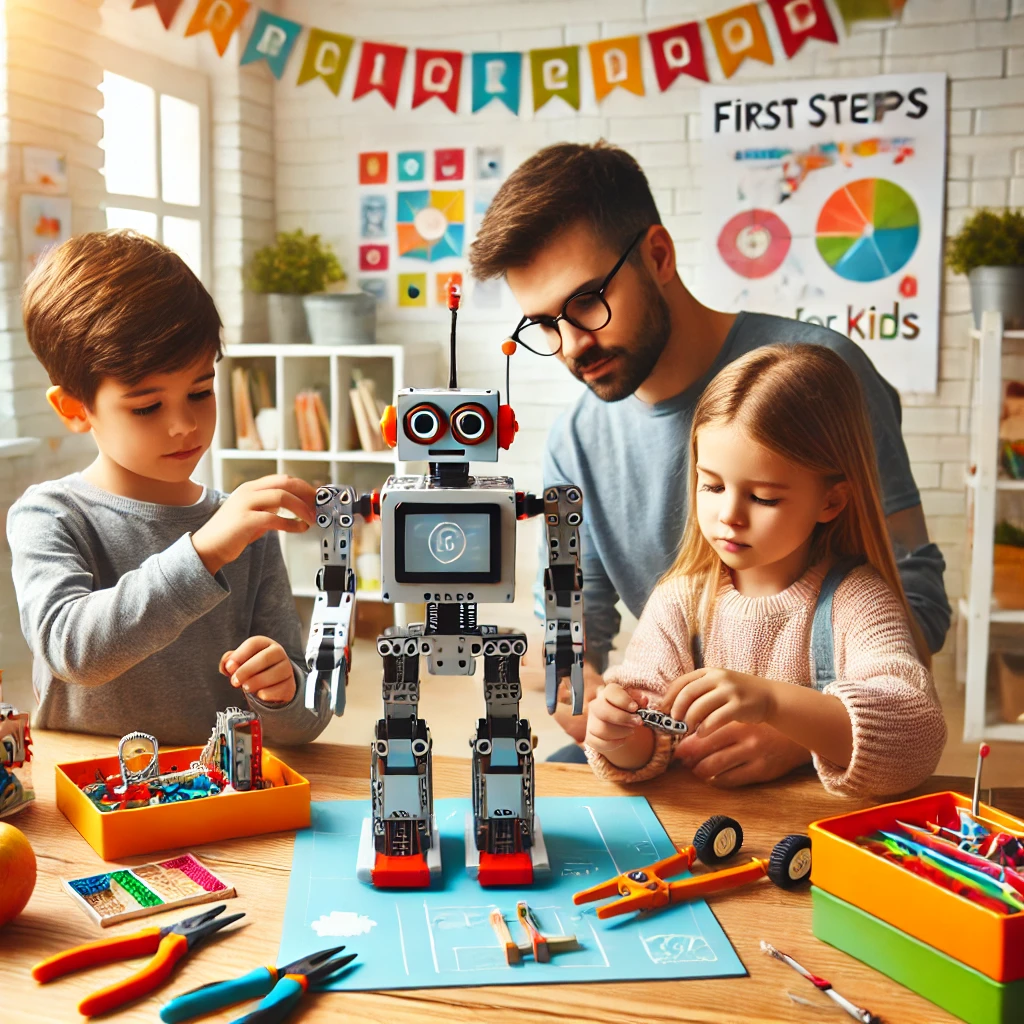
When kids take their first steps into robotics, they're not just learning how to put pieces together; they're learning to think like engineers. The initial foray should be all about exploration and fun. You might start with a story about a robot that needs to navigate through a space station, turning this narrative into a project where kids can build and code a solution.
Most importantly, this is a journey that should be free of frustration. That's why the right starting point is crucial. Look for classes that begin with the very basics and are age-appropriate. Remember, the goal is to ignite a spark, not to overwhelm.
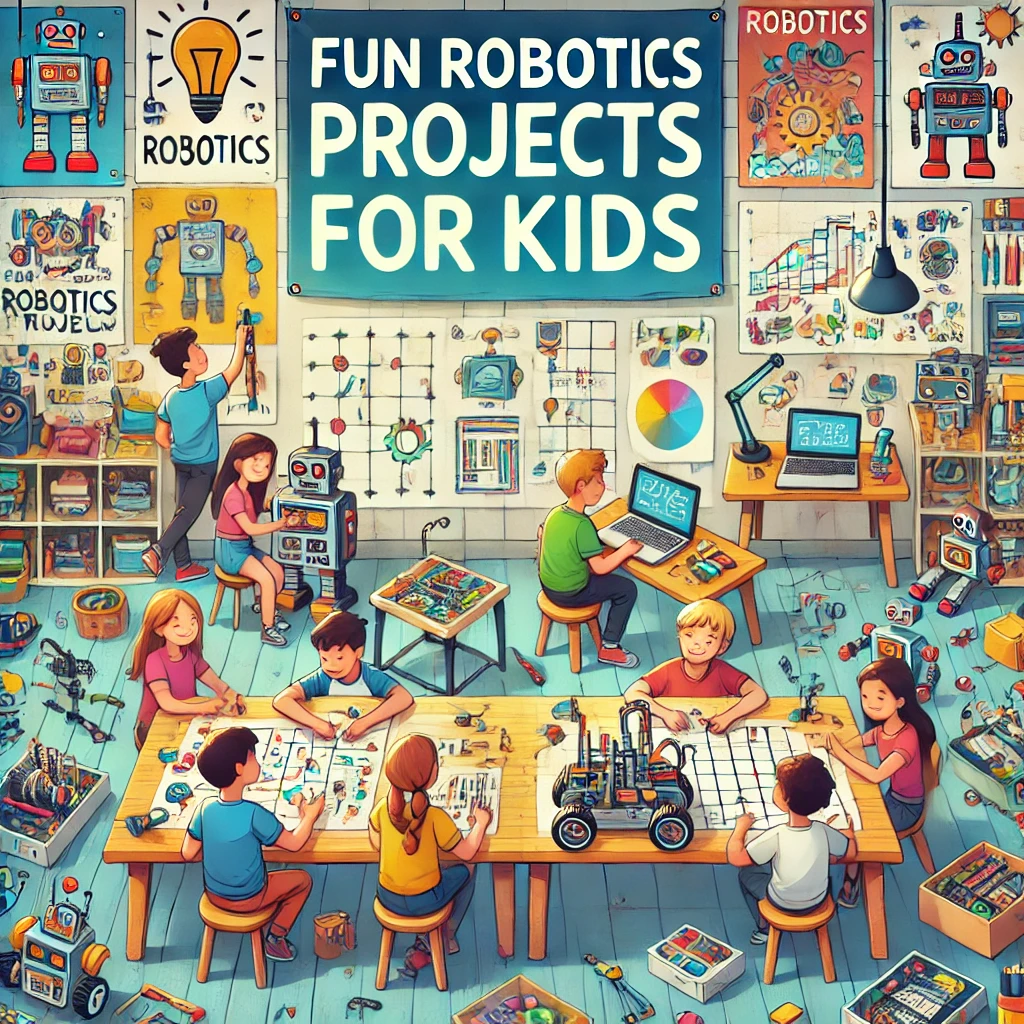
Let's dive into the nuts and bolts. At the heart of any robot are sensors and motors, guided by the brain of the operation—the code. Sensors act like the robot's senses, letting it interact with the world, while motors are the muscles that bring it to life. And coding? That's the set of instructions that tells the robot what to do with those senses and muscles.
Here's the cool part: kids get to be the boss. They decide what the robot will sense and how it will react. They can make a robot that responds to light, sound, or touch. With motors, they can create movement in any direction. And with coding, the possibilities are truly endless. But how do we make these concepts fun? Through projects!
Imagine your robot is on a secret mission to deliver a message. To succeed, it needs to navigate a maze without touching the walls. Kids will learn to use sensors to detect proximity and program the motors to turn and move forward. And when they watch their robot escape the maze? That's a victory dance moment.
Building your first robot is a monumental step. It's where creativity meets functionality. You might start with something as simple as a cardboard box on wheels, but when you add a motor and some sensors, suddenly it's not just a box; it's a rover exploring distant planets.
Each part of the robot serves a purpose, and as kids piece them together, they're not just building; they're learning. They'll understand that the wheels need an axle, the motor requires power, and the sensors need to be placed where they can do their job. And once they press that 'on' button and their creation whirrs to life, the pride they feel is immeasurable.
Remember, the first robot doesn't have to be perfect. It's about the experience, the trial and error, and the joy of making something that works. And that's a lesson that will stick with them for life.
Before kids can build robots that will roam their living rooms, they can practice in a risk-free virtual environment. Simulations are a game-changer in robotics education. They allow young learners to experiment with different robot designs and programming logic without the need for physical materials. It's like having an infinite supply of robot parts and an undo button for every mistake.
These virtual platforms are more than just play; they teach fundamental concepts such as physics and geometry. As kids adjust angles and speeds in their simulations, they're unknowingly getting a math lesson. And the instant feedback from the simulation means they can quickly learn from their mistakes and try again, which is critical for developing resilience and a growth mindset.
Once kids have mastered the virtual world, it's time to get their hands dirty. Transitioning from simulations to physical robot construction is a thrilling step. It's where abstract concepts become tangible, and the lines between the digital and physical worlds blur. Kids learn that what works in the simulation might need tweaking in the real world, and that's where true engineering skills come into play.
Building a physical robot involves dealing with unexpected challenges, like a motor that doesn't turn as anticipated or a sensor that's a bit too sensitive. It's these 'oops' moments that often lead to the most learning, as kids have to troubleshoot and problem-solve, which are invaluable skills in any area of life.
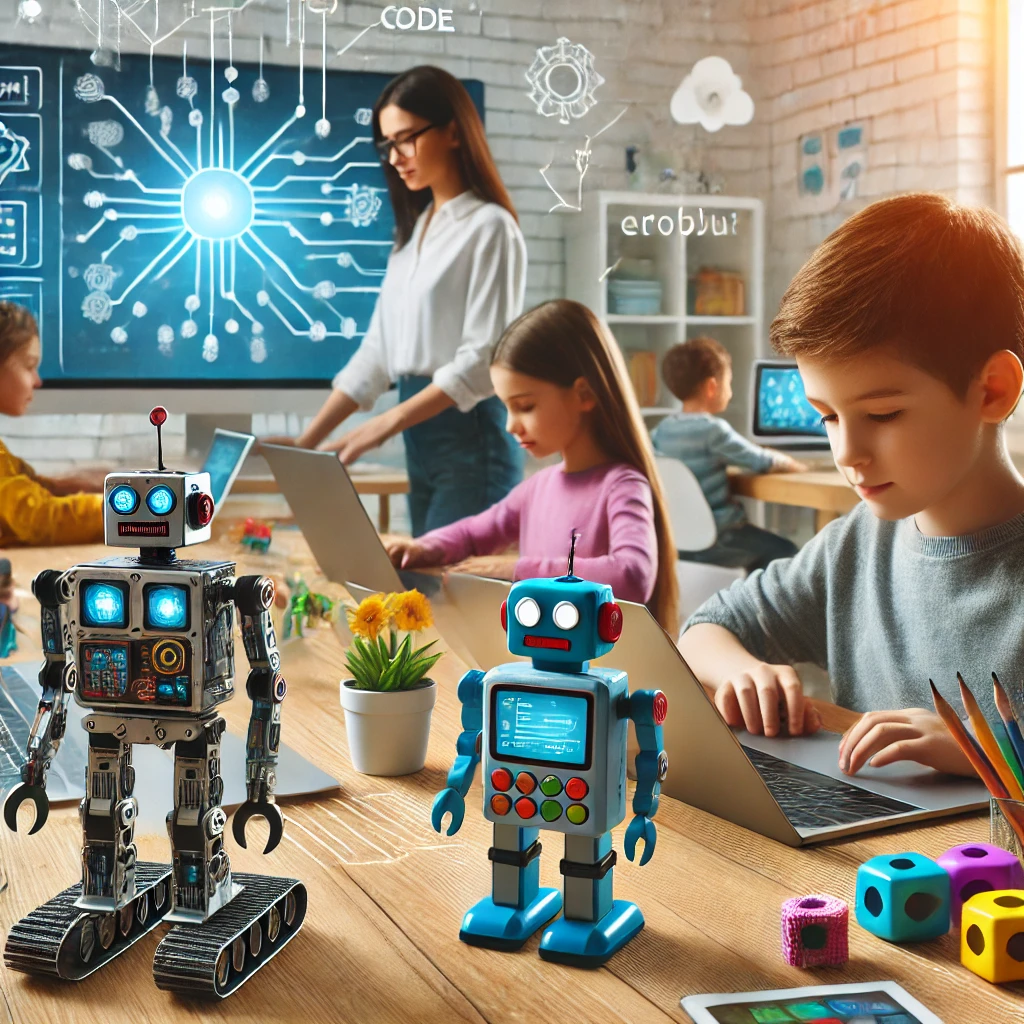
Robotics courses for kids are designed with their natural learning progression in mind. They start simple and gradually increase in complexity, ensuring that each new skill is built on a solid foundation. But what's most important is that these courses are packed with fun, engaging content that keeps kids excited to learn more.
From designing robots that can navigate obstacle courses to programming a robotic arm to move objects, the courses are structured to provide a variety of challenges that cater to different interests and learning styles. It's this diversity that helps keep all students engaged, whether they're future artists or engineers.
Beginner courses might start with the basics of block-based coding, where kids can drag and drop commands to control their robots. As they advance, they'll move on to more complex programming languages like Python or C++, which offer more control and complexity. By the end of a comprehensive course, students won't just be playing with toys; they'll have a deep understanding of what it takes to build and program a fully functional robot.
The best robotics classes for kids use project-based learning to keep things interesting. Instead of just learning theory, kids apply what they've learned to solve real-world problems. They might design a robot that can clean up a spill or one that can deliver supplies in a hospital. These projects help kids see the relevance of their learning and inspire them to think about how they can make a positive impact on the world.
Project-based learning isn't just about building robots; it's about building confidence. When kids see their creations come to life and accomplish tasks, it's a powerful moment that encourages them to tackle even more complex challenges.
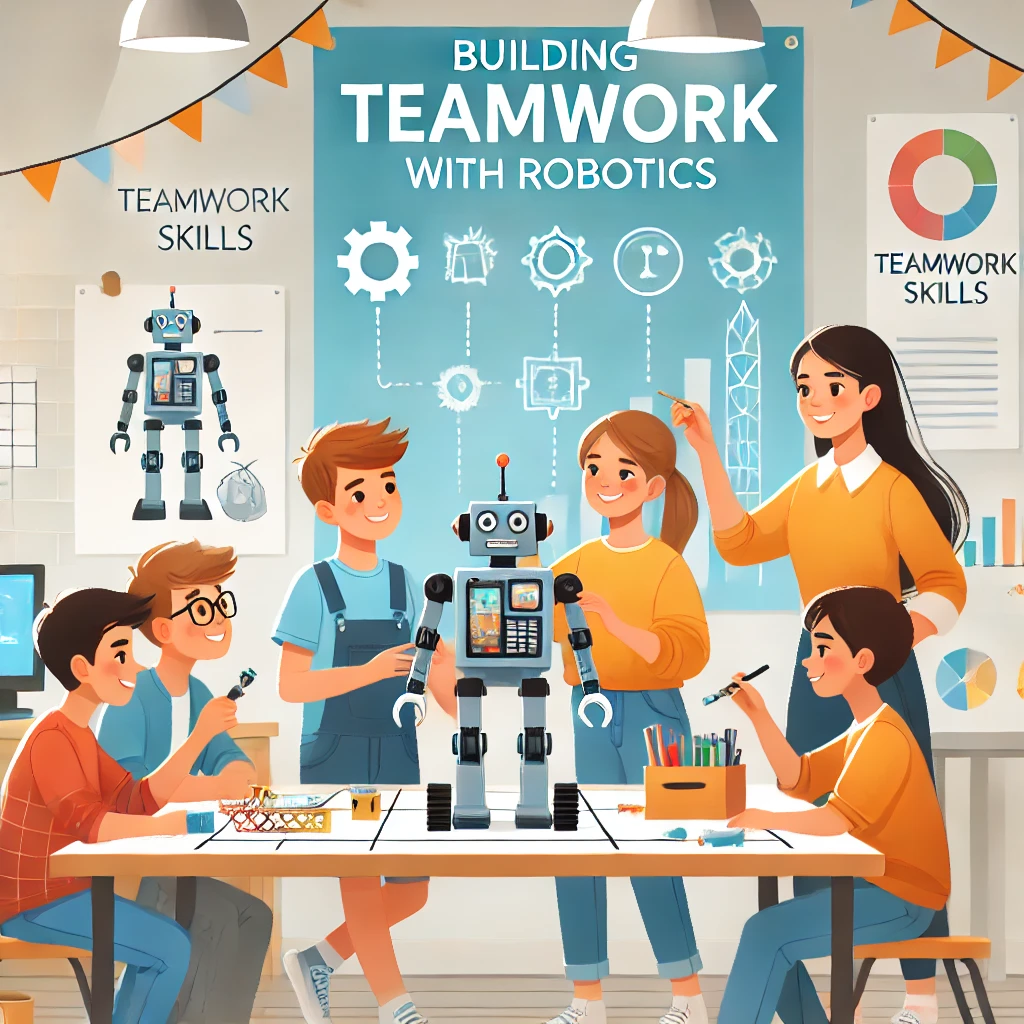
A typical robotics class is buzzing with energy and excitement. You'll find kids collaborating on designs, programming on their laptops, and testing their robots in makeshift arenas. It's a space where creativity and logic come together, and every student brings something unique to the table.
One of the most valuable aspects of robotics classes is the emphasis on teamwork. Students often work in groups to build and program their robots, learning to communicate effectively and share ideas. This collaborative environment mimics the real world, where engineers and programmers work together to solve complex problems.
It's not just about the robot; it's about the team. Through these collaborative projects, kids learn that listening to others and valuing different perspectives can lead to a better, more innovative solution. And when their robot successfully completes a task, it's a win for the whole team.
Robotics classes are full of challenges that require critical thinking. For example, a common activity is programming a robot to navigate a maze. To succeed, kids must break down the problem into smaller parts, testing and refining their code until the robot finds its way out.
This kind of problem-solving is a brain workout. It teaches kids to approach problems methodically, testing hypotheses and learning from the outcomes. And the best part? When they finally crack the code, the sense of accomplishment is unbeatable.
As a parent, you play a crucial role in your child's robotics journey. Your support and encouragement can make all the difference. But how do you choose the right course, and how can you help without being an expert in robotics yourself?
Choosing the right course for your child involves looking at the curriculum to ensure it matches their age and interests. It should offer a balance of instruction and hands-on activities, allowing kids to learn at their own pace. Also, consider the level of support provided—good courses offer resources for both kids and parents to make the learning experience as rewarding as possible.
Supporting your child's robotics journey means being there to celebrate their successes and help them through their frustrations. Encourage them to think critically and to see mistakes as learning opportunities. Your interest in their projects, even if it's just listening to them explain their latest robot design, can boost their confidence and motivation.

The world of robotics is accessible to children as young as 6 or 7 years old, primarily through visual programming and simple robotics kits. However, the ideal age might vary depending on the child's interest and cognitive abilities. Kids around 8 to 10 years old often have the patience and problem-solving skills needed to enjoy more in-depth robotics classes that involve both building and programming.
No, kids don't necessarily need prior coding experience before jumping into robotics classes. Many introductory courses start with the basics and use visual, drag-and-drop coding interfaces that make it easy for children to grasp the concepts. As they progress, they can move on to text-based coding, which will be taught as part of the curriculum.
Robotics classes offer a multidimensional learning experience that can profoundly impact a child's education and personal development. They foster problem-solving skills, encourage logical thinking, and promote creativity. Moreover, robotics can enhance a child's understanding of STEM subjects by providing a practical, hands-on application of math and science concepts. These skills are not only beneficial for academic success but are also highly valued in the workforce.
In robotics classes, kids get to work on a variety of exciting projects that may include designing robots to perform specific tasks, like navigating mazes, picking up objects, or even participating in robot battles. Projects are often themed around real-world scenarios, such as space exploration or environmental monitoring, which helps to contextualize their learning and demonstrate the impact of robotics in the world.
Absolutely. Robotics classes can be a stepping stone to a multitude of career paths in engineering, software development, artificial intelligence, and more. They help children develop technical skills and a mindset for innovation, which are critical in the rapidly evolving job market. Additionally, the teamwork and problem-solving skills acquired in robotics classes are transferable to virtually any career.
By participating in robotics classes, kids not only learn about technology but also about collaboration, perseverance, and thinking outside the box. These are the skills that will help them no matter where their future careers take them.
Introducing your child to robotics classes can be a transformative experience, offering them the opportunity to develop their problem-solving skills, ignite a passion for technology, and prepare for a future where technology will play a major role in every career field.
Math might seem like a serious subject, but believe it or not, it's full of hidden humor! Imagine math class as a live performance at Drybar Comedy, where every problem is a punchline waiting to happen. Ever tried dividing by zero? It's like the ultimate dad joke—completely impossible and guaranteed to make you chuckle. Picture the Pythagorean theorem as the funniest triangle in town, always squaring off against its sides with a wink and a nudge. And don't even get me started on fractions; they're just whole numbers having an identity crisis! So next time you're stuck on a tough math problem, just remember, even equations have a sense of humor!
Who said math has to be a chore? Think of it as a game, full of mysteries to solve and puzzles to crack. When we shift our perspective from seeing math as a series of equations and numbers to viewing it as a narrative with characters (the numbers) and plots (the problems), something amazing happens. Engagement soars, and suddenly, the classroom buzzes with excitement. Let's dive into how we can transform the math learning experience.
Games are not just for recess. They're a secret weapon for making math irresistible. By weaving puzzles and play into math lessons, we invite students to learn without even realizing it. Games like Sudoku and tangrams challenge students to use logic and spatial reasoning, sharpening their math skills in a playful environment.
For example, a simple game of 'math bingo' can turn a routine lesson on multiplication into a thrilling race to find the right answers.
Moreover, puzzles help students see patterns and connections, key skills in mastering math. But it's not just about adding games to the lesson plan; it's about fostering a game-like mindset where curiosity, experimentation, and a bit of healthy competition drive learning forward.
Every number has a story. When we frame math problems as stories, we tap into students' natural love for narratives. Storytelling adds context to abstract concepts, making them easier to grasp. It's one thing to solve an equation; it's another to help a character in a story find the treasure by cracking the code.
Imagine a math problem where students help a chef calculate the ingredients needed for a big feast. They're not just learning fractions; they're on a culinary adventure.
This approach not only makes math more relatable but also helps students develop empathy and imagination, skills that are invaluable both inside and outside the classroom.
Think of the classroom as a laboratory, a place where students can mix and match concepts like a scientist combines chemicals. Math labs encourage exploration and discovery, which leads to a deeper understanding of how math works in the real world.
Hands-on learning brings math concepts to life. When students manipulate objects, they can see the abstract become tangible. For instance, using blocks to demonstrate algebraic equations helps students visualize solving for x in a way that numbers on a page cannot.
You don't need fancy equipment to create a math lab. Simple, everyday items can become powerful tools for learning. A tape measure can teach measurement and geometry, while a set of weighing scales can demonstrate the principles of balance and equivalence.
For a fun and interactive experiment, have students create their own number lines with string and paper clips. As they physically move along the line to add or subtract, they'll develop an intuitive sense of number magnitude and the operations involved.
Competition can be a great motivator for learning. Math competitions and leaderboards tap into students' competitive spirits and can transform their attitude towards learning math.
Contests create a sense of urgency and excitement around math. They push students to apply their knowledge in new and challenging ways and to think outside the box. Plus, the recognition that comes from doing well in a competition can be a huge confidence booster.
A classroom leaderboard can provide ongoing motivation. It's not just about who's on top; it's about setting personal bests and celebrating individual progress. Be sure to recognize not just the highest scorers, but also those who have made the most improvement.
For example, after a series of math challenges, display the results on a leaderboard. This visual representation of achievement and growth can inspire all students to push their boundaries.
Let's take math on a shopping spree. Give students a budget and a list of items to 'purchase.' They'll need to add prices, calculate tax, and ensure they stay within budget. This exercise not only teaches practical math skills but also financial literacy.
Bring math into the kitchen. Cooking is full of math lessons, from measuring ingredients to adjusting recipes. Have students convert a recipe for a small group to one that will serve a larger party. This is a delicious way to learn about ratios and proportions.
These real-world connections show students that math isn't just a subject in school—it's a part of life. And understanding it can lead to tasty results!
Technology has opened up a world of possibilities for making math interactive and fun. From apps to websites, there's a wealth of digital resources at our fingertips.
Apps like DragonBox Algebra turn solving equations into a game that feels more like a puzzle adventure than a math lesson. These apps use the power of play to help students learn complex concepts without the pressure of a traditional classroom setting.
Websites like Khan Academy offer video lessons and practice exercises for a range of math topics. These resources allow students to learn at their own pace, revisit challenging concepts, and get instant feedback on their work.
By integrating these digital tools into math lessons, we can cater to different learning styles and keep students engaged.
When we present students with open-ended problems, we invite them to think creatively. There's no single right answer, so students can explore multiple pathways to a solution.
A classroom that encourages creative problem-solving is one where every student has the opportunity to contribute unique ideas. This fosters a collaborative learning environment where students can learn from each other.
Consider scenario-based challenges that require students to apply math to solve complex, real-world problems. For example, ask students to plan a community garden, calculating area and perimeter for planting beds and walkways.
These types of challenges not only make math relevant but also empower students to see how they can use math to make a difference in their communities.
One of the best ways to understand a concept is to teach it to someone else. Peer-to-peer teaching is a powerful tool for math education. It allows students to articulate their understanding and fill in any gaps in their knowledge.
Set up a system where students can tutor each other on different math topics. This not only reinforces their learning but also builds a supportive classroom community where students feel responsible for each other's success.
In conclusion, engaging math learning strategies are about more than just making lessons fun. They're about creating an environment where students are excited to learn, feel confident in their abilities, and see the value of math in the world around them. By integrating these strategies into your teaching, you're not just teaching math; you're inspiring a lifelong love of learning.
Study groups can turn the solitary act of studying into a collaborative and interactive session. Here's how to get started: first, group students by skill level or interest. Then, assign each group a specific math topic or problem set. Encourage them to work together to solve problems, explaining their reasoning to each other as they go. This peer-to-peer interaction not only reinforces their understanding but also builds communication skills.
But remember, the key to successful study groups is structure. Set clear goals for each session and provide guidance to ensure that the group stays on task. This could mean assigning roles within the group or providing a checklist of concepts to cover. With a little organization, study groups can become a cornerstone of your math class.
Let's tackle some common questions to help make math a blast for everyone.
First, normalize the struggle; math can be challenging for many, and that's okay. Introduce math games that align with their interests to make practice less intimidating. Use tools like number blocks or visual aids to break down complex problems into manageable parts. Celebrate small victories to build confidence, and most importantly, maintain a patient and supportive attitude.
Absolutely! Websites like Cool Math Games and Math Playground are filled with engaging, free games that cover a wide range of math concepts. For a more structured approach, Khan Academy offers practice exercises alongside their lessons. These resources can make math practice feel like playtime.
Storytelling transforms math from abstract to concrete. When students can follow a narrative, they're more likely to understand and remember the concepts. For instance, framing a word problem as a story about a character they can relate to helps them visualize the problem and work through it with more interest and empathy.
Get creative with household items. Use measuring cups to teach fractions, or create a homemade board game to practice addition and subtraction. Even sorting laundry can be a lesson in categorization and pattern recognition. The key is to relate math to everyday activities, making it relevant and practical.
Another fun idea is to have a 'math scavenger hunt' where kids search for objects of different shapes and sizes around the house. It's a great way to get them moving and thinking about geometry in a tangible way.
Yes, the competitive nature of math contests can be daunting. To prevent intimidation, emphasize that the goal is personal improvement, not just winning. Offer various levels of challenges so that all students can participate at their comfort level. Prepare them well, celebrate participation, and ensure that the competition is seen as a fun and exciting learning opportunity.
It's also important to offer alternative ways to shine in math, such as collaborative projects or creative math presentations. This way, every student can feel valued and included, regardless of their competitive nature.
Key Takeaways
As we dive into the exciting world of kids' science TV shows, let's get one thing straight: every child is a born explorer. Their minds are bubbling cauldrons of questions, and nothing beats the thrill of discovering the answers. Science shows for kids are like keys that unlock the doors to a universe brimming with wonders, from the smallest atom to the vastness of space.
Imagine a tool so powerful that it can spark a lifetime of curiosity, and you've got science TV shows. They're not just about fun and games; they're a critical ingredient in shaping how kids understand and interact with the world. These shows can transform complex concepts into bite-sized, digestible nuggets of knowledge, making the learning process both enjoyable and memorable.
Because science is all around us, understanding it is crucial. It helps kids make sense of everything from why the sky is blue to how their favorite gadgets work. And in today's rapidly advancing world, fostering a love for science early on could be the nudge that propels a child towards a future career in STEM (Science, Technology, Engineering, and Mathematics).
But how do you sift through the mountain of content out there to find the gold? Here's what to look for:
And most importantly, the best science shows respect the intelligence of their young audience. They don't dumb down the science; they make it accessible.
Creating an engaging and educational science show for kids requires a blend of several key elements. Here’s what makes a science show truly exceptional:
The best science shows are highly interactive, encouraging kids to participate in experiments and demonstrations. This hands-on approach not only keeps children engaged but also helps them understand complex scientific concepts through direct experience.
A great science show features hosts who are both knowledgeable and relatable. They should be enthusiastic and able to explain concepts in a way that resonates with children. A host who can blend humor with education often leaves a lasting impression.
Kids are naturally drawn to colorful and dynamic visuals. High-quality graphics, animations, and live-action footage that illustrate scientific principles can captivate young audiences and make learning more enjoyable.
Linking scientific concepts to everyday life helps children see the relevance of what they are learning. Shows that demonstrate how science affects their daily lives, from the food they eat to the technology they use, foster a deeper interest and understanding.
It's crucial that the content is suitable for the target age group. The complexity of the topics, the language used, and the overall presentation should be tailored to the cognitive and emotional levels of the audience.
Incorporating storytelling into science shows can make learning more memorable. Narratives that involve problem-solving, adventures, and relatable characters can help illustrate scientific concepts in an engaging and accessible way.
A great science show includes diverse perspectives and representations, showing that science is for everyone. Featuring scientists from various backgrounds and highlighting contributions from different cultures can inspire all children to pursue their scientific interests.
The best science shows encourage kids to ask questions and explore on their own. By fostering a sense of wonder and curiosity, these shows motivate children to continue learning and experimenting long after the episode ends.
While entertainment is important, the primary goal of a science show should be education. The content should align with educational standards and help reinforce what kids are learning in school, providing both fun and educational value.
Shows that celebrate successes, encourage perseverance, and frame mistakes as learning opportunities help build a positive attitude toward science. This supportive approach can boost kids’ confidence and interest in the subject.
By combining these elements, a science show can create an enriching and enjoyable learning experience that inspires the next generation of scientists and thinkers.
Now, let's get to the really exciting stuff – the shows themselves. There's a whole cosmos of content out there, and some of it is truly stellar. From wacky experiments that can be tried at home to mind-blowing facts about the natural world, these shows have it all.
Take, for example, "Bill Nye the Science Guy," a classic that's been sparking imaginations for decades. Bill's zany antics and clear explanations make even the most complex topics a joy to learn. Or "MythBusters," where science meets urban legends, showing that learning can be a blast – sometimes literally!
Interactive science shows are like the secret sauce that can turn passive watching into active learning. They're the ones that get kids jumping off the couch, eager to try their own experiments. And it's this hands-on component that cements the knowledge, turning abstract concepts into tangible, unforgettable experiences.
Shows like "Blaze and the Monster Machines" use interactive storytelling to introduce engineering and physics concepts. With each episode, kids learn about trajectory, force, and more as they help Blaze solve problems and overcome obstacles.
Our planet is teeming with life, and understanding ecosystems is key to appreciating the delicate balance of nature. Shows that focus on this area can instill a sense of wonder and responsibility towards the environment.
"The Magic School Bus" is a prime example, whisking kids away on fantastic voyages inside the human body, to the depths of the ocean, and even through time to witness the age of dinosaurs. It's a wild ride that educates as much as it entertains.
Stay tuned for more as we continue to explore the fantastic world of science shows for kids, where fun experiments and learning series make education an adventure worth embarking on.
Cartoons have a special place in the heart of every child, and when they're combined with science, you get a potent educational tool. Animated series like "Wild Kratts" bring biology to life, teaching kids about wildlife and conservation through the thrilling adventures of the Kratt brothers. With a blend of humor and facts, these shows make science approachable, breaking down barriers to learning with colorful characters and storylines.
Docuseries take a different approach, showing science in action in the real world. "Brainchild," produced by Pharrell Williams, explores a wide range of scientific topics, from social media's effect on the brain to the vastness of the universe. By showcasing actual scientists and innovators, these series can motivate kids to pursue their own scientific interests and maybe even become the heroes of their own stories.
Science shows can be more than just entertainment; they can also reinforce and expand upon what kids learn in school. By aligning with educational standards, these programs ensure that they're not only captivating but also beneficial for academic development.
STEM education is a priority in today's schools, and the right TV shows can play a supporting role. Series like "Sid the Science Kid" and "SciGirls" use storytelling and relatable characters to introduce scientific concepts, fostering an early interest in STEM fields. They also encourage critical thinking and problem-solving, skills that are invaluable in any academic pursuit.
Many science shows are now designed to align with the Next Generation Science Standards (NGSS), ensuring they cover the key concepts and practices that students need to learn. For example, "NOVA" offers in-depth explorations of scientific topics that complement high school curricula, making it a perfect match for older students.
By incorporating NGSS into their content, these shows provide a foundation that helps students excel in their studies and develop a deeper understanding of the scientific principles that govern our world.
To truly maximize the educational impact of science TV shows, it's important to go beyond passive viewing. Engaging with the content actively can turn a half-hour episode into a full-fledged learning experience.
After watching an episode, take the time to talk about it with your child. Ask them what they found interesting, if there was anything they didn't understand, and how they might apply what they learned to the world around them. This dialogue not only reinforces the material but also encourages them to think more deeply about the subject.
For example, after an episode of "Octonauts" that explores ocean ecosystems, you might ask your child to explain how different sea creatures depend on each other for survival. This helps solidify their understanding and makes the learning experience more personal and meaningful.
Supplementing TV shows with additional resources can turn a moment of interest into a lifelong passion. Many science programs offer websites with further information, printable activities, and even kits for hands-on experiments. These resources can help kids delve deeper into subjects they're curious about, providing a more rounded and interactive educational experience.
Experiment kits, often available for purchase, can bring the excitement of the TV show into your home. They usually contain the necessary materials and instructions to conduct safe and educational experiments. This hands-on approach not only reinforces the scientific concepts but also gives kids a sense of achievement as they watch their experiments come to life.
Let's address some common questions to ensure you have all the information you need to make science shows a valuable part of your child's learning journey.
Science shows are designed for various age groups, with content tailored to the cognitive and emotional development of the intended audience. Preschoolers can benefit from shows that introduce basic scientific concepts, while older children and teens might prefer more in-depth exploration of scientific theories and phenomena. The key is to choose shows that are appropriate for your child's age and interests.
Many science shows are available internationally, either through global streaming platforms, educational channels, or online services. However, availability can vary based on your location and the specific platform. It's worth checking your local listings or online to find out which shows you can access.
Absolutely! Science shows can be a fantastic supplement to traditional lesson plans. They provide a visual and engaging way to introduce concepts, and many come with additional resources specifically designed for educators. When planning lessons, consider incorporating episodes that align with the topics you're teaching.
To gauge your child's learning progress, you can create simple assessments or quizzes based on the content of the shows. Alternatively, observe how your child applies the concepts in real life or in discussions. Their ability to recall information and make connections between the show's content and the world around them is a good indicator of their understanding.
Yes, many science shows for kids have interactive platforms or companion websites with additional content and activities. These can include games, quizzes, project ideas, and forums for discussion. Such platforms provide an excellent opportunity for children to explore topics further and interact with a community of like-minded young scientists.
When it comes to sparking creativity in young minds, few tools are as powerful as a 3D printer. In 2024, the landscape of 3D printers for kids is rich with options that balance fun and education. The key is to choose a printer that is easy to use, safe, and within your budget. Let's dive into some of the top contenders that are making waves this year.
3D printers have transformed from niche gadgets to essential educational tools. They offer kids a hands-on approach to learning, blending the excitement of seeing their creations come to life with the intricacies of design and engineering. With the right printer, children can:
These experiences are invaluable, providing a foundation for lifelong skills in an increasingly tech-driven world.
Choosing the right 3D printer for your child can be daunting. You want a machine that's not only safe and easy to use but also capable of growing with them as they learn. Whether you're looking for the fastest model, the best value, or the most educational, there's a 3D printer out there that's perfect for your budding innovator.
When selecting a 3D printer for kids, it's essential to consider several factors that will ensure a positive and educational experience. User-friendly features, safety measures, and cost-effectiveness are all crucial aspects to weigh before making your decision.
Look for printers with intuitive interfaces, straightforward software, and resources that help kids get started quickly. Features like one-touch printing and pre-loaded designs can make all the difference for beginners.
Safety is paramount when it comes to technology for children. Opt for printers with enclosed designs to prevent accidental burns, and those with non-toxic, biodegradable filaments are a plus. Additionally, look for models with built-in sensors that pause printing if the door is opened or if the printer detects an issue.
Most importantly, supervision is key, especially for younger children. While many printers are designed with safety in mind, it's always best to keep an eye on the printing process.
It's not just about finding the cheapest model; it's about finding the best value for your investment. Consider printers that offer a balance of quality, reliability, and features that will inspire your child without breaking the bank.
The Toybox 3D Printer for Kids stands out as an all-in-one solution for young creators. It's designed to be accessible for children, with a simple setup and a user interface that makes printing as easy as pressing a button.
With its extensive toy catalog, kids can choose from a vast array of designs to print, providing endless hours of entertainment and learning. And because it's designed specifically for kids, the Toybox printer includes numerous safety features to give parents peace of mind.
The Toybox printer's one-touch functionality is perfect for young users. It removes the complexity often associated with 3D printing, allowing kids to focus on the fun of creation. The vast toy catalog means they won't run out of ideas or inspiration anytime soon.
The Toybox 3D Printer is not only fun but also safe for kids to use. It's designed with an enclosed printing area to prevent accidental contact with hot surfaces, and uses only non-toxic, biodegradable filaments. This makes it an excellent choice for parents concerned about both safety and the environment.
If you're on a tight budget but still want to introduce your child to the world of 3D printing, the XYZprinting Da Vinci Mini Wireless is a fantastic choice. It's affordable without sacrificing quality, and its wireless capabilities mean it's easy to use in any space.
This printer is particularly suited for the tech-savvy kid, as it allows for printing from anywhere in the house. Plus, its compact size means it won't take up too much space in your home.
The XYZprinting Da Vinci Mini Wireless is proof that you don't need to spend a fortune to get started with 3D printing. It's a budget-friendly printer that doesn't skimp on features, making it a smart choice for families new to 3D printing. The cost-effectiveness of this model means you can invest in more filament or other creative tools for your child.
One of the coolest features of the XYZprinting Da Vinci Mini Wireless is its ability to connect to your home Wi-Fi. This means your child can send their designs to the printer from a tablet or computer without the need for cables. It's a hassle-free way to bring their digital creations into the physical world.
Patience is a virtue, but when it comes to 3D printing, sometimes you just can't wait to see your ideas come to life. The AnkerMake M5C is a dream come true for kids who are eager to play with their creations. It's one of the fastest printers on the market, without compromising on the quality of the print.
The AnkerMake M5C's rapid printing capabilities mean that your child won't have to wait long to see their designs take shape. This quick turnaround can be a huge motivator for kids, keeping their interest piqued and their creativity flowing. It's perfect for children who thrive on instant gratification.
Some 3D printers can be noisy, but not the AnkerMake M5C. It operates quietly, ensuring that your child's creativity doesn't disrupt the peace of your home. This quiet operation is also ideal for classrooms, allowing teachers to integrate 3D printing into lessons without causing a distraction.
As kids grow into their teenage years, their designs often become more complex. The Monoprice Voxel is a 3D printer that can keep pace with their evolving skills. It strikes the perfect balance between user-friendly features for beginners and more advanced options for those ready to expand their capabilities.
With features like a heated print bed and a variety of compatible materials, the Voxel is versatile enough to handle a wide range of projects. Its enclosed design not only keeps the printing process safe but also maintains a consistent temperature for better print quality.
The Voxel's assisted leveling system simplifies the setup process, making it easier for teens to get started and ensuring successful prints. It's a 3D printer that grows with your child, supporting them as they explore more ambitious designs and concepts.
With the Monoprice Voxel, teens are not limited to simple toys and figures. They can tackle intricate architectural models, engineering projects, and even artistic sculptures. This kind of versatility is what makes the Voxel an excellent tool for teens looking to push the boundaries of their creativity.
The Voxel manages to be both accessible and powerful. Its touchscreen interface and Wi-Fi connectivity make it a breeze to use, while its ability to handle different filament types and software options means it can take on more complex tasks. It's the perfect stepping stone for teens transitioning from beginner to intermediate 3D printing.
For kids who are not just interested in playing with their creations but also in understanding the process behind them, the FlashForge Finder 3 is an exceptional choice. It's built with education in mind, integrating seamlessly with educational software to enrich the learning experience.
The FlashForge Finder 3 pairs with educational programs that teach kids about 3D modeling and printing in a structured way. These resources guide them through the design process, from the initial concept to the final print, making the learning curve much more manageable.
Hands-On Learning: From Digital Design to Physical Object
There's something magical about turning a design on a screen into a tangible object. The FlashForge Finder 3 facilitates this process, giving kids a hands-on understanding of design principles and the mechanics of 3D printing. It's a powerful way to connect digital skills with real-world applications.
3D printing opens up a world of possibilities for projects and applications. Kids can start with simple designs like keychains and progress to more intricate items like musical instruments or robots. The key is to let their interests guide the projects they choose.
Beginning with simple designs is a great way to introduce kids to 3D printing. They can quickly see the results of their work, which builds confidence and encourages them to try more complex projects. Remember, the journey of learning should be filled with successes and challenges alike.
Imagination is the playground of the mind, and with 3D printing, kids can turn their wildest dreams into reality. This technology is not just about creating toys; it's about teaching valuable skills that blend art, science, and critical thinking. It's about preparing our kids for the future, today.
STEAM—Science, Technology, Engineering, Art, and Mathematics—is where 3D printing truly shines in education. It's a tool that crosses disciplines, allowing students to discover connections between different areas of learning. For instance, when designing a 3D model, kids apply mathematical concepts to create art, engineering principles to ensure stability, and technology skills to bring their design to life.
Maintenance is crucial to keeping a 3D printer in tip-top shape. It's like caring for a pet; you need to clean it, feed it the right materials, and sometimes give it a little TLC if things aren't working correctly.
Encourage kids to take an active role in maintaining their 3D printer. It teaches responsibility and helps them understand the mechanics of their creative partner. Plus, it ensures that the printer is always ready for their next big idea.
To keep a 3D printer running smoothly, there are a few simple, yet essential, care routines to follow:
The type of filament used can greatly affect the outcome of a print. For kids, it's usually best to start with PLA (Polylactic Acid) because it's easy to print with and biodegradable. As they progress, they can experiment with different materials like ABS (Acrylonitrile Butadiene Styrene) or PETG (Polyethylene Terephthalate Glycol) to see how each impacts the durability and finish of their creations.
As a parent or educator diving into the world of 3D printing with kids, you might have a few questions. Let's tackle some of the most common queries to give you a clearer picture of what to expect.
Can kids use 3D printers independently? Absolutely! With supervision and proper safety measures, kids can learn to operate 3D printers on their own. It's a fantastic way to boost their confidence and technical skills.
But remember, the level of independence will vary depending on the child's age and the printer's complexity. Start with simple tasks and gradually introduce more responsibilities as they become more comfortable with the process.
How to choose age-appropriate 3D printing projects? Start with basic shapes and objects that can be completed quickly. This gives instant gratification and encourages further exploration. As their skills develop, introduce more complex projects that challenge their abilities.
For younger kids, printing their favorite cartoon characters might be a hit, while older kids might enjoy creating practical items like phone stands or pencil holders.
When shopping for a 3D printer for kids, prioritize models with the following safety features:
3D printing can enrich a child's education by making abstract concepts tangible. It encourages problem-solving, fosters creativity, and provides a hands-on approach to learning that can enhance understanding and retention. It's an engaging way to apply lessons from the classroom to real-world scenarios.
To manage costs effectively:
By considering these factors, you can make 3D printing an affordable and educational hobby for kids that will pay dividends in their development. Embrace this technology with them, and watch as they learn, grow, and invent the world they'll one day inherit.
Let's face it, math can be tough, and not every child finds it as easy as pie. But how do you know when it's time to step in and get some extra help? It's not always as clear as a wrong answer on a test. Sometimes, the signs are in the frustration on your child's face or the hours they spend agonizing over homework. That's where I come in, to help you spot those signs and understand when it's time to consider a math tutor for your child.
Math anxiety is real, and it's a stealthy blocker that can keep a child from reaching their potential. It's that feeling of tension and worry that creeps in when they're faced with solving a math problem. It can cause a mental block, making it hard for them to focus and remember what they've learned. And it's not just about the numbers; math anxiety can affect their overall confidence and willingness to participate in class.
So, if you see your child getting unusually nervous before math tests or avoiding math homework, it could be a sign of math anxiety. And that's a big indicator that a math tutor could help. A good tutor can provide not just math skills, but also strategies to manage anxiety, making math a less daunting subject.
There are a few telltale signs that your child might need some extra help in math:
These signs are not just about academics; they're about your child's well-being. Addressing them early can make a world of difference in their attitude towards math and learning in general.
When it comes to math tutoring, creating the right atmosphere is just as important as the content being taught. Imagine trying to learn in a place where you feel uncomfortable or stressed. Not very effective, right? That's why a positive learning environment is key. It should be a space where mistakes are seen as learning opportunities, where questions are encouraged, and where each victory, no matter how small, is celebrated.
A tutor who fosters such an environment can make all the difference. They can transform math from a subject of dread into one of discovery. They do this not only through their knowledge of math but also by being patient, approachable, and empathetic. They understand that building a student's confidence is just as critical as improving their math skills.
But how can you, as a parent, contribute to this positive environment? Here are a few ways:
Remember, the goal is to make your child feel supported and confident, not just to get through their math homework.
While a good tutor is invaluable, there are also some fantastic tools out there that can supplement your child's learning. These can reinforce what's being taught in tutoring sessions and provide additional practice in a fun and engaging way.
Let's dive into some of these tools:
In today's digital world, educational apps are a game-changer. They turn learning into a game, making it fun and interactive. Here are a few apps that can help your child practice their math skills:
These apps can be great for practice outside of tutoring sessions and can help reinforce the skills your child is learning.
It's not just about the tools though; it's about how they are used. Practice and persistence are vital. Encourage your child to regularly use these apps and resources. It's the consistent effort that will lead to improvement. As they say, practice makes perfect, or at least, a lot better at math!
One of the most significant benefits of tutoring is the impact it can have on a student's confidence. When a child starts to understand concepts that once baffled them, you can literally see them light up. They start to participate more in class, tackle homework with less trepidation, and approach tests with a new sense of readiness.
Confidence in math doesn't just help with grades; it spills over into other areas of life, giving them a 'can-do' attitude. It's truly rewarding to watch this transformation take place.
Take, for example, a student I worked with named Jamie. Jamie struggled with basic multiplication and division, which caused a lot of frustration and tears. After a few months of tutoring, not only had Jamie mastered those skills, but she had also moved on to more advanced topics. Her newfound confidence was evident in her willingness to volunteer answers in class and help her peers with their math problems.
While grades are a clear indicator of improvement, they aren't the only measure of success. Look for changes in your child's attitude towards math, their willingness to take on challenges, and the ease with which they can explain concepts. These qualitative measures are just as important as the quantitative ones and often provide a more complete picture of your child's progress.
As you consider a math tutor for your child, remember that you're investing in more than just their academic success. You're investing in their confidence, their attitude, and their future. With the right support, every child has the potential to excel in math and beyond.
When it comes to improvement, remember that progress in math isn't just about the grades on a report card. Improvement can be seen in the way a child approaches a problem, their ability to explain their thinking, and their overall confidence in math. Pay attention to these subtle yet powerful indicators of growth as your child continues their journey with a math tutor.
As a parent, you're bound to have questions about math tutoring. Let's tackle some of the most common ones to give you a clearer picture of what to expect and how to make the most out of this educational investment.
The frequency of tutoring sessions should be tailored to your child's specific needs. For some, once a week may be sufficient, while others might benefit from two or three sessions per week, especially if they're preparing for an upcoming test or trying to catch up. Consistency is key, so make sure to establish a regular schedule that works for your child and the tutor.
Remember, the goal is to provide enough support to help your child succeed without overwhelming them. Too many sessions can lead to burnout, while too few might not give them the help they need. It's all about finding that sweet spot.
Yes, online tutoring can be just as effective as in-person sessions, provided that the tutor is skilled at engaging students through a screen. Many tutors today are adept at using digital tools to create interactive and productive online learning experiences. The key is to ensure that your child has a quiet space to focus and the necessary technology to facilitate smooth communication.
A good rapport between your child and their tutor is crucial for successful learning. If it seems like they're not clicking, don't hesitate to address the issue. Sometimes, a simple conversation about teaching style or expectations can resolve any concerns. If the problem persists, it might be worth considering a different tutor. The right match can make all the difference.
High-quality math tutoring doesn't have to break the bank. There are several affordable options available, including group tutoring sessions, online resources, and even some free tutoring services provided by schools or community organizations. You can also look for tutors who offer sliding scale fees based on income or package deals for multiple sessions.
It's important to remember that investing in your child's education is invaluable, and finding the right tutoring fit is worth the effort.
To track your child's progress in math tutoring, you'll want to look at a combination of quantitative and qualitative indicators. Here are some ways to monitor their development:
By staying involved and communicating openly with both your child and their tutor, you'll be able to see the strides they're making in their math journey.
In conclusion, if you're noticing signs of struggle in your child's math performance, it might be time to consider the support of a math tutor. With the right help, your child can overcome their challenges, build confidence, and develop a stronger understanding of math. Remember to choose a tutor who aligns with your child's needs, foster a positive learning environment, and use additional tools and resources to reinforce learning. By doing so, you'll be setting your child on a path to success in math and beyond.
Imagine a child's eyes lighting up with wonder as they watch a volcano erupt or build their first robot. This is the power of science kits—they transform abstract concepts into tangible experiences. By turning learning into an adventure, these kits ignite curiosity and instill a love for discovery that can last a lifetime.
Science kits for kids provide an engaging way for children to learn about various scientific principles through hands-on activities. These kits not only foster curiosity and a love for science but also develop critical thinking and problem-solving skills.
Hands-on experiments are not just fun; they're essential for learning. When kids can touch, see, and manipulate the elements of an experiment, they gain a deeper understanding of scientific principles. It's one thing to read about chemical reactions, but it's quite another to mix the ingredients and watch the fizz and color changes happen right before your eyes.
Most importantly, these kits teach the scientific method: hypothesize, experiment, observe, and conclude. By repeatedly going through this process, young scientists develop a methodical approach to solving problems, a skill that will benefit them in all areas of life.
There's a special kind of confidence that comes from discovery. When a child successfully completes an experiment, they're not just learning about science; they're learning that they can understand and influence the world around them. This confidence encourages them to take on new challenges and fosters a growth mindset.
Choosing the right science kit can be a game-changer for a child's education. With so many options on the market, it's important to select kits that are not only educational but also engaging. Here are some top-rated science kits that cater to a range of scientific interests.
For kids fascinated by reactions and the elements, chemistry sets are a classic choice. These kits can introduce basic concepts of chemistry in a safe and controlled environment. They often include materials for creating things like slime or growing crystals, which are not only educational but also incredibly satisfying for kids to make.
For example, a quality chemistry set should include:
It's vital to choose kits that are age-appropriate and have clear instructions to ensure a successful and enjoyable learning experience.
The Mel Science Chemistry Kit is a comprehensive set that introduces kids to the world of chemistry through exciting and safe experiments. It includes all necessary materials and equipment, detailed instructions, and even virtual reality lessons to enhance understanding.
The kit is designed with clear, step-by-step instructions that make it accessible for kids and parents alike. The experiments are safe, with minimal risk involved, making it a perfect choice for home use.
Children will learn fundamental concepts of chemistry such as chemical reactions, molecular structures, and the properties of different elements and compounds. The VR lessons further solidify these concepts, providing a deeper understanding.
Robotics kits take science learning to the next level. They blend engineering and technology to teach kids about mechanics, electronics, and coding. Starting with simple models that may involve snapping pieces together, children can progress to more advanced kits that require assembling circuits and writing code.
Robotics kits should typically contain:
These kits not only teach technical skills but also encourage persistence and problem-solving as kids work through the challenges of building and programming their creations.
The LEGO Mindstorms Robot Inventor Kit is an exceptional robotic kit that combines the beloved LEGO building experience with the excitement of robotics and coding. This kit allows kids to build, code, and play with customizable robots, offering endless creative possibilities.
Kids will love the hands-on experience of building and programming their robots. The kit includes a variety of sensors and motors, allowing for the creation of robots that can move, interact with their environment, and perform specific tasks. This interactive experience helps children understand basic robotics, engineering, and programming concepts in a fun and engaging way.
Parents will appreciate the educational value of the LEGO Mindstorms Robot Inventor Kit. It promotes STEM (Science, Technology, Engineering, and Mathematics) skills, encouraging children to think critically, solve problems, and develop their creativity. The coding aspect is particularly beneficial, as it introduces kids to programming languages and logical thinking.
The kit is designed to be user-friendly, with detailed instructions and a companion app that guides users through the building and coding process. The app supports block-based coding, which is intuitive for beginners, and also offers text-based coding for more advanced users.
LEGO is known for its high-quality and durable products, ensuring that the pieces will last through many building and rebuilding sessions. This durability makes the kit a worthwhile investment for long-term use.
This kit is a fantastic way to introduce kids to the world of robotics and programming, providing both educational value and endless hours of fun.
Physics kits for kids are designed to introduce young learners to the fundamental concepts of physics through hands-on experiments and activities. These kits provide a tangible and interactive way to understand the principles that govern the physical world, making learning both fun and educational. Here's a more detailed look at what makes physics kits for kids so valuable:
Thames & Kosmos Physics Workshop
Physics kits for kids offer an invaluable resource for making the learning of physics both interactive and enjoyable. They provide a hands-on approach to understanding complex scientific concepts, foster critical thinking and problem-solving skills, and create opportunities for meaningful parent-child interactions. With these kits, children are not just learning physics; they are experiencing it firsthand, which can inspire a lifelong interest in science.
Ecology kits provide a window into the natural world, allowing kids to explore environmental science and the delicate balance of ecosystems. They can learn about topics like plant life cycles, weather patterns, and renewable energy in a hands-on way that makes the subject matter come alive.
A well-rounded ecology kit might include:
These kits encourage outdoor exploration and a respect for nature, teaching children the importance of environmental stewardship.
The National Geographic Rock Tumbler Kit allows kids to explore the fascinating world of geology by turning rough rocks into polished gemstones. The kit includes a tumbler, rocks, grit, and detailed instructions.
The rock tumbler is easy to operate, and the kit includes a learning guide that explains the process and the science behind it. This makes it suitable for kids to use with minimal supervision.
Children will learn about the properties of different rocks and minerals, the process of erosion, and the geological forces that shape our planet. The hands-on experience of transforming rocks into gemstones is both educational and rewarding.
While traditional schooling provides the foundation of scientific knowledge, science kits build upon this by offering experiential learning. They allow children to apply what they've learned in textbooks to real-world scenarios, deepening their understanding and retention of the material. In essence, these kits serve as a bridge between theory and practice, making abstract concepts concrete.
Science kits often come with detailed guides that explain the science behind each experiment. This helps children understand not just the 'how', but also the 'why' of scientific phenomena. By engaging in the experiments, kids can see the principles they've learned about in class come to life. This hands-on approach reinforces learning and helps to clarify complex ideas.
Beyond the core curriculum, science kits promote a range of skills that are vital for academic and personal growth. These include:
As children experiment, they learn to hypothesize, test their ideas, and adapt based on the results. These skills are transferable to any subject and essential for success in the 21st century.
Furthermore, science kits can be particularly beneficial for visual and kinesthetic learners who may struggle with traditional learning methods. By engaging multiple senses, these kits ensure that all types of learners have the opportunity to grasp scientific concepts effectively.
While there are many excellent science kits available for purchase, creating your own can be a rewarding experience that allows for customization to your child's interests. It's also a fantastic way to involve your child in the learning process from the very beginning.
A DIY science kit should include a mix of common household items and easy-to-find scientific tools. Here's a basic list to get you started:
This starter kit can provide a foundation for countless experiments that teach fundamental scientific concepts.
As your child's scientific curiosity grows, you can enhance the DIY kit with more advanced tools and materials. Consider including items such as:
Remember to always prioritize safety and supervise your child during experiments, especially as they become more complex.
Safety should always be the top priority when children are conducting experiments. Ensuring that they understand the importance of following instructions and using protective gear is crucial.
When using science kits, adhere to the following safety practices:
By instilling good safety habits, you help create a secure environment where children can explore and learn without risk.
Moreover, it's important to teach children to respect the tools and materials they're working with. Emphasize the need to handle chemicals and equipment responsibly, and explain the reasons behind each safety rule. This not only keeps them safe but also fosters a mature approach to scientific exploration.
One of the most rewarding aspects of introducing science kits to your child is the opportunity to mentor their exploration. Engage with them by asking questions, encouraging them to predict outcomes, and discussing the results of their experiments. This involvement shows your support and interest in their learning, which can be incredibly motivating for a young scientist.
Remember, the goal isn't to have all the answers, but to foster a spirit of inquiry and learning. Your enthusiasm for their projects will inspire them to continue asking questions and seeking knowledge. And who knows, you might just learn something new alongside them.
In conclusion, science kits are more than just educational tools—they're invitations to adventure and discovery. By choosing the right kit, integrating it with your child's education, and fostering a safe and supportive learning environment, you can ignite a passion for science that will burn brightly for years to come.
As we wrap up our exploration of science kits for kids, let's address some common questions that might be on your mind. These FAQs can help clarify any lingering doubts and ensure that you're well-equipped to choose the perfect science kit for your young learner.
Science kits are designed for a wide range of ages. They typically start for kids as young as 3 years old and can go up to kits suitable for teenagers and beyond. It's essential to select a science kit that's age-appropriate, which will be indicated on the packaging or product description. For younger kids, look for kits that emphasize sensory experiences and simple concepts. Older children and teens can handle more complex kits that delve into advanced topics and require more precision and analytical thought.
Science kits benefit a child's education by providing practical, hands-on experiences that reinforce theoretical knowledge. They encourage active learning, which is known to improve comprehension and retention. Besides that, science kits can help develop critical thinking, problem-solving skills, and a deeper understanding of scientific methods and concepts. They also make learning fun and engaging, which can inspire a lifelong interest in science and learning in general.
Absolutely! Science kits are an excellent resource for homeschooling families. They provide structured activities that align with educational standards and can be used to supplement curriculum-based learning. They also offer a break from textbook learning, bringing a hands-on component to your child's education. You can choose kits that align with your child's interests or current learning topics, making the educational experience both personalized and comprehensive.
Yes, there are many science kits available that cover advanced topics such as coding and electronics. These kits often include components like microcontrollers, sensors, and other electronic parts that allow kids to build and program their own devices. They are a fantastic way to introduce kids to the basics of computer science and electrical engineering, and they can range from beginner to advanced levels to suit your child's skill and comfort.
Quality science kits can be found at many retailers, including specialty educational stores, large online marketplaces like Amazon, and directly from the websites of companies that specialize in educational toys. When looking for a science kit, consider reading reviews and looking for awards or endorsements from educational institutions to ensure you're getting a kit that's not only fun but also a valuable learning tool.
In conclusion, educational science kits for kids are more than just toys; they're gateways to understanding the world around us. They turn abstract science concepts into hands-on experiences, making learning both enjoyable and effective. By carefully selecting a science kit that matches your child's age, interests, and educational needs, you're setting the stage for a rewarding adventure in learning that could inspire a lifetime of scientific curiosity and discovery. Go ahead, choose a science kit today, and watch your child's love for science grow!
